
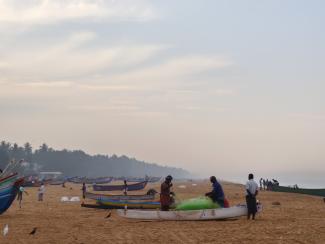
The Mukkuvar Peoples, the seascape Indigenous Peoples in the south of Kerala and along the Kanyakumari coast of south India, have had their own systems of self-governance for generations. These systems emerged from our relationship with the ocean, beaches, estuaries, and coastal ecosystems that have sustained us from the beginning. Our governance has shaped how we live together as a community, care for our marine environment, pass knowledge from one generation to the next, and protect our marine territory. It is a dynamic system that continues to evolve in response to changing social, political, and economic realities, with the core values of collective responsibility, reciprocity, and respect for the sea.
Living with the sea taught us how to live with one another. Every journey onto the water reminded us that no one could survive alone; our lives depended on mutual trust and cooperation. Because we depended on the sea, we worked collectively. Because we worked collectively, we cared for one another. That care naturally extended to the sea itself, for we understood that its well being was inseparable from our own. We learned which places should be left undisturbed, which fishing practices should be avoided, and when it was time to take only what was needed. These responsibilities were not written in laws, but carried in memory, practice, and everyday life, passed down through stories, observation, and experience, ensuring that our governance endured as surely as the tides.
The sea is our source of food, livelihood, healing, learning, recreation, culture, and spirituality. The sea is inseparable from the beach and the intertidal zone. They form a single living space where our livelihoods, culture, spirituality, and community life have developed. Among our most respected knowledge holders are the kanichakar/kanivakkar, chelalikal, and marampidikkar, whose intimate understanding of winds, currents, stars, the seabed, and the rhythms of the ocean has guided generations of fishers. Their wisdom stands alongside scientific knowledge, reminding us that nothing is separate. The sea connects all into a single, living relationship.
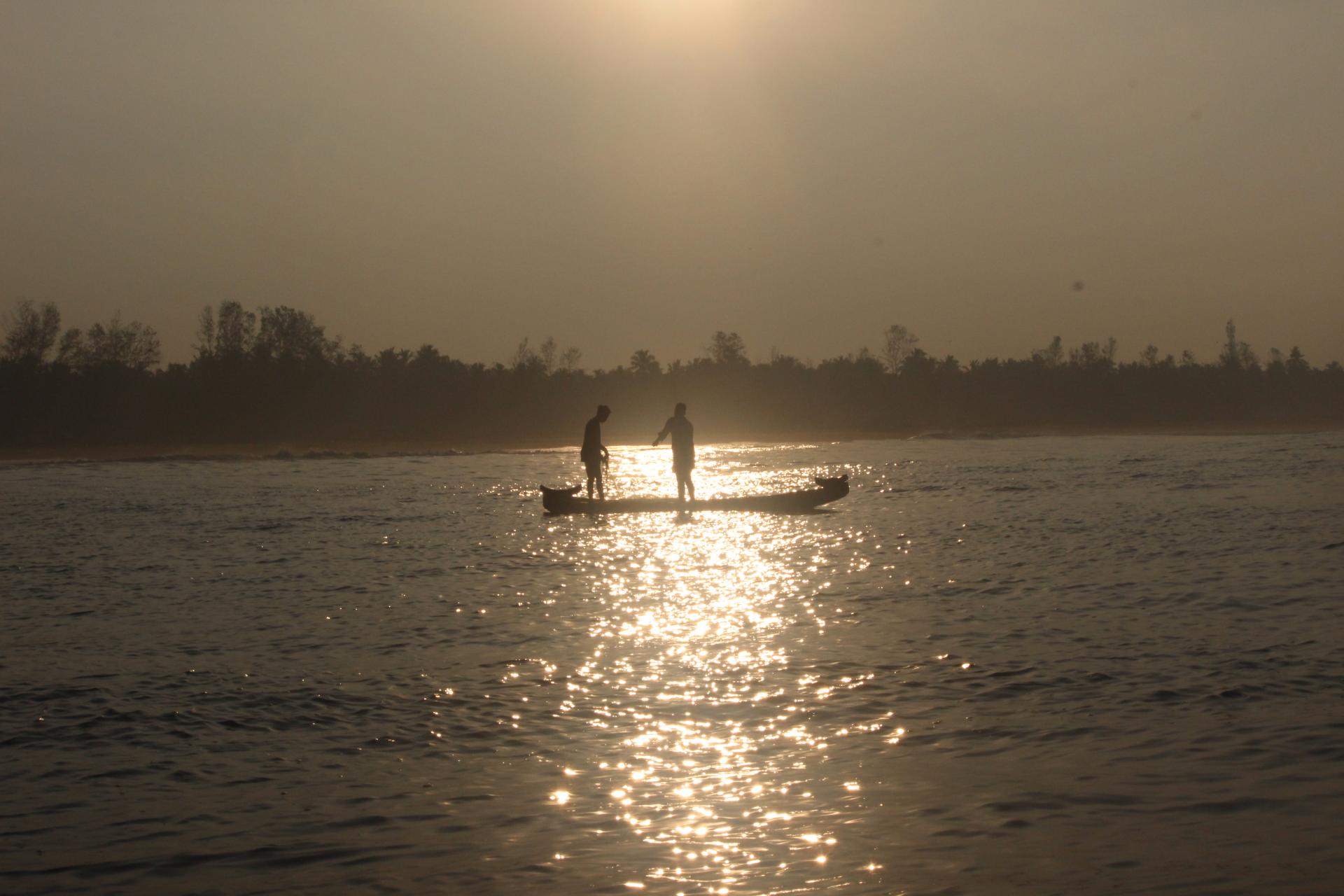
Not simply a way to organize people, our governance created a sense of belonging. We did not see ourselves as separate households living beside the sea, but as one community bound together by it. When the catches were plentiful, the joy belonged to everyone. When the sea claimed a life, grief was equally shared. No family mourned alone, no family was expected to face hardship alone.
The beach and intertidal zone remained shared spaces where people of all ages gathered to learn, deliberate, celebrate, and support one another. The beach was also where governance became visible—where knowledge was passed on, relationships were strengthened, visitors were welcomed, returning fishers were received, and collective responsibilities were renewed. Elders, widows, persons with disabilities, pregnant women, children, and families who had lost fishers were supported through the generosity of the community, sustained by the sea itself. We worked together during fishing, festivals, and times of crisis. Cooperation was a way of life.
Collective decisions carried collective responsibilities and were respected because they were made for the well being of the whole village. Belonging meant accepting responsibilities towards one another. When exceptions were necessary, they were expected to be fair, transparent, and guided by genuine need. Leadership was valued for its ability to maintain harmony, resolve disputes, and build consensus. Beneath all of this was trust—the quiet foundation that held our governance together.
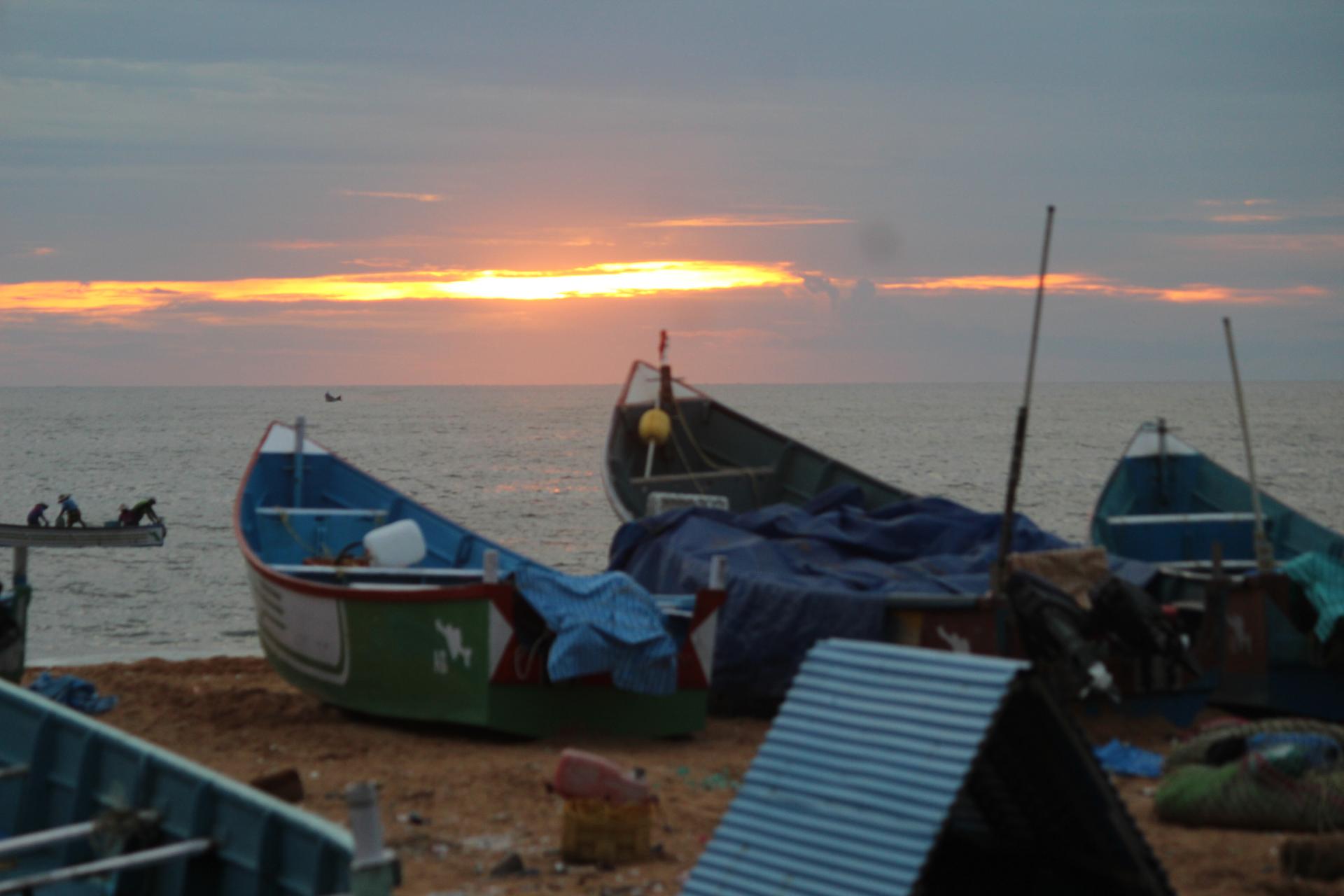
Mukkuvar fishers continue the traditional practice of artisanal fishing at sea with a catamaran.
Our governance sustained a reciprocal relationship with the sea by recognizing that it has its own rhythms, seasons, and boundaries. Fishing was guided by the changing seasons, the abundance of marine life, the weather, and the breeding cycles of fish. We adapted where, when, and how we fished because we understood that the sea would continue to provide if it was treated with respect and care. Taking only what was needed reflected trust in the sea’s continued generosity, rather than fear of scarcity.
We also understood that some places belonged to the sea itself. Rocky reefs, estuaries, beaches, and the seabed were not simply places to be used, but living parts of the coastal ecosystem that carried their own responsibilities. Leaving them undisturbed allowed marine life to regenerate and the sea to maintain its own balance. Our Elders often reminded us that even the sand in estuaries belonged to the sea. It moved with the seasons, shaped the coastline, and sustained healthy estuarine ecosystems. When destructive fishing methods, sand mining, harbors and port development, or other activities threatened these relationships, the community responded collectively—not to enforce rules for their own sake, but to uphold our responsibilities to the sea and to future generations. In our governance, wisdom was measured both by knowing when to harvest and also when to refrain.
Our governance endures because each generation renews it. Learning begins by watching, continues through doing, is deepened through questioning, and gradually becomes responsibility. Only then does it become governance. Oral histories, family conversations, and cheluparachil—the practice of sitting together to share stories related to the sea-connected environmental change with lived memory and strengthened relationships across generations. As the seasons, weather, fish, and technologies changed, so, too, did our knowledge. Governance therefore endured not because it remained unchanged, but because every generation renewed it with humility and care.
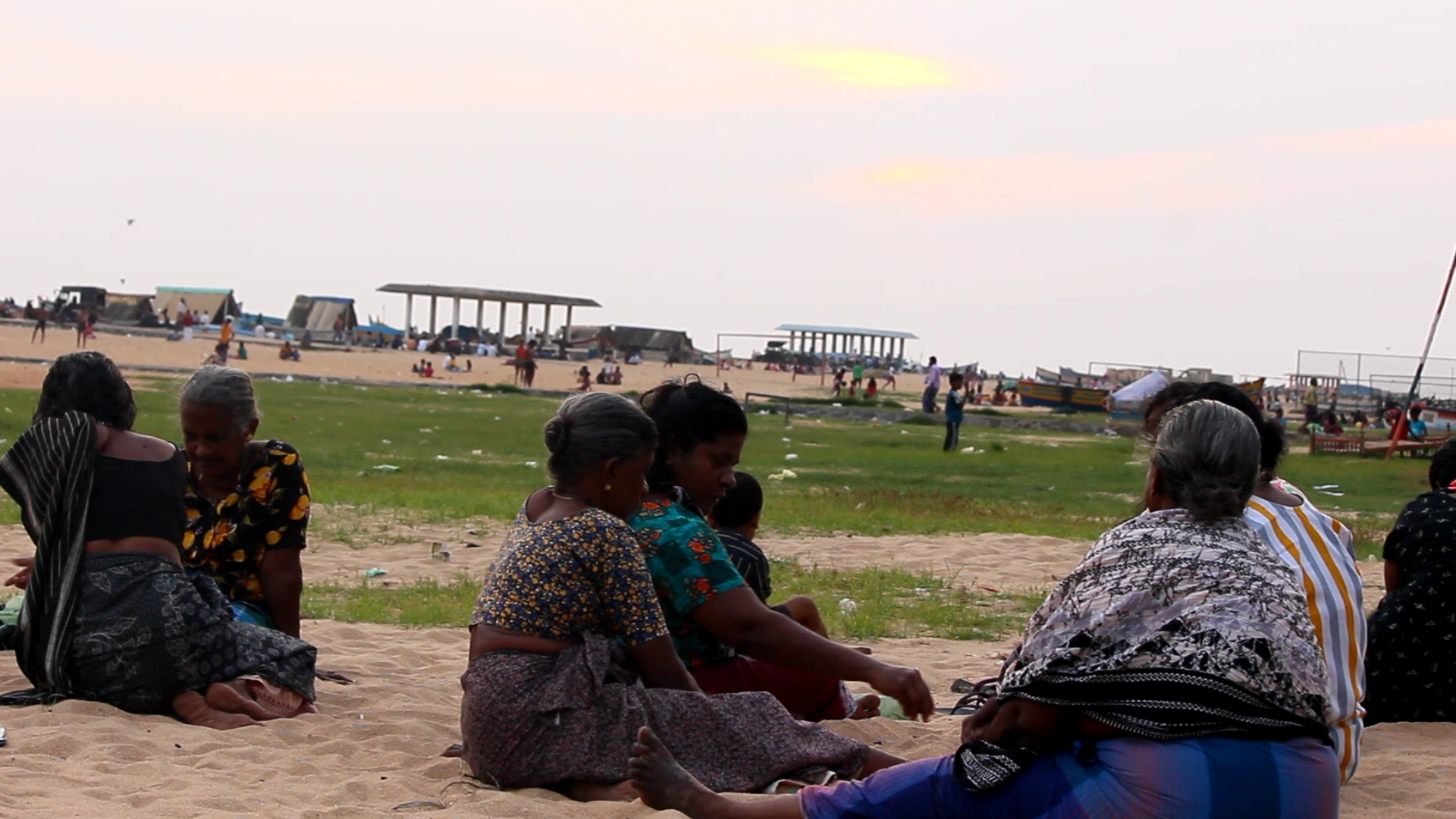
Our governance did not end where the land met the sea. It extended across a living seascape that generations of our People had traveled, named, understood, and cared for. This was our territory, not because governments drew boundaries or issued legal titles, but because relationships with these places had been built over generations. As new technologies expanded our journeys into more distant waters, younger fishers continued to explore alongside experienced knowledge holders, extending this relationship while remaining guided by customary values. Every fishing ground, reef, and current carried meaning. Places that sustained our lives were remembered through names, reflecting generations of observation, experience, and use. These names formed living mental maps that guided navigation long before coordinates appeared on charts.
Different places also carried different responsibilities. Our territory was never simply where we worked. It was where our memories lived, where our ancestors had traveled, where our stories were anchored, and where future generations would belong—from the beaches and estuaries to offshore fishing grounds, from the seabed below to the stars above that guided our journeys.
Colonial institutions, organized religion, State governance, modern education, migration, and changing political and economic realities have all influenced our customary governance in different ways. They have not erased our enduring values of collective responsibility, reciprocity, and care for our marine territory. Like the sea, our governance has never been a fixed system, but has evolved with each generation. New technologies, formal education, scientific knowledge, and changing livelihoods have created new opportunities to strengthen community well being when they are brought into dialogue with Indigenous Knowledge. They have challenged the collective responsibilities that once held our communities together. State laws and policies increasingly define our customary marine territories as public waters or government property, creating uncertainty about who is responsible for caring for our sea and coastal territories.
The future of our governance does not depend on returning to the past. It depends on carrying forward the values that have always sustained us: responsibility, reciprocity, respect, humility, and a willingness to keep learning. The sea will always remain unpredictable. Neither Indigenous Knowledge nor scientific knowledge removes that uncertainty, but together they can strengthen our judgment and deepen our understanding. As long as we continue to nurture our relationships with one another, with the sea, with our coastal territories, and with future generations, our Indigenous self-governance will continue to evolve as a living expression of who we are.
In 2025, the Mukkuvar Collective received a Keepers of the Earth Fund (KOEF) grant to support their work.
Johnson Jament (Mukkuvar) holds a PhD from the University of Northampton and is an Honorary Research Fellow at the University of Sussex (UK). He founded BlueGreen Coastal Resources, a social enterprise supporting Indigenous-led research, education, and the protection of biocultural diversity, bridging traditional knowledge and scientific practice.
Lisba Yesudas (Mukkuvar) is an Assistant Professor at St. Xavier’s College in Thumba, Kerala. She holds a PhD from the University of Kerala on the Indigenous coastal language, has published books and journal articles in the regional language of Malayalam, and has represented her community at UN ocean conferences.
Leno Ignatious (Mukkuvar) is a youth leader and graduate in English Language and Literature. He plays a pivotal role in bringing his community's voices to national and international platforms. Currently, he volunteers as the Program Coordinator for the Artisanal Fishers Association in Kerala.
Romer Ignatious works as Web Administrator and Developer for BlueGreen Coastal Resources. Previously, he served as Editor for a community radio station. He is also a photographer and engages in on-site and online data collection and in short film and documentary projects.
Jima Rose Marypushpam (Mukkuvar) holds a Master's degree in Social Anthropology from the University of Sussex (UK). She is currently a researcher at BlueGreen Coastal Resources, where her work focuses on developing a network of women in fisheries and documenting the experiences, challenges, and concerns of women within the fishing communities.
All photos by Romer Ignatious
Main photo: Mukkuvar community members engaged in their customary activities along the seacoast.