
Long before the concept of modern democracy emerged in ancient Greek political thought, the Minahasan Peoples had already developed their own system of governance rooted in consensus-based deliberation, equality, division of responsibilities, and collective accountability. Unlike societies structured around rigid social stratification, Minahasan society embraced the principle of human equality. Individuals were seen primarily based on the roles and responsibilities they assumed within their communities, rather than social status.
Minahasan people earned respect because of the duties they fulfilled, the knowledge they possessed, or the responsibilities entrusted to them, a principle reflected in a Tontémboan proverb: “Si tou peleng masuat, mapute waya. Cawana se pakuru’an, cawana se paruku’an,” which means, “All people are equal; no person is meant to be worshipped, and no person is meant to worship another.” This understanding of equality became one of the fundamental pillars of Minahasan governance. Leadership was understood as a social responsibility entrusted by the people, and important decisions were not made unilaterally. Instead, they emerged through collective deliberation involving the community.
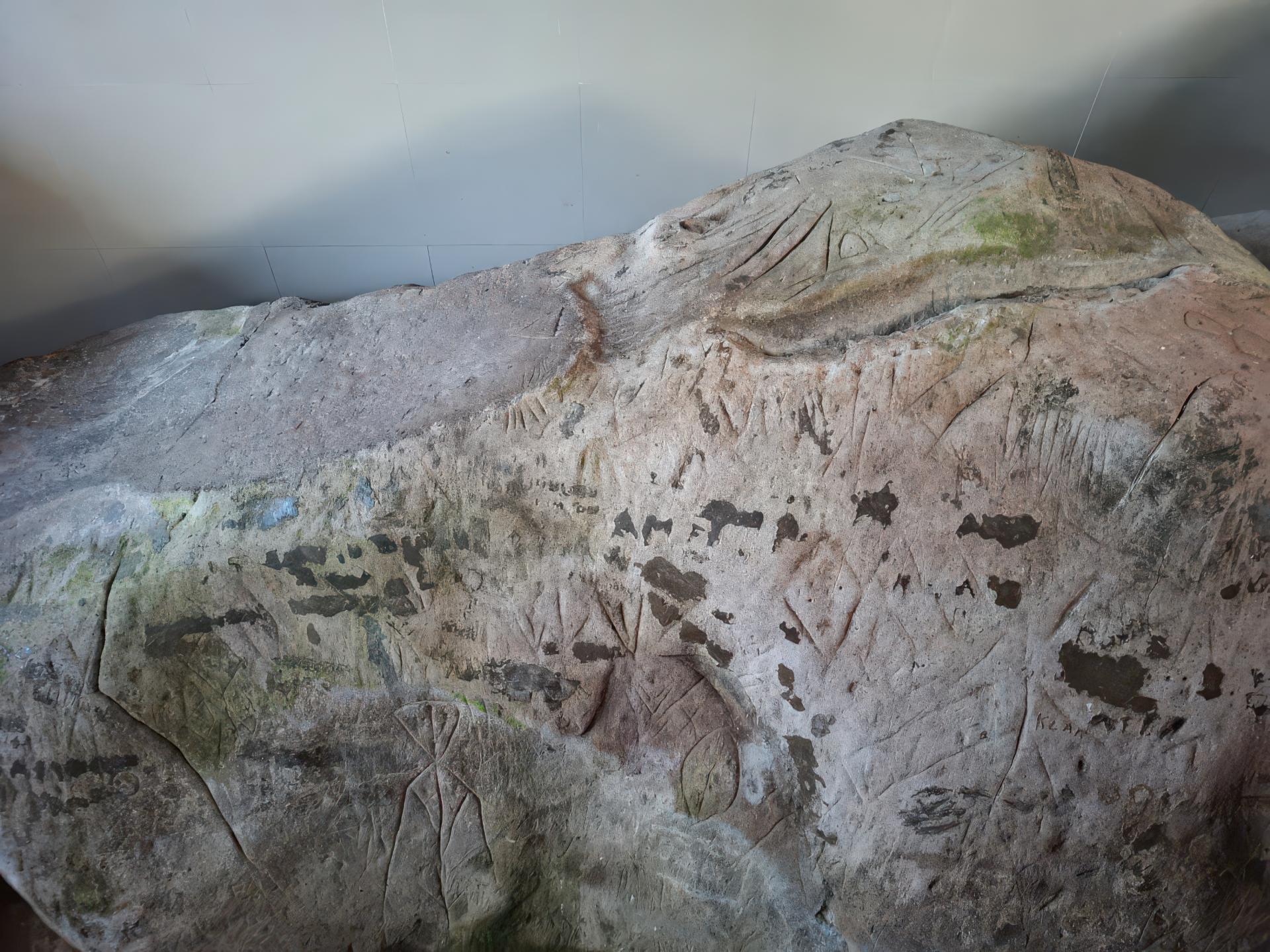
Located in Tontemboan Indigenous Territory, "Watu Tumotowa Wangko" (The Great Altar Stone) or also called "Watu Rurumeran Ni Empung" (The Stone Throne of the God) or commonly known as "Watu Pinawetengan" (The Stone Where Division Were Made) contains etchings or engravings that symbolizes a directive or decision.
Architecture of Minahasan Governance
At the most fundamental level, Minahasan governance was rooted in the taranak, a kinship group or family clan. Within each taranak were three key figures who carried different responsibilities: the pahéndon tu’a, a person recognized for their wisdom and ability to make decisions for the benefit of all members of the clan; the wali’an un taranak, the ritual leader responsible for maintaining the spiritual relationship between members of the taranak, their ancestors, and the natural world; and the si lumulukaz or tétérusan, responsible for the physical security and protection of clan members.
From the taranak, several family groups formed a wanua. A wanua was the primary space where the social, political, economic, and spiritual life of the Minahasan Peoples took place. It was the most fundamental unit of community where important decisions concerning collective life were made and implemented. Each wanua had a leadership structure composed of figures who carried specific functions. The tona’as umbanuа served as the primary leader of the community, the wali’an wangko’ led rituals and maintained the spiritual relationship of the wider community, the tétérusan wangko’ was responsible for the security and defense of the community, and the gumigirot carried out functions related to dispute resolution and justice.
Beyond the wanua, the walak was based on geographical proximity and relationships between communities, while the pakasa’an was primarily formed through shared language, history, and ritual connections. There were also various tona’as who possessed specialized knowledge and expertise in particular fields, respected for their abilities and the responsibilities they carried for the benefit of the community. Even a young person could become a tona’as if they fulfilled the criteria known in Minahasan philosophy as sigha, enté’, wo wuaya—someone possessing intelligence, conscience, physical capability, and courage.
Together, these interconnected structures formed a system of self-governance that emerged from within the community itself, growing from social relationships, collective responsibility, and the community’s own needs.
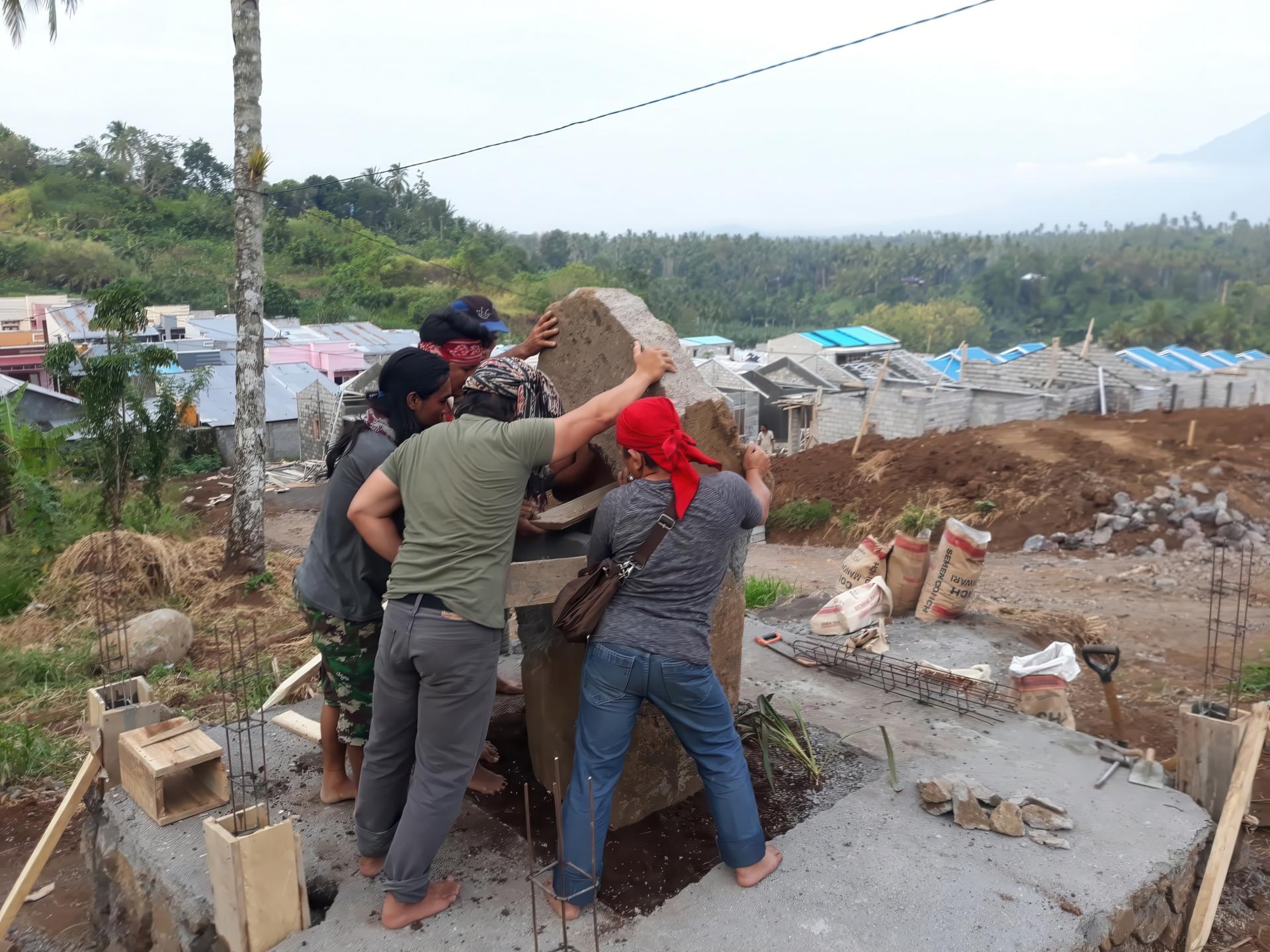
Restoring a waruga (Ancient Minahasan stone sarcophagi) in a housing area. Not only this is the act of honoring our ancestor, it is also an action to show that despite the land has been bought by the housing corporation, it will always belong to the indigenous people. Photo by Rinto Taroreh.
Displacement and Survival of Indigenous Governance
Minahasan governance was disrupted by colonialism. The Dutch implemented a centralized, hierarchical administrative system to monitor and control territories, frequently appointing the heads of the walak as district heads within the colonial administration—a strategy that allowed the Dutch to expand their influence through figures already recognized and trusted by local communities. As authority became controlled by the colonial government, the position of the wanua as the center of governance and community life gradually weakened, while the walak began to transform into an administrative unit more aligned with colonial interests.
The end of Dutch colonial rule did not automatically restore Minahasa’s Indigenous governance system. After Indonesia emerged as a modern nation State, it developed a governance structure based on nationally standardized administrative divisions. These new administrative boundaries did not always correspond with the social, cultural, and ethnic territories that had previously existed. In Minahasa, Indigenous territories that had historically developed through shared histories, languages, and cultural identities were divided across several administrative regions.
Although Minahasan governance structures are no longer formally recognized within the State administrative system, traditional Indigenous self-governance has not completely disappeared. In many parts of Minahasa, village leaders are known as Hukum Tua, a position that has a historical connection to Minahasan leadership traditions, as they are directly elected by the village community. When issues arise that affect the entire community, a sidang adat, or Indigenous council meeting, will be convened as a forum for communities to reach decisions through deliberation.
An important element of the sidang adat is the role of the taranak as the community’s basic social unit. Each taranak is represented by a pahendon tu’a, who attends as a representative of all members of their clan. During the council, the pahendon tu’a each carry a piece of tawaang, symbolizing that they have received a full mandate from their community to speak, express views, and make decisions on behalf of the taranak they represent. Decisions produced through this process are outcomes of community representation.
Indigenous councils are generally led by three, five, seven, or nine Indigenous leaders; the number nine holds profound meaning as it is regarded as a symbol of human completeness. The use of an odd number of leaders also reflects the importance of balance and wisdom in decision-making processes, while ensuring that deliberations can reach agreements accepted by the entire community.
Equally important, decisions made by Indigenous councils are binding and must be respected by all community members. Indigenous sanctions may take the form of fines in accordance with the provisions applicable within each community. However, the most severe form of sanction is not a monetary fine, but social exclusion from community life. In societies where social relationships are built on kinship, mutual cooperation, and a sense of belonging, losing acceptance within the community is a far greater consequence than material punishment.
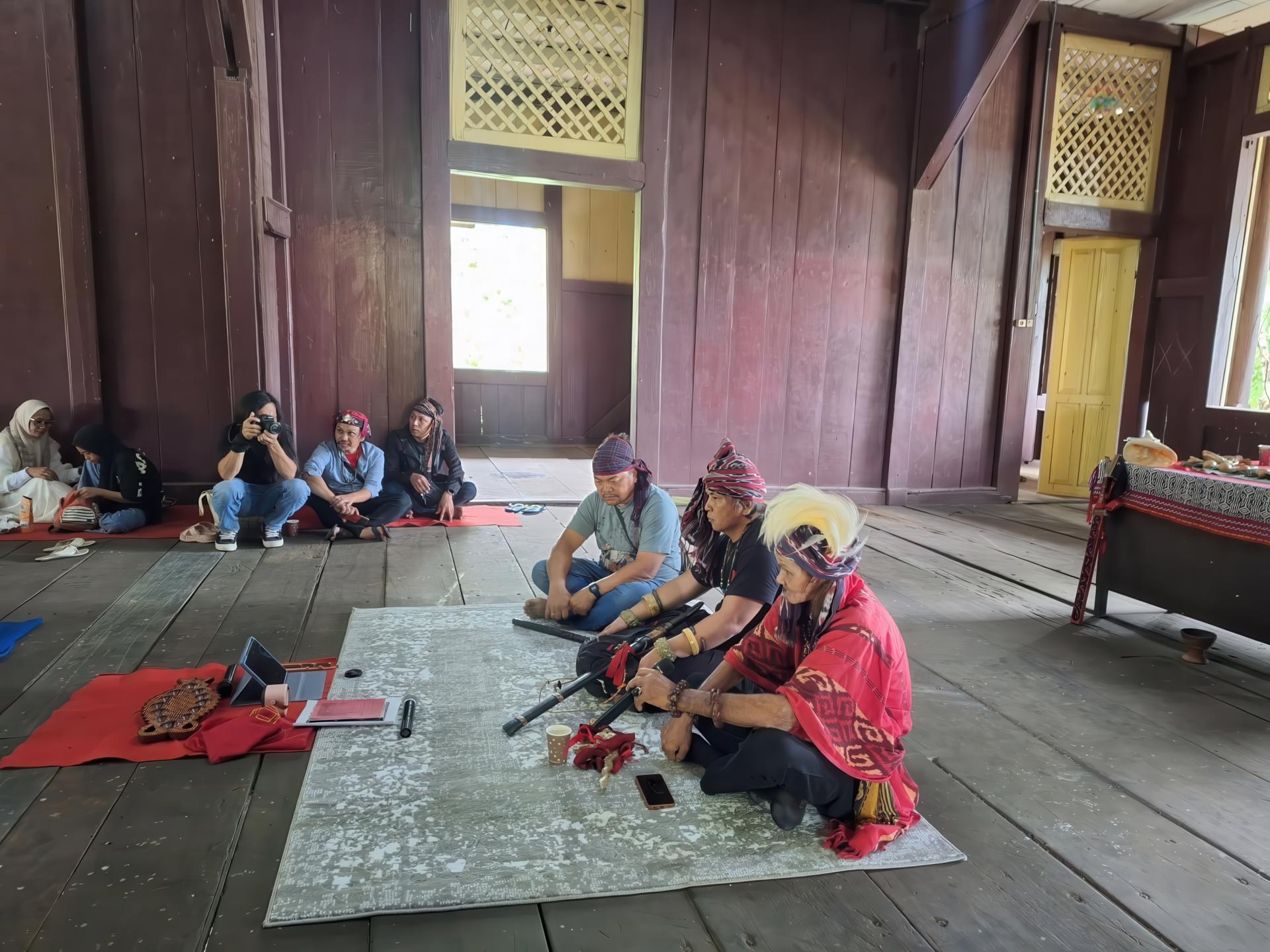
Minahasan Elders and representatives during a meeting.
Reclaiming Identity, Rebuilding Governance
The active involvement of Indigenous youth in shaping regulations is providing the foundation for recognition of their existence, through involvement in historical documentation, Indigenous territory mapping, revitalization of Indigenous institutions, and development of public policies. The Tomohon city government recently invited Indigenous youth to participate in drafting the Regional Regulation on Indigenous Peoples. If enacted, the instrument is expected not only to provide legal certainty for the Tombulu community, but also will ensure that local government development respects Indigenous rights and decision-making systems.
This experience shows that reclaiming Indigenous self-governance does not mean just rebuilding past Indigenous governance, rather, creating spaces where Indigenous governance principles, community participation, social legitimacy, deliberation, and respect for Indigenous institutions can coexist alongside modern governmental systems. If successful, Tomohon will offer a model of how Indigenous communities and local governments can build an equal relationship within a democratic nation State.
History has taken the Minahasan Peoples through colonialism, centralized governance, and urbanization. This journey has not completely erased how Minahasan society understands leadership, deliberation, and collective responsibility. What needs to be reclaimed are not the exact past institutional structures, but the right of Indigenous communities to participate in determining their futures. Indigenous governance is a living, social practice that ensures that the values that have sustained Minahasan society for centuries will continue to shape the future.
Gerard Tiwow is a journalist belonging to the Tombulu’ Tribe of the Minahasa Peoples in Tomohon, Sulawesi Utara, Indonesia, and a former CS Youth Fellow.
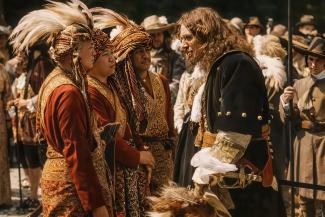
Top photo: 1920s reenactment (colonized and processed) of 1679 Tombulu Elders meeting with the Dutch East India Company.
All photos courtesy of Gerard Tiwow.