
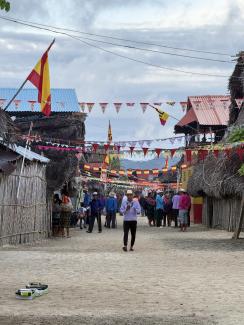
Gunayala is a leading example of Indigenous autonomy and self-government in Abya Yala. The Guna Peoples have been defending their territory, their identity, and their own form of governance long before international instruments such as the UN Declaration on the Rights of Indigenous Peoples formally recognized the rights to self-determination, autonomy, and self-government. Our Peoples have been practicing their own forms of organization and decision-making for centuries, and today we continue to live and exercise these internationally recognized rights in Gunayala.
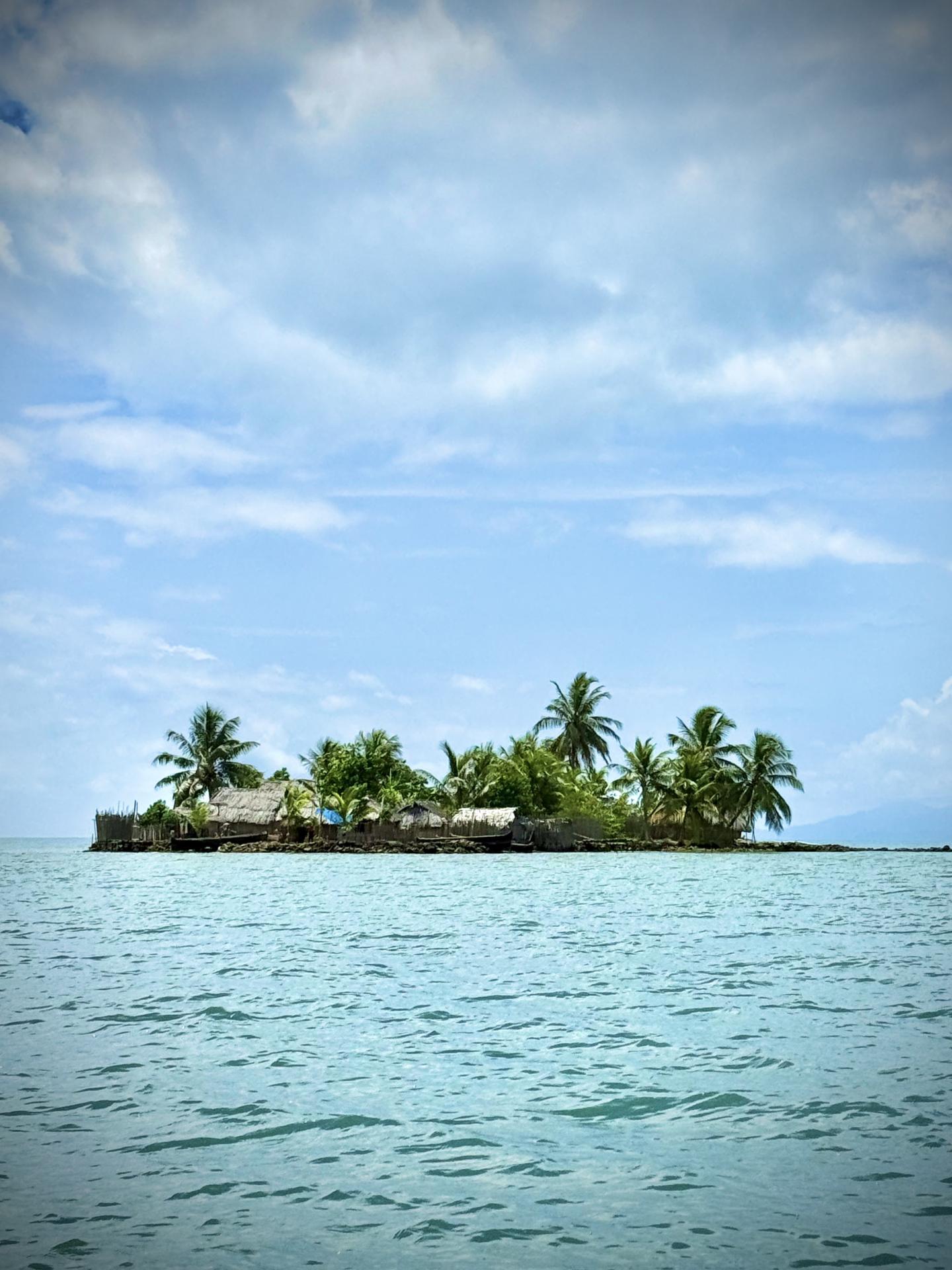
The ancestral territory of Gunayala Comarca is located on the Caribbean coast of Panama and extends to the Colombian border, comprising mainland, forests, rivers, mangroves, coastlines, the sea, and numerous islands where our communities are located. It is the home of our Guna ancestors, and is where we continue to live and pass on our knowledge and our way of understanding the world. Its coastline is approximately 315 kilometers long and includes more than 400 small islands and islets; we often describe our communities as seaside villages. Our people traverse this territory from the mountain ranges, down its rivers, through the forests, mangroves, and beaches until we reach the sea, the islands, the coral reefs, and the white sands—places that are not only part of our geography, but also our memory, our spirituality, and our struggles.
Our autonomy did not originate from a State law, and our form of self-governance existed long before its formal legal recognition. Law 16, enacted on February 19, 1953, legally organized what was then called the Comarca of San Blas, now Gunayala. Subsequently, other laws and judicial decisions have recognized our organization and autonomy.
Fully understanding our autonomy also requires remembering an event that profoundly marked our history: the Dule Revolution of 1925. The Dule, or People’s, Revolution was a decisive moment in the defense of our rights, our territory, our culture, and our way of life against the Panamanian government’s policies that sought to “civilize the Indians of San Blas,” as our people were then known. In truth, we already had our own civilization, with authorities, norms, knowledge, spirituality, and a worldview that guided our lives long before the Republic of Panama existed. The Revolution did not create our autonomy, but rather defended and reaffirmed it. This year, as we commemorate 101 years since that feat, it continues to hold profound meaning for us.
The autonomy that our ancestors defended more than a century ago does not belong only to the past; it endures and is exercised every day in our communities. One of the spaces where our form of self-governance comes to life is the Onmagged Nega, the House of Congress, where the community gathers to listen, dialogue, and reflect on the issues that affect us, and to make collective decisions. There, our Sagla (traditional authorities) guide us through their songs, which transmit the memory, knowledge, and teachings of our ancestors, while the Argar help interpret that knowledge and relate it to the situations the community experiences in the present.
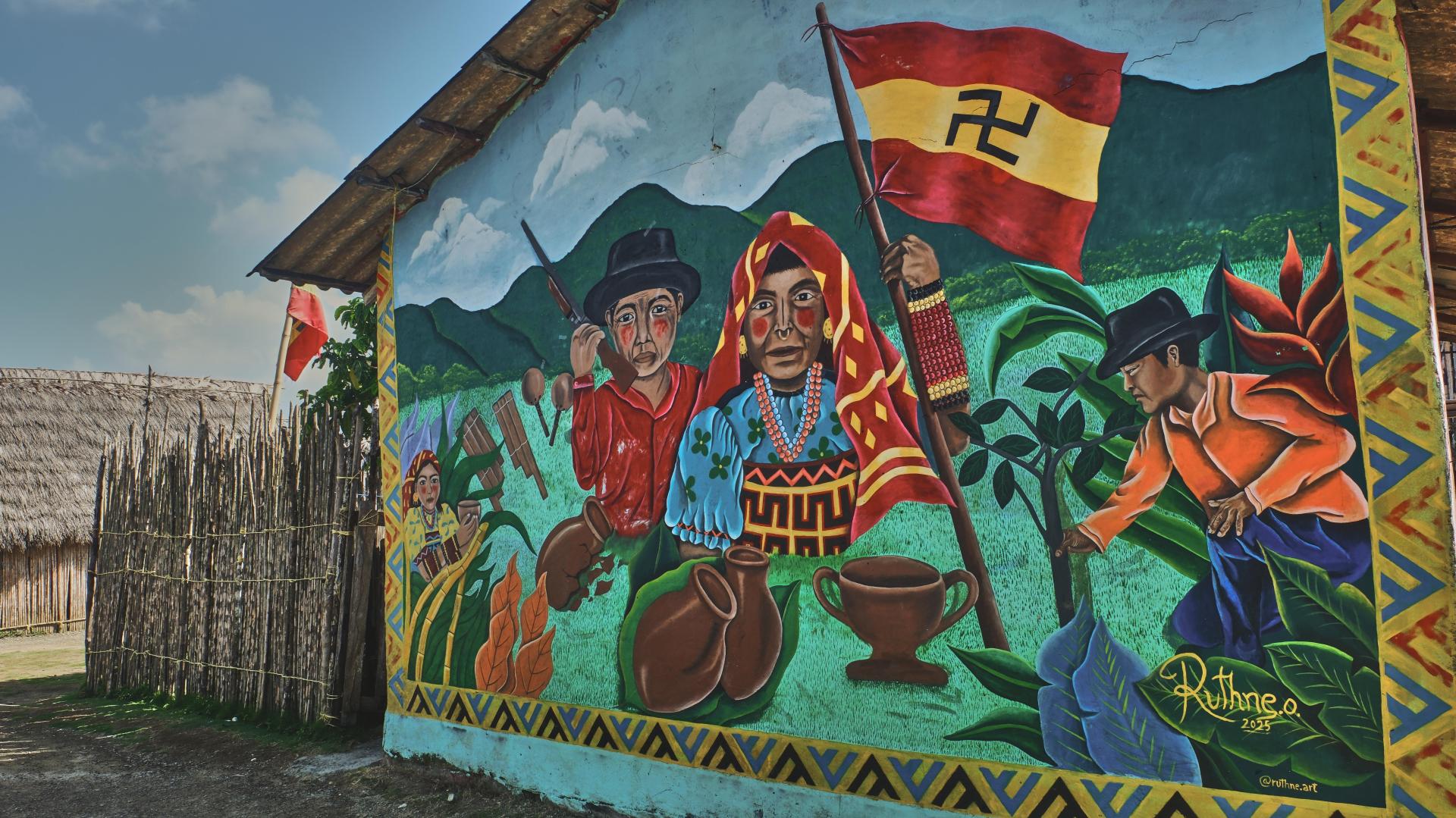
Murals in Gunayala reflect the Guna way of life, which bridges land and sea. Photo by Julien Defourny.
For us, song is not separate from governance. In our worldview, governing means not only managing resources, approving laws, or exercising authority, but also guiding, listening, advising, transmitting knowledge, and assuming responsibility toward the community. From each of our communities, a broader collective structure is built that connects the 49 communities of Gunayala through the Guna General Congress, where our people have organized to govern themselves collectively.
The Congress is our highest political and administrative body and addresses matters related to territory, natural resources, education, and other issues that affect the lives of our communities, as well as maintaining relations with the State and other institutions. Alongside it is the General Congress of Guna Culture, responsible for strengthening our Traditional Knowledge, spirituality, songs, language, and other cultural expressions that form our identity. This relationship between the two institutions demonstrates a fundamental tenet of our model: governance, culture, spirituality, knowledge, and territory are not separate, but interconnected.
Decisions in Gunayala are made collectively, guided by our customary law, norms, and worldview. The Igardummadwala, our Fundamental Law—together with the statutes, regulations, and resolutions from our Congresses, as well as community norms—forms our unique system and expresses our right to govern ourselves according to our own rules and institutions. This takes on special importance in the face of external projects or interests, because self-government cannot be reduced to mere recognition written in a law. It only becomes real in practice when a Peoples can make decisions about matters that transform their territory and way of life.
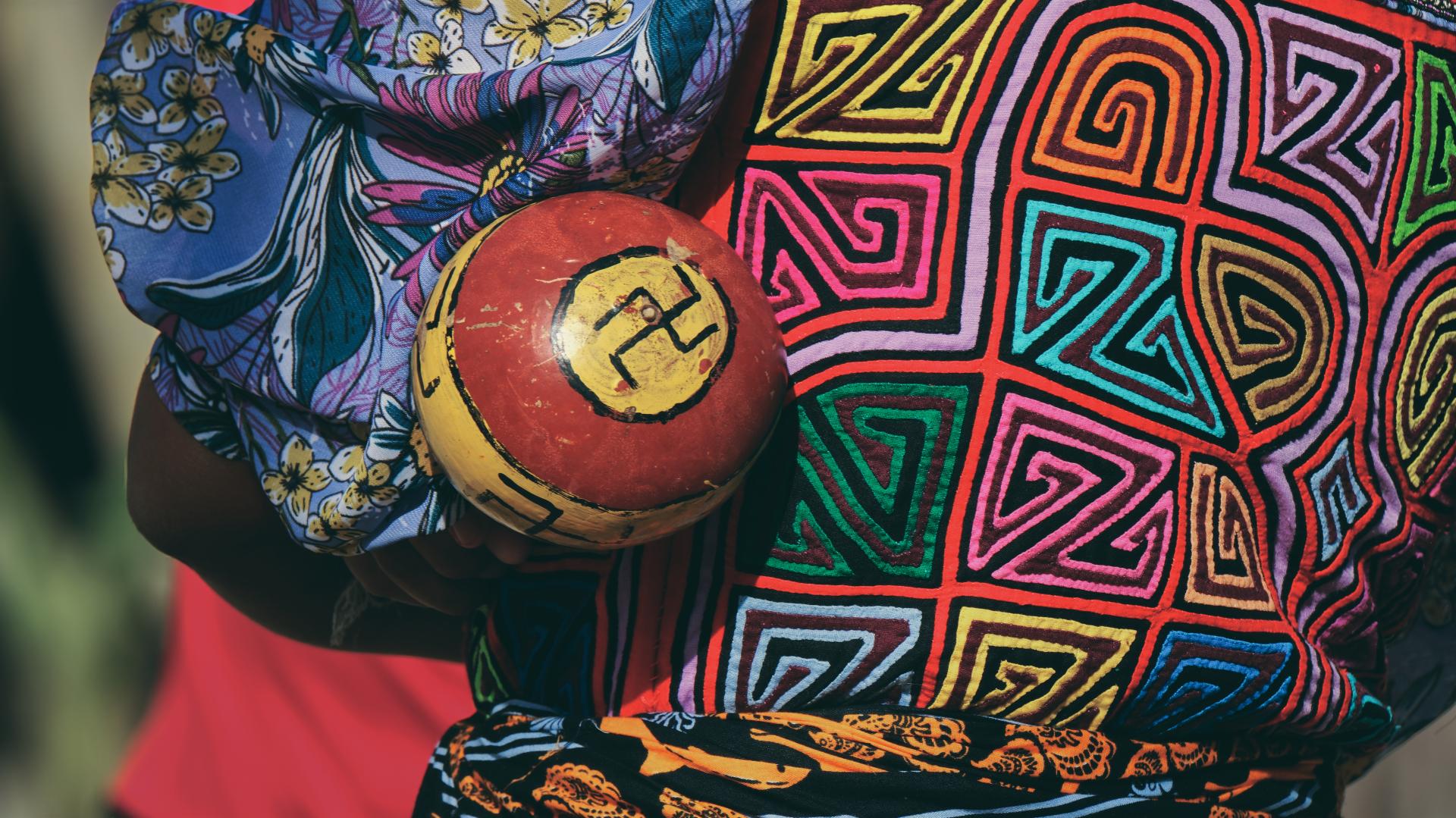
Maraca with a Naa Ukuryaa. This symbol has been part of Guna culture for centuries, representing the octopus that created the universe, the four cardinal points, and the origin point of humanity. Photo by Julien Defourny.
Over time, our autonomy has been tested by various interests in our territory and resources, and in recent years, by proposals for development megaprojects such as the Central America Electrical Interconnection System. In the face of these situations, our authorities, assemblies, resolutions, and internal norms serve as tools for exercising our autonomy. Governing ourselves means having the ability to say no, to set conditions, and to decide what is compatible with our vision for our territory.
To see Gunayala as a model of self-government does not imply it is a perfect system, or one frozen in time. Our self-government is a living system that must continue to adapt to the challenges of today. Some of our practices and forms of knowledge have weakened over time, and many of our young people live outside the territory. Our communities are undergoing social, economic, cultural, and environmental transformations, while climate change increasingly impacts our coasts, islands, and ecosystems. Maintaining our autonomy entails acknowledging these realities and continuing to strengthen our heritage so that our language, knowledge, norms, and unique forms of organization remain meaningful for future generations.
I am proud to note that in 2017, I helped found what is now known as the General Congress of Guna Youth—a space dedicated to strengthening our people’s leadership, conservation efforts, and values in Gunayala. We also cannot overlook the young people living outside the territory who maintain ties to their communities and return to visit their families, participate in traditional ceremonies, celebrate community anniversaries, or commemorate the Guna Revolution. This relationship with new generations is fundamental to ensuring that our culture, knowledge, and self-governance continue to strengthen over time. Women also play a vital role in this continuity, as they participate in passing on our language, knowledge, and cultural practices, and in shaping new generations.
Likewise, our relationship with the land is expressed through knowledge systems like Nainu, our traditional agricultural practice. Passed down through generations and rooted in an understanding of cycles, crops, and land management, it reminds us that our way of governing ourselves is deeply intertwined with how we care for life. In the face of biodiversity loss and climate change, Gunayala’s experience has much to offer—not because we hold all the answers, but because over generations, we have learned that there can be no autonomy without territory, no territory without knowledge, and no knowledge without community. Our experience demonstrates that recognizing the rights of Indigenous Peoples means more than simply outlining a territory on a map. It requires respecting their authorities, institutions, knowledge systems, and norms, and, above all, their capacity to make collective decisions about their present and future.
Our autonomy is not merely a right recognized by laws or international instruments. It is a practice we continue to exercise, defend, and strengthen through the Onmagged Nega, our Congresses, our norms, the transmission of our knowledge, and the defense of the territory inherited from our ancestors. Perhaps one of the greatest contributions Gunayala can share with other Indigenous Peoples and the world is demonstrating that self-governance is not a relic of the past, but a living expression of our self-determination and a collective commitment to safeguarding who we are, our territory, and the legacy we will leave to future generations.
--Iniquilipi Chiari-Lombardo (Guna) is Deputy Secretary of the Guna General Congress. May Pérez (Guna) is Cultural Survival Panama Advocacy Coordinator.
Top photo: Uggubseni community in the Gunayala Comarca in Panama. Photo by Iniquilipi Chiari-Lombardo/TV Indígena.
