By Iza Harris
The Boruca Peoples have faced immense imposition from outsiders since the Spanish conquest in the 1500s, spanning from colonialism to the current governance structure under the Democratic Republic of Costa Rica. Costa Rica became an independent state in 1838, though Indigenous communities there did not receive legal recognition until 1977 and did not gain the right to vote until 1994. Despite some legal progress toward recognizing the need for self-determination and representation of Indigenous Peoples, the federal government has essentially carried the torch of the conquistadors.
Currently, governance operates through Integral Development Associations (ADIs), local governing bodies intended to represent each Indigenous territory. Within Boruca communities, the ADIs have encouraged passivity—a stark contrast from the communal ethos that has long been central to Boruca life. Carlos Morales Lázaro (Boruca), a former ADI vice president, says that the government’s failure to implement legal procedures to protect Indigenous Peoples’ rights and defense against invading Peoples is “proof of institutionalist racism, a relic of colonialism... which presents this country as an ecologist’s paradise to the outside world while failing to seriously protect ethnic groups who follow a model of ecologically sound agricultural practices.”
Brún̈cajc community leader José Ángel says that before the installation of the ADI, both designated Boruca territories (Rey Curré and Boruca Village) were governed by an active citizenry who were keen to work on communal projects and mutual aid and devoted to raising future leaders. The majority of Borucan community members agree there has been a retreat from community engagement as power became concentrated within the development organization.
In Boruca Village, there was a time when various committees would work in tandem. When public streets and spaces needed cleaning, for example, the town would get together in the hundreds and do their share. It was more than just working together to solve problems; it was a time of celebration and joy in shared spaces. “We had more autonomy before today, [whether] there were problems or times of celebration. It was a communal decision where different committees worked together,” Ángel affirms.
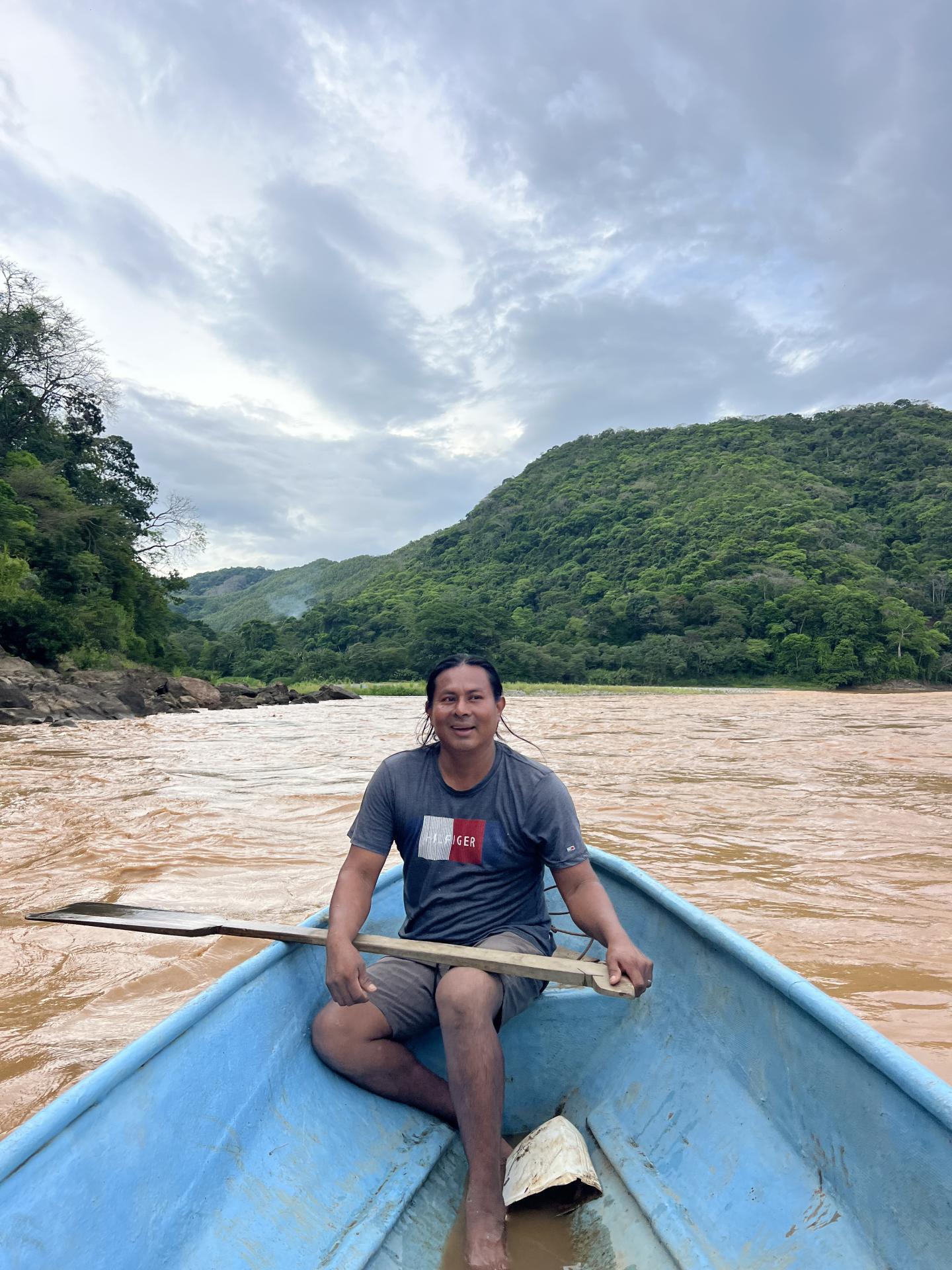
The day before we spoke, Ángel recalls that heavy rains nearly washed the village’s bridge away. Before the ADI, everyone would have been energized to resolve the issue, to bring shovels and machetes and cut down nearby trees to fix the problem. Now, he says, “the municipality’s machinery comes, it gets fixed. And if not, no one helps.” The sense of responsibility to participate in civil services has been snuffed out by bureaucracy, while the disconnect between organizations has grown. Now, each enterprise within the territory receives funding that must be accounted for and solely distributed toward the needs of each individual organization—an approach that inhibits cross-collaboration and resolution of issues. “This type of regulation killed the form of organization that the town had,” Ángel says.
Ángel’s comments reflect the sense that laws and regulations applied to the Indigenous territory are “closing us off,” reducing community participation to individuals doing their day jobs and returning home without an interest in further resolution of issues. Years ago, he worked as a teacher in the local reservation school. At that time, he says, teachers had the power and influence to teach the importance of communal thinking and action within the classroom. Now, however, a culture of passivity has infiltrated the schools, and teachers are no longer personally invested in creating future leaders in their students. “If they were to train leaders [today],” Ángel says, “they would be leaders who are just looking around to see what they can grab, how they can benefit from being there.”
The underlying sentiment of Ángel’s comments is that imposed governmental structures have usurped the sense of communal responsibility, heightening individualistic, self-serving, and financial motivations of people throughout the governing body and town. As a result, people are less willing to participate in projects without compensation. The Indigenous collectivist mindset has been eroded by the disease of the capitalistic mindset, which has been imposed on these Indigenous territories.
Despite the growing distance between governance and community, there are still occasions where the Boruca Peoples are exercising communal identity and the power exerted within it. One such example is the community’s fierce fight against the development of the Diquís Dam, a project proposed by the Costa Rican Electricity Institute (ICE), a state-owned utility. The project was initially proposed in the 1970s, then redesigned and publicly launched in the mid-2000s, designed to be the largest dam in Central America. It would have had a catastrophic impact on terrestrial and marine ecosystems, causing flooding and disruption to the Boruca community in Rey Curré.
The fight against the installation of the hydroelectric dam was waged by Maria Lázaro’s activist grandfather, Don Christiano Lázaro. In a 2024 article in "Terralingua," she detailed the beginning of the fight: “In 1978, the Peoples of Ujarrás, Salitre, Cabagra, Térraba, Boruca, and Yímba Cájc took over the civic center of Buenos Aires canton as a form of protest and rejection of the project.” This mass mobilization of people included Indigenous leaders, community members, and various organizations who refused to be the victims of a massive imposition on their lands. The original project was projected to “displace 1,600 persons, including 500 Indigenous people.”
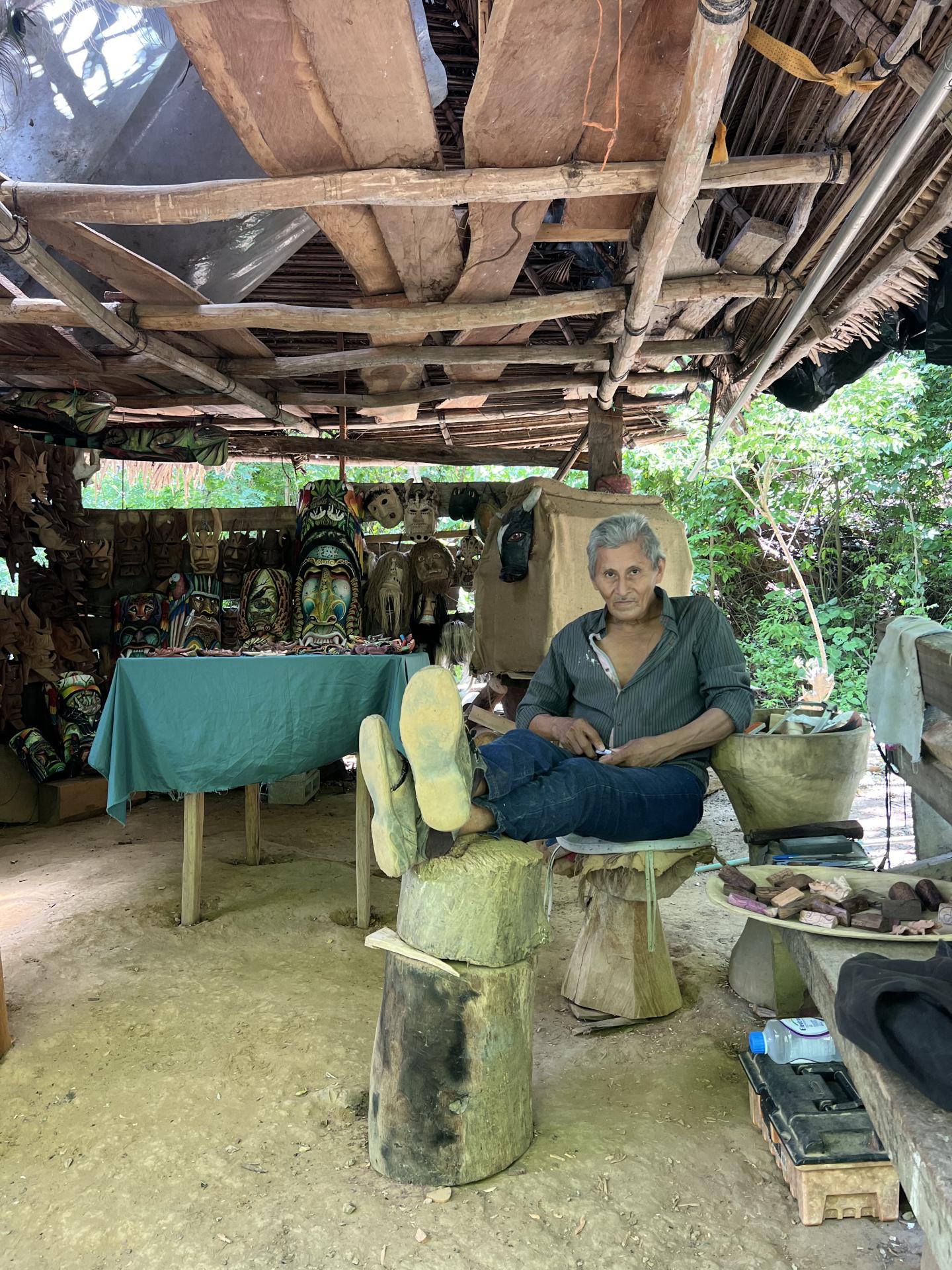
Rafael González.
Artisan and Elder Rafael González was one of the community members opposing the project; he participated in the various peaceful marches to Buenos Aires and La Merced Park in San Jose to the Legislative Assembly and the Presidential Palace. González spoke of the various community groups that spearheaded the resistance to the megaproject, such as the Mujeres con Espíritu de Lucha, or Women with a Fighting Spirit, as well as other men’s groups. He remarks that this $2.5 billion project would have only harmed local communities while lining the pockets of national institutions and international contractors. “The greed for money that comes along...that’s what spreads. Good ideas, good deeds are thrown in the trash,” he says.
There was plenty of back-and-forth regarding the legality of the project. In 2011, the Constitutional Court determined that it was constitutional “as long as the Indigenous communities were consulted within a period of six months from the notification of the ruling.”
Yet, no consultation was conducted, and therefore, the condition necessary to proceed was not met. The Indigenous communities involved were not interested in the offers made to relocate them in exchange for well-paying jobs. Speaking for the community, beloved Terriba martyr Jehry Rivera, now deceased, said, “We don’t believe in the promises of employment for Indigenous Peoples, as up until today it had been demonstrated that all the qualified and best paid personnel have been brought from the outside. Indigenous workers are used only to break rocks.”
The community’s fight was aided by the ADI, which filed a lawsuit against ICE, forcing workers off their land. The lawsuit corroborated that a consultation process never took place. Eventually, the fight was won, and in 2018, the project was indefinitely halted. The dynamics at play show the strength of the Boruca in their conflicts with neighboring Indigenous communities. The ADI played a role, yet was not the utmost factor of importance in pushing for the rights legally granted to Indigenous Peoples within their territories.
Leaders throughout the Boruca community hope that in the future, Boruca youth will be trained to be invested in their community and traditions. Morales Lázaro notes how vital it is that the Boruca Peoples find ways to maintain their identity and to critically reflect on the imposed and adopted forms of education taught to their children. “We must not forget that [imposed] education tells us that learning happens within four walls. But the Indigenous way of life has always been to learn by observing, by example,” he says. “Young people need to be trained, and more importantly, to gain experience” in local organizing and communal activity, so that “when we older people aren’t here anymore, they will continue the defense of rights.”
Maria, who is young and community-oriented, is frustrated with the lack of involvement of her Boruca peers in the fight for their human rights and representation. Her approach is to follow in the footsteps of her justice-seeking, community organizer grandfather, and to join her peers across Salire, Terriba, and other Indigenous communities. She acknowledges that the objective of the state government is to divide so Indigenous people don’t see their collective needs, because “all their fights are connected.” Fortunately, having inherited her grandfather’s temperament and sense of duty, she is carrying the torch for the shared struggle of a resilient and culturally vibrant community.
-Iza Harris is a recent graduate from Pitzer College with a Bachelor of Arts in International Political Economy whose work centers on justice, indigeneity, and decolonial perspectives as pathways toward a more environmentally conscious, caring, and equitable society. During her time at Pitzer, she studied abroad in Nepal and Costa Rica, conducting in-depth research with the Raute and Boruca Indigenous communities to uplift the voices and perspectives of communities whose experiences are often unheard or dismissed.
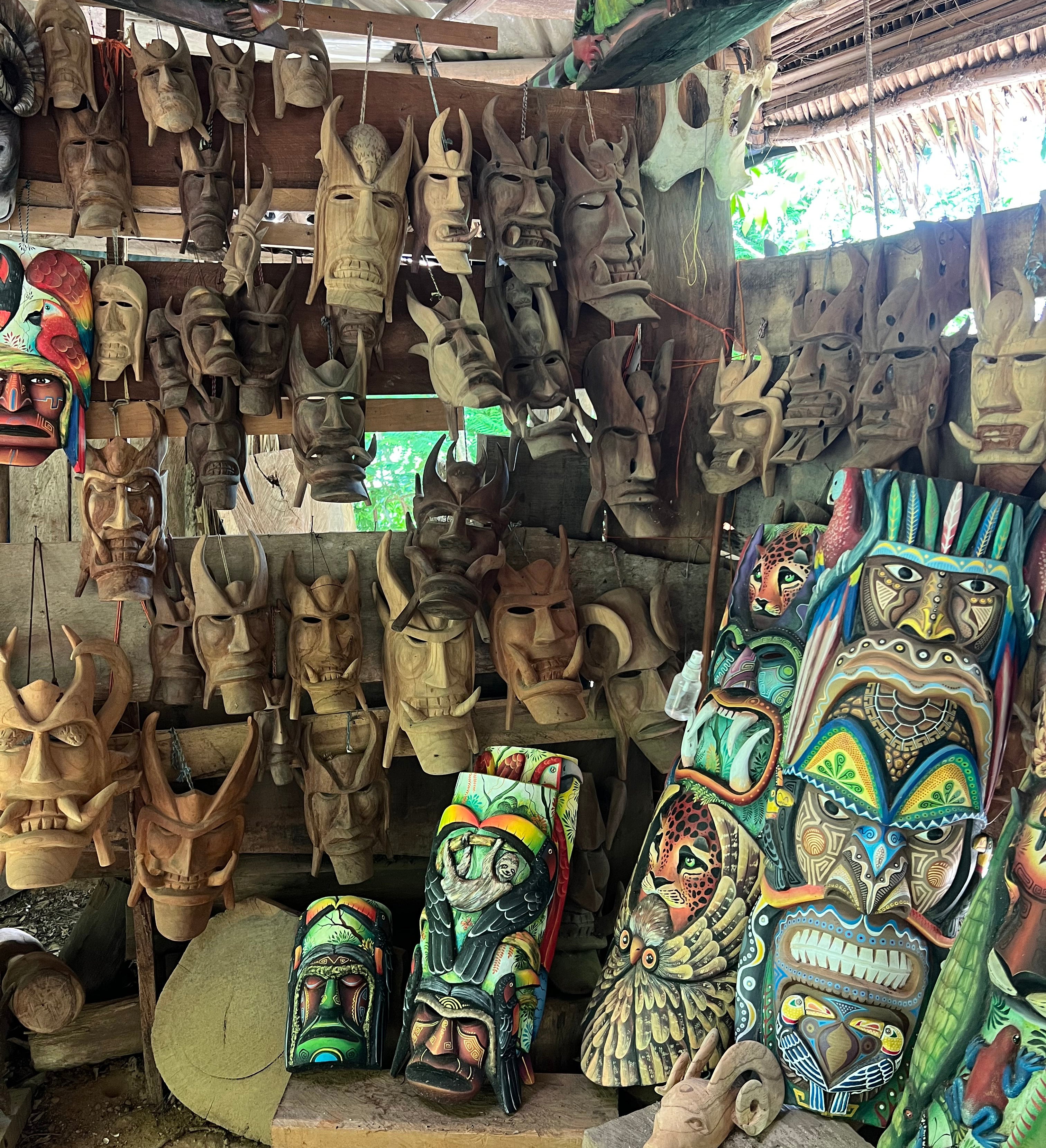
Top photo: Fiesta de los Diablitos Boruca masks. All photos by Iza Harris