
By Phoebe Farris (Powhatan-Pamunkey)
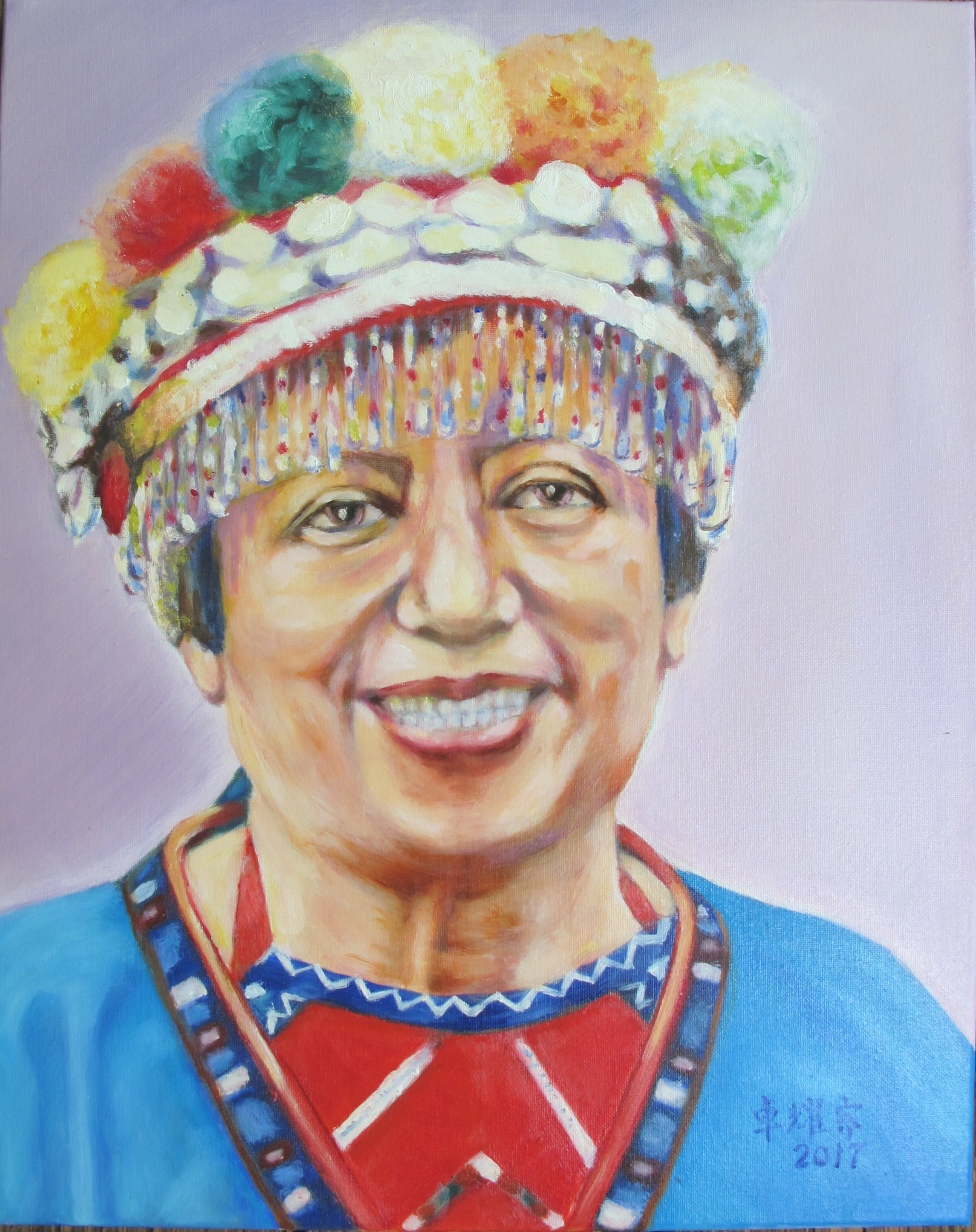
Faisu Mukunana (Tsou) is an acclaimed Indigenous woman writer from Taiwan. Born in the community of Lalauya in 1942, Mukunana has lived through two regimes: the Japanese occupation and the Republic of China. She speaks three languages, including her native Tsou, and is the recipient of several literary awards.
Yao-Chung Tsao has a Ph.D. in Cognitive Psychology and a master’s degree in Industrial Engineering. Dr. Tsao has translated many books between Chinese and English, including Mukunana’s work, “My Dear Ak’i, Please Don’t Be Upset.” He served on the faculty of Rensselaer Polytechnic Institute before joining Bell Labs. Now retired, he focuses on writing, translating, and painting. I recently spoke with Dr. Tsao.
Phoebe Farris: How did you first meet Faisu Mukunana? When did you become aware of her writings and activism regarding Indigenous cultures in Taiwan?
Yao-Chung Tsao: Faisu’s mentor, Tseng Hsin-I, is a writer friend of mine. She taught creative writing courses in various community adult education programs in and around Taipei City. Around the year 2000, when Faisu was in her late 50s, she found time to pursue her interest in writing and began to take courses taught by Ms. Tseng. Faisu wrote primarily about her life experiences as an Indigenous woman of the Tsou Tribe. With Ms. Tseng’s guidance and support, in 2003 she published her first book, “My Dear Ak’i, Please Don’t Be Upset.” Through my connections with Ms. Tseng, I had been reading Faisu’s essays with great interest. Her writings showed a strong sense of humor, sincerity, and sensitivity, and touched my heart a great deal. I wanted to translate her book into English and began to do so around 2018. Throughout the process, I felt that it was my passion, my mission, and that I was committed to translating this book and promoting it to a wider readership. Doing so also reinforced my view that the Indigenous people and their cultures were, and are, an integral part of Taiwan’s culture and history.
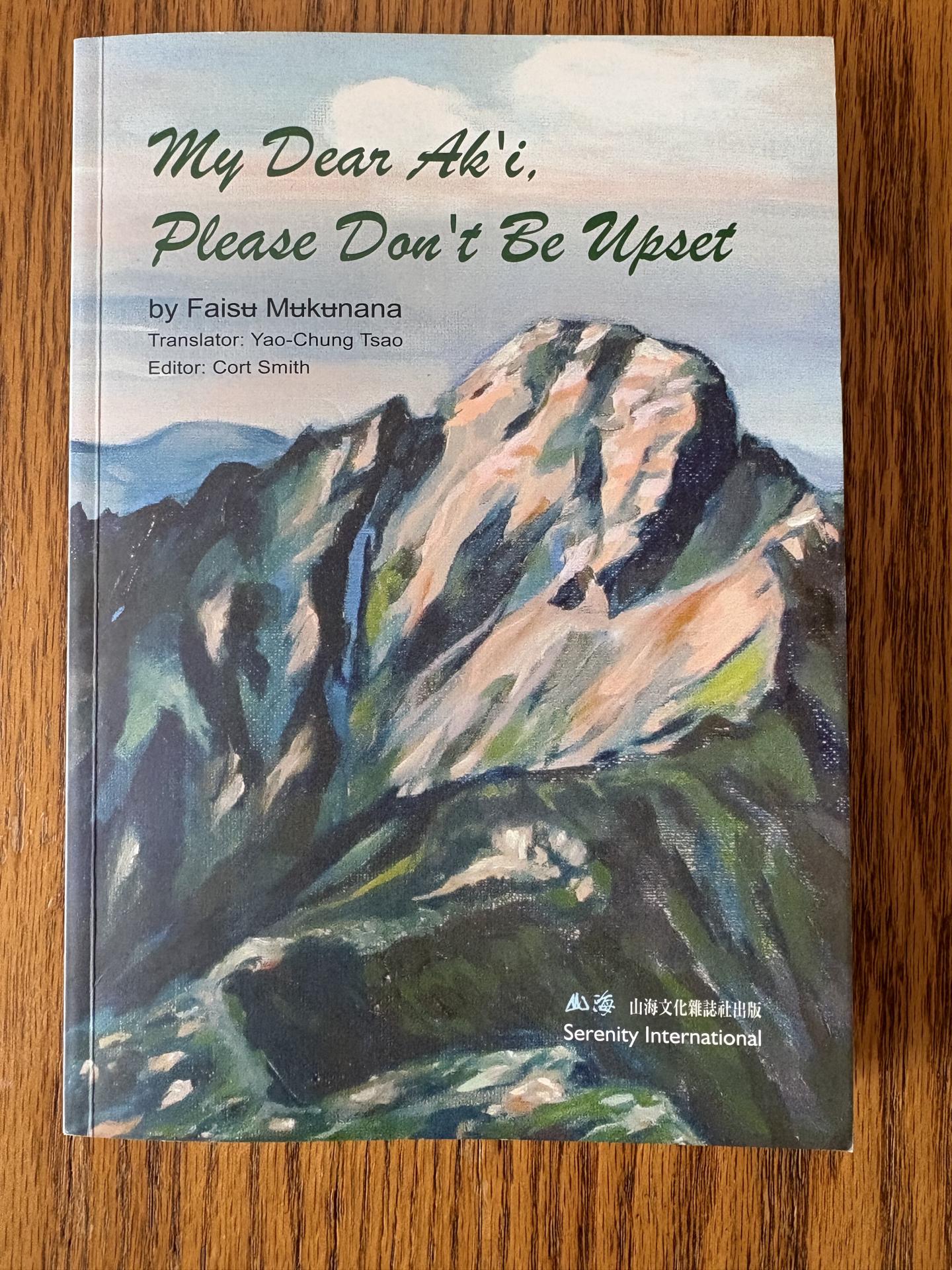
PF: How would you describe Mukunana’s style in this book, which spans the era of Japanese occupation from 1895-1945 through the current governance by the Republic of China?
Y-C T: As [you] mentioned, the author has lived under Japanese colonialism and the current government of the Republic of China. Over time she has seen many aspects of Tribal cultures disappear. She has lamented these losses, and wanted to write about her memories of the Tribal past for future generations. Her writings are a mixture of history, memoir, and the social injustices imposed upon the [Tsou Peoples]. She tells their stories in a plain, yet faithful manner, drawing from the day-to-day lives of the people living in the mountains in central Taiwan, showing the harmony between them and the natural world they inhabit.
PF: Throughout the book, the author speaks to her deceased grandfather, Ak’i, about their native language. Through your reading/translating of this book and your personal perspective, how do you see contemporary Indigenous people in Taiwan balancing the maintaining of traditional customs in a non-Indigenous language—especially the younger generations who do not speak their ancestral languages?
Y-C T: Many Indigenous people in Taiwan today follow mainstream Han Chinese culture practices, especially since a large proportion of the Indigenous population now live in urban areas. As a result, daily life is often shaped by the broader Han-dominated society. For those who continue to live in their traditional territories, however, the situation is often somewhat different. They may observe Taiwanese holidays and customs while also preserving Indigenous ceremonies, rituals, and belief systems that are central to their cultural identity. For example, the Tao people on Orchid Island continue to perform ceremonies related to fishing and boat-making, and the Flying Fish Festival, which emphasizes respect for the natural environment and sustainable ecology—all of which remain deeply embedded in their cultural and spiritual life.
In recent years there has also been a growing movement of younger Indigenous people returning to their ancestral communities as part of broader efforts toward cultural revitalization. They work with Elders and local governments to revive Indigenous languages, rituals, and festivals while organizing cultural events and educational programs for both community members and visitors. Although the degree of cultural preservation varies among different Indigenous Nations and communities, many continue to actively uphold and revitalize their traditions alongside participation in contemporary Taiwanese society.
PF: As referenced in the book, during the Japanese occupation of Taiwan, several thousand Tsou were relocated to other Tribal villages. The Bunun People and other Indigenous Peoples were also relocated, and eventually the Tsou and Bunun Peoples became assimilated into existing populations in both language and lifestyle. How do Taiwan’s Indigenous Peoples maintain their own customs and cultures in the present day?
Y-C T: Members of the 16 recognized Tribes very much maintain their respective festivals, customs, costumes, and languages. Take festivals as an example: the Amis Tribe celebrates Ilisin between July and September for harvesting; the Tao Tribe in Orchid Island celebrates Meyvaked as it is related to fishing; the Tsou Tribe in Alishan celebrates Mayasvi to worship Amo Hamo and warriors. In Nantou County, there is Formosan Aboriginal Culture Village, which is an entertainment center where various Tribes perform their traditional dances and songs. Organizations related to tourism also vary from Tribe to Tribe. Smangus of the Atayal Tribe is well known for its community-managed tourism, such as imposing limits on visitors and vehicles to protect the giant cypress forest. Similar practices exist elsewhere. The Alishan community of the Tsou Tribe is somewhat different because it is a major national scenic area rather than a single Indigenous community. There, tourism management is shared among Indigenous communities, government agencies, and Taiwan's National Park Administration.
PF: Mukunana discusses the communal and individual land and water rights she observed as a child. How have these rights and customs changed or evolved during the 21st century?
Y-C T: Taiwan's Indigenous Peoples Basic Law, enacted in 2005, recognizes Indigenous Peoples' rights to their traditional lands and natural resources. The government has also introduced laws and policies to protect Indigenous Peoples’ lands, compensate Indigenous landowners for logging restrictions, and increase Indigenous participation in decisions about land and resource management. However, land rights remain a significant issue. Many Indigenous groups continue to seek broader recognition of their traditional territories, including privately owned land that is currently excluded from official protections. There have also been legal disputes over mining, forestry, and development projects on or near Indigenous lands.
In the Alishan area of Chia-Yi County, while the Tsou communities there operate guesthouses, restaurants, guided tours, and cultural experiences, they do not control the entire Alishan tourism industry. Many Tsou communities have developed community-based tourism, allowing visitors to experience traditional culture, food, music, and ecological tours. However, decisions about land use, forest conservation, and major tourism development are often shared with—or controlled by—government agencies, rather than by the Indigenous communities themselves.
PF: The author’s niece, Fenmei Niahosa, is an annual participant at the United Nations Permanent Forum on Indigenous Issues, advocating the revitalization of Indigenous languages in Taiwan. What are your reflections on the various Indigenous languages still spoken in Taiwan, as well as those that have few fluent speakers left?
Y-C T: As far as language use is concerned, the situation varies considerably across different Indigenous groups. Overall, many Indigenous languages in Taiwan are considered endangered and many younger Indigenous people are more fluent in Mandarin Chinese than in their ancestral languages. However, there has also been a strong movement toward language revitalization in recent years. Indigenous languages are now taught in schools, and communities organize language classes. Contemporary Indigenous singers and entertainers have also played an important role in this revitalization. Some of them have gained national and international recognition by producing songs primarily in their native languages, which helps entice younger generations to learn their mother tongue.
PF: You sent me a recent CNN World article about Tao seafarers from Taiwan’s Orchid Island who completed a 111-mile journey to the Philippines using handbuilt, wood canoes to revive a maritime route that honored an ancient seafaring migration of Austronesian peoples. Indigenous people from Taiwan are believed to be the ancestors of some of the groups who came to inhabit lands from Hawai’i and Easter Island in the Pacific, to Madagascar off the coast of East Africa. Do you have any comments about this?
Y-C T: First, I’d like to take a moment to say that I was very fortunate to meet with you this May at the opening of the Native Americans of New Jersey exhibit, which you curated, and to share with you [Mukunana’s] book that I translated. With respect to the recent history-themed voyage, the theory of Austronesian migration from Taiwan to a vast area, including New Zealand, has been proposed, and is supported by linguistic evidence suggesting that Maori People in New Zealand descend from the Indigenous Tribes of Taiwan.
PF: Dr. Tsao, thank you so much for taking the time to enlighten our readers about Faisu Mukunana’s perspectives on Indigenous Taiwanese culture from both her personal lived experience and your scholarly research.
--Phoebe Farris (Powhatan-Pamunkey descent) is Contributing Arts Editor for the Cultural Survival Quarterly magazine. An art critic, curator, author, and photographer, she has written extensively on Indigenous visual, literary, and performing arts for over two decades. Farris is also a Professor Emerita of Art and Design at Purdue University and has curated and contributed to exhibitions highlighting Native and global Indigenous artists. Her work bridges scholarship, creative practice, and advocacy, amplifying Indigenous voices in contemporary art and media.
Top image: Painting of Faisu Mukunana created by the translator Yao-Chung Tsao.