
Dra. Lyla June Johnston (Diné/Tsétsêhéstâhese) es música, escritora, organizadora comunitaria y miembro de la junta directiva de Cultural Survival. Integra sus estudios de Ecología Humana en Stanford, sus estudios de posgrado en Pedagogía Indígena y la cosmovisión tradicional con la que creció para dar forma a su música, sus perspectivas y sus propuestas. Su investigación doctoral se centró en cómo las Naciones Indígenas precoloniales moldearon amplias regiones de Turtle Island para producir sistemas alimentarios abundantes para humanos y no humanos. Aquí conversa con la historiadora Gabrielle Tayac (Piscataway), profesora asociada en la Universidad George Mason, ex curadora del Museo Nacional del Indígena Americano y cofundadora de Nekamaco (Casa de la Madre), una organización sin fines de lucro liderada por mujeres mayores Indígenas.
Lyla June Johnston: ¿Quiénes son los Piscataway y dónde se encuentra su territorio ancestral?
Gabrielle Tayac: Piscataway significa “donde las aguas se unen”. Piscataway se refiere a dos cuerpos de agua, específicamente [al lugar donde] el arroyo Piscataway desemboca en el río Potomac, a unas 15 millas al sur del actual Washington, D. C., donde nuestro pueblo tenía su ciudad principal. Esa ciudad se llamaba Moyaone, en la ribera del río Potomac que hoy se conoce como Maryland. Ese es realmente el centro. A menudo, en los mundos Indígenas y en los tiempos ancestrales, existen núcleos espirituales en el territorio que son más importantes para quienes lo habitan que el destino de esos lugares durante y después de las invasiones coloniales.
En sus orígenes, Piscataway estaba conformado por una serie de aproximadamente doce Pueblos, cada uno con su propio líder local, que podía ser hombre o mujer. Su territorio se extendía desde las cataratas situadas arriba de lo que hoy es Washington, D. C., y descendía siguiendo todo el curso del río Potomac hasta la desembocadura en la bahía de Chesapeake; abarcaba también el área entre los ríos Potomac y Patuxent. Por lo tanto, se ubicaba principalmente en lo que hoy conocemos como Maryland e incluía también espacios que comprenden Washington, D. C. y la otra orilla del río, lo que actualmente identificamos como el norte de Virginia. Es donde nuestra comunidad sigue viviendo hasta el día de hoy. Los Piscataway somos ahora un Pueblo consolidado, integrado por los sobrevivientes de aquel cacicazgo original, mucho más extenso. Somos una Tribu de familias, parientes y estructuras que han persistido juntas a lo largo de los últimos 400 años.
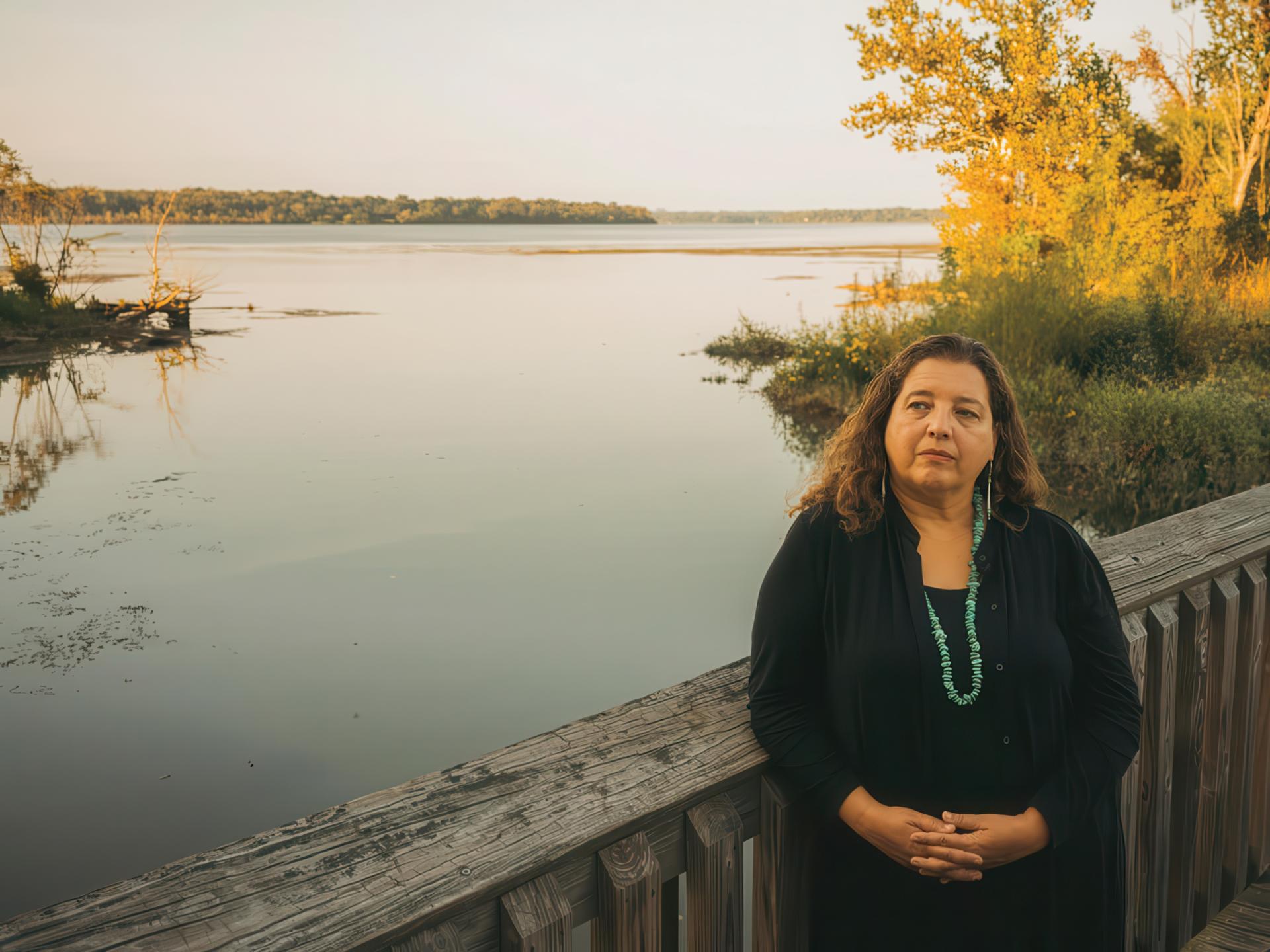
Gabrielle Tayac en el paseo entablado que atraviesa los pantanos y conduce al lugar sagrado ancestral de Moyaone, a orillas del río Potomac, en el Parque Nacional Piscataway, en Maryland. Foto de Greg Kahn.
LJJ: ¿Qué es lo que más te entusiasma de ser descendiente de estos Pueblos, descendiente de ancestros Tskado’i?
GT: Hay una riqueza increíble en esta biosfera, en este lugar. La bahía de Chesapeake, de la que formamos parte, probablemente tiene una de las migraciones más grandes: las trayectorias de aves, los peces, los sistemas, la vida que existe en estos espacios, y la sensación de que la propia tierra tiene amor. Para nosotros, para mí, se trataba de querer comprender qué nos pasó, qué hemos hecho incluso para saber quiénes somos y para seguir juntos de alguna forma como comunidad. Hay una dimensión muy profunda, muy enraizada interiormente, en todo esto.
Hay otro aspecto que realmente me conmueve debido a la posición de estar en un lugar como Washington, D. C. Significa que no solo el mundo entero, sino también el mundo Indígena, en la búsqueda de tener voz, de luchar por derechos, de compartir y de existir, nos ha dado la oportunidad de caminar al lado de tantas personas que buscaban un fundamento para sus propios Pueblos. Fue ese apoyo y esa solidaridad lo que también nos ayudó a romper un sentido de soledad, porque el Pueblo Piscataway, como muchas pequeñas comunidades de la Costa Este, había estado separado del mundo Indígena más amplio durante muchísimo tiempo. Había un sentimiento profundo de anhelo por tener esa relación con otros pueblos Indígenas. Eso, para mí, es muy conmovedor: la sensibilidad arraigada de este lugar. Tengo una estudiante que es Cheroqui de la Banda Oriental y, al hablar de sus montañas, dijo: “Somos de este sitio”. Hay algo muy particular en pertenecer a un lugar.
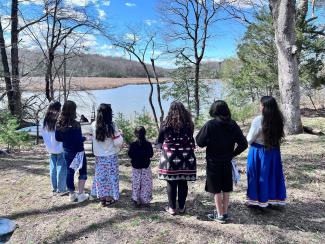
Foto: Dando gracias por los cielos y la Tierra que se abren con los Truenos, las mujeres guían a las niñas para honrar las aguas en el arroyo Nanjemoy, un afluente del Potomac y fuente de vida.
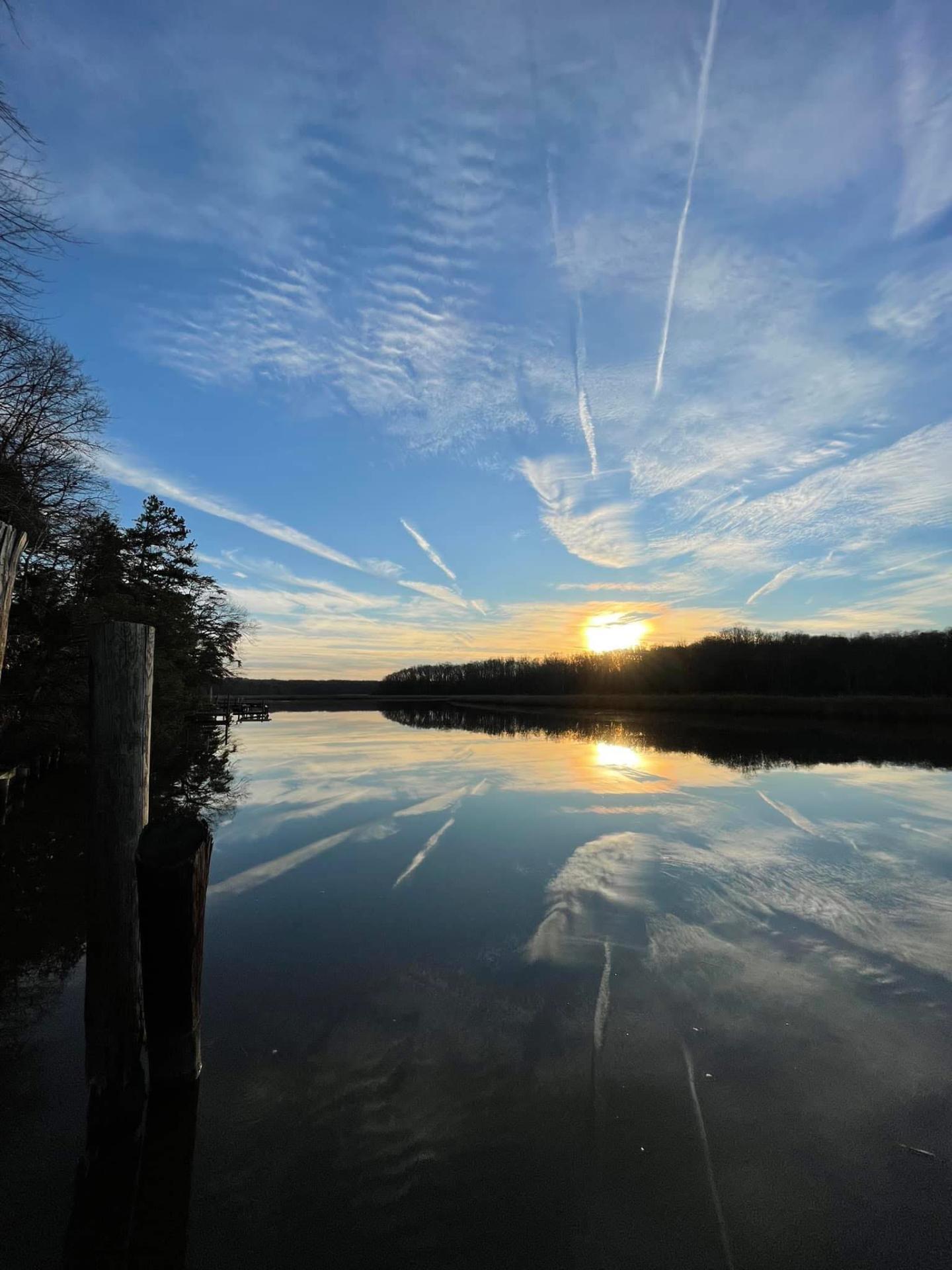
Nanjemoy Creek, un refugio en proceso de recuperación y un espacio de sanación, hogar del pueblo Piscataway desde hace milenios.
LJJ: Vi tu nombre en un artículo científico muy interesante, “Sostenibilidad a escala milenaria de la pesquería de ostras de los nativos americanos en la bahía de Chesapeake” (“Millennial Scale Sustainability of the Chesapeake Bay Native American Oyster Fishery”), del Dr. Rick Torben, que muestra cómo la Nación Piscataway atendió y cuidó los bancos de ostras de manera ininterrumpida durante miles de años en la bahía de Chesapeake. No solo cuidaron estas ostras, sino que de hecho ayudaron a que se volvieran más saludables con el paso del tiempo. Si eso no es agricultura regenerativa, no sé qué lo sea. Y en menos de 300 años, Estados Unidos ha logrado destruir por completo esa pesquería de ostras, que hoy tiene menos del 1 % de su tamaño original.
GT: Cuando imparto clases de historia, dedico el primer mes a analizar con mis alumnos los valores ancestrales, las tradiciones y las enseñanzas ceremoniales de aquellas partes que se pueden compartir.Las motivaciones que tienen los Pueblos indígenas y la manera en que toman sus decisiones provienen de otro lugar. No se trata solo de recursos económicos. En su mejor expresión, los espacios están imbuidos de estas cualidades sagradas. Para nosotros aquí, las ostras son simplemente una parte muy importante de esto, algo que transformó por completo el ecosistema. El agua que estoy viendo en este momento ahora está muy lodosa. Es menos profunda. Antes, el 95 % era bosque primario. Era cristalina, profunda y más angosta. Me contaron que, cuando la gente entraba al pantano, podía cruzar a caballo por el humedal porque el suelo era lo suficientemente firme. No era fangoso, no tenía todo ese sedimento.
Cuando hablo de relacionalidad, la parte subyacente tiene que ver con trabajar dentro de estas tierras, con estos seres, con todo este ser interconectado del que formamos parte. En Chesapeake, peake significa concha. Chesa significa grande, inmenso. Así que Chesapeake en realidad significa la Gran Bahía de los Mariscos y se refiere, sobre todo, a las ostras que hay allí. Pensamos en las ostras como parte de los pulmones, casi como los pequeños bronquiolos que filtran nuestra respiración, porque estamos en un espacio de mareas. La bahía de Chesapeake es de mareas: suben y bajan. Incluso aquí, en Nanjemoy Creek, hay mareas; suben y bajan dos veces al día. La bahía respira. Las ostras eran el mecanismo de dichos pulmones, ese filtro. Cuando vemos marejadas intensas es porque las ostras han sido arrancadas. El cuidado intencional, cuando pensamos en los bosques o en los cursos de agua, es una configuración muy deliberada basada en nuestros valores.
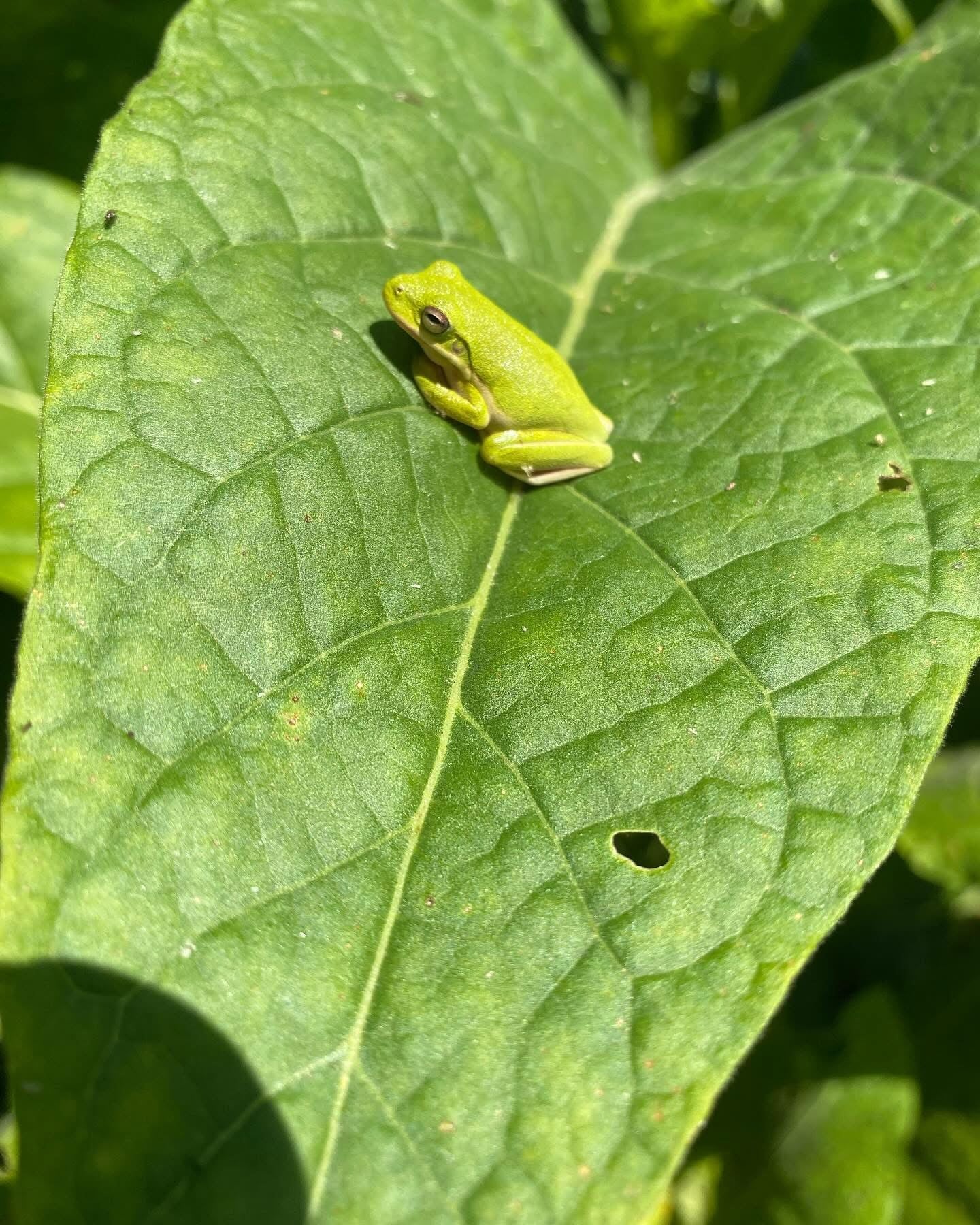
El tabaco tradicional, como planta medicinal, vuelve a cultivarse tras décadas de desaparición. Las ranas arbóreas verdes son indicadoras de equilibrios ecológicos poco comunes en las tierras recuperadas.
LJJ:¿Cuál es uno de los mensajes más importantes que quieres transmitir hoy al mundo sobre tu Nación y tus Pueblos?
GT: Nunca se rindan. Cuando digo nunca se rindan, no quiero decir que no haya que cambiar de estrategia o que a veces no haya que darse cuenta de que tu energía debe ponerse en algo que haga avanzar las cosas, o que estás atrapado en algo tóxico o traumático. Cuando pienso en los Piscataway, pienso en nuestras relaciones. Gran parte de quienes somos está en las relaciones que hemos tenido con aquello de donde venimos. Desde el lado Piscataway, estamos formados a partir del amor entre personas Indígenas sobrevivientes, mujeres blancas bajo servidumbre por contrato y africanos esclavizados. Esa es la realidad de quienes son hoy los Piscataway.
Trabajé durante muchos años en el Museo Nacional del Indígena Americano, y al hacer este trabajo histórico, aprendí que se diseñaron políticas para impedir que tuviéramos estas conversaciones. Ni siquiera se supone que debamos existir.Siempre tenemos esta narrativa de la extinción. Al pensar en todas estas encarnaciones, tal vez seas la única persona que se mantiene aferrada a ese hilo. Pero si aguantas lo suficiente, existe la posibilidad de que alguien más, o alguien como tú en tu generación, lo retome y lo lleve un poco más allá... nunca se sabe quién lo va a retomar. Solo mantente firme. Para los Pueblos Indígenas, existe ese nivel de responsabilidad de no rendirse, pero también de imaginar cómo pueden ser las cosas y vivir en esa dirección, de manera positiva.
LJJ: Lo has expresado de una manera hermosa y otros de mis mayores también me han dicho lo mismo. Me dijeron: aguanta. Me dijeron que quizá no fuera fácil, pero que aguantara. Aguanta. Incluso cuando sea más fácil rendirse.
