For Immediate Release
At UNFCCC SB 64 in Bonn, Cultural Survival and the SIRGE Coalition draw on the Brazil case to show how Paragraph 12(i) of the Just Transition Work Programme must be turned into binding practice
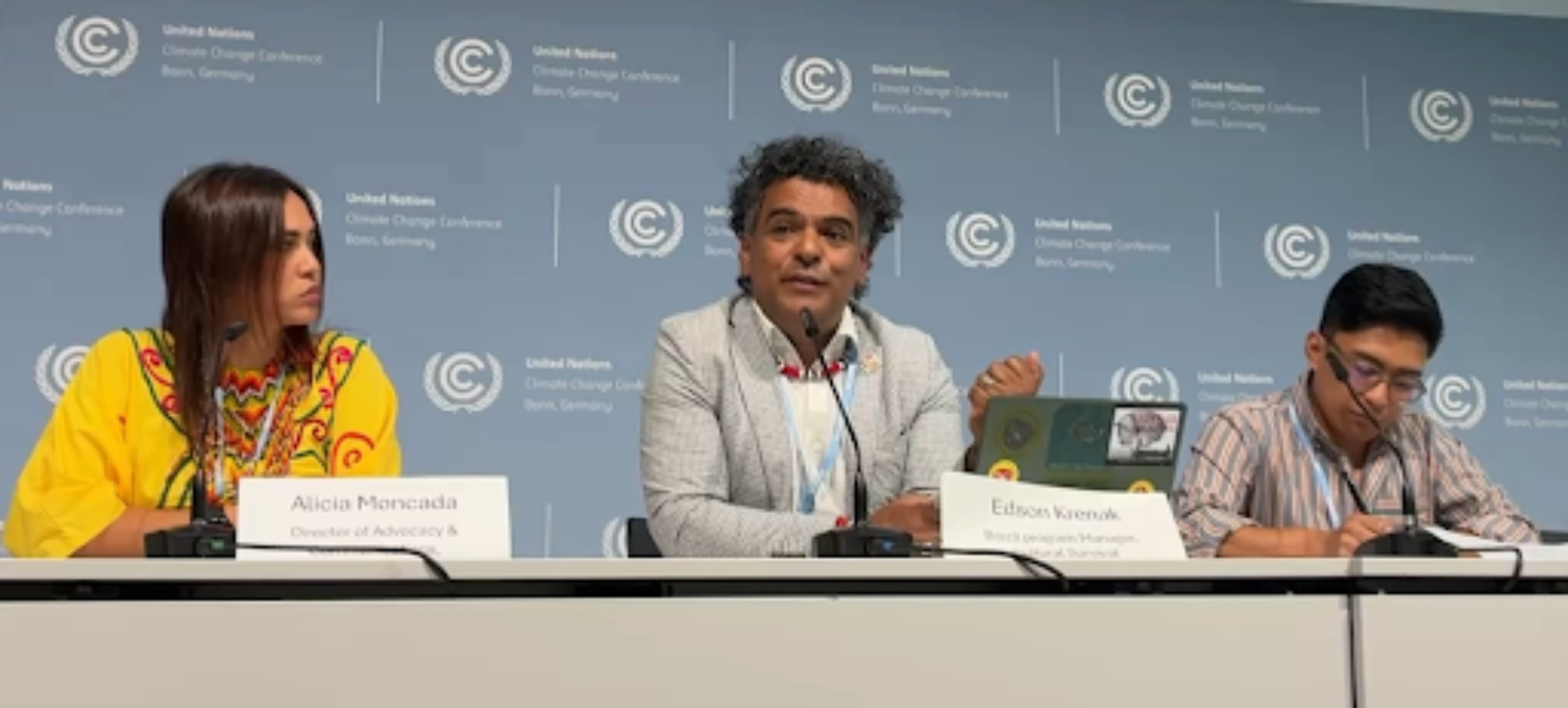
June 9, 2026. Bonn, Germany -- Cultural Survival today held a press conference at the UNFCCC Subsidiary Bodies session (SB 64), calling on States to operationalize Paragraph 12(i) of the draft decision of the UAE Just Transition Work Programme.
Paragraph 12(i) commits Parties to "ensuring that all Just Transition pathways respect and promote the internationally recognized collective and individual right of Indigenous Peoples, including the rights to self-determination." Speakers warned that without implementation, the commitment risks remaining words on a page while strategic minerals extraction advances on Indigenous territories.
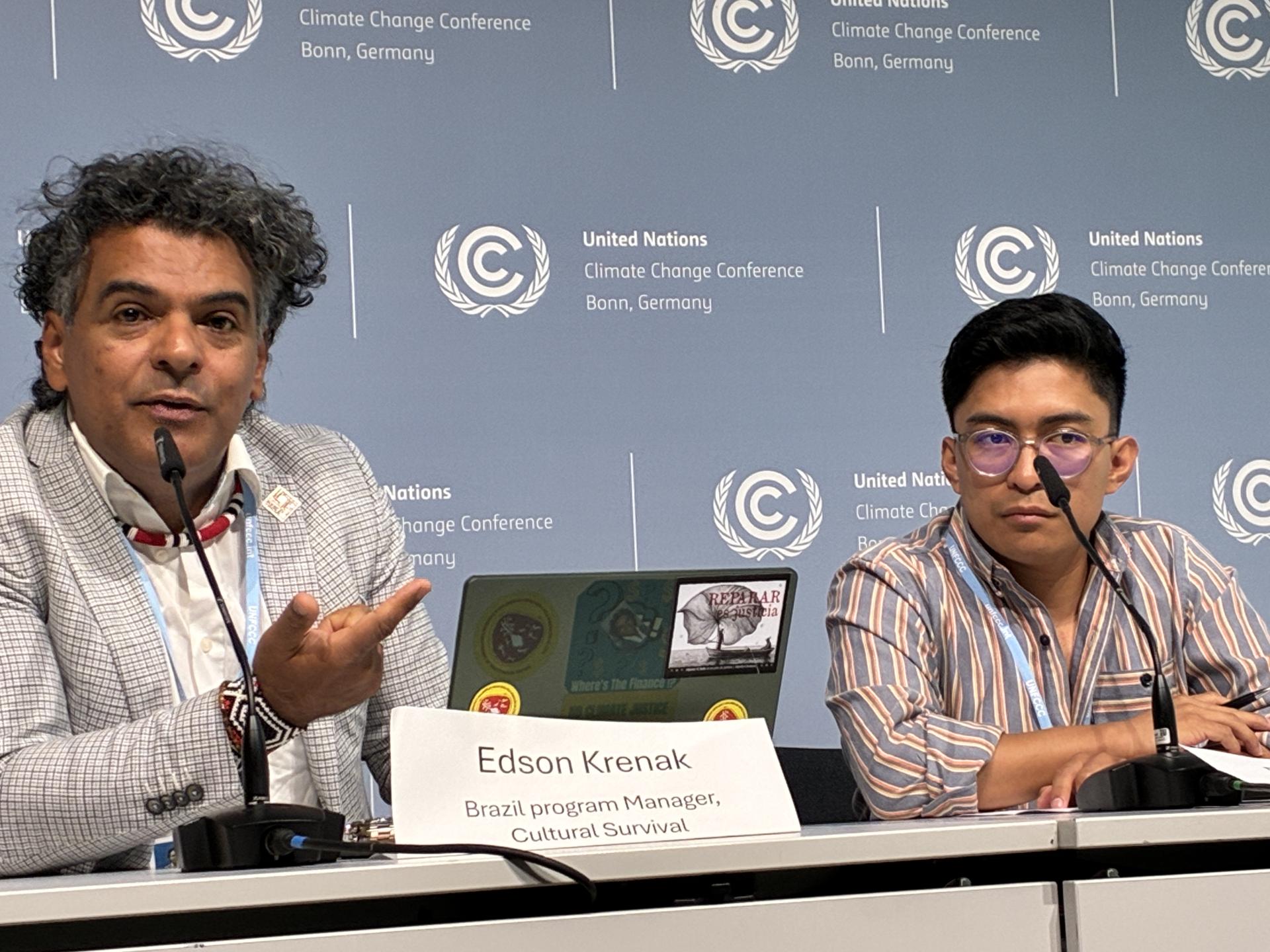
The press conference "Making the Transition Mechanism Work: Indigenous Rights and Paragraph 12(i). The Brazil Case" was held at the June Climate Talks at Bonn, Germany, and featured Alicia Moncada (Wayuu), Director of Advocacy and Communications at Cultural Survival; Edson Krenak (Krenak), Cultural Survival's Brazil Program Manager; and Bryan Bixcul (Maya Tz'utujil), Global Coordinator of the SIRGE Coalition.
A "Lithium Valley" that Communities Never Consented to
The speakers grounded the legal debate in the Jequitinhonha Valley, in the north of Minas Gerais, Brazil, where Indigenous and Quilombola communities have hung a banner reading: "We are the Jequitinhonha Valley, we are not the Lithium Valley."
"The question we are asking is simple and uncomfortable," said Alicia Moncada. "A transition built on the violation of [Indigenous Peoples'] rights, does it deserve to be called 'green,' or 'just,' at all? Under the banner of climate action, States are reproducing the exact pattern of colonial extraction that created the sacrifice zones of the oil industry."
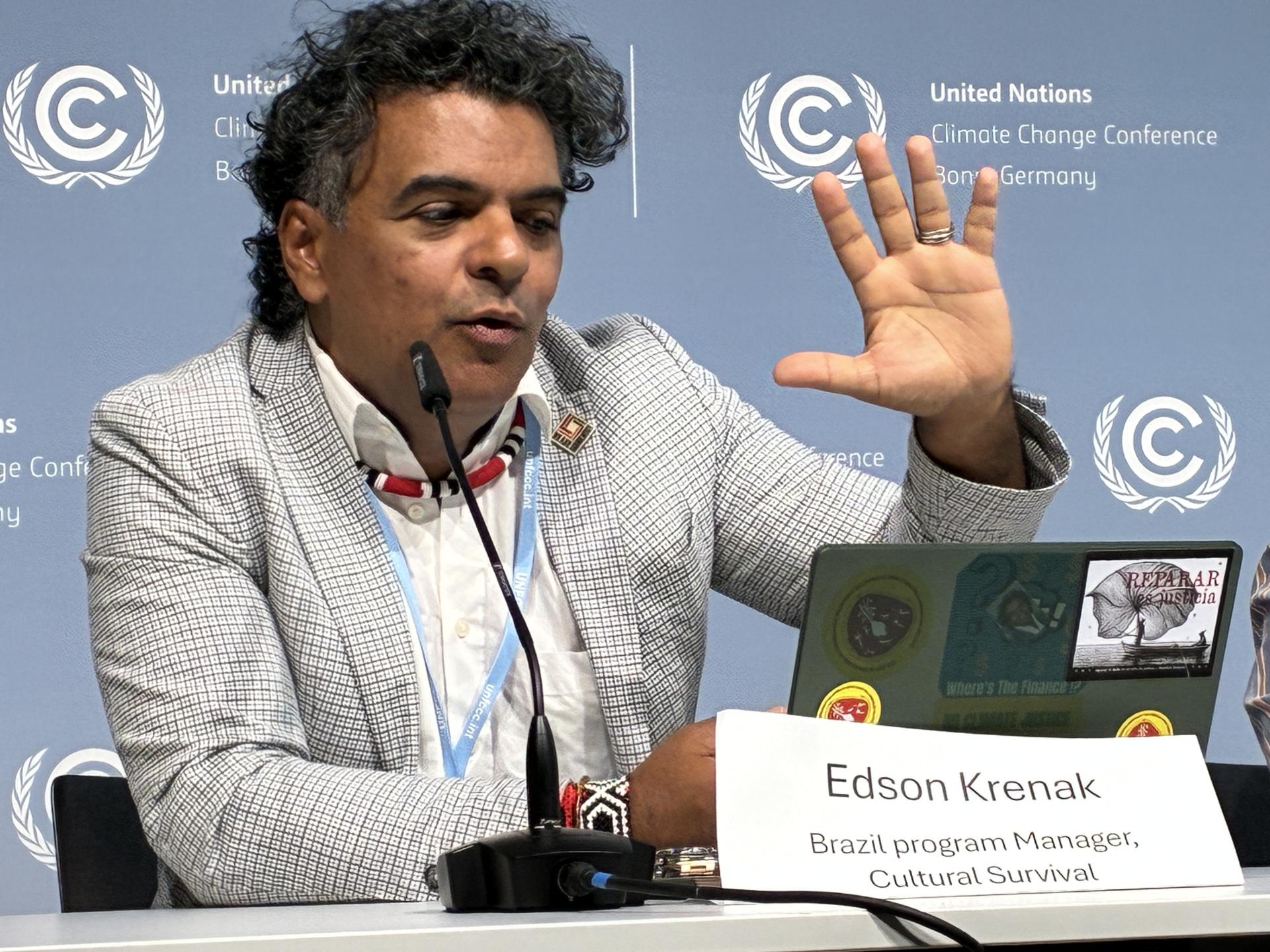
"The Jequitinhonha case is not unique. From the Cerrado to the Amazon, transition mineral and infrastructure projects are being licensed on our lands without our consent. Demarcation under Article 231 and verified FPIC must come before a license is granted, not after the damage is done," said Edson Krenak. “The BNDS, the national development bank`s Climate Fund, cannot invest in projects that violate Indigenous rights and communities that have no access to climate change mitigation and adaptation money in Brazil.” BNDS has secured funds for harmful projects in the Cerrado and Jequitinhonha Valley.
From Principle to Obligation: What Implementation Requires
Speakers stressed that operationalizing Paragraph 12(i) does not create a new obligation.
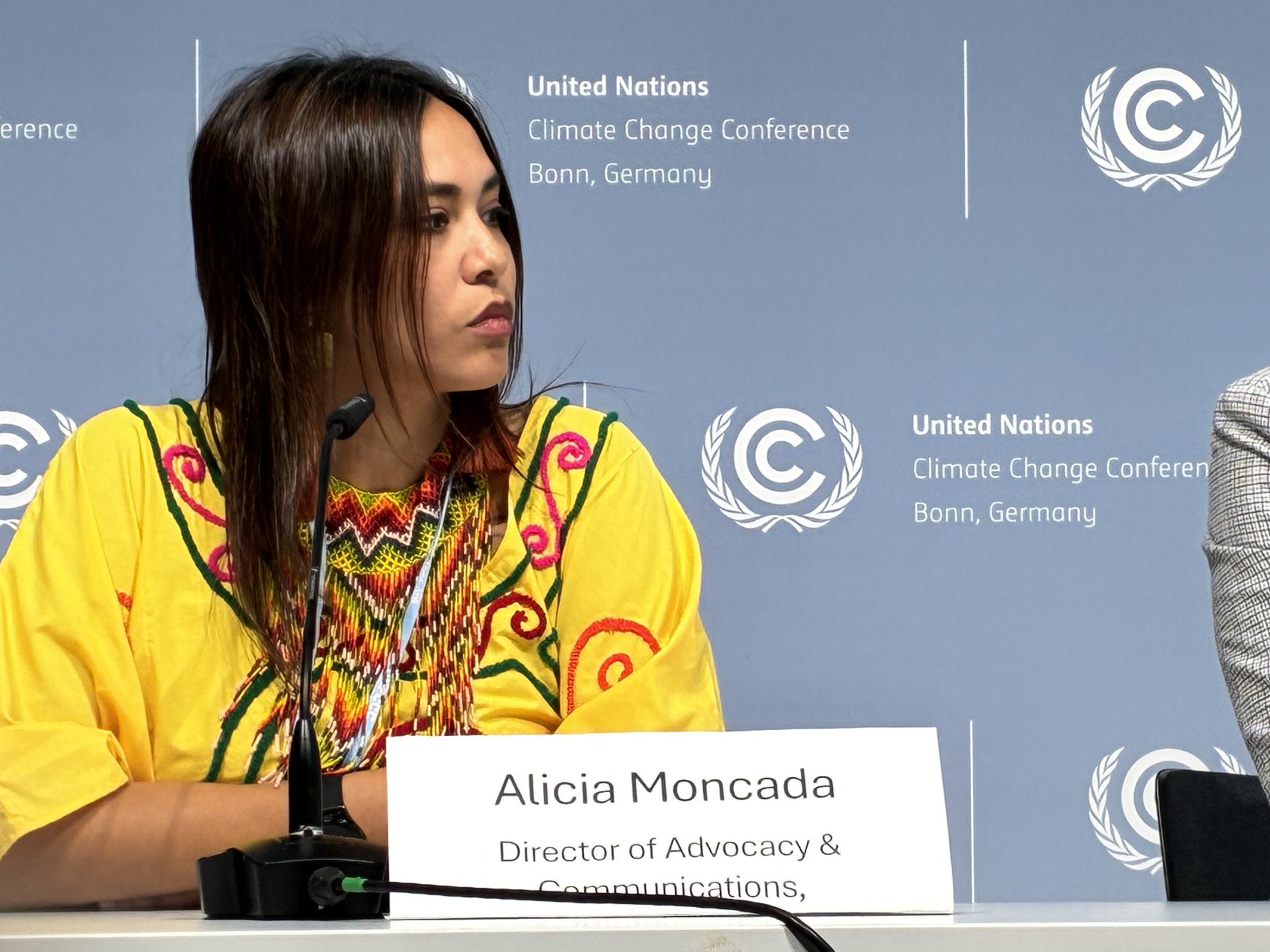
Alicia Moncada mentioned that:
“For Brazil and for other States, operationalizing Paragraph 12 (i) does not mean creating a new obligation; it means converting this recognized principle into binding domestic rules, financing conditions, and licensing procedures. The work that remains is implementation.”
Bryan Bixcul reminded that in a recent position paper, the International Indigenous Peoples Forum on Climate Change (IIPFCC) sets out how paragraph 12(i) of the COP30 decision should be operationalized through the Just Transition Mechanism. It begins from the premise that Indigenous Peoples, as stewards of approximately one-quarter of the world's terrestrial surface, are essential partners in an equitable transition.
Bixul mentioned that the paper offers five recommendations:
“(1) ensure the formal, meaningful and effective participation of Indigenous Peoples through their own representation procedures; (2) operationalize paragraph 12(i) across all functions of the Mechanism, through guidance, technical assistance on FPIC, knowledge-sharing, and dedicated attention to Peoples in Voluntary Isolation and Initial Contact; (3) identify and address the risks of transition pathways, including transition mineral extraction, renewable energy, carbon markets and bioenergy; (4) recognize and support Indigenous Knowledge Systems and Indigenous-led initiatives; and (5) include a recurring activity dedicated to paragraph 12(i) in the work programme.”
In conclusion, Edson Krenak urged the States to:
“The Just Transition must be accountable to the territories it affects, to the Indigenous and Quilombola communities that protect rivers, forests, and biodiversity.”
About Cultural Survival
Cultural Survival is an Indigenous-led human rights organization that advocates for Indigenous Peoples' rights and supports Indigenous communities' self-determination, cultures, and political resilience. Learn more at culturalsurvival.org.
About the SIRGE Coalition
The Securing Indigenous Peoples' Rights in the Green Economy (SIRGE) Coalition works to ensure that the transition to a green economy respects and upholds the rights of Indigenous Peoples, including the right to Free, Prior and Informed Consent.
###