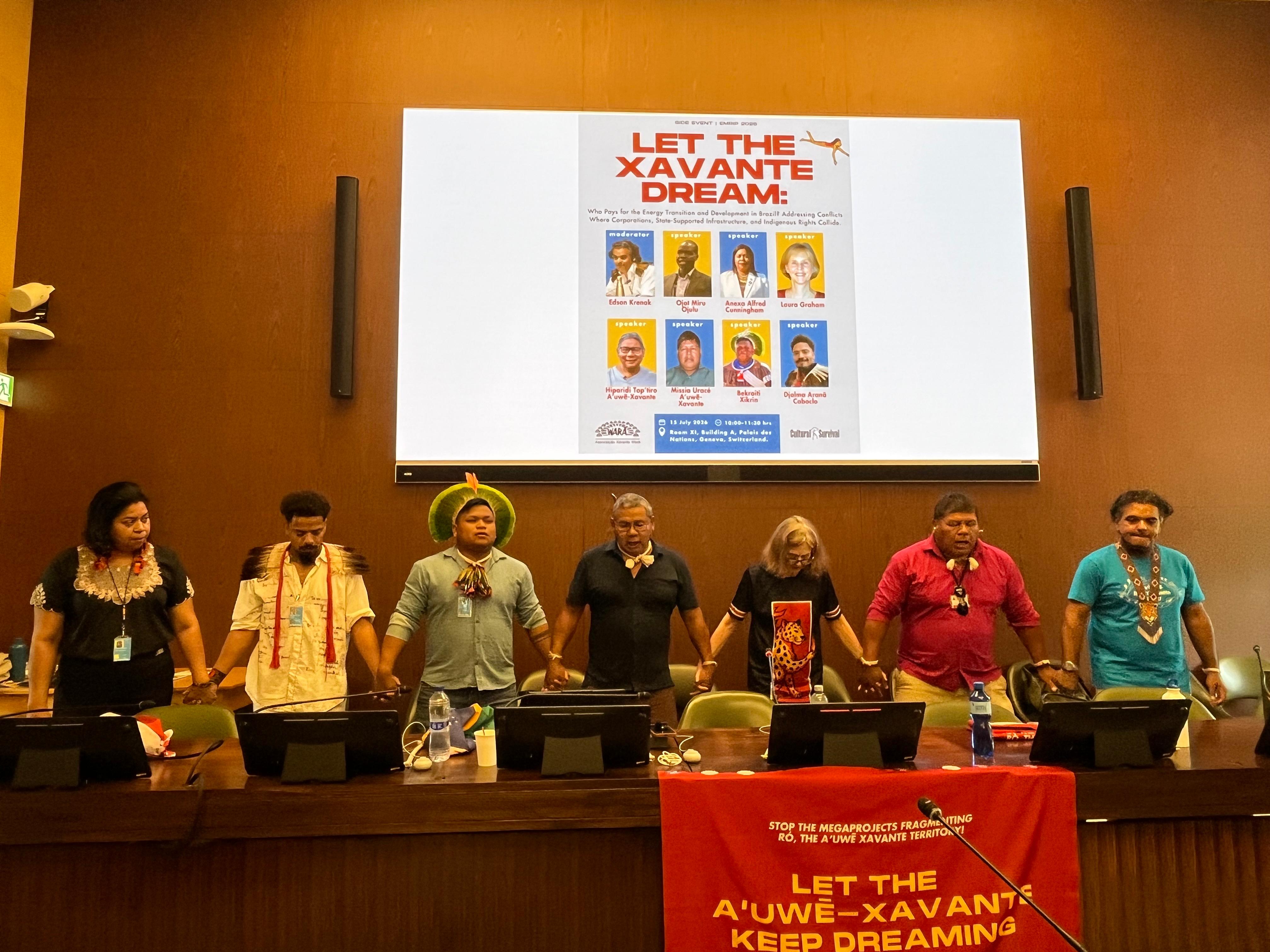
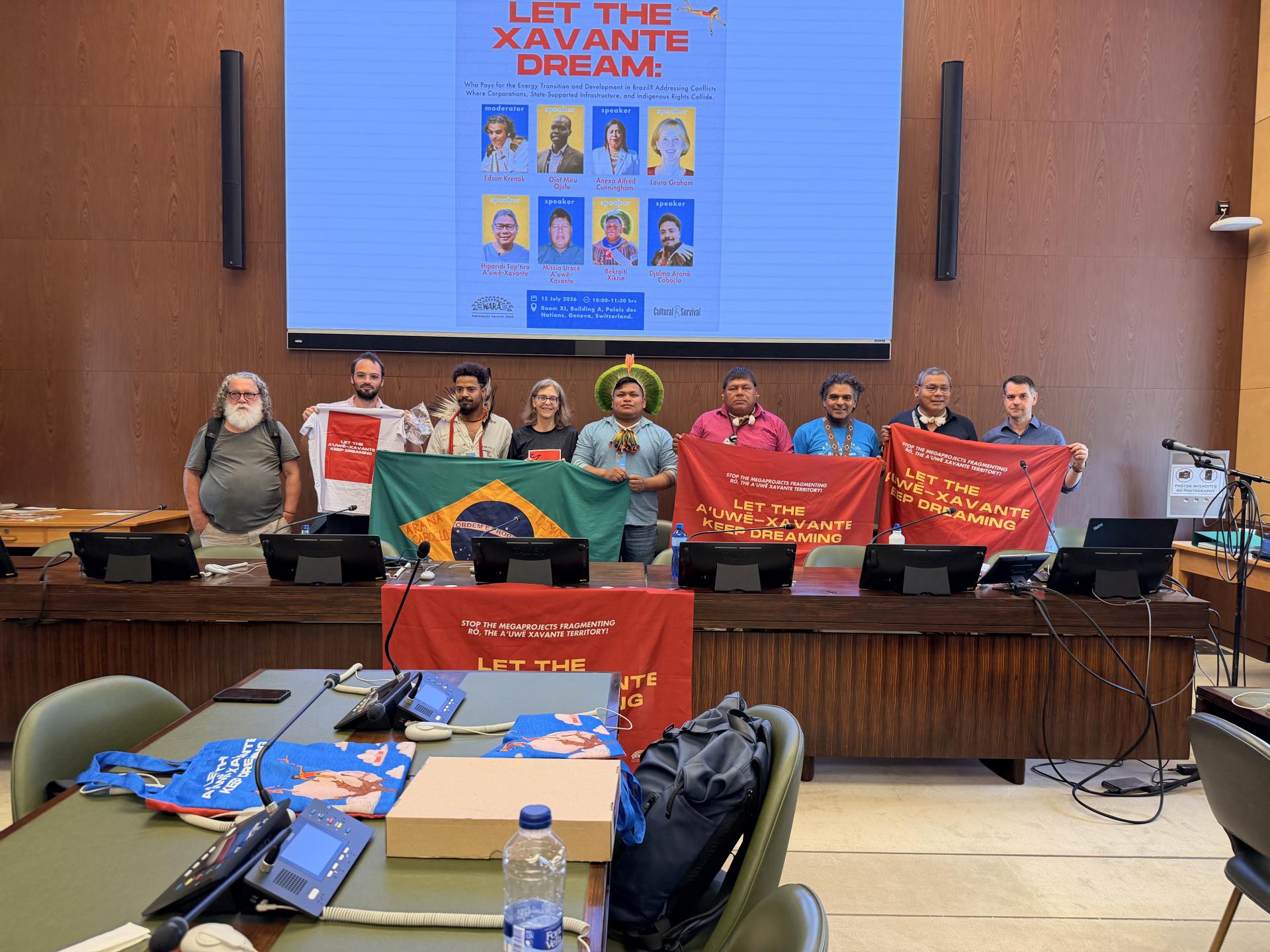
Today, July 15, 2026, at an official side event at the 19th session of the UN Expert Mechanism on the Rights of Indigenous Peoples (EMRIP), Xavante Warã Association, communities within Areões Indigenous Land, Mobilization of Cerrado Indigenous Peoples (MOPIC), Rede Cerrado, and Cultural Survival released the advocacy brief "Let the A'uwẽ-Xavante Keep Dreaming," combining litigation, international advocacy, and a global solidarity campaign amplifying the A’uwẽ Xavante's calls for the protection of their rights, territories, and self-determination in Brazil.
A federal railway, known as Ferrovia de Integração do Centro-Oeste (FICO) and promoted as low-carbon logistics for Brazil's agribusiness exports, is set to cut through A'uwẽ-Xavante territory. For the A'uwẽ-Xavante, it is something else entirely: a project advancing without genuine Free, Prior and Informed Consent (FPIC), threatening the sacred places, waters, and food systems that sustain their ceremonial life.
From July 13 to 17, A'uwẽ-Xavante and Xikrin leaders are bringing a warning to the UN Expert Mechanism on the Rights of Indigenous Peoples, and launching the international campaign "Let the A'uwẽ-Xavante Keep Dreaming," confronting a paradox at the heart of global climate policy: infrastructure and mining projects sold as climate solutions are advancing over Indigenous territories without Indigenous consent. For the A'uwẽ-Xavante, the territory is the living world that holds their food, their rituals, their memory, and their capacity to dream. Fragmenting the territory, leaders warn, would fragment the people.
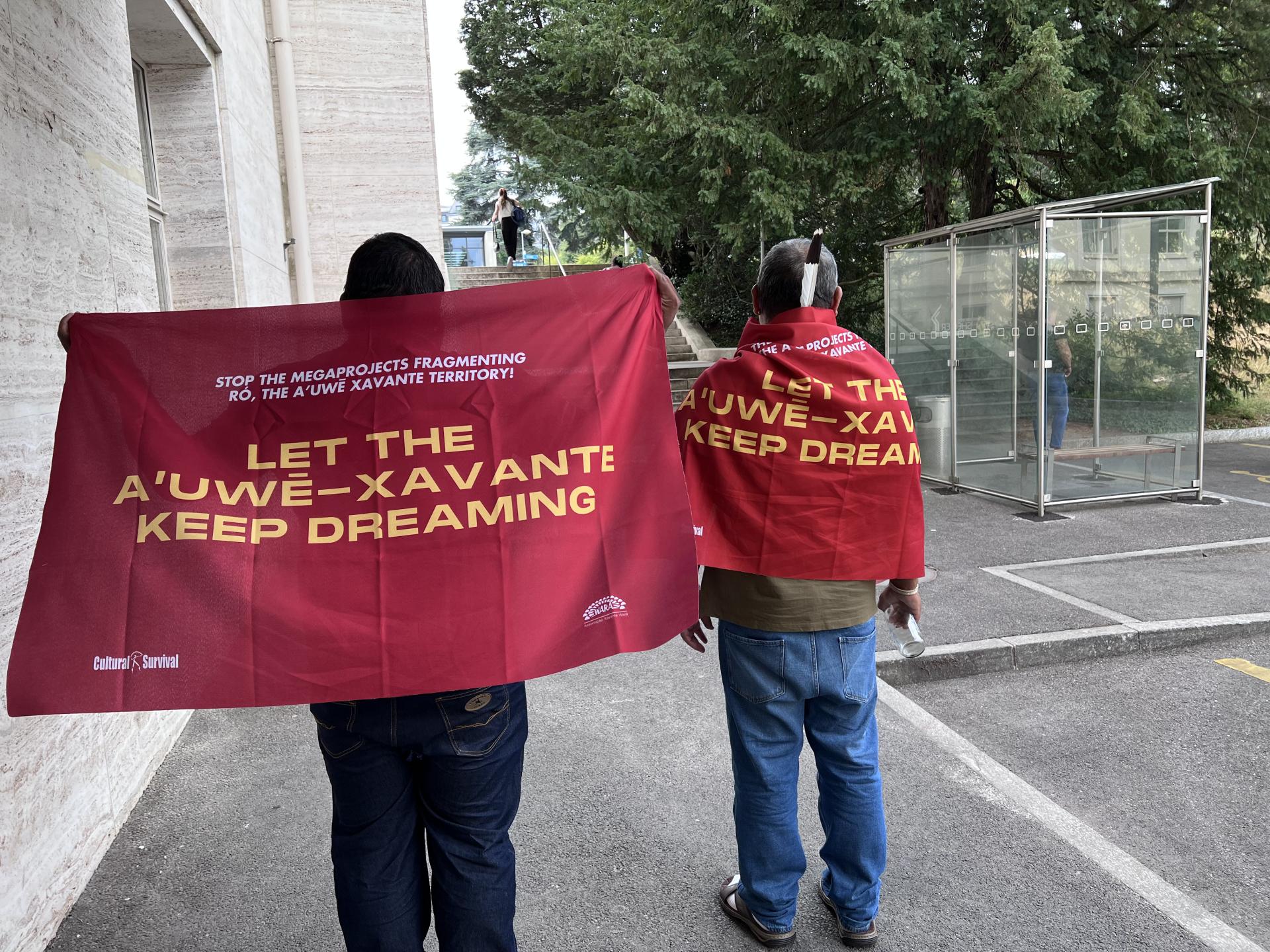
“We have come to the UN in Geneva to reveal to the world what is happening in our territories. Megaprojects are being forced upon our lands without our Free, Prior and Informed Consent, driven by empty promises that mislead our leaders. We are here to demand genuine dialogue with the government and the mega corporations, to ensure that our voices are heard and that our lands & lifeways are respected,” shared Hiparadi Dzutsi Wa Top Tiro (Xavante), chief of Abelhinha Village in the Sangradouro Indigenous Territory.
Missia Ihiwe Urace (Xavante), leader of the Areões Peoples from the Mutum community, stated, “The Brazilian government does not respect ILO Convention 169, which it signed in 2004 to guarantee our rights. The governor, politicians, and agribusiness are violating our rights, pushing projects onto our territories without consulting us. There is a desire to destroy our culture, but we are still here, resisting. Brazil and its people demand that we respect their laws and rights, but they do not extend the same courtesy to us. They demand respect, but they do not reciprocate.”
Bekroiti Xikrin (Xikrin), youth leader, teacher, and researcher, expressed, "The world speaks of a 'green transition,' but for us, it means the destruction of our home. There is no just transition if it continues to sacrifice Indigenous peoples. We are the guardians of the forest, not suppliers of strategic minerals. If you want a sustainable future, you must respect our lands and our lives."
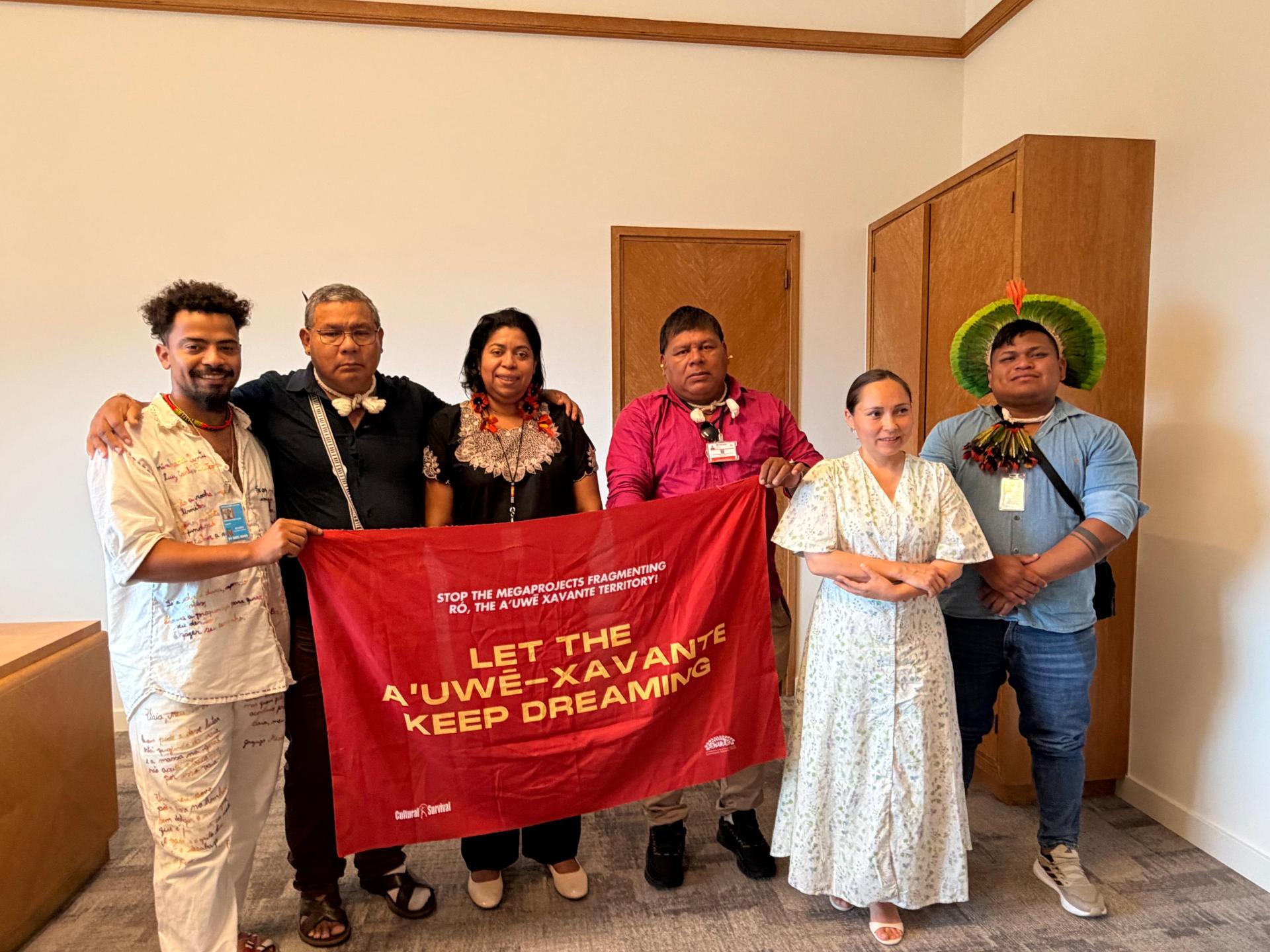
Adapted from and published alongside a submission presented to the UN Expert Mechanism on the Rights of Indigenous Peoples (EMRIP), the advocacy brief highlights:
-
The A’uwẽ Xavante right to cultural integrity, protected under ICCPR Article 27, UNDRIP, ILO Convention 169, and the American Convention, is inseparable from their territory and the resources that sustain material and spiritual life.
-
Free, Prior and Informed Consent (FPIC) is not a bureaucratic formality but the procedural guarantee of that substantive right. Where a project would substantially compromise life and culturally significant activities, international law requires consent, not mere consultation.
-
Brazil violates both: it has fragmented and coerced “consultation,” misrepresented A’uwẽ consent, and allowed the destruction of the cultural substrate the law exists to protect.
-
The only lawful remedy is immediate suspension of FICO and connected infrastructure, followed by a genuine FPIC process through A’uwẽ inter-territorial assemblies with binding authority to refuse.
The Indigenous delegation from Brazil is in Geneva with documented concerns: fragmented consultation practices, pressure on communities, and a State presenting a project as "development" that risks deepening a long history of violations against the Xavante, a Peoples who survived removals and epidemics in the twentieth century and returned to their lands to rebuild.
TAKE ACTION