
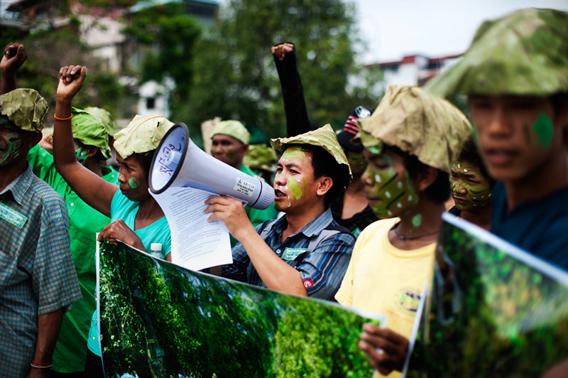
In a great victory, four Economic Land concessions that had been authorized in the Prey Lang forest of Cambodia have been cancelled. The concessions, totaling 40,618 hectares, would have allowed for the clear-cutting of pristine primary forests in order to grow rubber plantations, adding to a long list of other concessions that threaten the Prey Lang forest.
Prey Lang activists and conservation groups said if the concessions had been allowed it would have meant “game-over” for Prey Lang.
A letter obtained by the Phnom Penn Post, the Cambodia government body the council of ministers stated that the concessions were cancelled because they were located in the middle of evergreen and semi-evergreen forests within the “largest low-land [contiguous evergreen] forest in Southeast Asia.”
Hoeun Sopheap, a representative of the Prey Lang Network, welcomed the cancellations but said other firms with ELCs were still rampantly logging. Concessions in this area threatens not only the forests, but also the livelihoods of the Kuy Indigenous peoples who call Prey Lang home. The Kuy have been active in protesting the concessions, and repeatedly patrol the forest to monitor for illegal logging activity that has been decimating the forest. On August 13th nearly 100 villagers embarked on motorcycles for a 3-day forest-watch to monitor the area. Mathieu Pellerin, a consultant with rights group Licadho, said that though it was good the ELCs that had yet to be fully established had been cancelled, active concessions still being used to clear forest needed to be stopped urgently.
The fight is not over yet. Illegal logging and more concessions still threaten the forest. Please take action to defend Prey Lang Forest, here.
See the http://preylang.com for more information about Prey Lang and the Kuy people who live there.
