
Board

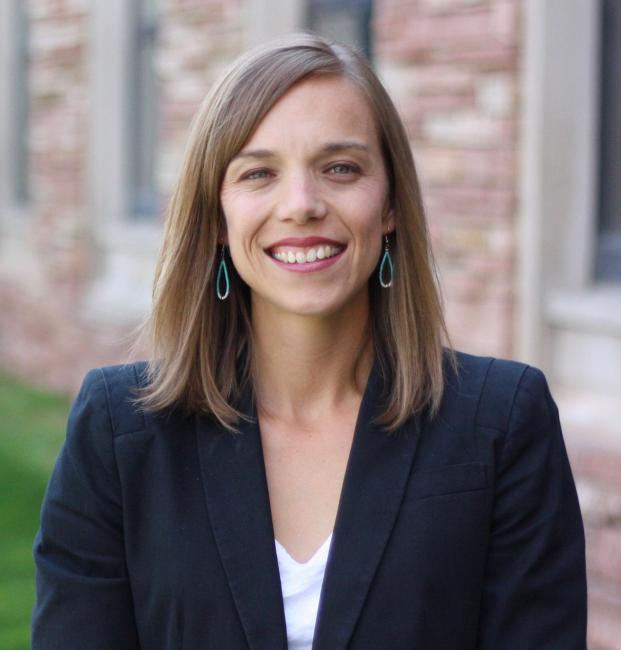
PRESIDENT AND CHAIR OF THE BOARD Sarah Fuller is the Executive Chairman of Millennium Prevention Inc., which combines serious science with web-enabled platforms and apps that link consumers and providers to improve health and wellness outcomes. She is also President Emeritus of Decision Resources Inc., a leading research and advisory firm focusing in health care. The company is best known for its therapeutically-focused analyses of global pharmaceutical, biotechnology and medical device markets and for its research on the U.S. managed care industry. Previously, Ms. Fuller was a Vice President at Arthur D. Little, Inc., from which she and Sam Fleming led a buyout of Arthur D. Little Decision Resources in 1990. Ms. Fuller is a member of the Board of Trustees and of the Board of Overseers at the School of Arts and Sciences at the University of Pennsylvania. In addition, she participates in the Huntsman and the Life Sciences Management Advisory Boards. She is also on the board of Cytel Corporation and The Forbes Consulting Group. Ms. Fuller holds a B.A. from the University of Pennsylvania and an A.M. from Harvard University.


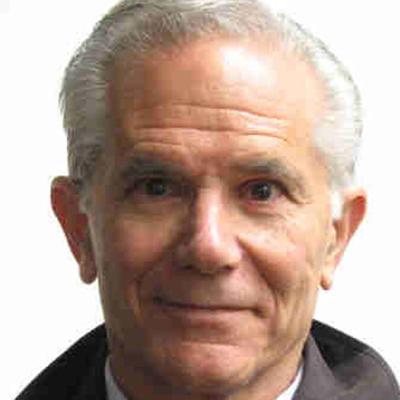
VICE CHAIR Vincent O. Nmehielle, Ikwerre from the Niger Delta region of Nigeria, is a Barrister and Solicitor of the Supreme Court of Nigeria, has over 22 years of professional and academic experience. He is currently a Professor of Law and Head of the Wits Programme on Law, Justice and Development in Africa at the University of the Witwatersrand (Wits) School of Law in Johannesburg, South Africa where he has taught since February 2002 and held the Bram Fischer Chair in Human Rights Law from 2002-2004. He was a Professorial Lecturer in Law at the Oxford University and George Washington University Human Rights Program in 2003 and 2004. From 2005-2008 Professor Nmehielle went on leave from Wits to serve as the Principal Defender of the United Nations-Backed Special Court for Sierra Leone in Freetown, Sierra Leone. He returned to Wits in June 2008. He holds a Bachelor of Laws (LLB) degree from the Rivers State University of Science & Technology, Port Harcourt, Nigeria; a Master of Laws (LLM) degree in International Law from the University of Notre Dame, and a Doctor of Juridical Science (SJD) Degree in International & Comparative Law from the George Washington University, Washington, DC. Professor Nmehielle specializes in International and Comparative Law and his professional, academic and research interests are in the theme area of Law, Governance, Justice and Development in Africa.

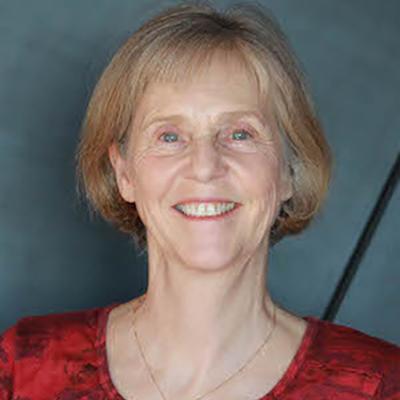
TREASURER Nicole Friederichs is a Practitioner-in-Residence at Suffolk University Law School in Boston, MA where she teaches an Indian Law and Indigenous Peoples Clinic. Prior to joining Suffolk, she practiced federal Indian law and international human rights law working on a range of cases, including jurisdictional cases between Native American tribes and New England states, and  indigenous peoples land rights cases before the international and regional human rights bodies. Nicole also has experience in the international development sector supporting community development and education programs located in West Africa. She holds a LLM in Indigenous Peoples Law and Policy from the University of Arizona, a JD from Suffolk University Law School, and is a graduate of Mount Holyoke College and the London School of Economics.

CLERK Jean Jackson chairs the Department of Anthropology at the Massachusetts Institute of Technology. Her books, articles, and teaching focus on medical anthropology, social and ethnic identity, gender issues, and indigenous mobilization in Colombia. She received her doctorate in anthropology from Stanford University.


Evelyn Arce, of Chibcha descent, has been Executive Director of International Funders for Indigenous Peoples (IFIP) since 2002. She obtained her Master’s of Art in Teaching degree at Cornell University with a concentration in Agriculture and Adult Education, and was a high-school teacher of Science, Horticulture, and Independent Living for seven years.  Evelyn has worked as a communications consultant for the Iewirokwas Program, a Native American Midwifery Program and coordinated the American Indian Millennium Conference held at Cornell University in 2001. As IFIP’s Executive Director, Evelyn brings a vision of philanthropy that is in accord with Indigenous culture, values, and spiritual sensibilities. She leads IFIP into its second decade of educating funders about critical Indigenous issues and supporting the philanthropic community in its efforts to increase funding to Indigenous communities and causes around the world.

Karmen Ramirez Boscan (Wayuu) is an international Indigenous Peoples’ rights activist with a life time of experience working with Wayuu communities in Colombia as well as national organizations such as Sütsüin Jiyeyu Wayuu—Strength of Women Wayuu, National Indigenous Organization of Colombia (ONIC), and Andean Coordinator of Indigenous Organizations (CAOI). She has advocated for Indigenous issues internationally working as a representative and consultant for organizations such as the International Labor Organization (ILO), Indigenous Peoples and Minorities Unit at the Office of the High Commissioner of United Nations for Human Rights, Organization of American States (OAS) and the U.N. Permanent Forum on Indigenous Issues. She studied in Geneva as a beneficiary of the Scholarship Program for Indigenous Peoples at the Office of the High Commissioner of United Nations for Human Rights and has a background in social communication and journalism.

Duane Champagne (Turtle Mountain Band of Chippewa from North Dakota) is professor of sociology, law, and American Indian sudies, a member of the Faculty Advisory Committee for the UCLA Native Nations Law and Policy Center, a former senior editor for Indian Country Today,  a past acting director of  TLCEE (Tribal Learning Community and Educational Exchange) Working Group, and contributor of the education chapter to the United Nations Permanent Forum on Indigenous Issues’ (UNPFII) State of the World's Indigenous Peoples Report.  Professor Champagne was director of the UCLA American Indian Studies Center from 1991 to 2002 and editor of the American Indian Culture and Research Journal from 1986 to 2003, and again in 2011 to 2014.  He has written or edited over 125 publications.

Laura R. Graham is a professor of anthropology at the University of Iowa. Her current work focuses on lowland South American Indigenous Peoples' activities in national and international arenas. She concentrates on two prominent and especially politically engaged groups: Xavante of central Brazil (Ge) and the Wayúu (Arawak, also known as Guajiro) of Venezuela and Colombia. She is past chair and current emeritus member of the American Anthropological Association's Committee for Human Rights (CfHR).  She chairs CfHR's Task Group on Language and Social Justice.  From 1994-2005 she directed the Xavante Education Fund, a Cultural Survival Special Project and now serves as a coordinator of Xavante Warã Association's projects with Cultural Survival.  

Steven Heim is director of social research for Boston Common Asset Management. He is primarily responsible for social investment research on domestic and international companies and for its shareholder advocacy work. He has over 15 years experience in this field. Steven brings a wealth of understanding of food and sustainable agriculture issues. He led shareholder proposals with ConAgra, Kroger, Yum Brands, and Dean Foods, worked over 7 years for Rural Vermont, a family farm advocacy group, and served 16 years total on the boards of consumer co-op stores. Steven received two Bachelor of Science degrees from Massachusetts Institute of Technology.

James Howe is a professor of anthropology at the Massachusetts Institute of Technology. A specialist on the Kuna of Panama, his research focuses on political and historical anthropology, indigenous-state relations, and the impact of missionaries. He received his doctorate in anthropology from the University of Pennsylvania.

Edward John (Tl’azt’en) is a prominent First Nations political leader in Canada. He holds a B.A. from the University of Victoria and an LL.B. from the University of British Columbia. John has served as an elected Councilor and Chief of Tl'azt'en Nation. He also served as Chief of the Carrier-Sekani Tribal Council. For his service to Tl'azt'en Nation he was awarded the title of Grand Chief of Tl'azt'en Nation. A fluent speaker of Carrier and one of the few people considered eloquent public speakers in Carrier, John was the founding President of the Yinka Dene Language Institute. He helped to create the First Nations Summit, the organization representing the British Columbia First Nations involved in treaty negotiations with Canada and British Columbia. In June, 2010 John was elected to his ninth term on the Task Group of the First Nations Summit. He is also Chief Treaty Negotiator for the Carrier Sekani Tribal Council. In January 2011 he began a three year term as the North American Representative to the United Nations Permanent Forum on Indigenous Issues.

Cecilia Lenk is a Town Councilor in Watertown MA. She consults on technology, health care, and education; and is a member of Launchpad. She has developed numerous national and international Internet initiatives in the areas of science, health, and science education. She received her doctorate in biology at Harvard University and her undergraduate degree from Johns Hopkins. She is currently Chair of the Society of Engineering Alumni at Johns Hopkins.


Stephen Marks is a Professor in the Department of Global Health and Population at Harvard School of Public Health.  The emphasis of his work is on the interface of health and human rights, drawing on the disciplines of international law, international politics, international organizations, and international economics. Stephen’s recent research has focused on integrating human rights into sustainable human development; biotechnology and human rights; impunity for mass atrocities; terrorism and human rights; cultural rights; tobacco control; access to medicines, and human rights education. He has published books, articles or book chapters in each of these areas. He directs Harvard Series on Health and Human Rights at Harvard University Press. He recently co-edited a book on Achieving the Human Right to Health, and his book Health and Human Rights: Basic International Documents is now in its third edition. Stephen is currently collaborating with Prof. Balakrishnan Rajagopal of MIT on a Research Handbook on Human Rights and Health for publication in 2014. He is also editing a volume on the right to development for the Office of the High Commissioner for Human Rights.

Pia Maybury-Lewis is a co-founder of Cultural Survival. She managed the intern and bazaar programs until 2006.


Les Malezer, Aboriginal Australian of the Gabi Gabi Community, is co-chair elect of National Congress of Australia’s First Peoples and the general manager for the Foundation for Aboriginal and Islander Research Action (FAIRA) based in Woolloongabba, Australia. He is also currently serving as Chairperson for the international Indigenous Peoples’ Caucus, and is a member of Cultural Survival's Program Council. Les was instrumental in lobbying governments to support the United Nations Declaration on the Rights of Indigenous Peoples with the Caucus.


P. Ranganath Nayak is the chief executive officer of Cytel Software. He has more than 24 years of senior-level management experience in technology and management consulting, and holds a doctorate in mechanical engineering from the Massachusetts Institute of Technology.


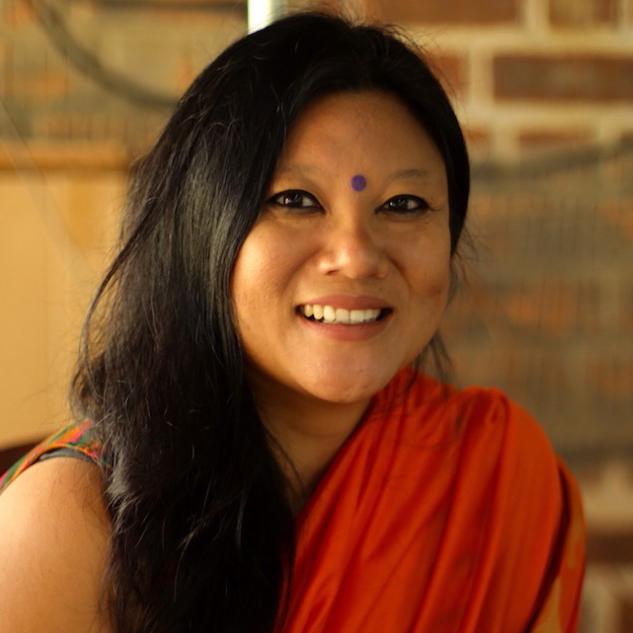
Stella Tamang, Tamang tribe from Nepal, was Chair of the International Indigenous Womens Caucus at the third session of the U.N. Permanent Forum on Indigenous Issues, is the chair of the South Asia Indigenous Womens Forum, and an advisor of Nepal Tamang Women Ghedung. She founded Bikalpa Gyan Kendra in Nepal to contribute to students' education and livelihood by combining academic learning with practical training. She is a member of Cultural Survival's Program Council. 

Jeff Wallace is founder of North Star Management, a firm that manages and develops commercial buildings in Boston. He holds a degree from Huxley College of Environmental Studies in Bellingham WA and an MBA. His past experience includes working for a venture capital firm and for an architect/developer before founding his company.

Che Wilson, Ngāti Rangi from the North Island of Aotearoa-New Zealand, is a managing director of a consultancy, Intugen Ltd, focusing in Māori community and cultural development. He possesses formal experience in policy and community development and has worked in the public sector in New Zealand and the United Kingdom. He was the chair of his tribe from 2008-2011 where he stepped down to become the Chief Executive.


Additional Program Council Members and Program Advisors

Jacob Manatowa Bailey (Sauk)  

jessie little doe baird (Wampanoag) 

Theodore Macdonald, Jr.

Mirian Masaquiza (Kichwa)

Ryan Sense Wilson (Oglala Lakota)