For as long as I can remember, art and story-telling have surrounded every corner of my life. Embraced through every detail, showing up in music, songs, textiles, food, and celebration, for me, art, culture, and identity are inseparable. They are roots that expand from my body to my homelands, grounding me to my community no matter what territory I find myself in, always strong, always present. The love I have for my culture and for the people I come from has always been the reason to channel that collective memory, that collective love of our community.
I come from a culture where people carry art into all aspects of their lives. I am the daughter and granddaughter of artisans, musicians, textile weavers, and mindalaes, who are artists, merchants, musicians, dancers, and cultural carriers. They have built systems of commerce across territories, creating paths that allowed Kichwa Otavalo communities to sustain themselves economically around the world.
I was never formally taught how to draw or paint. Our art is intergenerational, influenced and guided by the love of all those who came before us. Today, I call myself an artist through digital illustration, photo embroidery, murals, and wearable art. Wherever I go, I am proudly Kichwa Otavalo, carrying the Imbabura mountain in my body and the love, knowledge, and memory of my grandparents and ancestors; a whole universe of generations compacted in my heart.
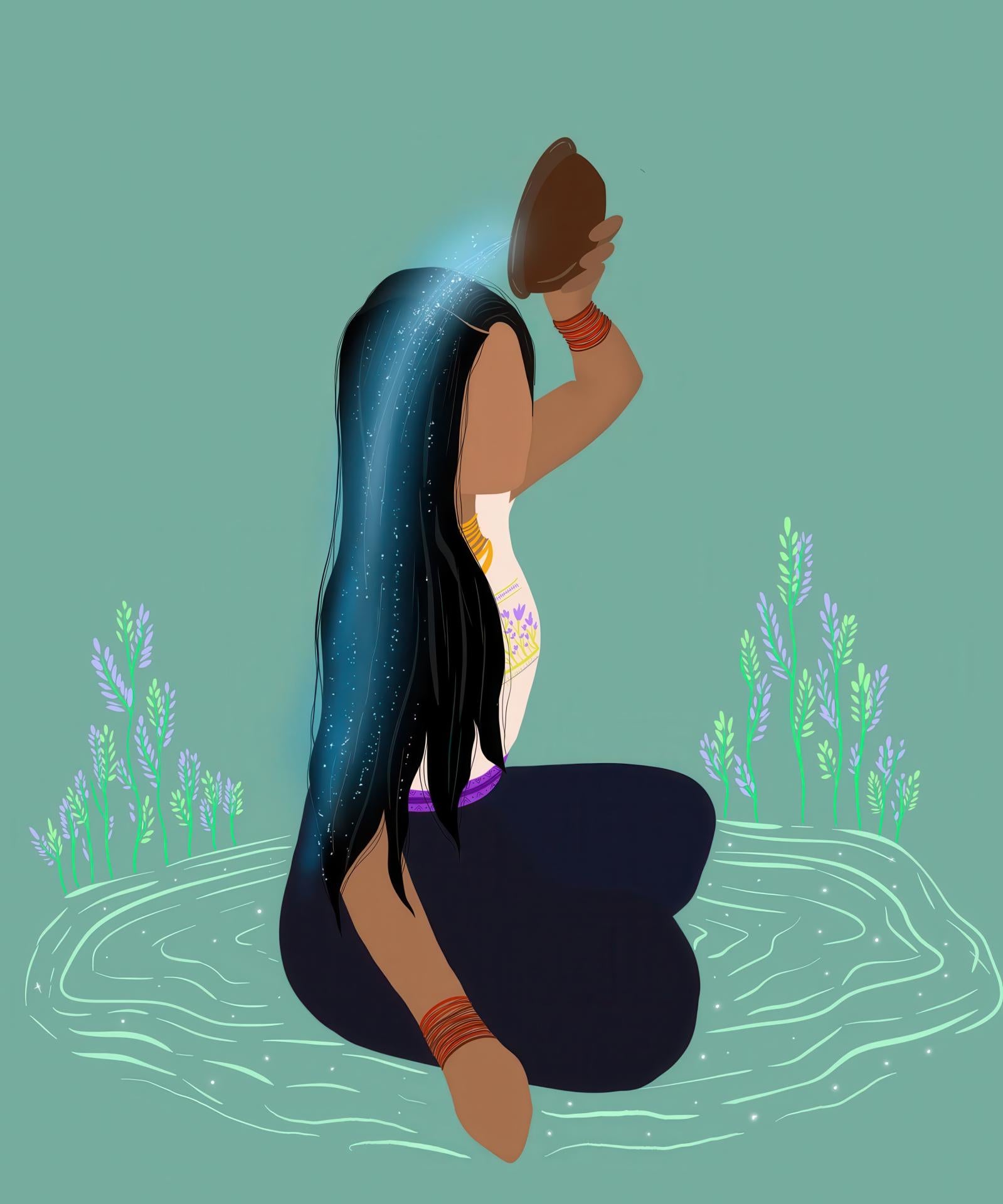
“water yourself” (2024).
Wherever Kichwa Otavalo people migrate out of necessity, we carry our culture with us. There is no way to separate our bodies from our territory. It is so deeply embedded in our memory that it traverses colonial borders and generations. Our art has always been a way to sustain ourselves, creating those spaces while being away from home. At the root, it has been the beating heart of the Kichwa Otavalo Peoples.
Drawing and illustration entered my life during college. What began as something fun and grounding became a way of processing identity, memory, and belonging. As I continued creating, I noticed I was constantly drawing variations of the same image: myself wearing my traditional clothing, the anaco. Over time, I realized that every drawing held something deeper than a woman in traditional clothing. When I wear my anaco, I feel the most elegant and the most beautiful. Those drawings transported me back to being a little girl, my mom helping me get dressed, placing each piece, teaching me how to wear it. My mother, my first teacher, the first storyteller I met, the first artist I knew. Through drawing, I was bringing those memories, those relationships, those raw feelings, pieces of home, into every space I occupied.
It took me years to confidently call myself an artist, despite coming from a culture that lives and breathes art. Yet the more I created, the more intention it carried, and I began to find language to describe why creating Kichwa art in the present matters. For me, art has always been political and never separate from resistance. Every illustration, every mural, every piece of wearable art is a way to assert our presence. That same force moved me to create work in response to the violence my community was facing—artwork that took direct action and broke into the news cycle, making the message land. That is what brought me to Kichwa Futurism.
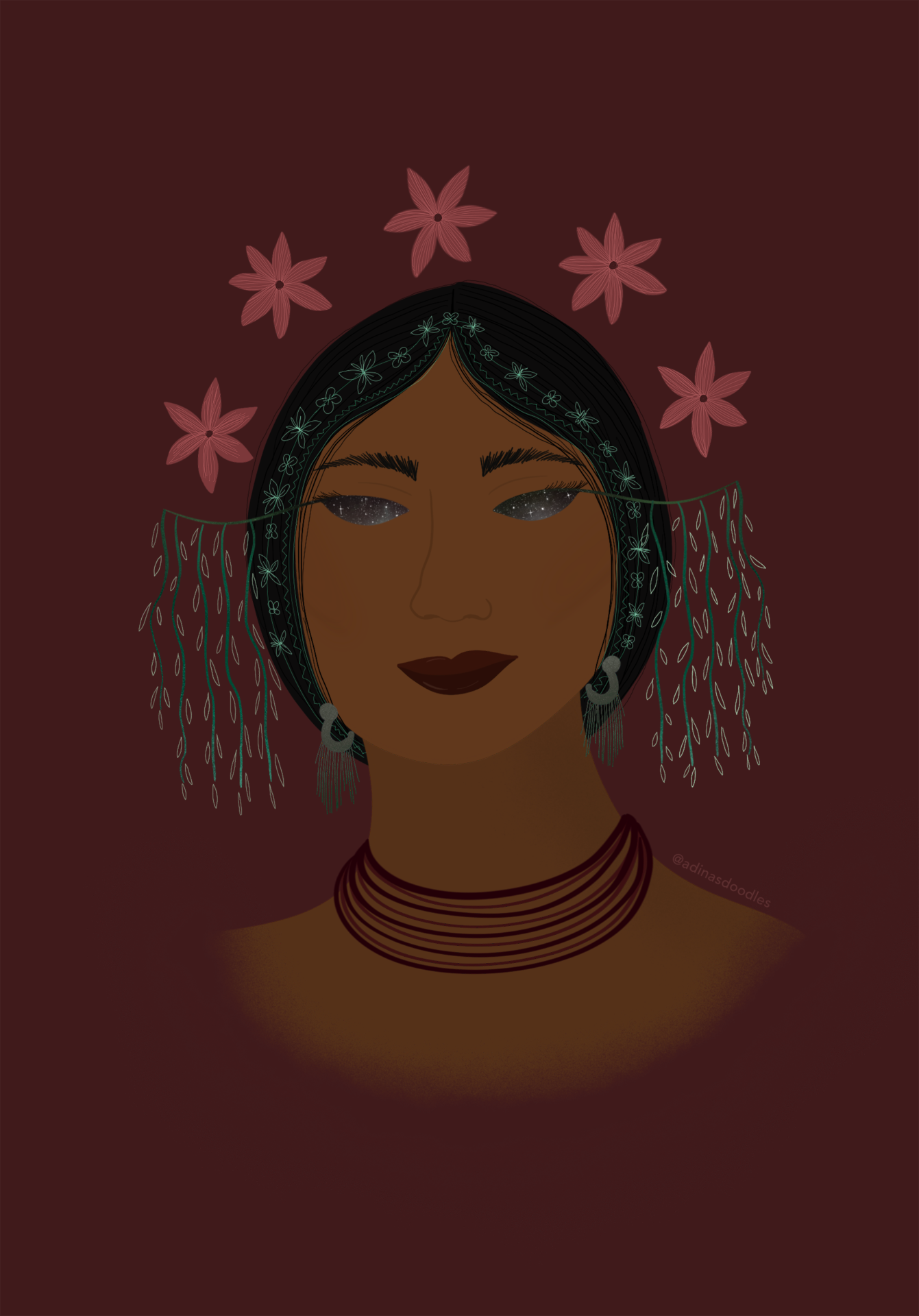
“Pawkar Szn” (2025).
Indigenous Futurism as a term has always resonated with me, but Kichwa Futurism is how I name it from where I stand, explicitly centering my people, our territory, and the Global South in a conversation that often looks only northward. It is the belief that Kichwa people belong in the future just as much as we belong in the past and present. Too often, Indigenous people are imagined only through books, museums, or tokenized narratives. Yet our communities are living and continuously creating new ways of expressing our existence in the world.
Kichwa Futurism is alive across every creative form our people are working in, bringing our identity into spaces where Indigenous music, visual art, film, photography, and fashion haven’t always been centered. I am equally inspired by Kichwa artists and creatives in the diaspora, those of us creating from distance, holding our culture with the love that comes from knowing what it means to be far. Indigenous Futurism creates space to imagine ourselves beyond settler colonialism, asking what is possible when Indigenous people can visualize and manifest our own futures. Our art and our futures are an extension of our bodies, universes, galaxies, the manifestation of the dreams of all our relatives.
Every time I create, I am pushing back against the idea that we can only be seen through a settler colonial gaze. Art has allowed me to contribute to representation that goes beyond visibility. It has become a way to reclaim narratives and ensure that our voices actually take up space. When people from my community see themselves in my work, I am always reminded of how powerful that is, not only for newer generations, but for little me, who never saw herself reflected anywhere.
Sharing my work online opened something I didn’t expect. It brought me to other Kichwa youth in the diaspora, people who saw my work and recognized themselves in it, and from those connections grew some of my deepest friendships. Creating art has allowed me to contribute a part of myself to the collective history of our community, a way to show up as a Kichwa Otavalo warmi (woman) from the diaspora, raw and unromanticized, outside of any tokenized frame.
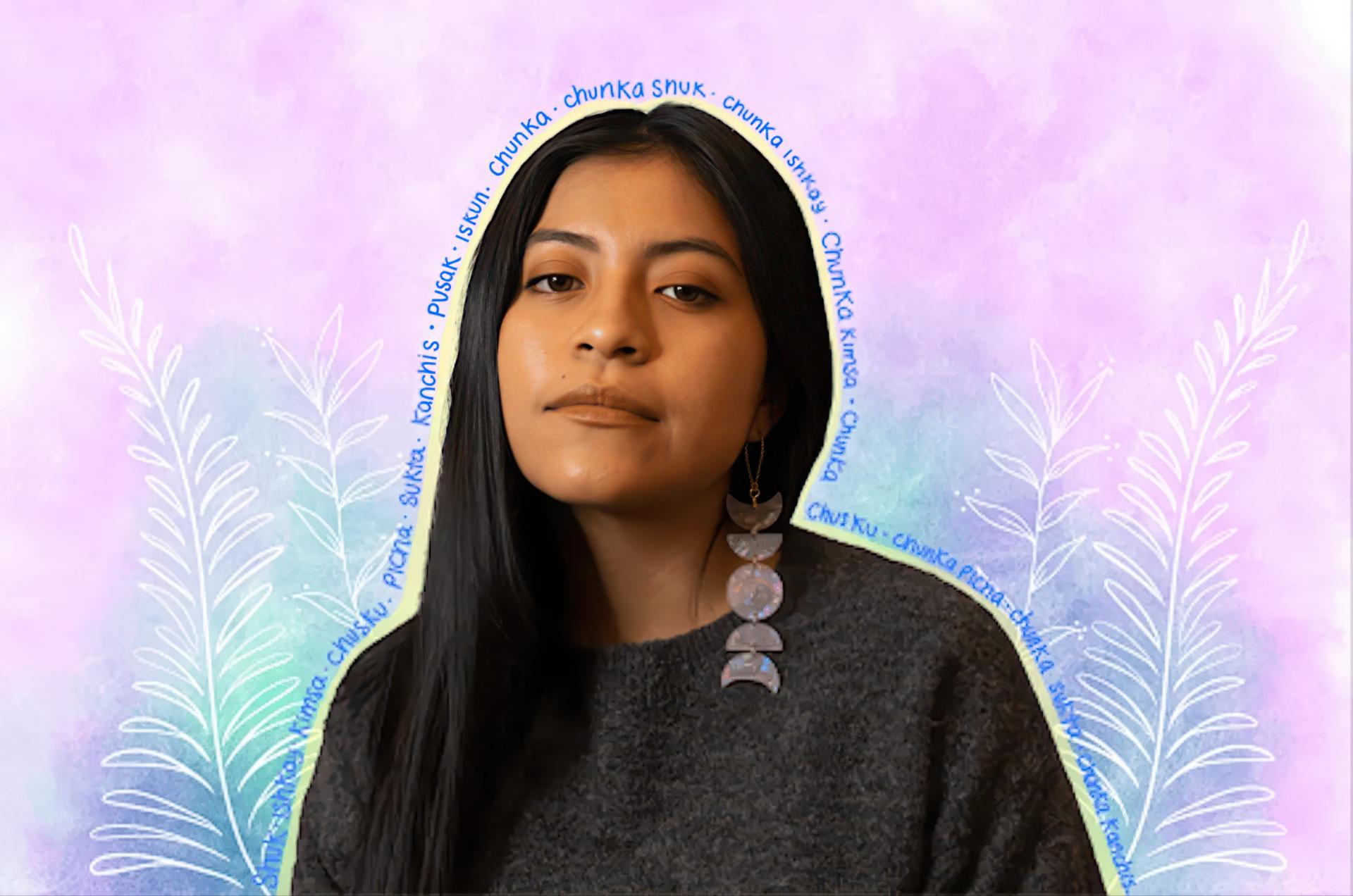
“Ñuka Adina” (2021).
Within Ecuador, Indigenous identities are constantly co-opted by nationalist narratives, the idea that our culture belongs to everyone, that it is simply part of being Ecuadorian. Yet, Indigenous communities continue to face discrimination, exclusion, and racism, celebrating Indigenous aesthetics while actively erasing Indigenous people. Every year when I go back home for Inti Raymi, I see it firsthand: Ecuadorians and tourists wearing our clothing, playing dress-up in the name of celebration, as if our identity were a costume available to anyone who wants to try it on. But this is not only a phenomenon of Inti Raymi. Brands use the Kichwa language for business names, our symbols for marketing, our people as props, and call it appreciation. Politicians wear our clothing to get votes. Folklore dance groups perform our dances outside any cultural context.
Even in the diaspora, the appropriation of our identity continues, people claiming identity without community attachment, while the extraction of our culture and bodies goes unnamed. I see this most visibly in the anaco. For Kichwa women, our traditional clothing is not simply an outfit or a symbol of Ecuadorian heritage. It is a political act of resistance. Every time someone treats it as a costume, they are not just borrowing an aesthetic. They are participating in the erasure of what it actually means to wear it, to carry it, and everything it took to still be able to wear it till this day. This is why it is so important for Indigenous people to create from our own eyes and experience. To tell our own stories from memory, responsibility, and lived experience that cannot be replicated from the outside. To move away from stereotypes and create space for how we want to be seen.
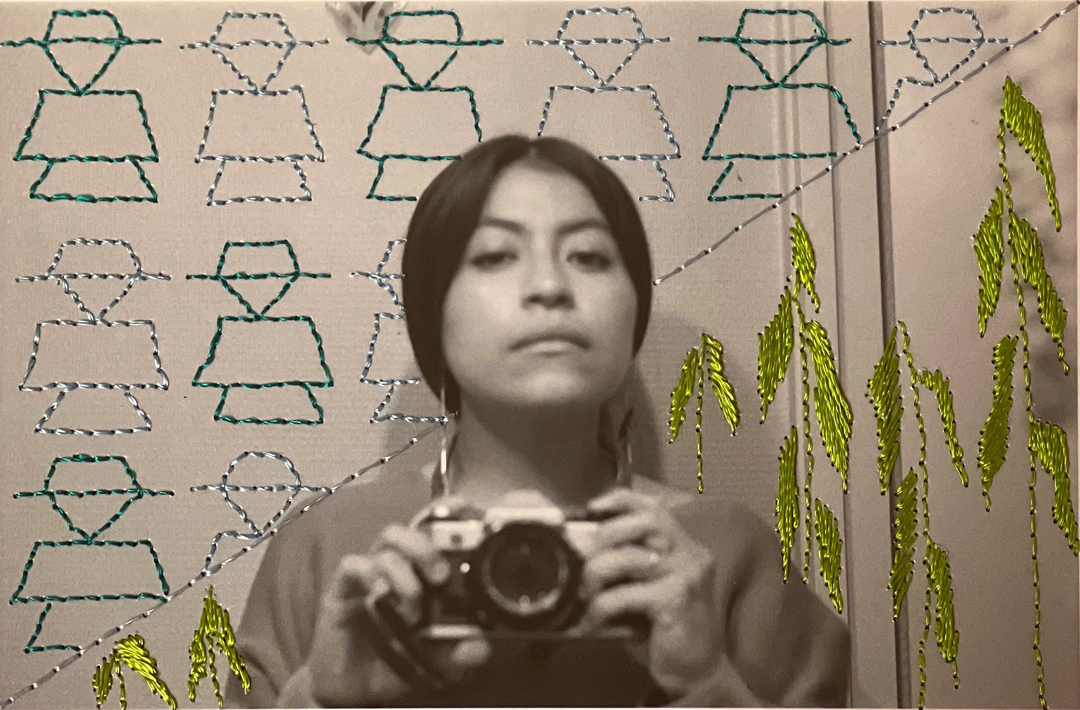
“Ñuka" (2021).
For me, art is both self-expression and responsibility. It is a way of honoring the people who came before me and honoring the futures that will come after me. Every work I create becomes part of the collective memory of who we are. It is my little seed for the future generation of Kichwa youth, artists, and creatives. Kichwa art lives in our bodies, and we carry our homelands wherever we go. The most radical act of love we can do is to speak from our experiences into every space we walk into.
Adina Farinango is an Indigenous Kichwa Otavalo artist and designer based between Lenapehoking/New York City and Ecuador. Learn more about her work at adinafarinango.com and follow her Instagram account @adinasdoodles.
Top image: “Sapi” (2021).
All art by Adina Farinango.