By Kerstin Sabene
On July 2, 2026, I boarded a lancha, a small public boat from Panajachel to the Maya Tz'utujil village of Santiago on Lake Atitlan in Guatemala, which has been the site of heightened tensions since the beginning of the year.
On October 24, 2025, the people of Santiago Atitlan succeeded in removing Mayor Francisco Coché Pablo from office on corruption charges. They forced his ouster following accusations of corruption regarding the illegal authorization of motor taxi licenses and a failure to respond to demands from ancestral authorities. They also succeeded in having the Supreme Electoral Tribunal recognize First Councilman Andrés Ajuchán Coó as the new mayor.
In February 2026, the Supreme Court ruled in Coché's favor, and he was technically reinstated with a provisional authorization to return to his post. Guatemala’s judicial system is highly corrupt, and the court’s ruling by no means implies that the charges against Coché were invalid or that he was exonerated. The Tz’utujil Peoples rejected the Supreme Court's ruling in favor of Coché and fiercely protested his reinstatement.
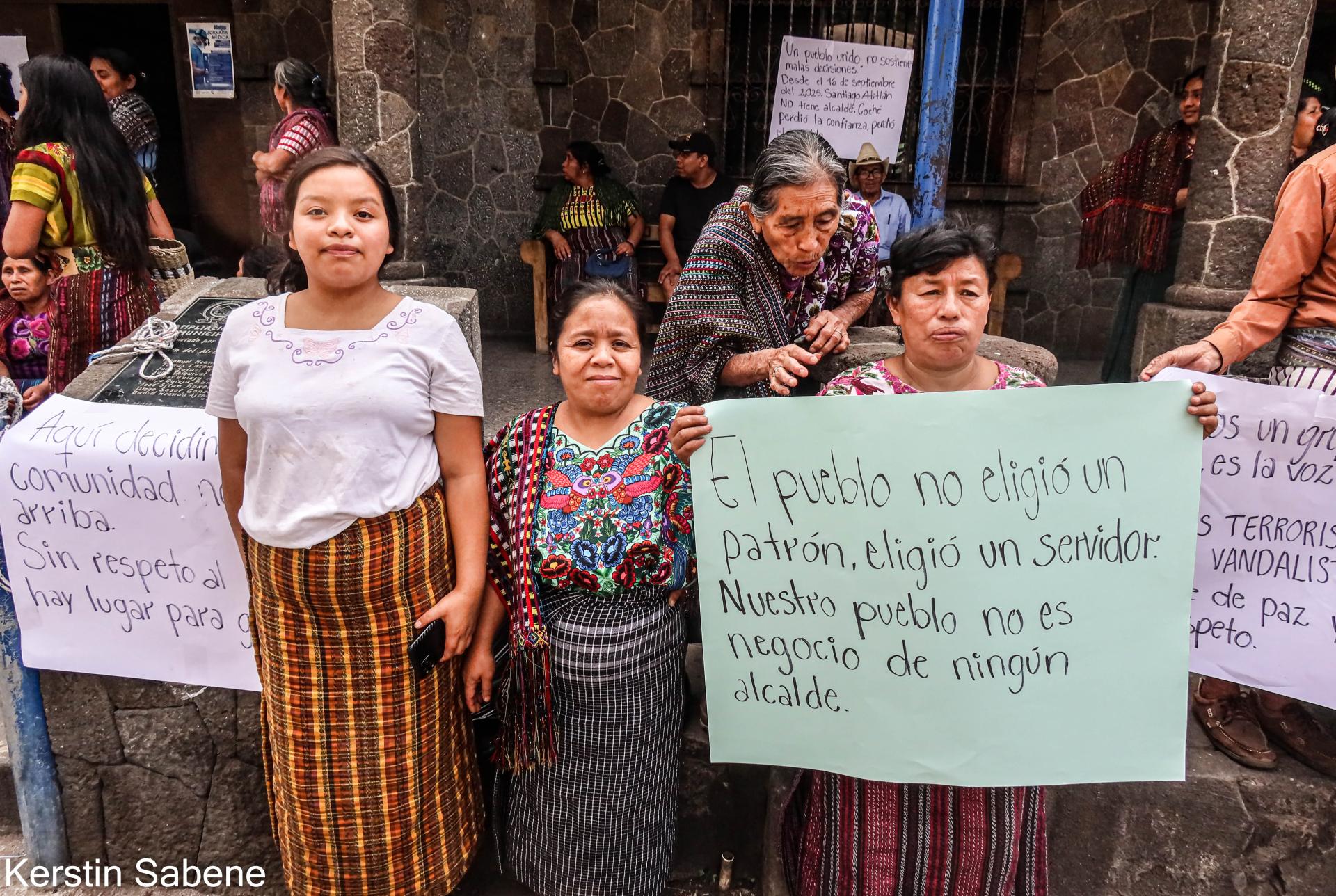
Peaceful protesters in Santiago's central park.
As I made my way up to town from the dock in Santiago, I was shocked by the broken glass, large chunks of concrete, rocks, and other debris strewn along the passageway. A few men who had gathered here explained they didn't want to clean it up because it was evidence, and the municipality's employees hadn’t yet arrived to take photos.
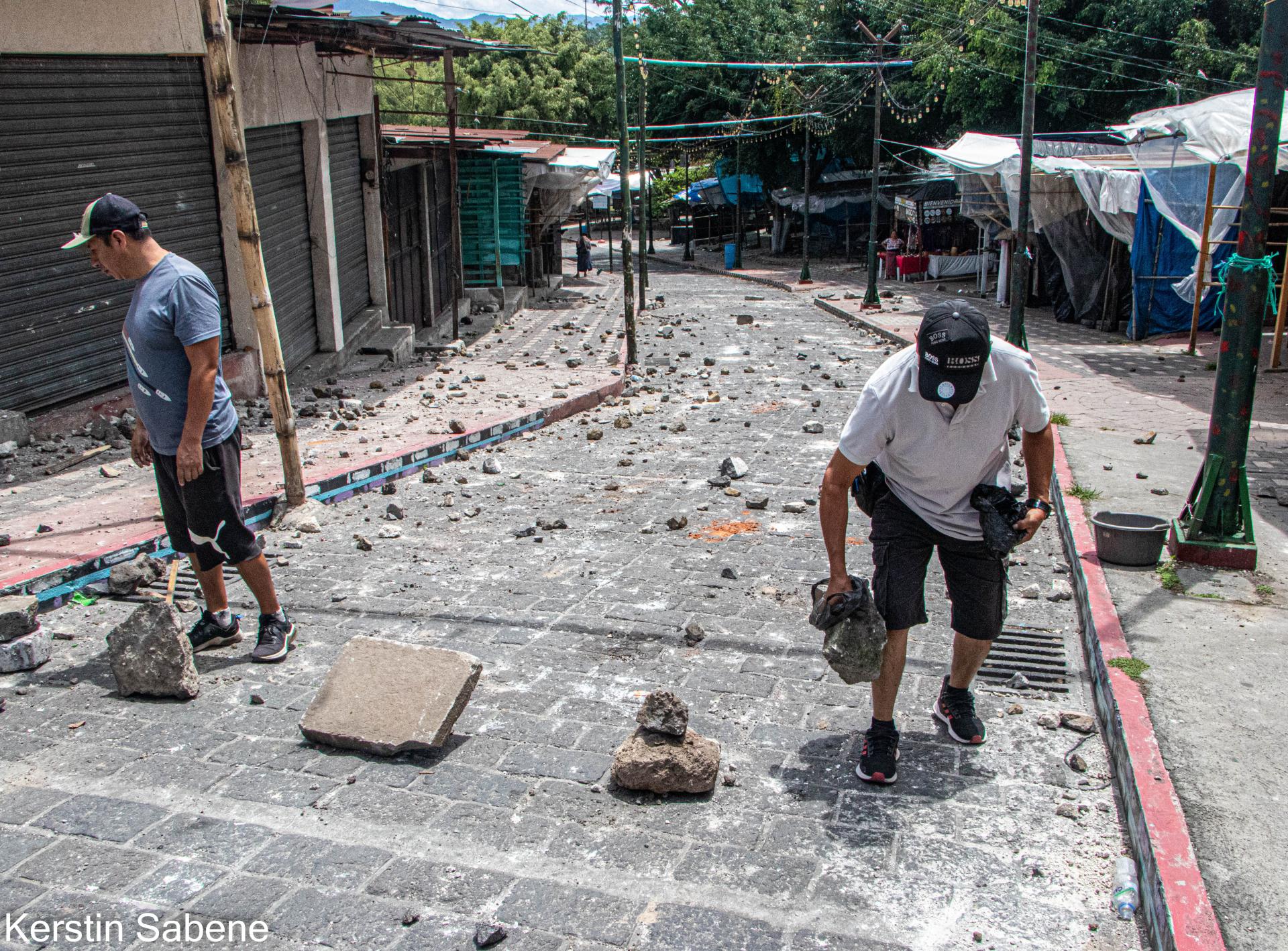
Walkway from Santiago dock up to town strewn with rocks, glass, and debris on July 2, 2026.
Members of the community who had been demanding Coché’s resignation learned that he was at a meeting on July 1 inside the ChukMuk Eco museum on the outskirts of town. People were protesting peacefully outside the museum until, at some point, someone attempted to set fire to the museum. Chaos ensued, and gunfire erupted; Coché was rushed to a boat by police, where he was transported to Panajachel and then to a nearby hospital for his injuries. The rocks strewn near the dock most likely had been used to pelt the vehicle Coché was evacuated in that morning.
As a result of the chaos, a man lost his life. Family, friends, and community members gathered on July 4 to bid a final farewell to Pedro Ixabalán Reanda (Maya Tz'utujil), 44, who died from a gunshot wound. According to witnesses, Ixabalán was participating in the protest demanding the resignation of Coché. Several other people were also injured.
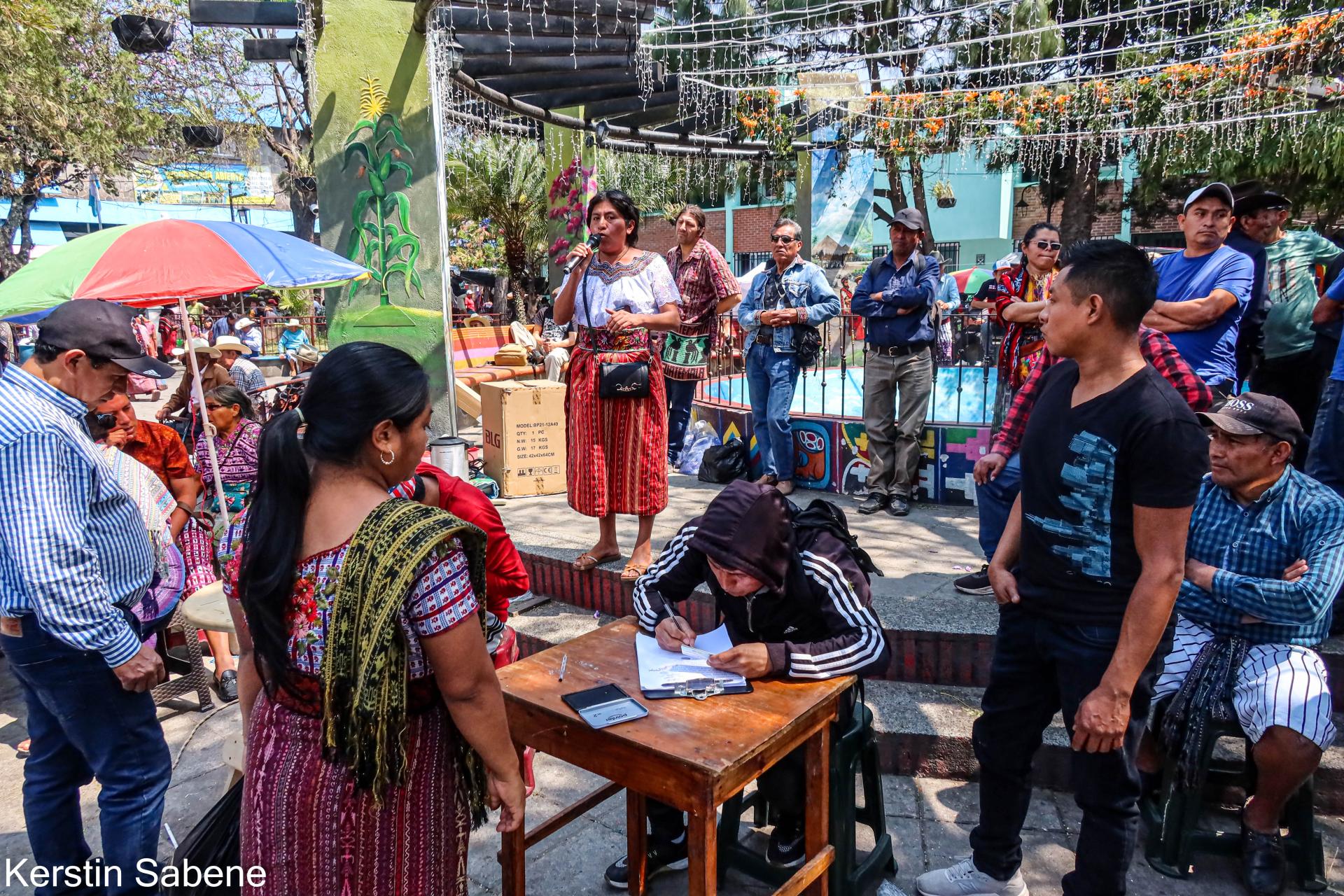
People in Santiago's central park signing a petition on February 15, 2026.
I proceeded to the park during my brief visit on that Thursday morning, where things were calm and appeared normal. The colorful market with its multitude of vendors and cornucopia of fruits and vegetables was in full swing. Local residents, mostly women, were discussing what had just transpired. One woman told me they were expressing their sorrow about the death of their community member and all of the injuries that had occurred. Another young woman said she was concerned about what they would do if the military were sent in, even though the army is prohibited from entering the municipality of Santiago.
To understand how the people of Santiago succeeded in expelling the army from their town in 1990 is to understand the survival, pride, and peaceful resistance of the Maya Tzutujil culture. It began during Guatemala’s 36-year internal conflict between the state and leftist guerrillas following the Panabaj Massacre on December 2, 1990. During the civil war, a military outpost was established in the Panabaj district of Santiago Atitlán municipality, ostensibly in response to the growth of the guerrilla movement. Late on December 1, 1990, a group of people who were tired of a decade of military intimidation marched toward the site carrying white flags, having agreed not to throw projectiles or provoke the soldiers. Leading the procession were the outgoing mayor and the mayor-elect, Salvador Ramírez y Ramírez, who was due to take office in a few days.
Upon their arrival, before Ramírez y Ramírez could speak to a superior officer, gunfire erupted, instantly killing 11 people, including children. Two more people died later in medical facilities, while more than 20 others were wounded. The community mobilized quickly, collecting signatures and thumbprints from those unable to sign. They petitioned the Guatemalan government and international authorities and succeeded in removing the army. Though the signing of the Peace Accords in Guatemala was still six years away, in Santiago Atitlan, the path to peace had already begun to be paved through social organization and the assertion of citizens' rights.
The common denominator between 1990 and today is the ancestral authorities, led by the cabecera, who is the leader of the almost-98% Tz'utujil community. It is a role of service to the community, carrying no monetary compensation. Based on a centuries-old Maya social order, cabeceras operate alongside, or in times of conflict against, the official municipal government, demanding accountability. They enforce community law, manage resources, and fight corruption, such as the recent dismantling of illegal tilapia cages in Lake Atitlan. Now they are challenging municipal authorities over a corrupt mayor who was successfully ousted, only to be reinstated.
In December 1990, the Cabecera led a movement with the backing of the local authorities, who traveled to Guatemala City to present their petition to Congress. After hearing the petition from the people of Santiago Atitlán, then President Vinicio Cerezo Arévalo issued a decree. The people had spoken, and the army was withdrawn from their municipality.
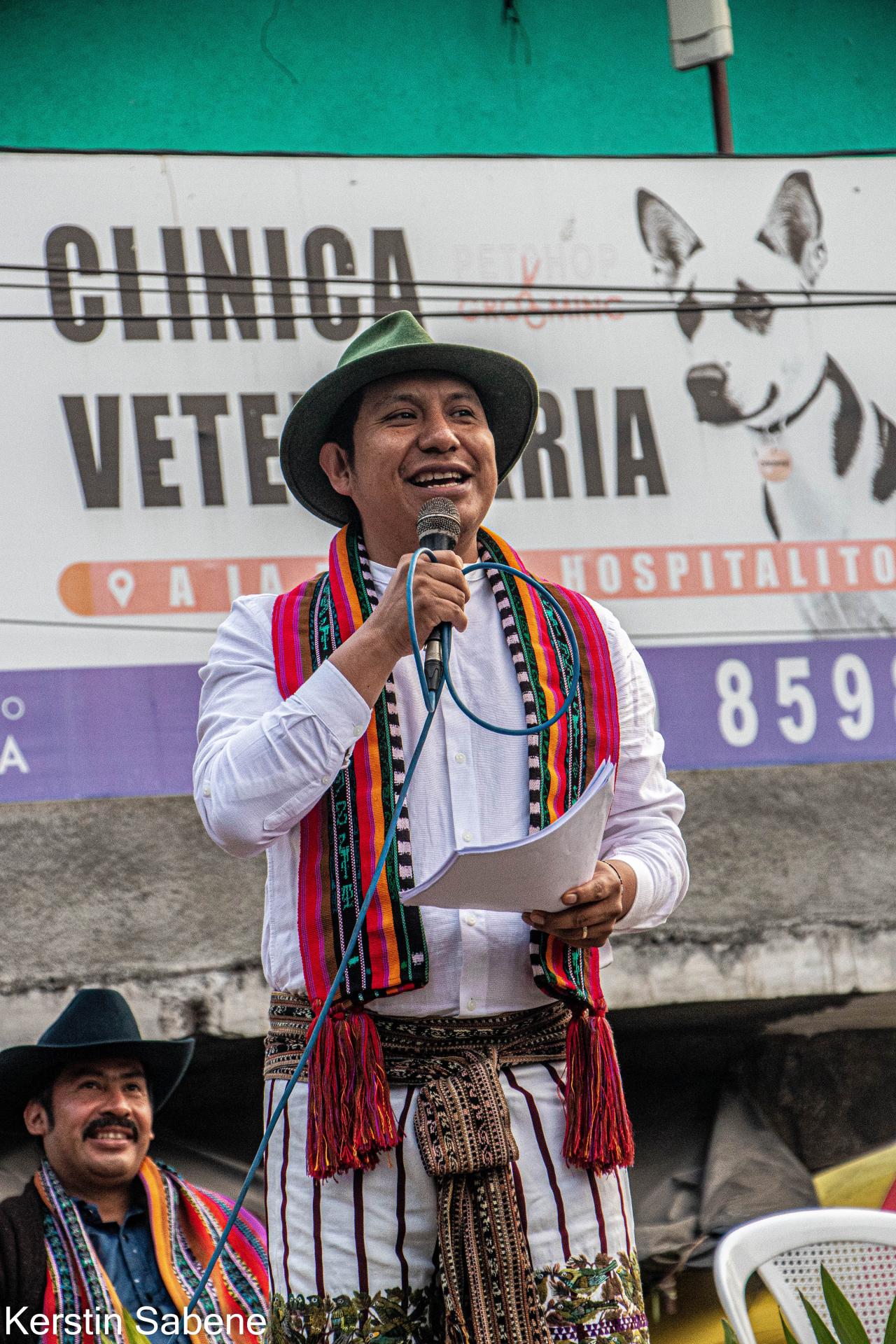
Scribe and Spokesperson, Diego Petzey of the Ancestral Authorities.
Community Mobilization and Unity
Since the ruling in favor of Coché in February, numerous peaceful protests have taken place in Santiago’s central park area. This is a principal gathering location where residents collected signatures to be sent to the courts, reiterating the people’s demand that the mayor be declared persona non grata.
In April, a select group of community members traveled to the Palace of Justice in Guatemala City, where they chanted slogans against corruption and offered a prayer before delivering a formal petition to the Supreme Court. According to Diego Petzey (Maya Tz'utujil), spokesperson for the Cabecera and member of the ancestral authorities, they were presenting a formal complaint because parts of the town were without water. “We needed authorization to purchase new water pumps that were desperately needed. The town was being held hostage for months without access to funds. Francisco Coché Pablo and the local municipality were not carrying out their duties,” he explained, adding that Coché “was referring to us, the ancestral authorities, as the terrorists.”
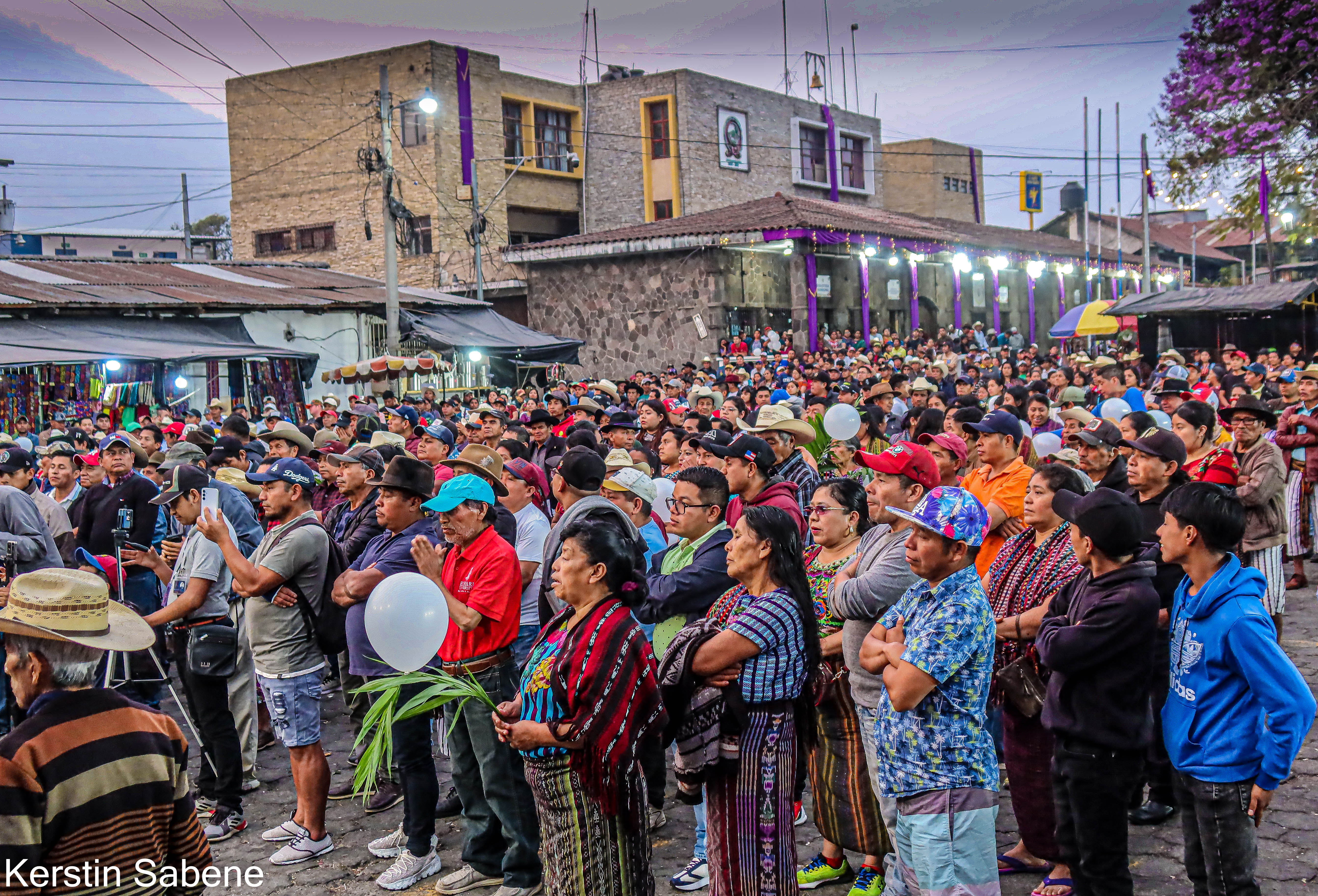
Prior to their visit to the capital in April, an important meeting took place on a Saturday afternoon in March near Santiago’s central park. As I approached the public meeting area where the asamblea was to be held, I heard the continuous ringing sound of Ch’ich’aal Rxiin Molon Ri’iil, the Unity Bell, from the roof of the town’s municipal building.
The purpose of the bell is to summon the Tz'utujil people in the event of an emergency, or as was the case on this day, to call the community to assembly to discuss urgent business matters. This is not a new practice in Mayan culture. Before the arrival of the Spanish in Guatemala, and more specifically in Santiago Atitlán, Maya leaders would regularly summon their people to discuss matters of importance affecting life in their communities. Recently, this centuries-old system of security and summoning has been revived for the people here. When the Unity Bell rings, everyone must attend and participate in the community assembly.
The main topic of this public assembly was to discuss the expenses incurred and funding still needed to repair the water pump that supplies the water to the town of Santiago Atitlan. The ancestral authorities and the people decided that everyone should donate a small amount to fund desperately needed repairs. Together with private donations from other organizations, they raised the necessary funds.
Cabecera Juan Mendoza Damián (Maya Tz'utujil) confirmed at a subsequent meeting in the park that they had purchased and installed four new water pumps. He also reiterated the town’s continued commitment to defending Lake Atitlan’s waters from further contamination. “We are fighting for the next generation,” he stated proudly, “and we will continue to do so.”
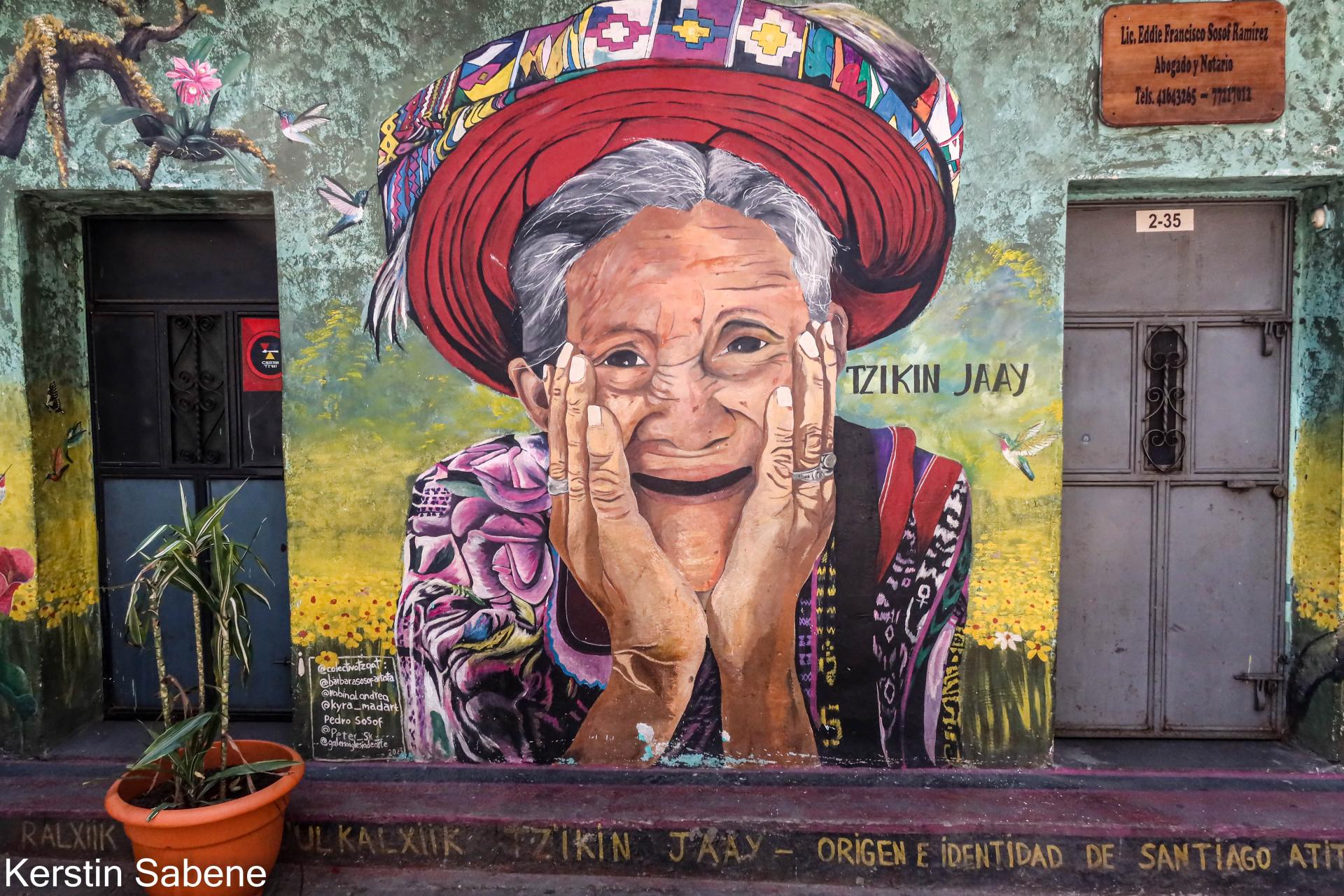
July 20, 2026 – A Day of Triumph
During my recent visit with Mendoza at his home on July 20, we discussed the struggle of the Tz'utujil Peoples. “The people's mobilization did not stem from political interests, but rather from the conviction that a municipality cannot be governed by officials whose integrity is compromised by corruption,” he said, adding that “One of the main problems is the lack of respect for our laws. Some of Guatemala’s legislative authorities, such as the Department’s District Prosecutor’s Office in Sololá, would not even investigate our claims.”
The crisis facing the Tz'utujil Peoples of Santiago Atitlan is the result of a structural problem recurring across multiple Indigenous territories in Guatemala: the coexistence of two systems of authority that the state has yet to effectively reconcile. There is the municipal institutional framework, grounded in the state legal system and representative democracy, and there are the ancestral and community authorities, whose legitimacy stems from history, collective organization, and their own customary laws. “This is not only a problem with the Tz’utujil, but with all of the Indigenous Mayan throughout the country,” Mendoza said.
On July 20, 2026, to everyone’s relief and amazement, the Constitutional Court of Guatemala issued a ruling to remove Coché as mayor of Santiago Atitlan—the same measure previously ordered by the Supreme Electoral Tribunal at the request of the Tz’utujil Peoples, who had accused him of corruption during his term.
The situation in Santiago Atitlan underscores a reality Guatemala has yet to fully resolve: the country continues to respond to the consequences of conflict while lacking a robust public policy to prevent them. Tragically, it took an episode of violence and the death of a community member to force the Constitutional Court to act. “As long as the state focuses on [putting out] the fire without addressing the conditions that ignite it, new crises will continue to emerge across the country's Indigenous territories,” one community member who preferred to remain anonymous lamented.
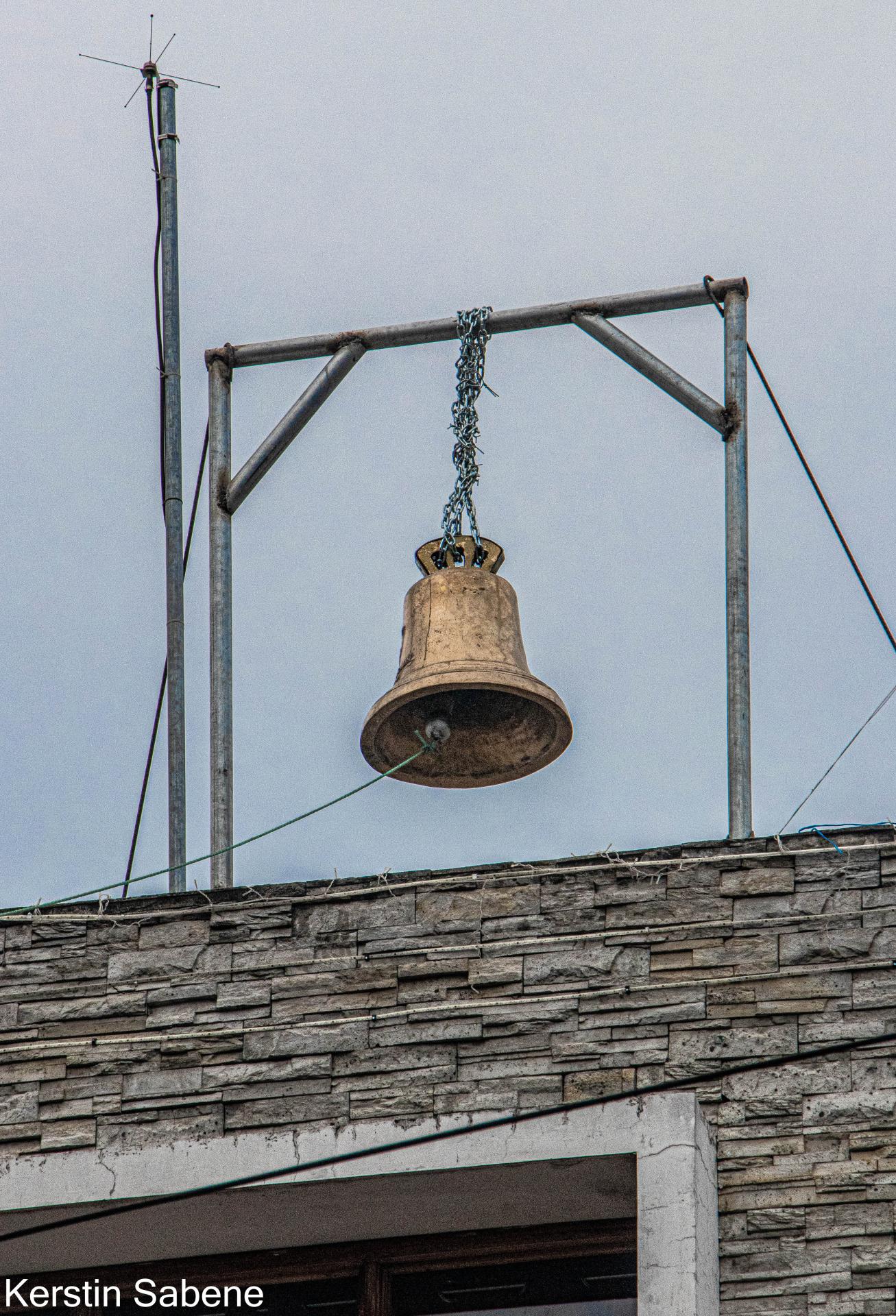
Unity bell.
Coché believed the people of Santiago Atitlan would have to take him back after the Supreme Court ruling in February of this year. He clearly underestimated their resolve. The community was united and rejected his return under any circumstances. Men, women, ancestral authorities, youth, and various sectors of the community stood firm in their demands. The Tz'utujil Peoples are peaceful, yet fearless. I personally witnessed them chase Coché out of town one afternoon by forming a human chain in front of a building he attempted to enter.
“This is not about power,” Petzey says. “It’s about life. Life lifts up the people; power destroys life. Our hope is alive. Our struggle is for life, and we will continue to exercise our constitutional rights as Indigenous Peoples.”
The Constitutional Court's decision to uphold the removal of Coché as mayor of Santiago Atitlan represents far more than a mere judicial ruling. It is a recognition of the sustained struggle waged by the Tz'utujil Peoples, who raised their voices to demand transparency, respect for the will of the people, and an end to practices tainted by corruption.
--Kerstin Sabene is a photojournalist currently living in Guatemala, where she reports on culture and arts, particularly as they relate to the indigenous Maya.
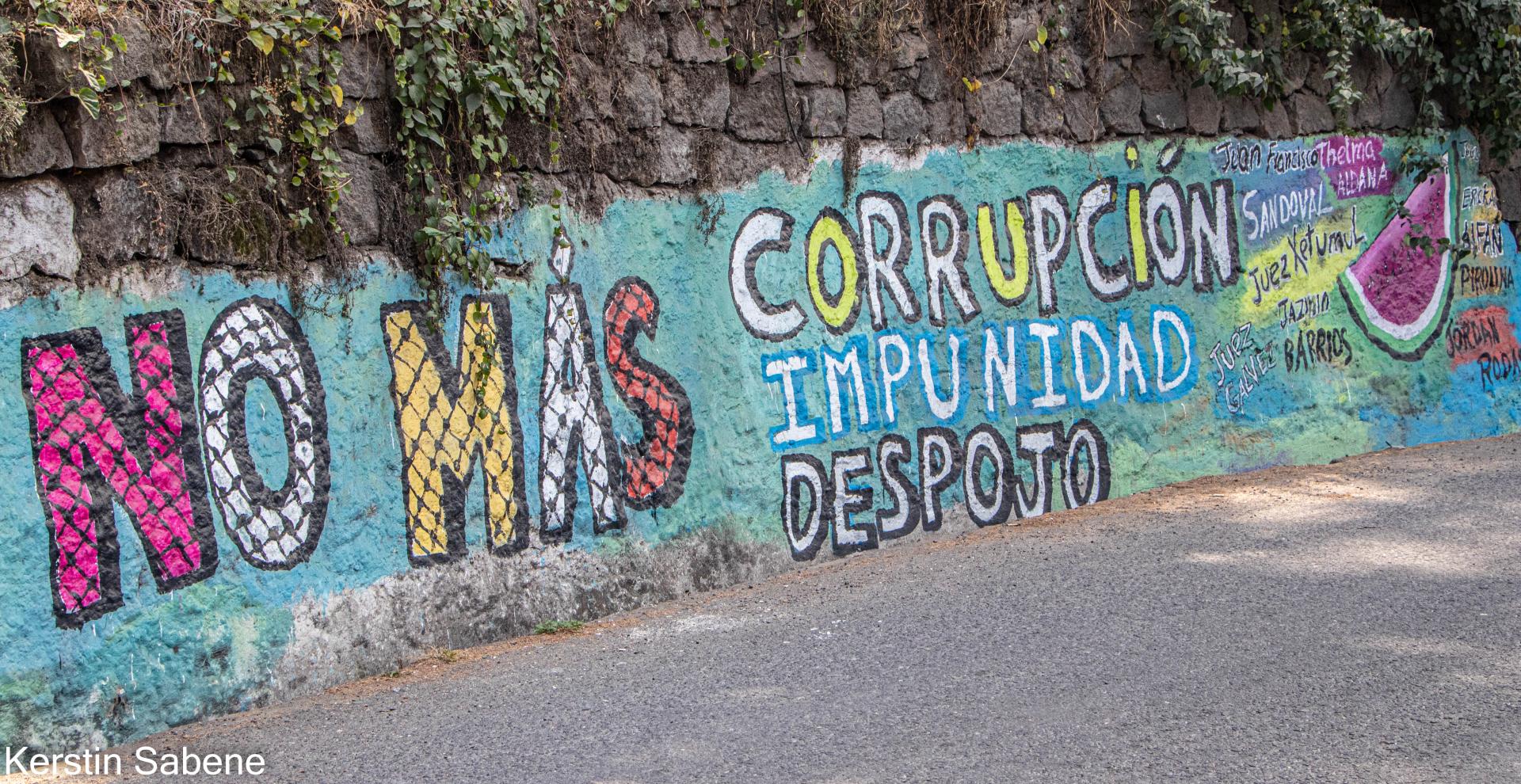
All photos by Kerstin Sabene.
Top photo: People gathered in Santiago for the public assembly in March 2026.