By Angel Ferreira (Payayá, CS Intern)
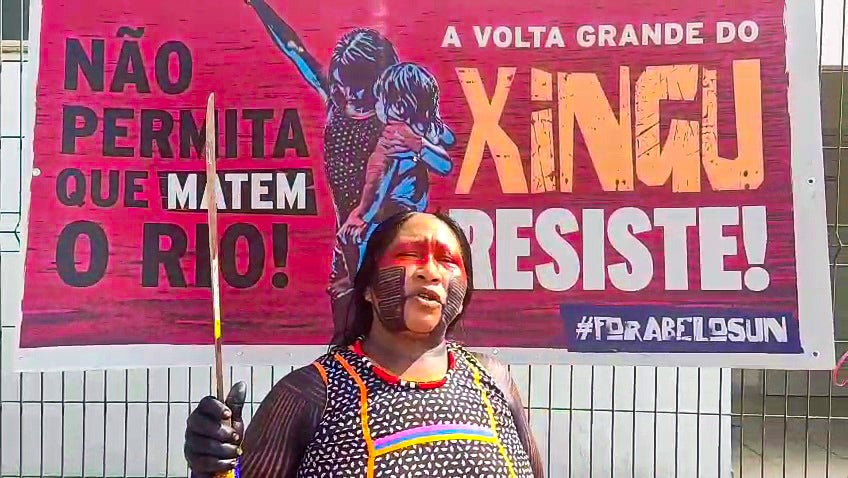
At Volta Grande do Xingu, Brazil, two Indigenous communities, the Arara da Volta Grande and the Yudjá, continue to defend their ancestral territories against mounting external pressures. For the Yudjá, their name carries profound significance: it affirms their sovereignty and enduring relationship with the Xingu River, a bond that shapes their identity, culture, and way of life.
Today, however, their traditional livelihoods face a severe threat. The Volta Grande Project, backed by an estimated $229 million investment from Belo Sun Mineração Ltda., a subsidiary of Belo Sun Mining Corp., aims to establish one of the largest open-pit gold mines in the region. Community leaders and environmental experts warn that the project could inflict irreversible damage on a river system already deeply destabilized by the Belo Monte Hydroelectric Dam.
To understand the technical, social, and legal dimensions of this ongoing struggle, Cultural Survival spoke with anthropologist Thais Mantovanelli from the Instituto Socioambiental (ISA) / Xingu Program.
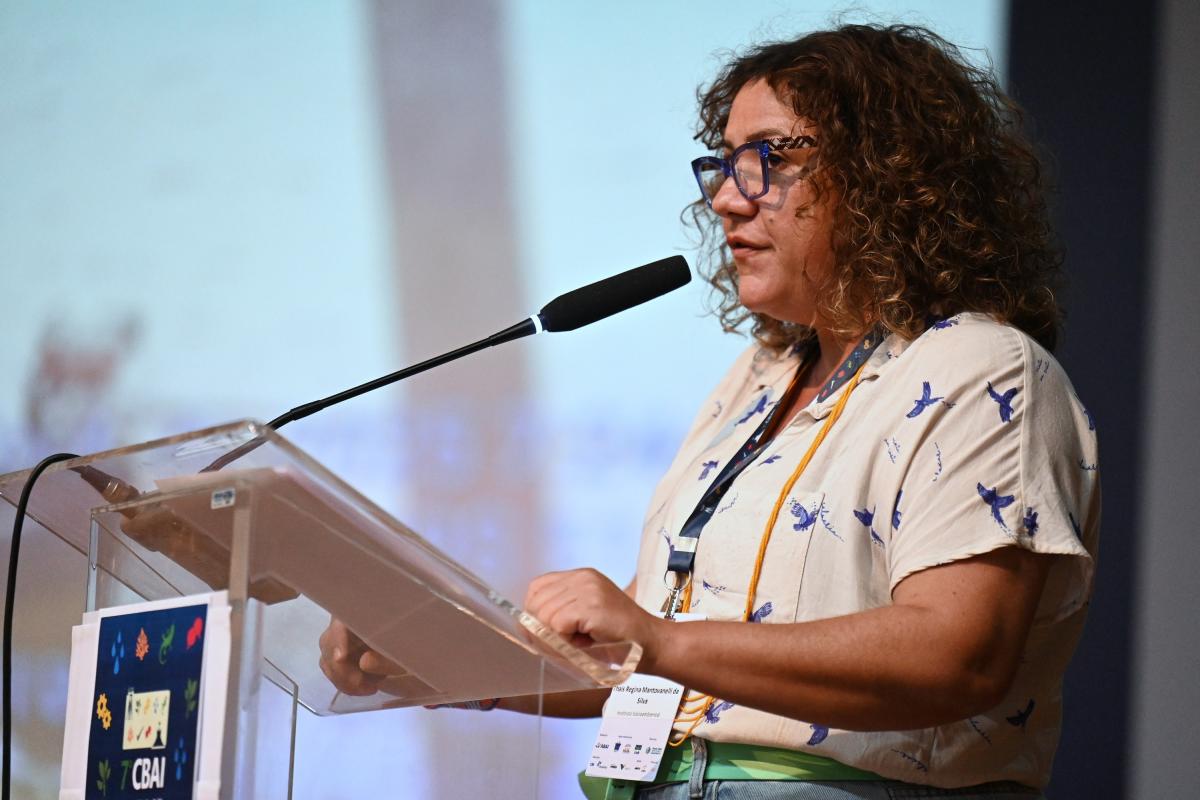
Thais Mantovanelli.
CS: With your experience of over a decade following the Juruna-Yudjá and Xikrin Peoples as well as the riverside communities, how are the mere expectations and pressure of Belo Sun's arrival already altering the social dynamics and mental health of these communities?
Thais Mantovanelli: The Volta Grande do Xingu region, composed of three Indigenous territories and hundreds of riverine families where Belo Sun intends to establish itself, currently faces the risk of reaching a point of no return, both environmentally and in terms of the social conditions required for the physical and cultural reproduction of these Peoples. This is because the chain of impacts from the operation system of the Belo Monte Hydroelectric Power Plant has weakened the region's ecological and social system far more aggressively than anticipated in the project's environmental impact studies. This terrifying scenario is well known to these collectives, whose current and ancestral traditional knowledge reinforces this catastrophic assessment.
Given this backdrop, the prospect of a mining project aiming to become the largest open-pit gold mine in the country severely impacts their social dynamics and mental health. It is an attack on the future of coming generations and on the maintenance of a cultural system intrinsically linked to the flood pulse of the Xingu River and its tributaries.
A climate of dread now governs the daily lives of these families, who are forced to mentally cope with the risk of human contamination associated with the mining project. The venture could cause shocks and instability in Belo Monte’s structures, such as the Pimental dam and other dikes, as well as the risk of a tailings dam failure, similar to what occurred in Brumadinho and Mariana. Other threats include the scaring off and poisoning of land animals on the islands; impacts on birds due to noise pollution from explosives (projected to operate 24/7 for at least 12 years); the death of fish species already scarce due to Belo Monte’s operating system; navigation risks; airborne pollutant dispersion; pressure on the territory caused by an influx of workers; and risks of sexual violence against girls and women in the territory due to the increase in unknown men arriving to join the mining project's workforce.
The threat of Belo Sun's installation represents a massive strain on the mental health of these collectives, who lose control over the management of their lives in both the present and the future.
CS: Volta Grande do Xingu is already experiencing ecocide caused by Belo Monte's "consensus hydrogram." From an anthropological and subsistence perspective, what would the overlay of a mega gold-mining project mean for these Peoples in this context of water scarcity?
TM: The current operating system of Belo Monte, through the consensus hydrogram, diverts 80% of the Xingu River's flood pulse during the flooding, high-water, and receding phases of the hydrological cycle, including the dry season. Indigenous and riverine Peoples of Volta Grande say that a river's flood pulse is like a person's heartbeat. They urge us to imagine what our own living conditions would be like if we could rely on only 20% of our heart rate, of our body's blood flow, which is vital to our existence. That is how the Xingu River is currently living: sickened and weakened, with only 20% of its flood pulse.
The fight for a fairer share of water for Volta Grande do Xingu is vital and urgent, as these collectives demonstrate. The MATI initiative (*Instituto de Pesquisa Intercultural e Monitoramento Independente da Volta Grande do Xingu* / Institute for Intercultural Research and Independent Monitoring of Volta Grande do Xingu) is one such movement fighting in this water dispute. Born from the intersection of traditional ecosystemic knowledge from local Peoples and academic knowledge from natural and social sciences, MATI produces ecological and social data on Belo Monte's impacts and fights to be included in the hydroelectric project's environmental licensing process.
Since 2023, IBAMA (Brazilian Institute of Environment and Renewable Natural Resources) has recognized the scientific validity of the initiative's analyses and agrees on the need for a fairer water allocation based on multiple uses, rather than being calculated exclusively for electricity generation. The dispute over water in Volta Grande do Xingu must also account for the climate emergency, increasing deforestation rates in the Xingu socioecological corridor, and decreasing rainfall in the region, which leads to extreme droughts and worsening living conditions for animals, plants, and people. The water volumes defended by the concessionaire Norte Energia for Belo Monte's operating system via the consensus hydrogram ignore the reality of the climate emergency and exacerbate it through the imposition of this water stress.
The installation of Belo Sun's mining project in a territory already experiencing a water dispute is ecologically, socially, and culturally unviable. The Canadian mining company's project ignores this context and fails to present cumulative impact studies considering Belo Monte's operation, an essential requirement for analyzing any new project or venture in Volta Grande do Xingu.
CS: The right to Free, Prior and Informed Consent and ILO Convention 169 is frequently undermined in these processes. How do you evaluate the quality and legitimacy of the dialogue that Belo Sun and the State have attempted to establish with local leaders?
TM: First, we must emphasize that for a consultation process to be free and informed, it must be *prior*, meaning it must address an initial idea or proposal, never a fully finalized project. This means that to comply with ILO Convention 169 requirements, the consultation must occur during the project's feasibility study phase, not during environmental licensing. The consultation process regarding the Belo Sun project violated this temporal principle because it was conducted after the issuance of the Prior License (*Licença Prévia*), which was later suspended so that consultations could take place.
The informative nature mandated by ILO Convention 169 was also neglected by Belo Sun. The scope of consultations conducted so far by the Canadian company and its third-party contractors was not properly informative. Critical details are missing regarding the project's operational mechanics, the extent of impacts associated with planned activities, and mitigation actions for each set of impacts. From a regulatory perspective under Convention 169, it is impossible to validate a consultation for a mining project that lacks complete details on the structure and operation of the tailings dam meant for storing toxic waste. Belo Sun failed to provide this information even after SEMAS (Secretariat of Environment and Sustainability of Pará) demanded a revision of the structural proposal.
Similarly, it is crucial that a mine closure plan be outlined and presented for consultation, which did not happen in Belo Sun's case. The Canadian company's mining exploitation project lacks any plan for closing the tailings dam following the proposed gold extraction period in Volta Grande.
CS: Large mining projects often use tactics that fragment the social fabric of communities, generating internal divisions. How have the Peoples of Volta Grande organized and resisted these co-optation attempts or individual negotiations?
TM: This is a crucial question, and we must highlight how violent and unfair these co-optation processes are, especially considering the emotional, social, and economic vulnerability of the Indigenous Peoples and riverine communities of Volta Grande do Xingu, who depended on fishing for food security and financial independence. These collectives have faced abrupt disruptions to their way of life since the licensing, construction, and operation of Belo Monte. The imposition of reduced water flow forced them to adapt to "living on dry land," seeking economic alternatives in agricultural activities outside their cultural tradition, such as cocoa planting. These activities are almost always ineffective as a replacement for the income previously earned through fishing.
Thus, we must stress the complexity at play in Belo Sun's licensing and the violations linked to co-optation efforts directed by the Canadian miner and its contractors at these vulnerable populations. Another dimension of violence caused by Belo Sun's licensing process is the creation of a hostile environment among relatives and neighbors in Volta Grande, leading to socio-affective ruptures that are difficult to heal. We see that the entire burden of Belo Sun is placed onto the impacted Indigenous and riverine communities, who should be protected under Brazilian constitutional and environmental law.
Despite this context of burden-shifting, local and regional collective responses have emerged as uprisings against the mining venture and its violations. The most prominent of these uprisings is led by women from various Indigenous ethnicities and riverine communities in the Middle Xingu region, demanding the suspension of Belo Sun's environmental licensing. Altamira, Belém, and Brasília have served as stages for these demonstrations, witnessing an explicit refusal sung by Middle Xingu women through the Mẽbengokre phrase *Belo Sun Akató* ("Out with Belo Sun").
CS: Riverine communities often face greater legal invisibility than Indigenous Peoples in licensing processes. How does the threat of Belo Sun specifically affect the territorial recognition and lifestyle of these non-Indigenous riverine residents?
TM: The social composition of Volta Grande is as diverse as its ecological structure. This multicultural and biodiverse character, which should be protected, is one of the aspects most damaged during environmental licensing processes, whether for infrastructure works or mining projects.
It is worth highlighting that the territorial situation of riverine communities in Volta Grande do Xingu significantly increases their vulnerability. Many families and communities lack legal land titles for their traditional territories and live with the daily insecurity of land conflicts. Even families living in land reform settlements recognized by INCRA (National Institute for Colonization and Agrarian Reform) report cases of violence and threats characteristic of regional land disputes, which have intensified with the prospect of Belo Sun’s installation. Several families abandoned their lands following threats due to their public opposition to the Canadian mining project.
Although the State Public Defender's Office and the Federal Public Prosecutor's Office have filed public civil actions to protect these communities, insecurity remains a daily reality. Many of these collectives, also impacted by Belo Monte, have not received proper mitigation and suffer various rights violations, including lack of access to drinking water, loss of river navigation, lack of roads, communication isolation, loss of food security and income, and the inefficacy of productive activity programs under Belo Monte's Basic Environmental Plan (PBA).
Having been excluded from consultations during Belo Monte’s licensing, these collectives continue to see their right to consultation violated by Belo Sun. Rendered invisible, riverine families were not even granted access to the environmental impact studies for the Canadian mining project. They remain unaware of the project's structure as well as the technical reports criticizing the proposal due to pollution risks and the lack of cumulative impact analyses, which are essential in a Volta Grande already altered by Belo Monte.
CS: Given the history of Belo Monte, what is the main lesson that the Peoples of Volta Grande do Xingu use today to try to prevent this history of rights violations from repeating itself with Belo Sun?
TM: The resilience of the Indigenous Peoples and riverine communities of Volta Grande do Xingu is truly incredible as they continue fighting to free the river's waters and preserve the migratory fish runs (*piracemas*). The MATI initiative and the mobilization of Middle Xingu women demonstrate the strength and boldness of those fighting for their right to exist.
Nevertheless, as a democratic society based on the rule of law, we must recognize that protecting these traditional collectives in Volta Grande do Xingu against socioenvironmental violations must be genuinely assumed as a matter of State policy, not left solely to the actions of communities already deeply weakened by Belo Monte.
The licensing process of Belo Monte teaches a bitter lesson: in Brazil, the pursuit of profit in development projects like hydroelectric power plants and large-scale mining has been prioritized over the defense of traditional Peoples, their territories, and their cultural rights. The very collectives that protect forests and waters are the ones left bearing the environmental and cultural losses of these polluting projects. As a society, we urgently need to rebalance this equation.
To learn more about the ongoing resistance and technical counter-assessments, visit the official platform of the Aliança Volta Grande do Xingu (voltagrandexingu.org). The Alliance brings together Indigenous Peoples, riverine communities, socio-environmental organizations, and researchers dedicated to defending the Xingu River basin against destructive megaprojects.
Their portal serves as a critical repository for independent scientific monitoring, human rights reports, and community-led declarations detailing the cumulative impacts of Belo Monte and the Belo Sun mining proposal.
You can also support the movement directly by signing the international petition against the Canadian mining company: Petition Against Belo Sun. The petition demands the immediate revocation of Belo Sun's installation license and urges Brazilian federal authorities to respect the constitutional rights and sovereignty of traditional territories.