For Immediate Release
Press release from Solidarity Campaign
On July 8 2026, NGO Arctida, Batani Foundation, and the Indigenous Institute released a series of reports and an investigation that show how on the international stage, Russia is represented on Indigenous issues by an agency with a strong security component, and the only "independent" experts are individuals affiliated with extractive corporations. Against the backdrop of the persecution of genuine independent activists, the genuine voices of Indigenous peoples are almost completely deprived of a hearing—instead, they are spoken by representatives of the state and big business associated with it. All of it is done through an organization called RAIPON (Russian Association of Indigenous Peoples of the North).
Today, three major publications were published following the presentation:
Investigation: Indigenous Peoples of Russia: Between War, Intelligence Services, and the Struggle for Rights
This investigation is looking into the Federal Agency for Ethnic Affairs and examines how Russia’s official representation of Indigenous peoples at international forums has increasingly come under the influence of state security structures and extractive corporate interests. It documents the role of the Federal Agency for Ethnic Affairs, whose leadership and staff include people with ties to the FSB, the Ministry of Defense, and other security bodies, and shows how these officials represent Russia in UN mechanisms on Indigenous rights. The investigation also raises questions about the independence of certain civil society representatives, including financial and institutional links to Nornickel, while independent Indigenous activists face criminal prosecution, intimidation, and exclusion from international advocacy. Through the case of Daria Egereva and Natalia Leongardt and others, the report argues that Russia is replacing independent Indigenous voices with state- and corporate-aligned representatives, leaving the real concerns of Indigenous peoples unheard both inside Russia and internationally.
Report: Manufacturing Indigenous Legitimacy
The report is looking into RAIPON (Russian Association of Indigenous Peoples of the North), which is becoming the de facto arm of the Kremlin, more a mouthpiece for state interests than a champion of Indigenous communities. It’s particularly visible on the global stage, where Russia leverages RAIPON to portray itself as a benevolent state actor defending Indigenous rights, while simultaneously co-opting Indigenous institutions to reinforce state narratives and economic interests. This report examines how a once-independent Indigenous platform was co-opted into a state apparatus, and the urgent implications of that shift.
Report: Indigenous Rights Under Development
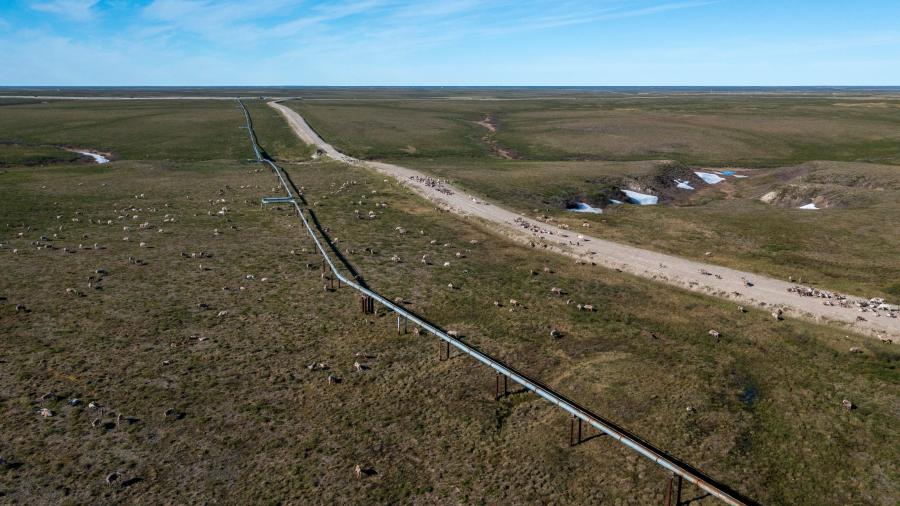
The report examines how large-scale infrastructure and resource extraction projects in the Russian Arctic affect the rights of Indigenous peoples, showing that Indigenous communities often bear the main social, environmental, and territorial costs of development while having little meaningful influence over decisions that shape these projects. Based on case studies including Baimskaya Mining and Processing Plant, Yamal LNG, Port Lavna, Vostok Oil, industrial activity around Iyengra Nasleg, and the Northern Sea Route, the report identifies a systemic pattern: weak consultation and participation standards, the absence of effective consent mechanisms, limited recognition of Indigenous actors, fragmented protection of traditional lands, and risks of state-controlled or substituted representation. It argues that Russia’s domestic practice falls short of its international positioning as supportive of Indigenous peoples, and that Arctic projects should be assessed not only through climate, energy, logistics, raw material, or sanctions policy, but also through their impact on Indigenous rights, land access, traditional livelihoods, representation, and self-determination.
More context:
Since the start of Russia’s full-scale war against Ukraine, Indigenous Peoples and activists in Russia have faced intensified pressure, including intimidation, criminal and administrative prosecution, stigmatization, pressure on relatives, obstruction of international advocacy, and the destruction of independent Indigenous self-organization.
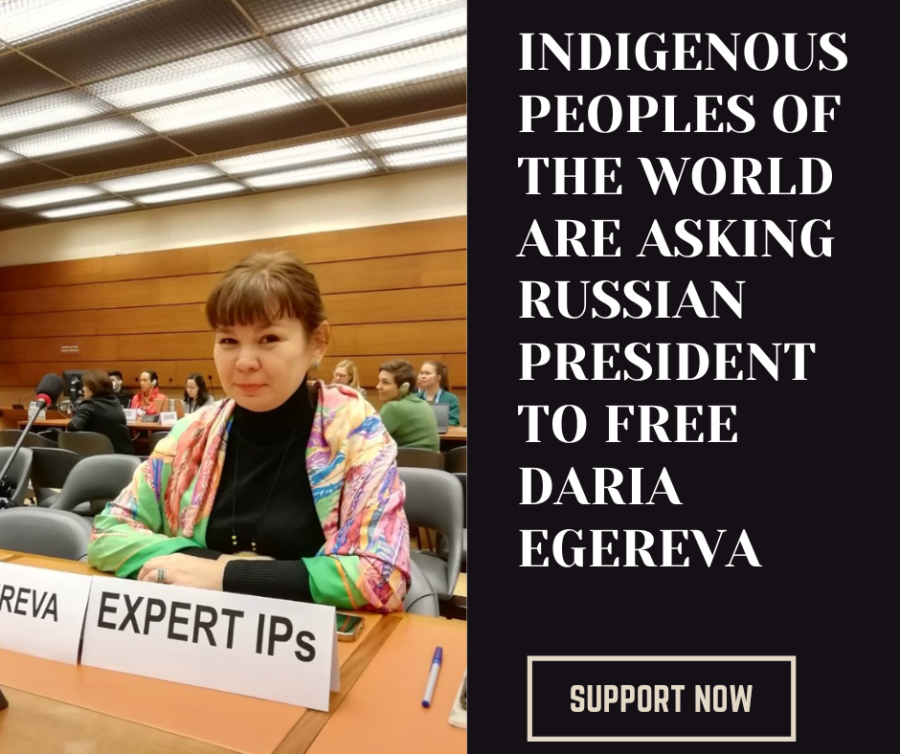
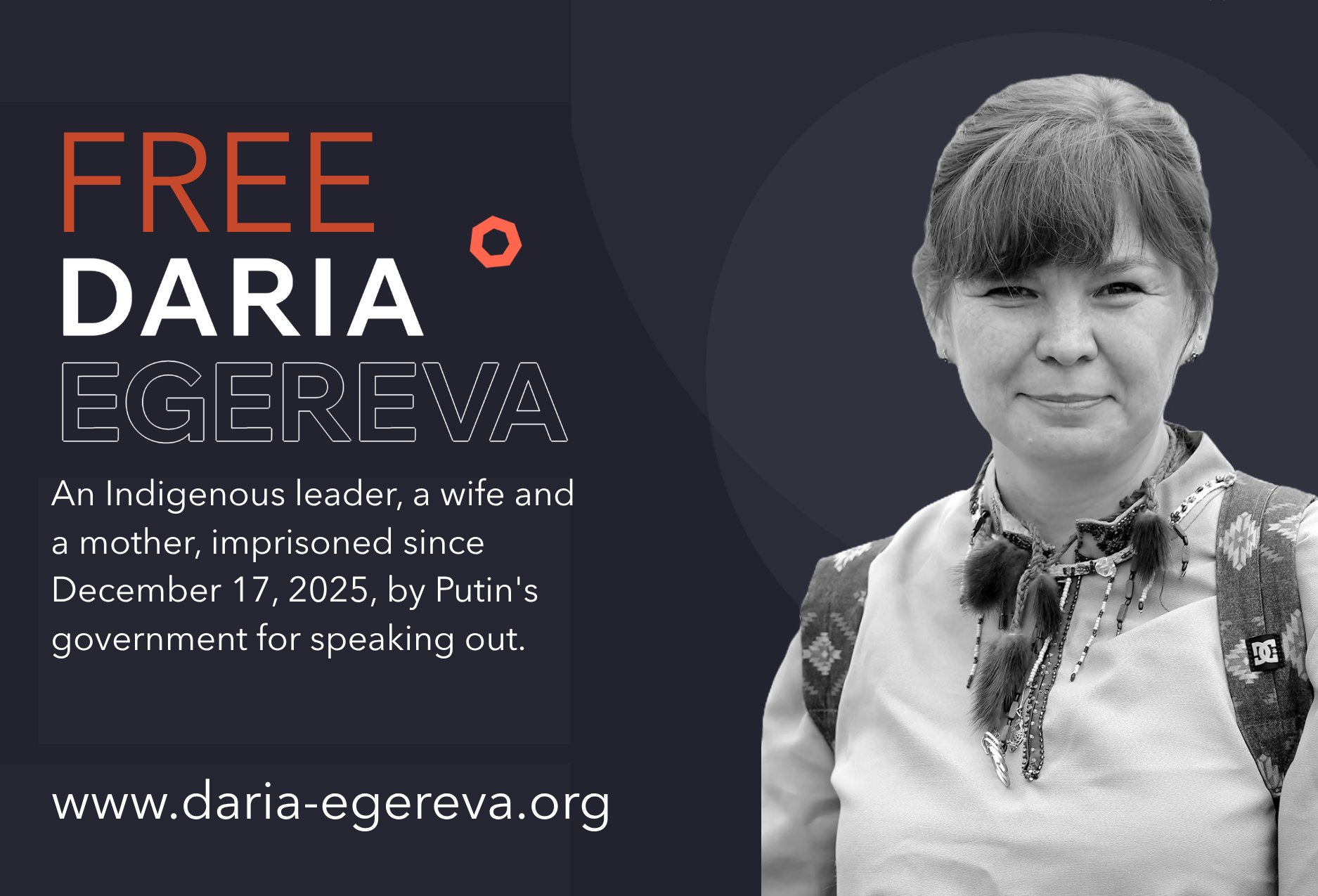
In December 2025, Daria Egereva, a Selkup representative, human rights defender, and climate activist who had represented Russia's Indigenous peoples at UN forums for many years and led their participation in the COP30 UN climate conference, was arrested in Moscow. She is accused of involvement in a "terrorist" organization—the Aborigen Forum, a peaceful expert network, which has been designated as such. That same day, at least 17 more activists in various regions were subjected to violent pressure. The lawyer calls the case "legal absurdity" and links it to the policy of ousting independent voices in favor of state-controlled structures.
For media inquiries please reach out via Signal: @solidarity.88 — Solidarity Campaign Media Coordinator @yellowbook.01 / pr@arctida.io — NGO Arctida