By Thais Pellosi (CS Staff)
The climate crisis is the result of a development model that has historically prioritized the extraction and accumulation of minerals and natural resources over the stewardship of territories. While international mechanisms focus on indicators, financial targets, and compensation schemes, Indigenous peoples offer a perspective grounded in the daily management of ecosystems that are key to global climate stability. These territories sustain forests, watersheds, water sources, and biodiversity systems that play a fundamental role in climate mitigation and adaptation; yet, they simultaneously face disproportionate impacts from climate change—such as extreme rainfall variability, prolonged droughts, and the loss of traditional livelihoods.
In this context, climate justice requires moving beyond mere rhetorical recognition and translating into real, concrete financial mechanisms that acknowledge and support territorial autonomy, the exercise of collective rights, and the capacity of Indigenous peoples to define, implement, and monitor the use of climate resources. Without effective participation and direct access to financing, adaptation and mitigation efforts run the risk of reproducing the very structural inequalities that have contributed to the current crisis.
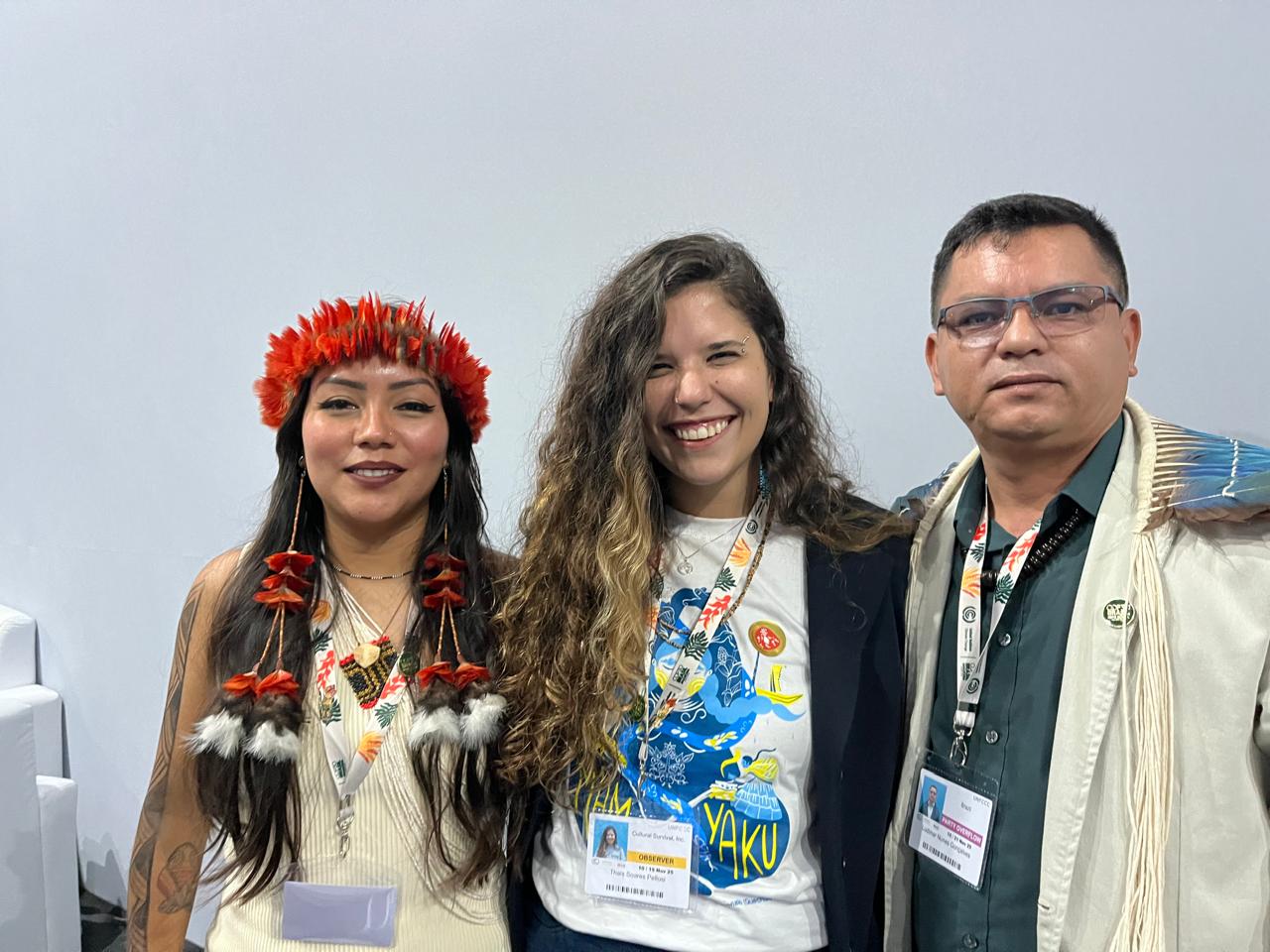
Through the voices of young leaders—such as Josimara Baré (Baré) and Ludimar Kokama (Kokama)—a clear demand emerges: “Financing must reach directly those who protect the planet’s forests, rivers, and biodiversity. Not as passive beneficiaries, but as political actors, stewards, and protagonists of climate solutions.”
In various international climate forums—such as the United Nations Climate Change Conference (COP30)—there is constant talk of “implementation,” “commitments,” and “targets”; yet, for Indigenous peoples, these words hold meaning only if they translate into concrete, transformative actions. According to the World Resources Institute (WRI)¹, the territories of Indigenous peoples and local communities harbor approximately 54% of the planet's remaining intact forests, underscoring their pivotal role in protecting biodiversity and ensuring climate stability. However, according to the report Funding Indigenous Peoples and Local Communities to Secure Climate, Nature and Pandemic Outcomes by the Rights and Resources Initiative (2021), less than 1% of international climate finance reaches Indigenous and community-based organizations directly—a fact that reveals a profound disconnect between the recognition of their role and their effective access to financial resources.
This contradiction exposes a structural flaw within the global climate finance system: while the central role of Indigenous peoples in climate protection is acknowledged, they are denied direct access to the economic resources necessary to sustain that protection. Climate finance mechanisms continue to channel only a marginal proportion of resources directly to Indigenous peoples and local communities, thereby perpetuating historical inequalities and diminishing the efficacy, scope, and equity of global climate responses. Without direct funding, climate justice remains unattainable, as relationships of dependency, intermediation, and guardianship are perpetuated—often compounded by the blatant diversion of funds by intermediaries.
Josimara and Ludimar, who participated in COP30, highlighted initiatives that are generating optimism—such as the Tropical Forests Forever (TFFF) Fund , proposed by the Brazilian government during the event—which allocates a minimum of 20% of its resources to direct financing mechanisms for Indigenous peoples. Even so, this percentage remains insufficient given the magnitude of the role that Indigenous peoples play in this country. “If we are the ones protecting the vast majority of the forests, why do we receive so little?” they asked. The demand is simple and profoundly just: expand direct access to resources and reduce the intermediation of funds.
On this path toward financial autonomy and climate justice, Brazilian Indigenous organizations have cultivated a unique and strategic body of experience: a network of funds for Indigenous, Quilombola, extractive, and riverine communities. Examples include the Fundo Indígena da Amazônia Brasileira (Podáali)—developed by the Amazonian Indigenous Movement and the Coordenação das Organizações Indígenas da Amazônia Brasileira (COIAB)—as well as other territorial funds created in response to the actual needs of local communities, such as the Fundo Indígena do Rio Negro (FIRN), Fundo Indigena Timbira, and Fundo Indígena RÛTI (CIR). These funds feature fully Indigenous governance, employ their own distinct processes for consultation and Free, Prior, and Informed Consent (FPIC), and rely on technical teams composed of Indigenous professionals specializing in fields such as administration, accounting, law, environmental management, and territorial planning.
These funds do not merely administer resources; they embody a concrete proposal for climate justice rooted in the territories themselves. Their underlying logic is clear and profoundly political: who is better equipped to define priorities, design projects, and implement actions than those who inhabit these territories, care for them on a daily basis, and depend directly on their ecological balance?
In practice, Indigenous funds have evolved into powerful tools for resistance, autonomy, and reconstruction. They finance initiatives led by indigenous communities—initiatives that, in many cases, should be guaranteed by public policy: territorial protection, land demarcation, community-based environmental monitoring, security for threatened leaders, sustainable natural resource management, and cultural strengthening. Wherever the State fails to reach—or reaches only inadequately—indigenous funds operate with efficiency, transparency, and verifiable results.
Currently, the majority of these resources come from philanthropy and, to a lesser extent, from international cooperation. However, indigenous communities also seek direct access to major multilateral climate funds, such as the Green Climate Fund and the GEF (Global Environment Facility). As Josimara and Ludimar assert: “If we have already achieved significant results with just 1% of climate financing, imagine what we could accomplish with access to large-scale resources.”
The primary obstacle remains the excessive bureaucracy inherent in multilateral mechanisms—mechanisms designed according to models far removed from the reality of indigenous territories—alongside a persistent lack of institutional trust. This situation persists even when indigenous organizations possess robust technical structures, established governance frameworks, and proven management capabilities.
The case of the Amazon Fund is emblematic: to this day, almost no indigenous organization has managed to access its resources directly⁵. Funds flow exclusively through intermediaries, thereby perpetuating a paternalistic dynamic that indigenous peoples have been denouncing for decades.
This financial architecture reinforces a colonial dynamic: indigenous capacity is viewed with skepticism, while trust is placed in external intermediaries. However, new generations of indigenous leaders—equipped with university degrees in diverse fields, deep territorial roots, and traditional knowledge—demonstrate that such skepticism is no longer tenable. These communities possess the requisite technical capacity, their own governance systems, and management models that seamlessly integrate efficiency, transparency, and collective values.
Direct financing is not merely an economic issue. It is an essential condition for self-determination, territorial security, cultural continuity, and climate justice. It entails recognizing that the defense of the rainforest is not a symbolic narrative, but a daily practice sustained by those who live within it. It entails ensuring that decisions regarding these territories are not routed through external intermediaries. It entails respecting, strengthening, and recognizing the mechanisms established by Indigenous organizations themselves.
Climate justice also demands expanding Indigenous presence in decision-making spaces—not merely in hearings or panels, but at the tables where global climate policies and financing frameworks are designed. Ludimar and Josimara remarked:
“We do not want to sit merely in the audience; we want to have a voice, to have the power to decide, and to be heard.”
The struggle continues, transforming itself without ever losing its essence. It remains a fight for life, for territories, for the rainforests, and for rights that are not yet fully respected. It remains a fight for future generations.
As long as the global architecture of climate finance remains unchanged, Indigenous voices will continue to resonate in every space: Demarcation now. Direct financing now. Climate justice for all, now.