Remarks on the Rights of Disabled Indigenous People
25th Session of the United Nations Permanent Forum on Indigenous Issues
Jen Deerinwater, Founding Executive Director, Crushing Colonialism
April 24, 2026
I thank the chair and my Indigenous relatives for this time to speak. The UN estimates over 1 billion people, or approximately 15% of the world’s population, are disabled, and that there are 476 million Indigenous Peoples globally. The Indigenous Persons with Disabilities Global Network estimates that the number of Disabled Indigenous people is 71 million. They estimate that 45 million of our Disabled Indigenous relatives live in the Asia Pacific region, in so-called developing and underdeveloped countries. Rates of disability also increase for our women and Two-Spirit, Lesbian, Gay, Bisexual, and Trans relatives. Our rates of disability and chronic illnesses are not due to our genetics, but rather the global impacts of colonialism, violence, and systemic oppression. This includes war, conflict, environmental degradation, and the climate crisis.
But these statistics are incomplete, as there has been no global study of Disabled Indigenous people. Even the UN’s global population numbers for Disabled people is from 2013. This number is surely higher now due to global conflicts and war, the climate crisis, and COVID-19, to name a few.
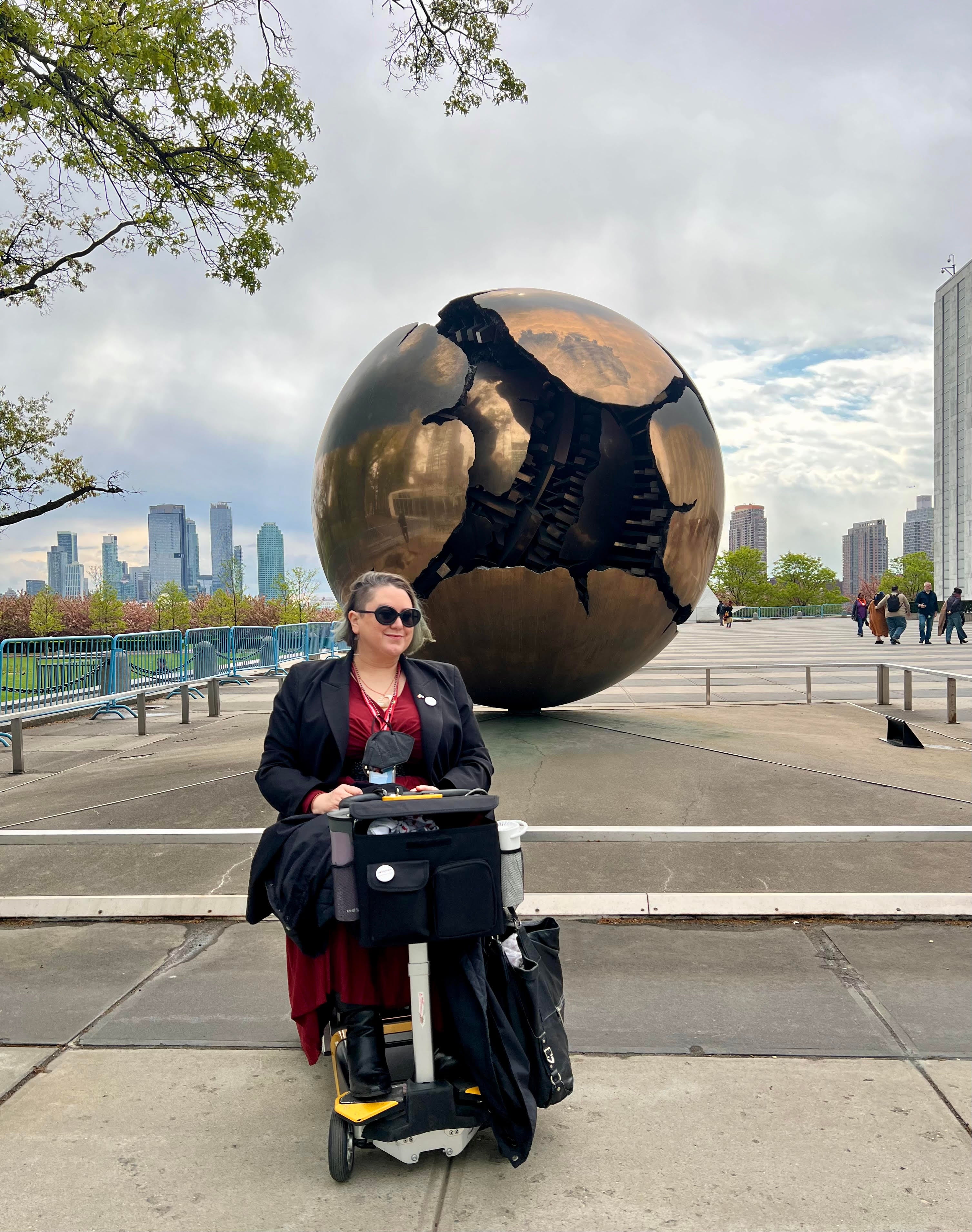
Despite higher rates of disability in Indigenous communities, disability has barely been mentioned at this Forum. How can we have good health, including our mental, emotional, and spiritual health, if we can’t traverse the world, including the UN NYC headquarters and these related events, if they’re not disability accessible for a wide range of disabilities? How can we speak of better health outcomes if many of us are struggling to access basic facilities, like bathrooms or medical facilities? Good health also depends upon easy access to disability and mobility-related devices such as the scooter that I use. Further, we need strong community care systems for all of our chronically ill and Disabled relatives, as we cannot rely on colonial governments to rescue us during crises or even to meet our healthcare needs, including support for our activities of daily living.
Disabled Indigenous people deserve the same sovereign and human rights as anyone else. We deserve to live with dignity and joy. I call on the UN to conduct a global study on Deaf, Disabled, and chronically ill Indigenous people, and for my Indigenous relatives and our tribal leaders to create disability access and care systems in your communities. We are your relatives. Do not forget us.
Wado. Thank you.
Photo: Jen Deerinwater, courtesy of Jen Deerinwater.