By Dr. Daniel Rogei (Maasai)
The story of the Nama Peoples in South Africa’s Namaqualand is one of incredible endurance. It is a narrative that stretches from the ancient rhythms of nomadic life to the high-stakes world of international law and the cutting edge of the so-called global green energy transition. For centuries, they have navigated a landscape of both immense natural beauty and harsh colonial violence. From the early days of nomadic pastoralism to the brutal diamond rush of the 1920s, the Nama were systematically stripped of their land and their very identity, reclassified by the state to erase their Indigenous roots.
However, the end of apartheid marked a turning point. Through the landmark case of Alexkor Ltd v. Richtersveld Community, in which an Indigenous community successfully sued a mining corporation for their land and mineral rights, the Nama achieved one of the most significant legal victories for Indigenous land rights in the world, reclaiming thousands of hectares of ancestral land and securing millions in reparations.
Today, they face a new frontier: the green energy transition. With massive hydrogen projects planned on their ancestral lands, the Nama have become active agents of a Just Transition. This community, once systematically erased and nearly exterminated from the map, now stands at the forefront of a movement for Indigenous justice. Asserting their rights as Indigenous Peoples, the Nama are demanding transparency and working hard to ensure that this new "green" era does not repeat the extractive mistakes of the past.
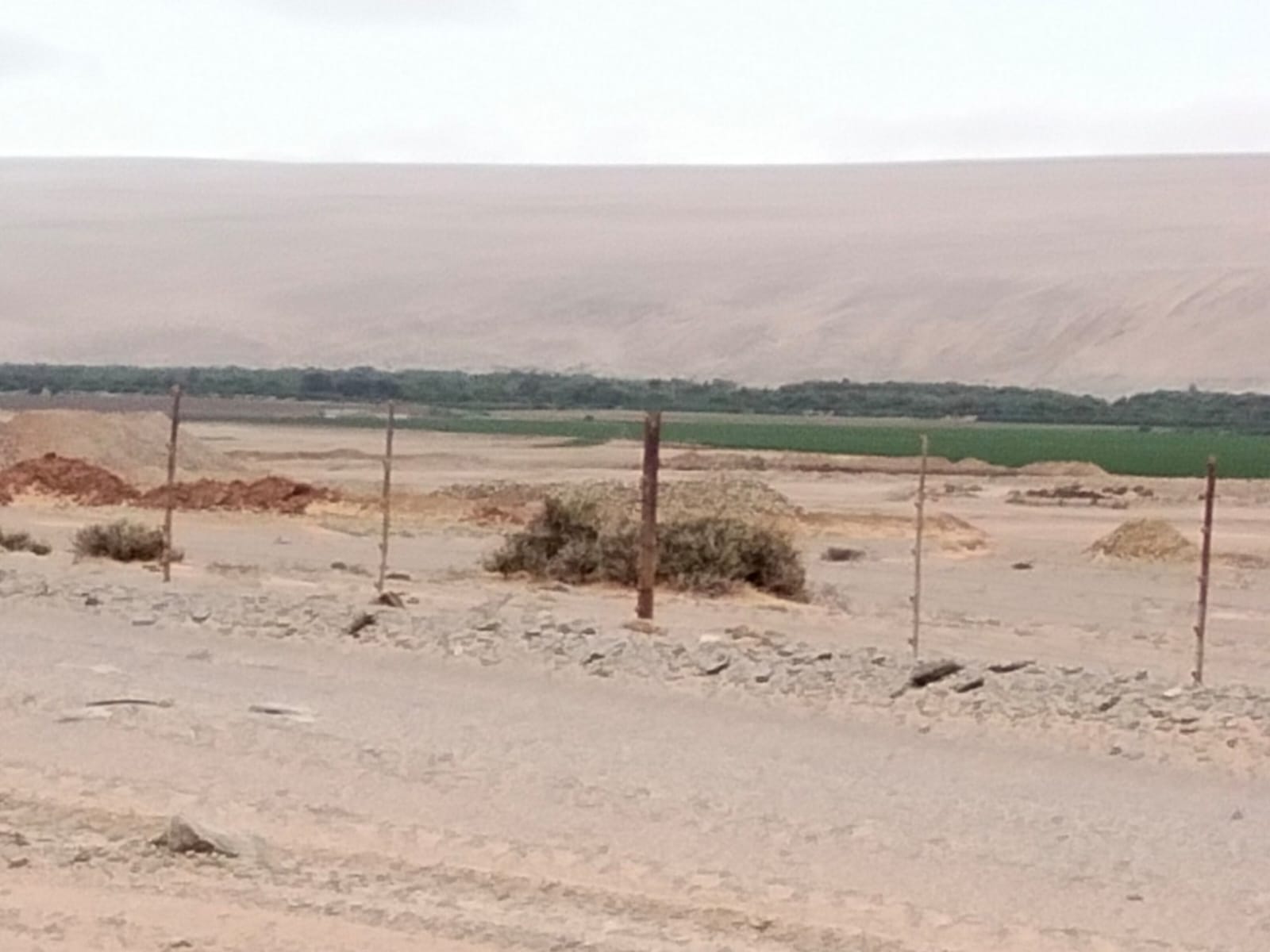
A farm along Orange River.
The Land of the Great River
To understand the Nama is to first understand the cradle of their civilization: Namaqualand. This is a vast, arid frontier that straddles the lower Orange River, stretching from the cold, diamond-rich Atlantic coast to the mountainous desert of the Richtersveld. For thousands of years, the Nama—the largest group of the Khoekhoe Peoples—were the undisputed sovereigns of this land. As nomadic pastoralists, they moved their herds of cattle and sheep across the plains in a delicate fusion with the seasons. Their wealth was not measured in gold or diamonds, but in the health of their livestock and their deep knowledge of the Nama Karoo biome—a landscape that can look like a barren desert one day and a vibrant carpet of wildflowers the next after a single rain.
The Nama were not merely survivors; they were a sophisticated society with a deep spiritual connection to the earth. Their social structure was built on a system of clans and a philosophy of shared land. They didn’t see the earth as something to be carved up with fences; instead, they moved freely, guided by their Goab (traditional leaders) and their deep spiritual connection to sacred sites like Boegoeberg Hill. Their language, Khoekhoegowab, filled the air with its distinctive clicks, carrying the stories of their ancestors through the desert winds. But this harmonious way of life was destined to collide with the expansionist hunger of colonial powers who saw the desert not as a home, but a wild to be conquered and a treasure chest to be looted.
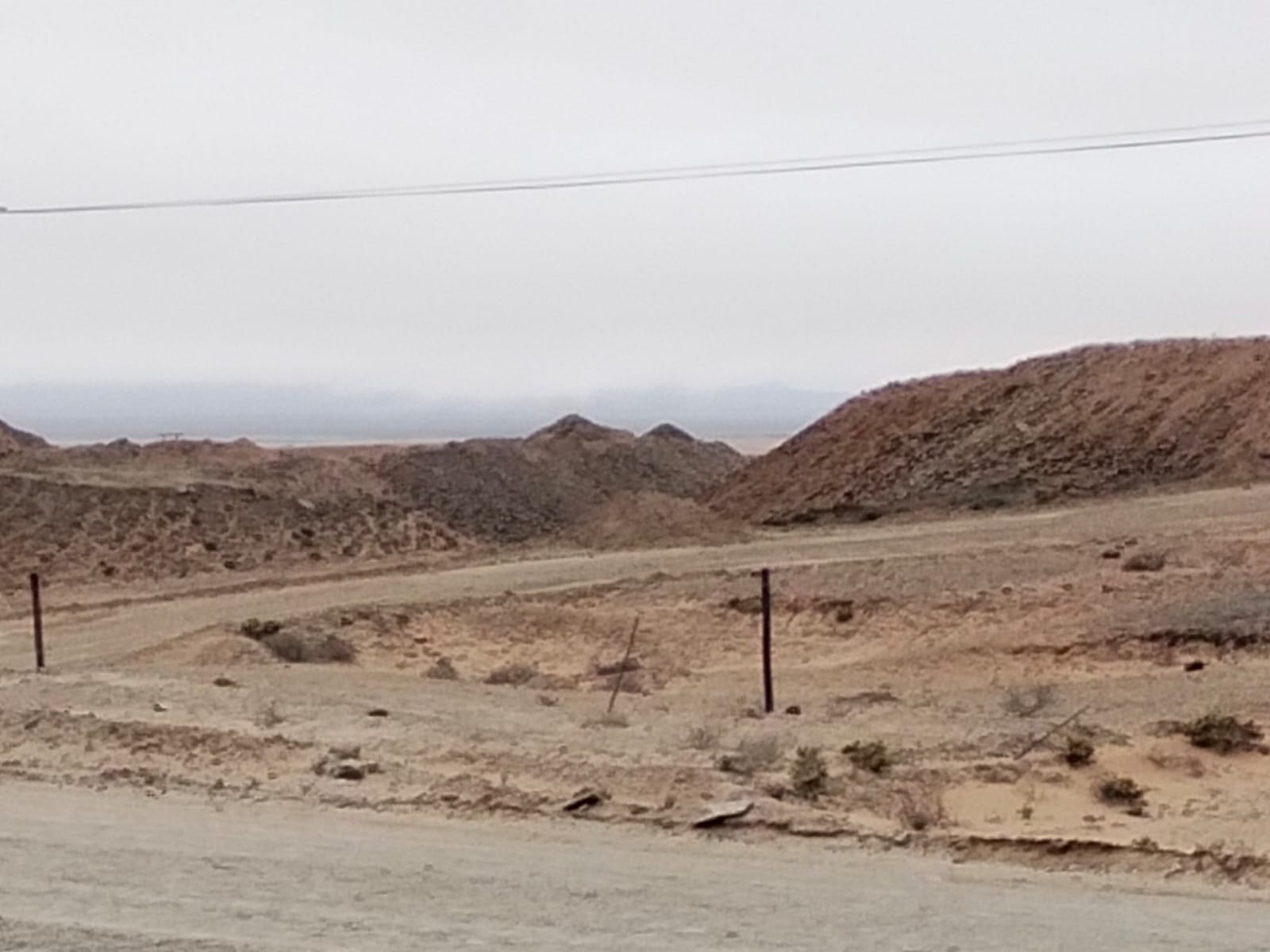
A mining site.
The Diamond Rush and the Erasure of Identity
The true tragedy for the Nama in South Africa began in earnest during the 1920s. While their relatives across the border in Namibia were recovering from a brutal genocide at the hands of German forces, the Nama in the Richtersveld were facing a different, more bureaucratic kind of erasure. In 1925, the world changed forever when diamonds were discovered in the coastal sands of Alexander Bay. Almost overnight, what had been ancestral grazing land for thousands of years was declared state property.
The colonial, and later apartheid, governments used a clever and cruel tactic to justify this theft: they reclassified the Nama people as "coloured" rather than "Indigenous." By stripping them of their Indigenous identity, the state could claim that the Nama had no original right to the land, treating them instead as a marginalized minority with no ancestral ties to the soil. The fences went up, and the Nama were pushed off their coastal territories and confined to reserves—small pockets of land that were essentially rural ghettos.
For decades, the Nama lived in the shadow of the mines. They watched as billions of rands worth of diamonds were pulled from the earth while they remained in poverty. Their language was suppressed in schools, and their traditional leadership was ignored by a bureaucracy that saw them as a source of cheap labor for the very mines that had stolen their heritage. This period was characterized by a vicious cycle of poverty and administrative neglect, where the State-owned company Alexkor grew wealthy while the local people suffered.
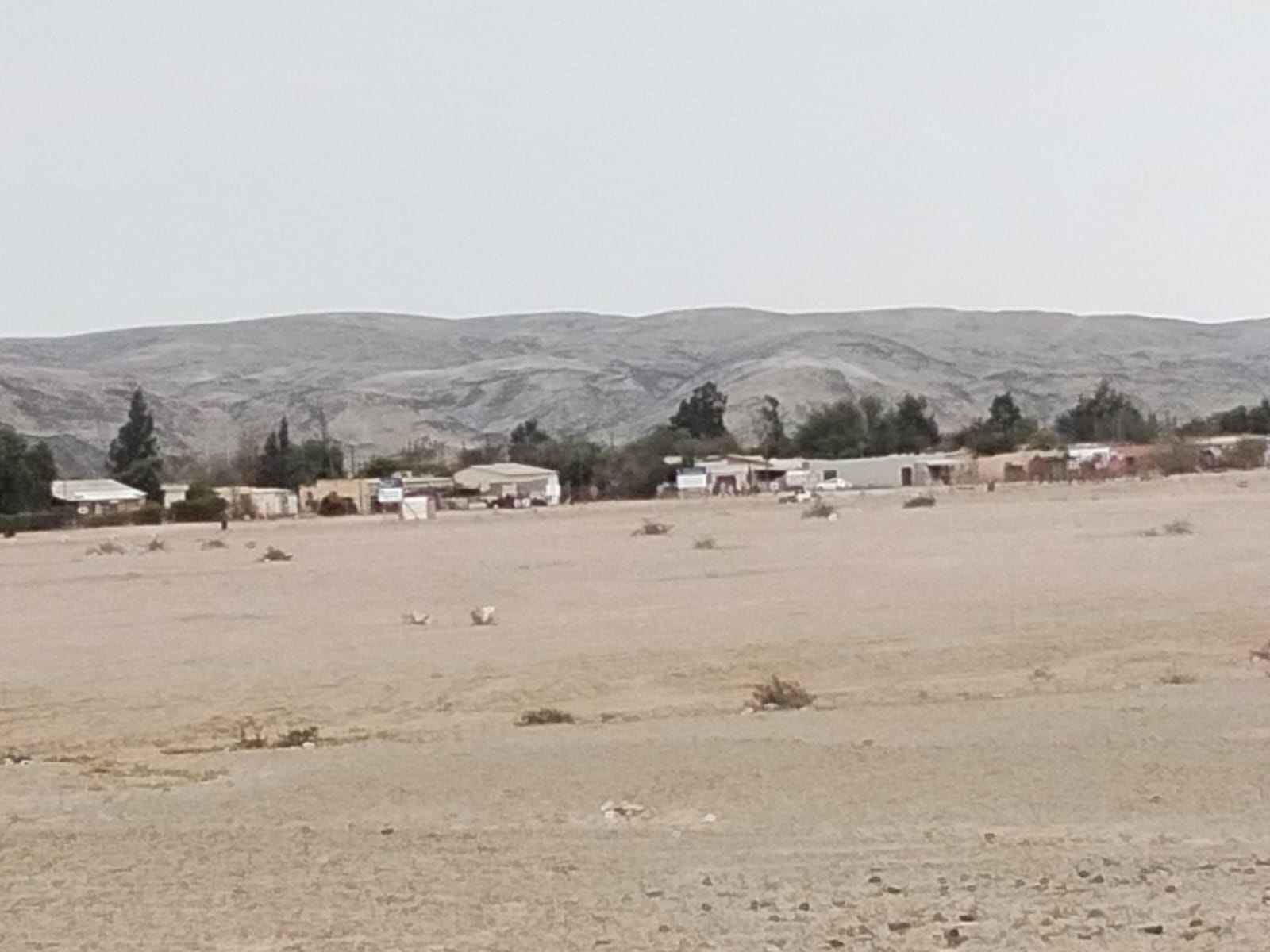
Sandrift Township, with Namibia hill ranges in the background.
A Monumental Victory: The Richtersveld Case
The turning point came with the fall of apartheid in the early 1990s. As South Africa transitioned to democracy, a spark of hope was lit in the Richtersveld when the Nama decided to do something that many thought was impossible: they sued the South African government and the state-owned diamond company to get their land back. This wasn't just any lawsuit—it was a battle for the soul of the new South Africa.
The case dragged on for years, eventually reaching the Constitutional Court, the highest in the land. The Nama argued that they held "Aboriginal title," a legal concept meaning they owned the land long before any colonial government arrived. They provided evidence of their centuries-old presence, their traditional laws, and their deep connection to the territory. In 2003, the court issued a landmark ruling that sent shockwaves through the international legal community. “Our witnesses made references of our ancestors' graves at the Boegoeberg site. It was a spirited and expensive struggle fighting with the government, but finally we won,” says one of the Nama Elders.
The final settlement, reached in 2007, was historic. The Nama won back 84,000 hectares of land along the coast, including the diamond-rich areas. They were also awarded R190 million ($11.3 million USD) in reparations and an R50 million ($3 million USD) development grant to help rebuild their community. For the first time in a century, the Nama were not just residents on the land: they were its legal owners. It was a victory of restitution, a formal recognition that a great wrong had been committed and that the state had a responsibility to fix it.
The Struggle of Success and the CPA Trap
The courtroom victory would prove to be only the beginning of a new set of challenges. Managing nearly 200,000 hectares of land is a complex task, and the Nama found themselves navigating a maze of bureaucratic hurdles and internal community disputes. There were a few options for managing the land: subdivide it for individual ownership, revert to the local municipality, or establish communal ownership through a Community Property Association (CPA).
The Nama opted for communal ownership as the least problematic among the limited options. The Sida!hub CPA was formed, but its structure was complicated and overly technical, and far removed from the community’s governance regimes that are sensitive to the Nama. The western-style democratic committee designed to hold the land in trust for the people became a source of immense friction.
Under great influence and control of the state, the CPA structure often clashed with the Nama Peoples’ traditional ways of leading and consultation. Many community members felt that the CPA was just another form of state control dressed up in the language of democracy. The transition was messy and opaque, and the community struggled with internal disputes over how to spend the reparations and manage the complex diamond mining operations.
The settlement did not immediately bring the prosperity that many had dreamed of. Instead, the Nama found themselves bogged down in legal red tape and administrative hurdles that kept the land's real benefits out of their reach. These challenges were confirmed by various oversight entities that acknowledged that the transition process has been long and corrupt. Many community resources have been lost over the past two decades since the deed of settlement was signed, thereby delaying the much-anticipated justice and economic transformation.
Despite these hurdles, the Nama refused to relent. They began to realize that their strength lay not in a government-mandated committee, but in their own Indigenous identity. They began bypassing the failing CPA structures and returning to their traditional roots, asserting their Goabs and Elders as the true keepers of the land.
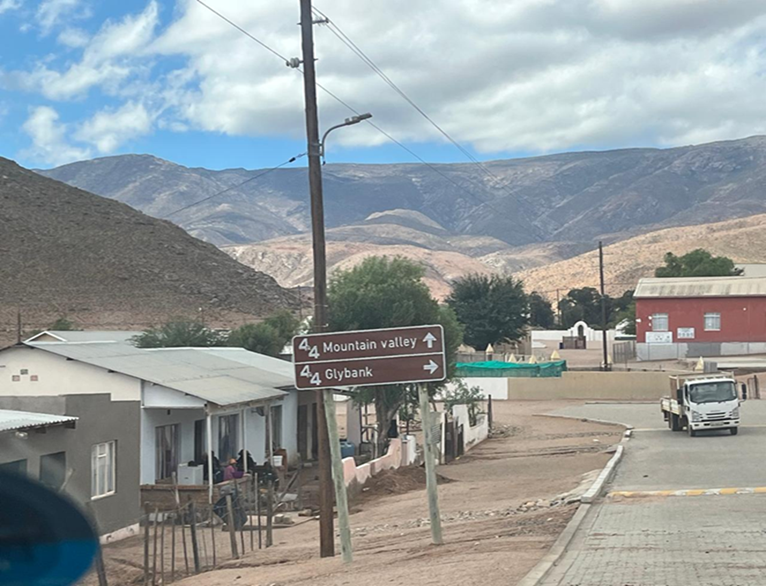
Kuboes Township.
The New Frontier: The Promise and Peril of Hydrogen
Today, the Nama face a challenge that feels eerily familiar to the diamond rush of a century ago: the hydrogen boom. The South African government, along with international investors, have identified the Namaqualand coast, specifically Boegoebaai, as a prime location for a massive energy hub. This project would involve building a new deepwater port and vast fields of wind and solar farms to produce hydrogen for export to Europe.
On paper, this sounds like progress; it’s part of the global effort to stop climate change. It also promises development and jobs―but at what cost? For the Nama, it is another form of green extractivism. A familiar vicious cycle is likely to repeat itself, but this time, on an astronomic scale. The Nama fear that, once again, their land is being treated as a frontier to be exploited for the benefit of the Global North while the local people bear the environmental consequences. The proposed "Special Economic Zone" for this project covers over 33,500 hectares―much of it ecologically sensitive and spiritually significant―squarely situated on their claimed land.
The Nama are concerned that the green energy transition will repeat the mistakes of the diamond era. They have endured broken promises of jobs and development before, only to see the wealth flow out of their region while their community remains marginalized. They are wary of being told that they must sacrifice their land for the greater good of the planet, especially when they have already sacrificed so much in the past.
But this time, the Nama are repositioning themselves. They are no longer the forgotten people of the desert; they are a vibrant, strategic community. They are using their national and global networks to demand recognition and meaningful consultation. “We are no longer begging for permission. We are asserting our right to Free, Prior and Informed Consent. We know our rights, and we shall not relent in pursuing them by whatever means,” says a local youth activist.
This proactive strategy is shifting the Nama’s relationship to development projects, redefining what Just development looks like. They are demanding that hydrogen projects partner with the community from day one. This means transparency, shared ownership, and a guarantee that the local people will be the primary beneficiaries of the energy and the income it generates. They are also working to ensure that Boegoebaai does not become another frontier of sacrifice, but rather a model for how Indigenous communities can lead the transition to a sustainable future. No longer trusting the government-driven CPA model, they are seeking their own management system with a community mandate and power behind it.
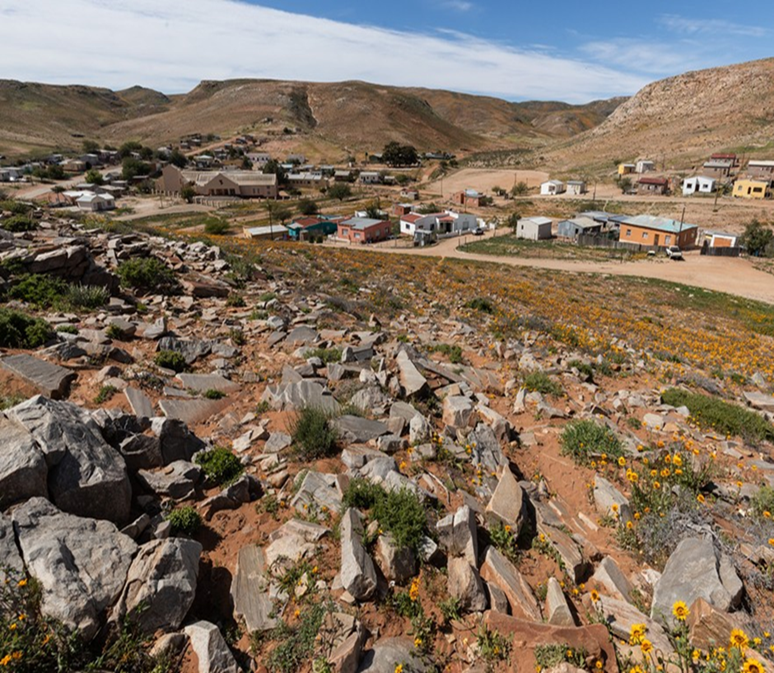
Lekkersing Township
Reclaiming the Spirits: Ancestors and Sacred Sites
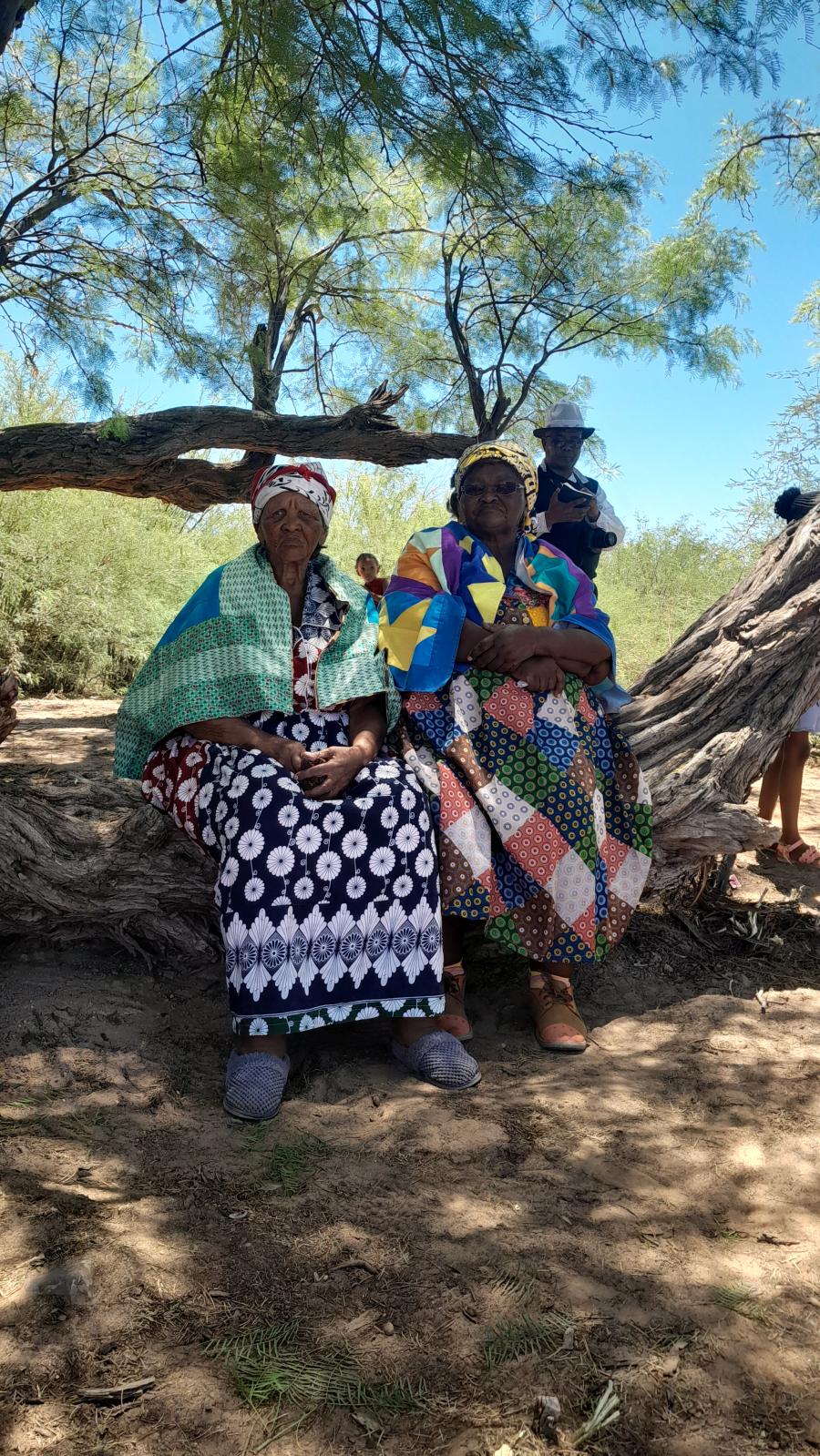
In parallel with the fight for land and energy, the Nama are in the midst of a deep spiritual awakening, working to bring home the ghosts of their past. The remains of Nama ancestors that had been taken to Scotland over 200 years ago were recently returned to Namaqualand and interned at Steinkopf on March 23, 2026, a profound moment of healing for the community. It wasn't just a funeral; it was a reclamation of their history and a restoration of their dignity.
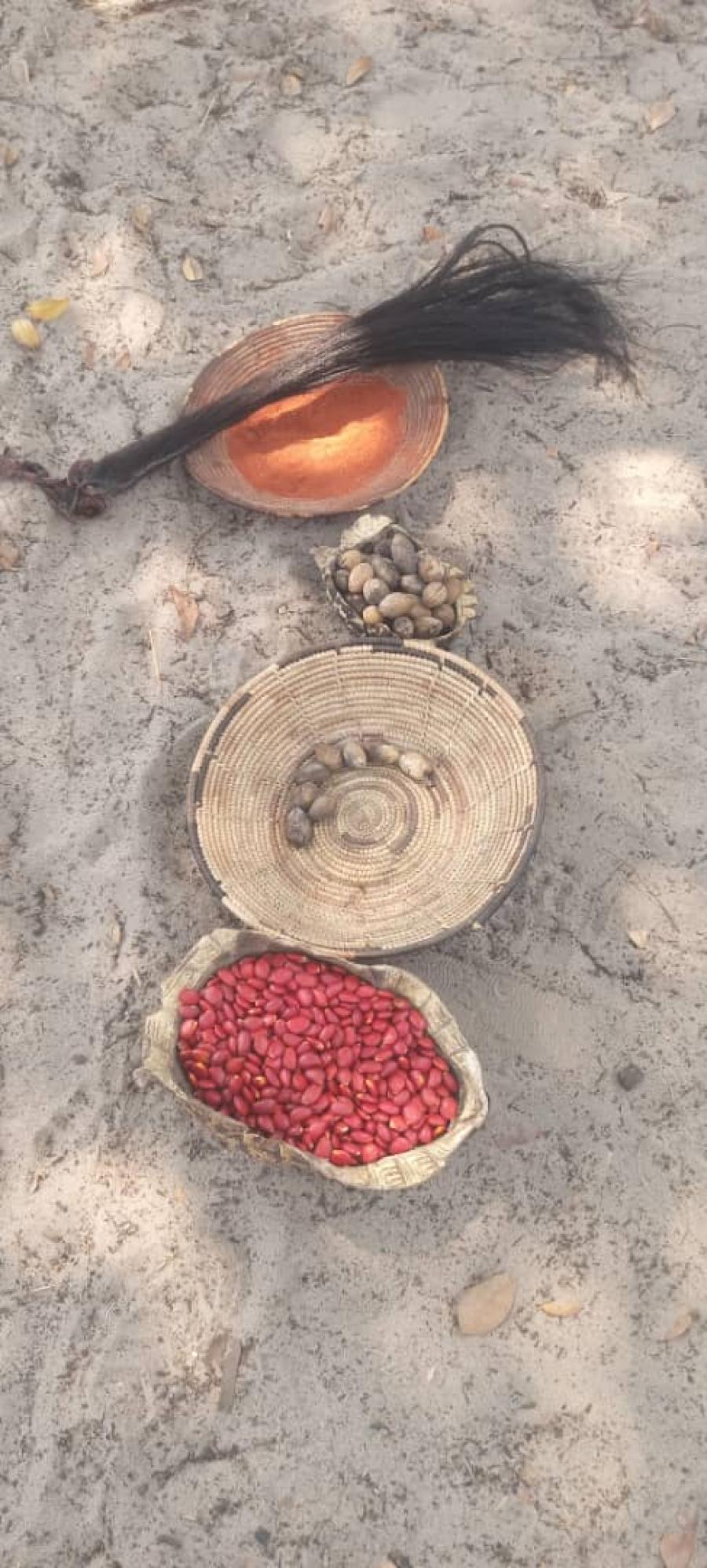
The Nama are also protecting their living heritage, which includes sacred sites like Boegoeberg where ancestors are buried and rituals have been performed for millennia. They are revitalizing their language and cultural practices, narrating their stories through songs and artistic expressions. “As Khoi artists and activists, our stories speak to questions of who we are as a Khoi community, what it means to be Khoi, and what it means to belong. Through our theater productions and festivals, we provoke critical conversations while creating spaces where audiences can reflect on their own sense of identity and belonging,” says a team leader of the youth organization Nama Khoi Productions.
By grounding their power in their culture, the Nama reassert what it means to have land: its historical and cultural significance, and why it remains fundamental to the community's dignity, survival, and future. The Nama are returning to a leadership model grounded in their Indigenous values, and in doing so, are gradually moving away from the subjugation of being a marginalized minority and stepping into their power as the First Peoples of the land. This cultural revival is the fuel for their political and legal battles and their future survival.
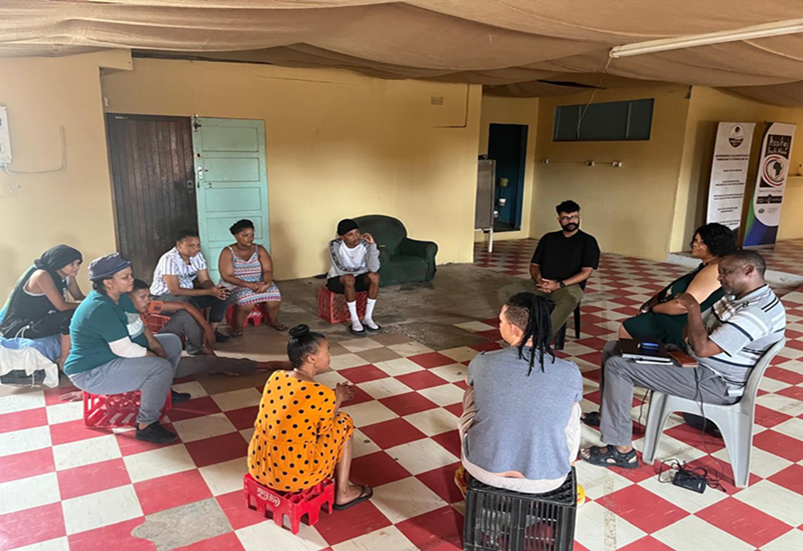
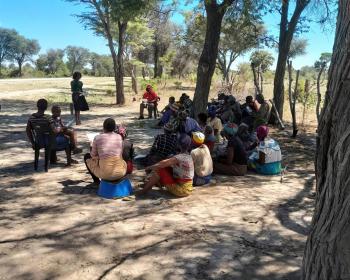
Youth focus group discussion at Sandrift’s Khoikhoi Cultural Centre.
A Legacy of Persistence and a Vision for Tomorrow
The journey of the Nama Peoples is a testament to the fact that justice is not a single event, but a continuous process of resilience. They survived the diamond rush that stole their land and the apartheid laws that tried to erase their very names and language. They won an impossible legal victory in the Richtersveld case, which redefined South Africa's laws forever. Today, the Nama stand at a crossroads between their traditional past and a high-tech, green future. Their story shows that true justice isn't just defined by a payout or a piece of paper; it’s about the right of a people to determine their own destiny on the land of their ancestors.
The Nama are showing the world how to turn a history of pain into a future of sovereignty. They are reminding us that no matter how arid the desert may seem, the roots of Indigenous identity run deep and can bloom into a powerful force for change. Their message to the world is clear: there can be no "green" future without Indigenous justice, and the Nama will no longer be left in the dust of history. They are the guardians of Namaqualand, and they are here to stay.
--Dr. Daniel Salau Rogei (Maasai) is a postdoctoral fellow at Stellenbosch University’s Sociology and Social Anthropology department. He is currently undertaking a comparative study on green energy among frontier communities in South Africa and Kenya. Dr. Rogei has extensively researched and consulted with Indigenous and pastoral communities on development, climate change, environmental issues, and social and economic empowerment projects. As an Indigenous scholar, Rogei’s interests embody the intersections between culture and modernity; indigenous knowledge and modern forms of knowledge creation, as well as sustainable well-being in the context of changing land regimes, livelihoods, and climate change.
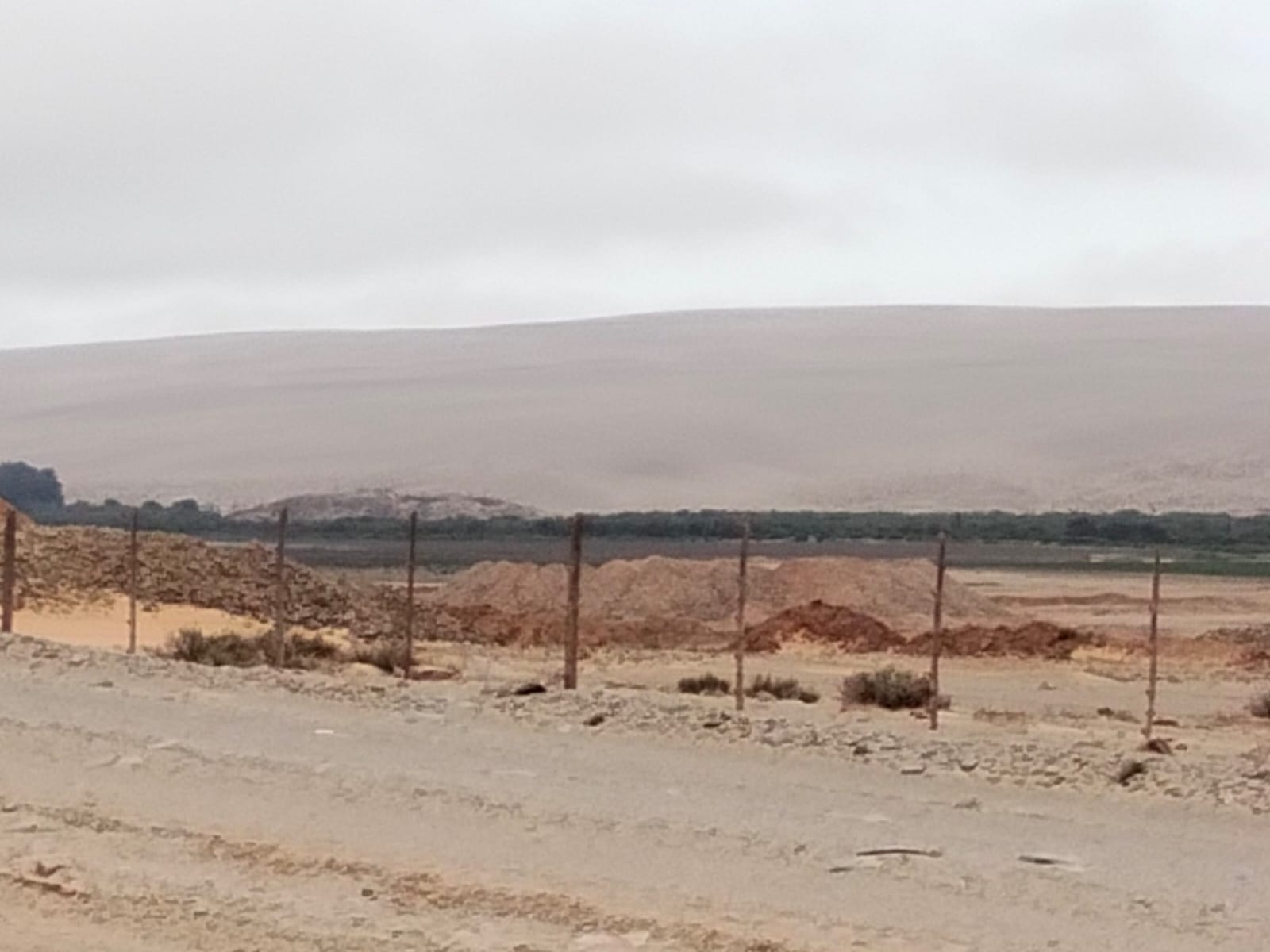
Top photo: A mine near the river and farm, with Namib Desert in the background.