
In the summer of 1995, as over 100 Indigenous women delegates gathered in Beijing for the Fourth World Conference on Women, a quiet revolution was taking shape. That same year, Indigenous women held continental gatherings, sowing the seeds of a global network. In Quito, Ecuador, they formed the Continental Link of Indigenous Women of the Americas (ECMIA) to unite organizations across the Americas. In Agadir, Morocco, they established the African Indigenous Women’s Organization (AIWO), creating a pan-African voice. These early alliances laid the groundwork for what would soon become the International Indigenous Women’s Forum, better known by its Spanish acronym, FIMI.
By March 2000, momentum from the Beijing conference culminated in the official founding of FIMI during a UN special session. More than 100 Indigenous women leaders from the world’s seven socio-cultural regions came to New York, determined to make their voices heard. Under the organizational leadership of Canada’s Assembly of First Nations and those visionary Indigenous women from around the globe, FIMI was born as a formal global mechanism to coordinate agendas, build capacity, and develop leadership for Indigenous women. FIMI’s founding was intertwined with another historic stride that year: the establishment of the UN Permanent Forum on Indigenous Issues, which created a vital space for Indigenous Peoples in the international system.
Building Leadership and Global Solidarity
FIMI serves as a global platform ensuring that Indigenous women’s perspectives are seriously included in decisionmaking on human rights. Over 25 years, FIMI has launched key programs to empower Indigenous women at every level. Among them are the creation of the Global Leadership School, the establishment of the first Indigenous Women’s Fund, Ayni, and a research department to gather the necessary evidence for our advocacy work.
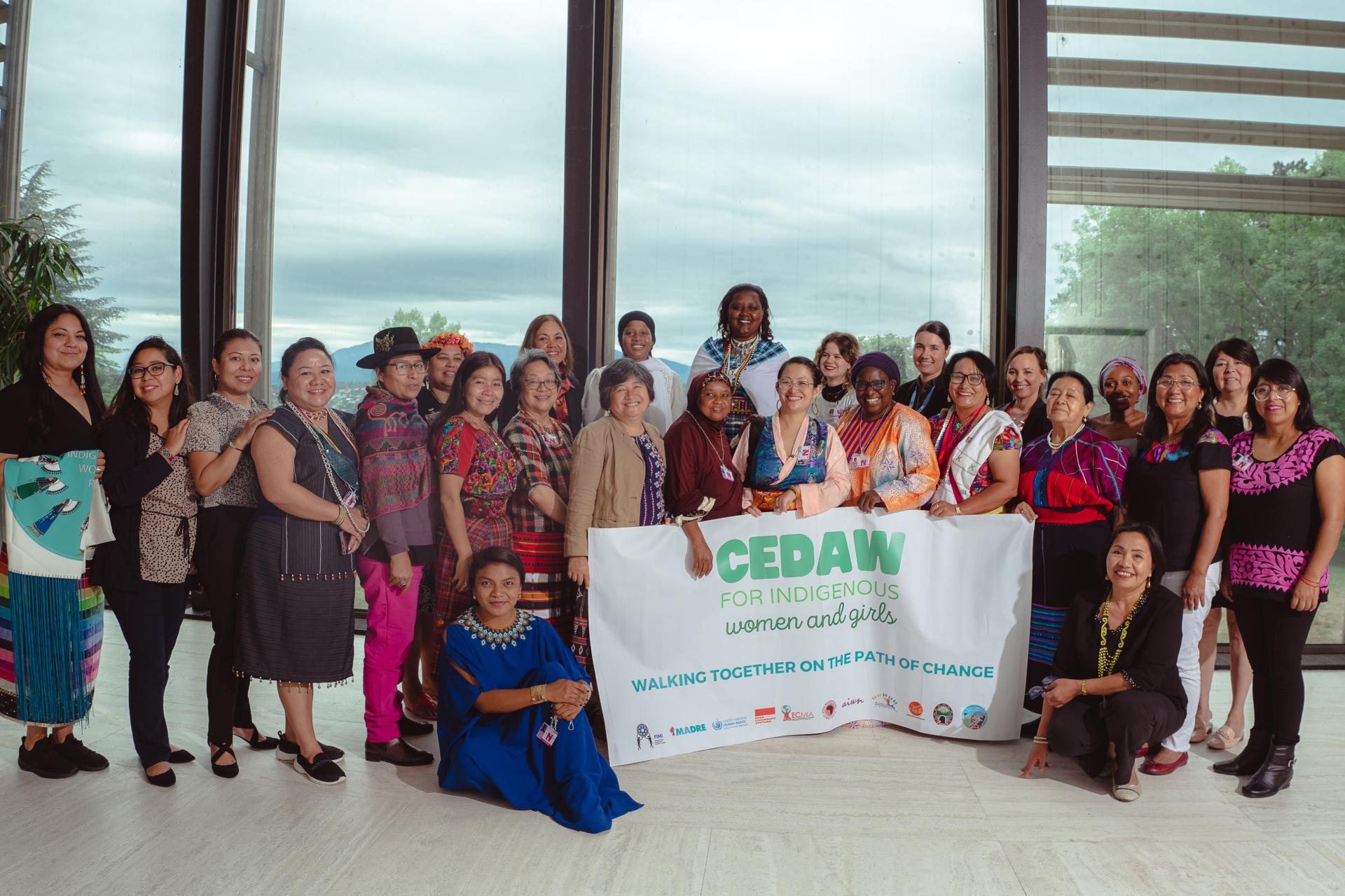
Alongside capacity and funding, FIMI has pushed relentlessly for policy change in international arenas. Early on, we helped achieve a milestone at the UN Commission on the Status of Women with the adoption of its first-ever resolution focusing on Indigenous women, highlighting issues like poverty and violence and urging action. This breakthrough planted Indigenous women’s priorities firmly on the global gender agenda. FIMI has also been instrumental in bringing Indigenous women’s concerns to human rights bodies such as the Convention on the Elimination of All Forms of Discrimination Against Women (CEDAW), and we have coordinated consultations from Asia to the Americas. Collectively, FIMI’s advocacy has transformed global norms and ensured Indigenous women are no longer sidelined as mere subjects, but recognized as “protagonists of change and subjects of rights” with decision-making power.
2025: Milestones and Action
Last November, history was made at UN Headquarters when the General Assembly voted to officially proclaim September 5 as the International Day of the World’s Indigenous Women and Girls. The date carries deep meaning, as September 5 has long been commemorated by Indigenous communities in the Americas to honor Aymara heroine, Bartolina Sisa. The resolution stresses Indigenous women’s “full, equal and meaningful participation in decision-making,” echoing one of FIMI’s core demands. Henceforth, the 5th of September will be a rallying point each year to focus world attention on Indigenous women’s empowerment.
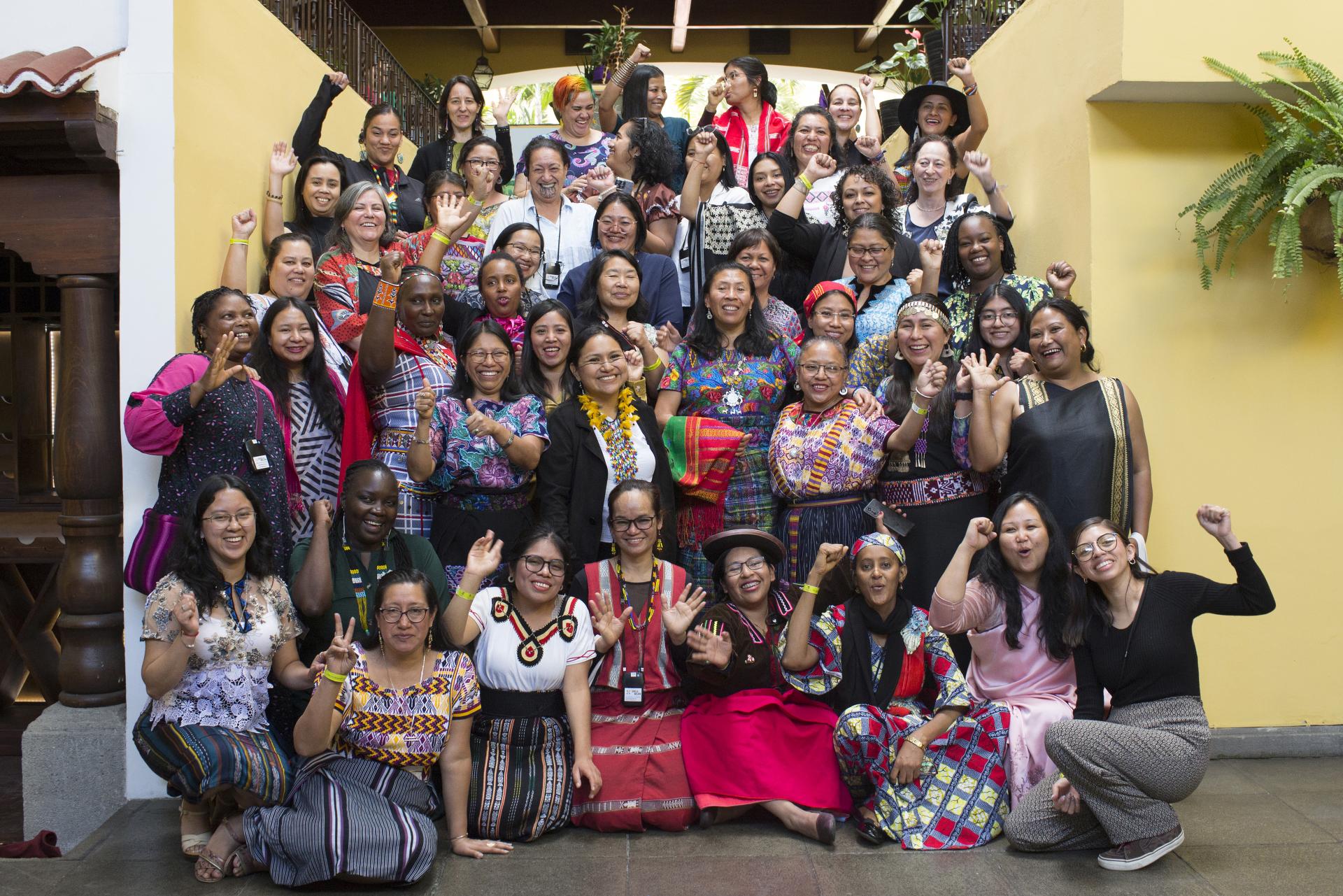
Throughout 2025, FIMI advanced the dissemination and implementation of CEDAW General Recommendation 39 (GR39). In close coordination with our regional Indigenous Women’s networks, FIMI led the collective development of the GR39 Five-Year Action Plan, translating the General Recommendation into concrete priorities and advocacy pathways across local, national, regional, and global levels. Amid these policy victories, 2025 was a year of celebration, reflection, and renewed commitments. In June, FIMI organized a Global Indigenous Women’s Gathering in Lima, Peru, bringing together women from dozens of nations to mark our 25th anniversary. For two days, Elders and young leaders shared stories of struggle and triumph, honored pioneers of the movement, and reaffirmed their collective resolve to keep advancing Indigenous women’s rights. FIMI awarded recognition to our long-time ally, International Funders for Indigenous Peoples, acknowledging how solidarity from philanthropic partners has strengthened Indigenous women’s initiatives over the years.
On the world stage, Indigenous women also stepped up as climate leaders in 2025, with FIMI playing a convening role. During COP30 in Belém, Brazil, FIMI co-hosted the Global Summit of Indigenous Women and Youth, where Indigenous women issued a bold political declaration addressing the climate crisis as “a crisis of rights, justice, and life”. The declaration, collectively crafted by women from the Amazon to the Arctic, demands protection of Indigenous territories and knowledge as essential to any climate solution. It also calls for direct climate financing to Indigenous communities and safeguards for Indigenous environmental defenders who face violence every day in their resistance.
We Are Not a Topic: We Are Rights Holders
Behind FIMI’s milestones are the voices of Indigenous women themselves—voices that for too long were silenced or ignored, but are now resonating in the corridors of power. At the UN Permanent Forum’s 24th session last April, these voices took center stage in a high-level global dialogue on Indigenous women’s rights. Leaders spanning generations, from a young Anishinaabe water protector to seasoned activists and UN officials, echoed a common message: Indigenous women are agents of change, not victims.
Decades of resistance have been paired with articulated proposals that demonstrate Indigenous women’s capacity to lead. As Lucy Mulenkei (Maasai), FIMI co-founder, has emphasized, “Often when they look at us, they think that we have no skills. As Indigenous women, we are pushing forward and must work together,” underscoring both the collective power nurtured by FIMI and Indigenous women’s role as agents of transformative change. Teresa Zapeta (Maya K’iche’), FIMI’s current Executive Director, put it bluntly during the UN dialogue: “We are not a topic. We are rights holders.”
True inclusion means more than inviting Indigenous women to speak; it requires actively involving them in designing solutions, ensuring direct access to resources, and respecting their knowledge systems. In practice, this means that governments must see Indigenous women as partners in policy-making, not as beneficiaries of aid. It means funding Indigenous women-led initiatives and respecting Indigenous governance, not imposing outside programs. FIMI models this approach, centering authentic partnerships based on mutual recognition instead of top-down assistance.
Crucially, Indigenous women’s leadership doesn’t just benefit Indigenous communities; it offers pathways for transforming broader society. Indigenous women put their bodies and lives on the line in defense forests, water, and land—work that contributes directly to global environmental sustainability and conflict prevention. They serve as culture keepers and educators, passing on languages and values that enrich humanity’s heritage. And in areas wracked by conflict or oppression, Indigenous women often emerge as the peacemakers.
This nexus of women’s empowerment and peace is precisely why FIMI matters: by strengthening Indigenous women’s leadership, we are investing in more peaceful, just societies. It’s fitting that the theme of El Mundo Indígena 2026 centers on peace and security, because Indigenous women’s advocacy is fundamentally about securing a peaceful future for their Peoples. FIMI’s 25-year effort has been to ensure these builders of peace have the tools, networks, and recognition they need to succeed.
A Legacy and a Future Woven Together
As FIMI crosses the 25-year mark, our story is both a celebration of how far Indigenous women have come and a call to action for the journey ahead. We have nurtured a generation of Indigenous women who are leading with confidence not only on “women’s issues,” but on climate change, economic development, and peace-building, proving that their perspectives improve outcomes for all. And we have shown the world that empowering Indigenous women is one of the surest ways to protect human rights and our planet. While we celebrate our successes, we recognize that the work is unfinished. Inequalities and violence persist, and many hard-won gains remain fragile. FIMI’s journey shows that change is possible when those most affected are in the driver’s seat. From remote forest communities to UN halls in New York, women’s voices—full of wisdom, resilience, and hope—are shaping a more equitable and peaceful world. And FIMI, the forum that has woven these voices together, continues to stand as a beacon of what Indigenous women’s global solidarity can achieve. When Indigenous women lead, all of society stands to benefit.
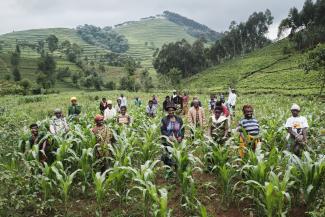
Main photo: Women in the fields of Rwanda. Photo by Tracy Keza.
All photos courtesy of FIMI.