In 2016, Michelle Schenandoah, a member of the OnΛvyota’:aka (Oneida) Nation Wolf Clan of the Haudenosaunee Confederacy, founded Rematriation, an Indigenous women-led nonprofit based in Syracuse, New York. The organization uplifts Indigenous women’s voices and advances the rematriation movement, through films, podcasts, and fostering community gatherings and applying Indigenous Traditional Knowledge to areas such as environmental stewardship, governance, policy, and justice practices. Through these efforts, Rematriation empowers Indigenous communities and allies to build equitable, sustainable, and culturally grounded solutions by inspiring dialogue to shift narratives. Schenandoah carries her ancestors’ passion to rematriate her Peoples’ lands and share the Haudenosaunees’ global influence on modern democracy and civic rights. Cultural Survival Indigenous Rights Radio Coordinator, spoke with Schenandoah about her work.
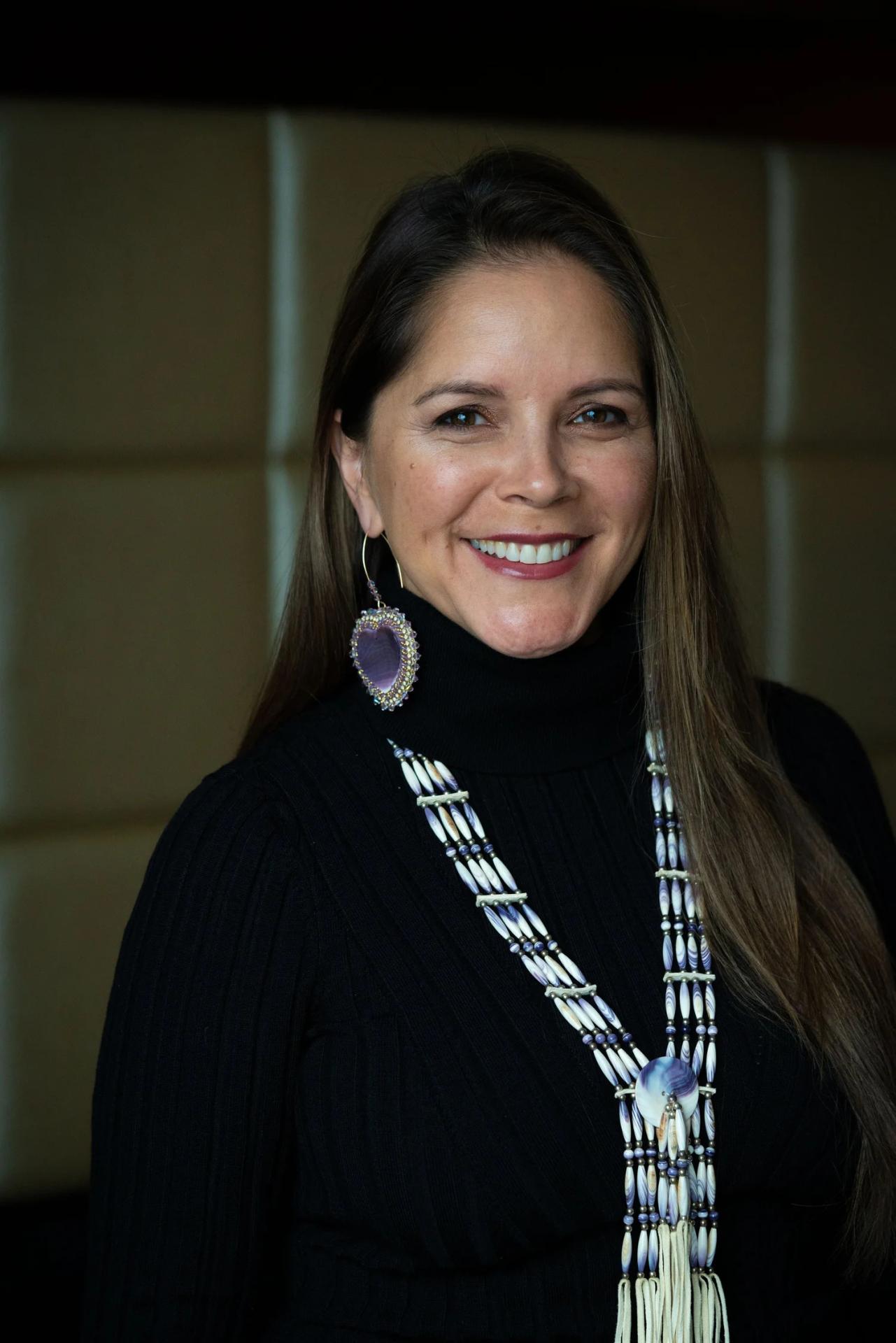
Michelle Schenandoah. Photo by Tahila Moss (Yaqui).
Cultural Survival: You’ve mentioned that the essence of being Haudenosaunee is about “striving for peace.” What does that mean in a modern context?
Michelle Schenandoah: Peace was brought to us by a messenger. There was a very dark period in our Peoples’ lives [when] our Nations were at war with each other. During that time, a messenger came to us with this message of peace and living with a good mind, and united our people through this very powerful spiritual message. The simplicity of it can sometimes be overlooked by people unfamiliar with our culture. It’s something that has united six different nations in peace for a thousand years.
We recognize that we received this message and we are to share these core principles of peace and peacemaking to not only get along as people, but to also consider future generations. Embedded in our way of life is caretaking and looking out for each other and carrying responsibilities that we have to each other as humans, but also to the natural world, from Mother Earth to the water, to the birds, to the wind, and to future generations, that they will have a life as good as we have, if not better.
CS: What does Indigenous feminism look like to you? How does it differ from western understandings of feminism?
MS: As Haudenosaunee people, our cosmology centers around Sky Woman, who was the first being to come here to this Earth. From her life and her story is eventually how humans came to be here on Earth. Our entire worldview is centered around a woman. Our creation story begins with a woman, and women are very central to our understanding of who we are. Women are celebrated as life-givers. We did not come from the rib of a man. We have not had to f ight for our status and position within our communities; it’s one that is revered, it’s one that’s elevated and safe. We also have clan mothers who guide the leadership of our Nations. Every mother has a voice and autonomy, and authority. This idea of Indigenous feminism is one that I can’t give definition to because feminism, from my understanding, comes from having to push back against patriarchy.
I like to refer back to the words of one of our clan mothers, Mommabear, a Mohawk Bear Clan mother. She was asked this question about feminism, and she says, ‘We’re not feminists. We’re the law.’ I understand that there are many Indigenous Peoples around the world who speak about Indigenous feminism from their point of view and their perspective. As a Haudenosaunee woman, I’d like to defer to Mommabear’s words.
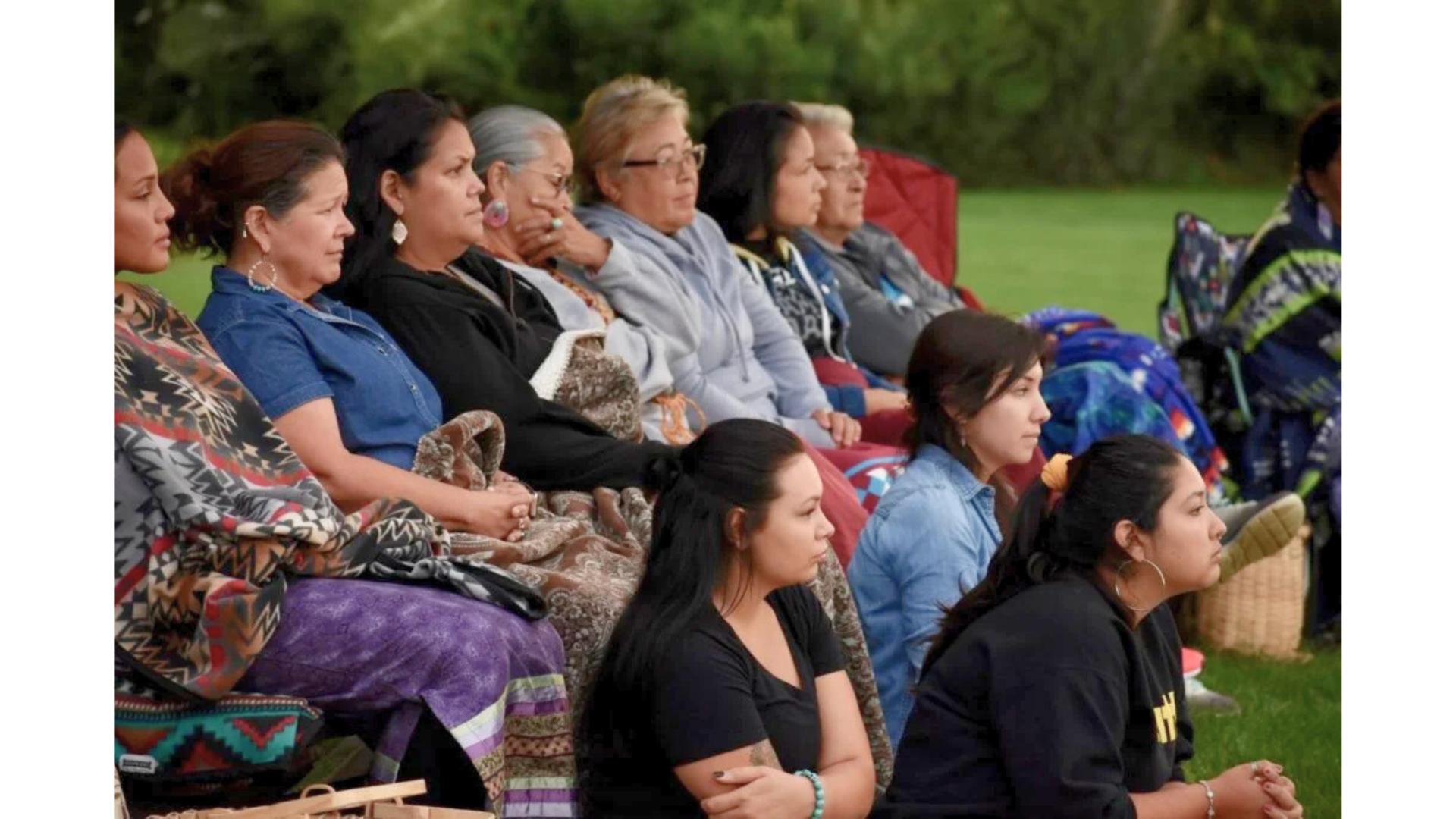
Rematriation creates media and organizes in-person gatherings centering Indigenous women's knowledge, experiences, and healing journeys. Photo by Brenda Mitten (Seneca).
CS: Tell us about your work at Rematriation. What are you trying to achieve?
MS: I had always dreamed of creating a space much like Cultural Survival, one where Indigenous voice is centered. I also saw one where Indigenous women’s voices are centered. I come from a family where a lot of our women, starting with my great-grandmother and my grandmother, created a family legacy to fight for our land claims. My mother would remind me that ‘we as Haudenosaunee people, we have our laws, and this is what you have to uphold.’ Creation pushed me in the direction of beginning to work with our women at home and among the Haudenosaunee Nations. I started to look at the impacts of trauma that was directly affecting our people, from sexual violence and the impacts of residential schools and of colonization.
I started Rematriation and created a lot of gathering spaces for our women. Now we do a significant amount of work to create space for our Indigenous women to share their knowledge, their voices, their healing. We share that knowledge with our People, and also with the public in ways that are appropriate, about living in balance with the Earth and each other to overcome those harms of colonization and focus on our strengths. To share that love, compassion, forgiveness, and healing with others (settlers) who live here in our homelands so that they can experience those feelings and their relationship with the land that they’re on. We now tell stories through videos and podcasts, and are still creating these gathering spaces, which are really proving to be a space of love and healing. We are the children of Sky Woman today.
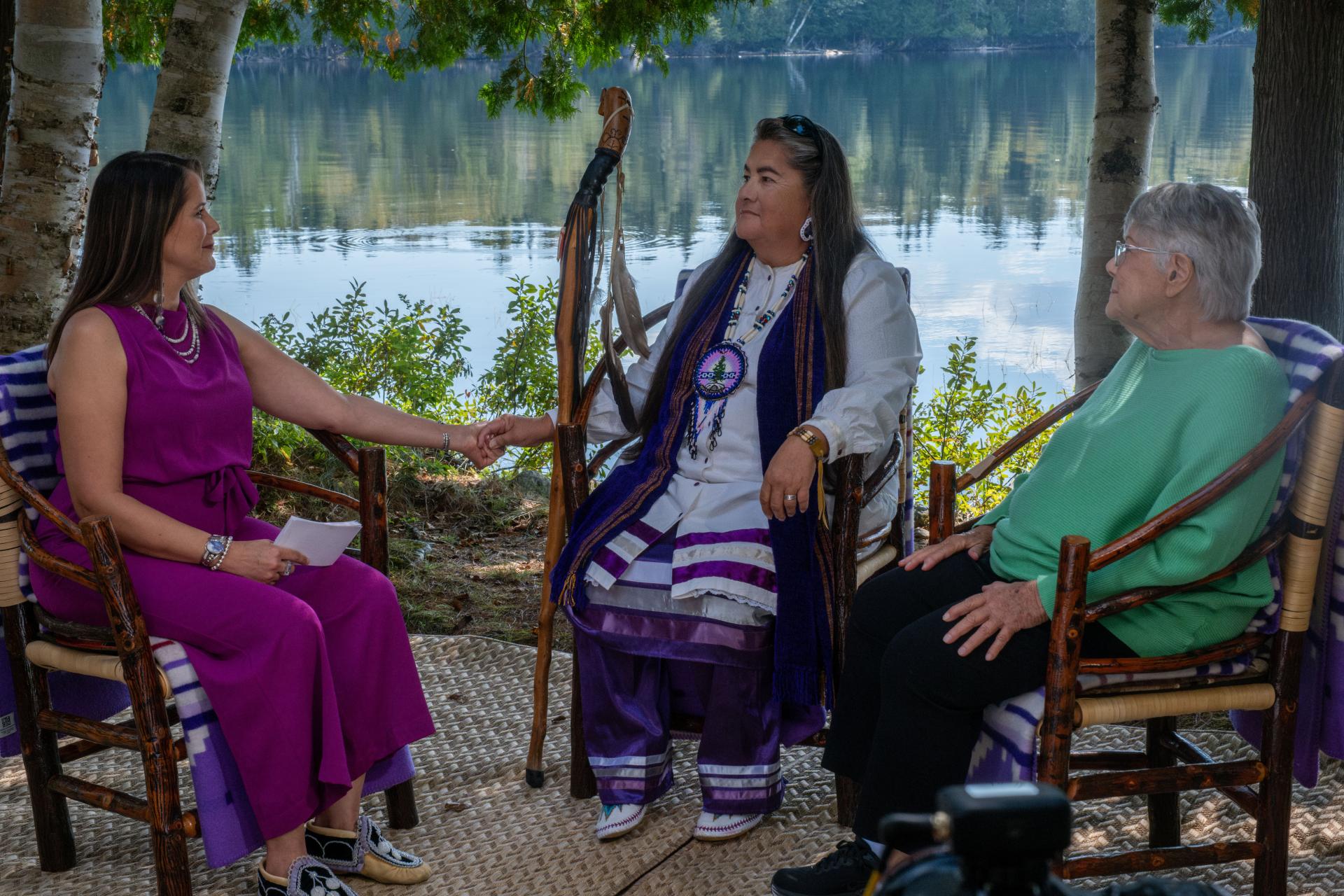
Michelle Schenandoah, left, in conversation with Mohawk Bear Clan mother, Mommabear, and historian Dr. Sally Roesch Wagner, on “Rematriated Voices.” Photo by Adriano Kalin.
CS: Tell us about your latest project, “Rematriated Voices.”
MS: “Rematriated Voices” is a five-part talk show series that can be found on PBS with a podcast companion. It was part of this dream that I had to create a space to bring our Elders, our Traditional Knowledge holders, our leaders, friends, and allies who are doing the work alongside us to be able to come together and to share these aspects of our lives, our governance, the influence that we’ve had.
How different would it be in the United States if people knew that the roots and the origins of their Constitution were Indigenous and that very important aspects were left out deliberately—aspects regarding peace and peace-making, compassion for one another, and forgiveness? It would also be very different to have the women behind those decisions who are thinking about ensuring that all people are fed, ensuring that all people are warm at night and have a place to sleep. Since the beginning of our Confederacy, we have been a people of inclusion, fairness, equity, and honesty. That’s all built into our governance.
All those types of sharing and stories and histories are part of what people can hear in “Rematriated Voices.” There are some really wonderful people like Katsi Cook (Mohawk), who helped to birth Rematriation into the world and brought this terminology from Indigenous midwifery. She’s in an interview with Robin Wall-Kimmerer (Potawatomi). We have two young chiefs from the Haudenosaunee Confederacy and one of our Elder Clan Mothers and a Faith Keeper. We even talk about issues such as the Doctrine of Discovery and how Indigenous women are responding in their work today, and what some of our allies are doing to work alongside us to help to elevate this knowledge into the world to make a difference and perhaps create a paradigm shift towards life.
CS: What is your vision for the future?
MS: The work that I do now is always thinking of the future. We’re in this very critical time as human beings, and we have to shift our values. The work that we do here at Rematriation is to help create that paradigm shift so that we can begin to orient our thinking towards life. [It] is not just for our future generations as Indigenous people, it’s for everyone. It’s my hope that people will see our work and begin to really think about those values that we share. Rematriation, as a definition that we’ve given as Haudenosaunee women, is returning the sacred to the mother, and that’s returning that love that she gives to us back onto her and to all of her children.
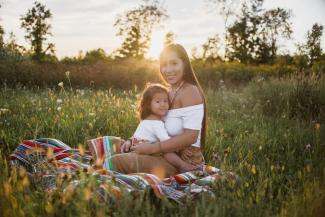
Main photo: Tsiotenhariio and Iesohtsherine. Photo by Jessica Sargent (Akwesasne Mohawk).
❯ Learn more about Rematriation and “Rematriated Voices” at rematriation.org.