By Angel Yraê Ferreira (Payayá, CS Intern)
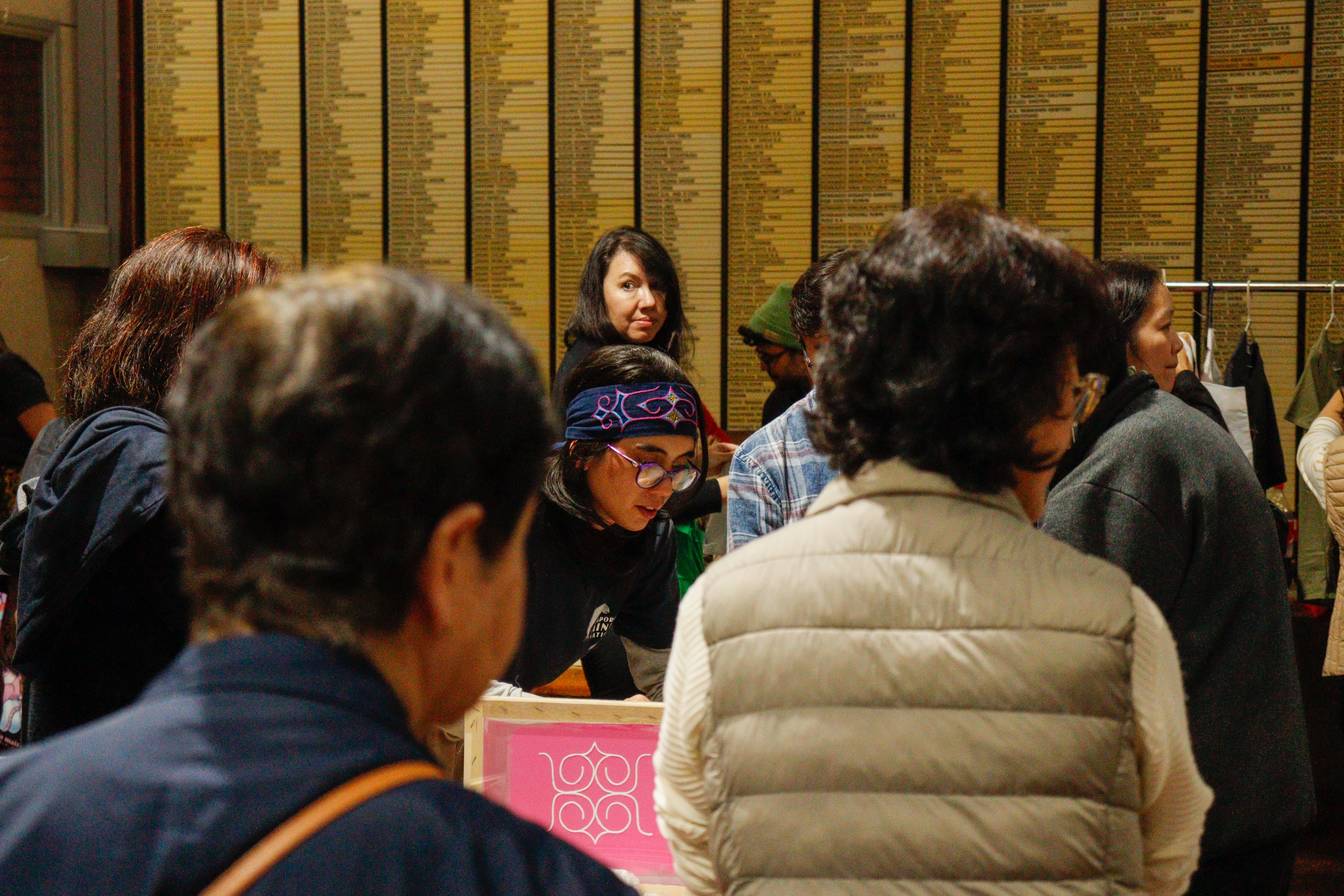
As part of Cultural Survival’s coverage of the Ainu cultural event hosted by the Hokkaido Association in São Paulo, Brazil, on June 27, 2026, which included traditional dance performances and textile painting workshops, this feature highlights the panel discussion "Ainu and Ainu-Renpukuru: Indigenous Peoples of Hokkaido." Speakers Allan Yzumizawa, Gabriela Ichii, and Umeno Morita explored key themes such as traditional attire, culinary heritage, spirituality, and the enduring impacts of colonization.
In this interview, Political Philosophy scholar and researcher Umeno Morita (Ainu) reflects on family memory and trauma within the Ainu diaspora in Brazil. From the historical violence of the Shindo Renmei and isolation from the mainstream Japanese-Brazilian community to the reclamation of ancestral spirituality, Morita discusses asserting an Ainu Indigenous identity in diaspora and the urgent need for political solidarity with Brazilian First Nations.
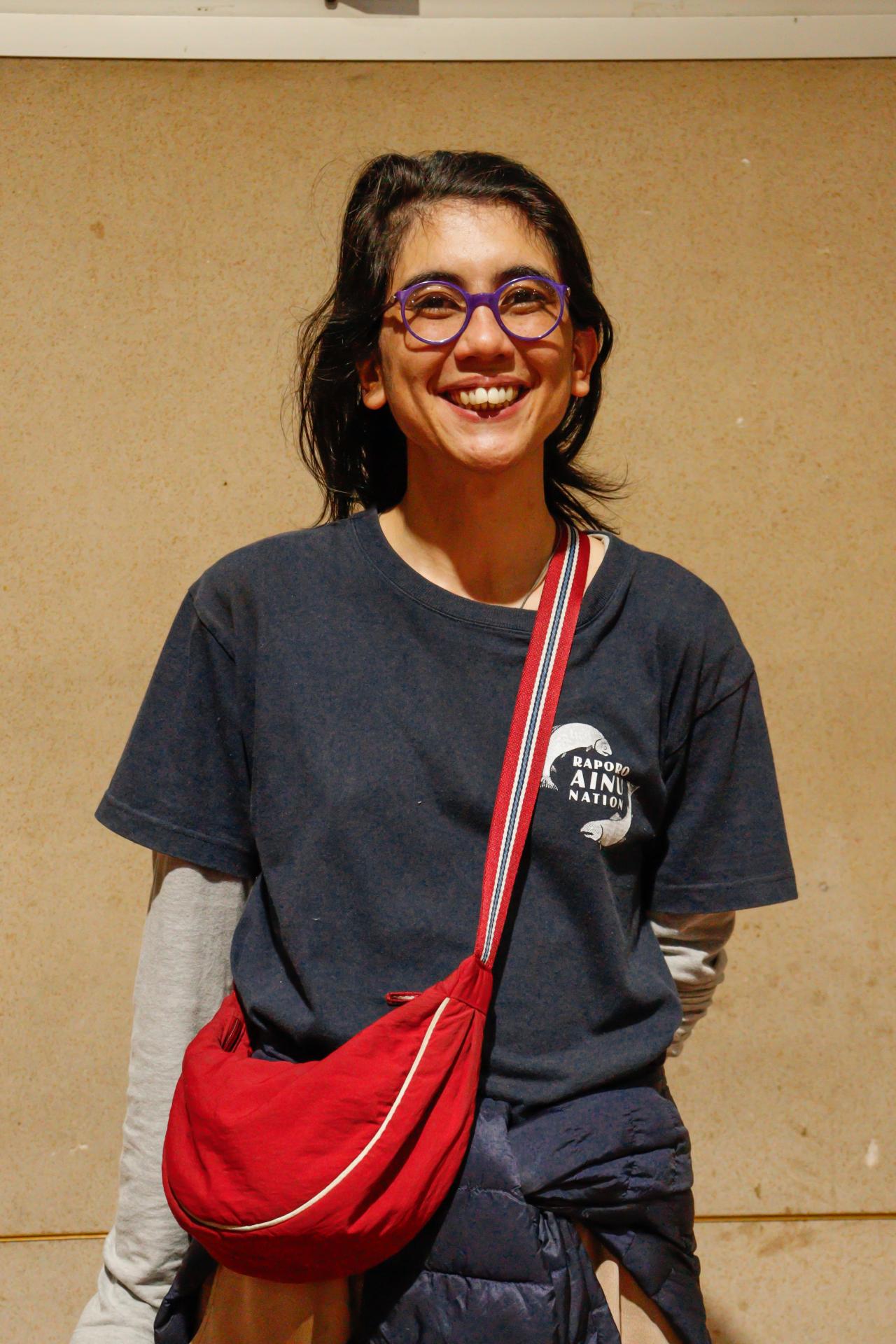
Cultural Survival: In Brazil, the Nikkei (Japanese-Brazilian) community is often viewed as a monolithic block by the rest of society. As an Ainu person, what is it like for you to navigate this space? In what ways do you feel your experience diverges or differs from that of the majority of Japanese-Brazilians?
Umeno Morita: My grandmother, who was an Ainu woman born in a kotan (village), used to say a very powerful phrase: "Japan and the Japanese do not like us." This phrase was echoed by my aunts and my father when referring to the time they lived in the Japanese colony of Tupã. I have heard this phrase since I was a very young child. Tupã was the municipality of my family's first colony in Brazil; all my aunts and uncles (including my father) were born there. The 1940s and 1950s were quite turbulent in Japanese-Brazilian colonies. It was a context defined by the formation of fundamentalist imperialist leagues that used lethal violence to attack people they considered defeatists for accepting Japan's unconditional surrender at the end of World War II. The league with the highest number of records in police inquiries in São Paulo and Paraná was called Shindo Renmei. My family had a very traumatic experience in the colony because of this league. My aunts, uncles, father, grandmother, and grandfather were called "dirty blood" for not being a "pure-blood Nikkei" or "pure-blood Yamato" family. Shindo Renmei means "League of the Way of Subjects" and was the result of intense Japanese nationalist propaganda in the colonies. People became so blinded that they began killing in the name of the nation anyone who, in some way, represented a deviation from Yamato-damashii (the pure Yamato spirit).
Therefore, my family had no choice but to perceive themselves as different from the Japanese-Brazilian community. This was transmitted to my generation in very complex ways that sought to silence a trauma. I know my family fled Tupã for a colony in Paraná, in the city of Astorga. They had problems there as well, and in the 1960s the whole family moved to Carapicuíba, a suburb of Greater São Paulo. Ever since, all generations of the family have been encouraged to keep their distance from Nikkei groups.
It was through extensive listening at different times in my life that I pieced together the puzzle of these accounts of my family's life in the colony. There are good things, such as my father's and my aunts and uncles' relationship with the radio, listening to soccer broadcasts to learn Portuguese. They tell beautiful stories about planting and harvest times, of a simple, humble life. But there are also these traumatic episodes of having to flee because "the Japanese do not like us." My father is one of the youngest children, so he remembers little, but he is the one who talks to me most about our history. He speaks sparingly about the threats my family faced in the colony because of Shindo Renmei. So I researched the formation of this and other leagues extensively and began to understand that many notable dates in the colonies' relationship with Japan coincided with the periods in my family's accounts.
That was when I began to understand the isolation my family established regarding the Japanese-Brazilian community. My grandmother's house and my eldest uncle's house were built facing each other, and the other aunts and uncles, including my father, went to live around Carapicuíba (in places like Barueri, São Roque, Osasco). My eldest uncle married an Uchinanchu woman (from the Indigenous Peoples of Okinawa), and one aunt never married. My father married a white woman (my mother), another uncle married a Black woman, and another aunt married a Black man. In other words: no one married a Nikkei person. Our family embodied this diversity, and our relationship with the surrounding Nikkei community was reduced to being good customers of one another in trade: my father always bought from stalls run by Nikkei families at street markets, for instance, and he ran a repair shop in downtown São Roque that was frequently visited by the region's Nikkei community. We never told these people that we were an Ainu family. That was spoken, in very fragmented ways, only within our internal, "secret world."
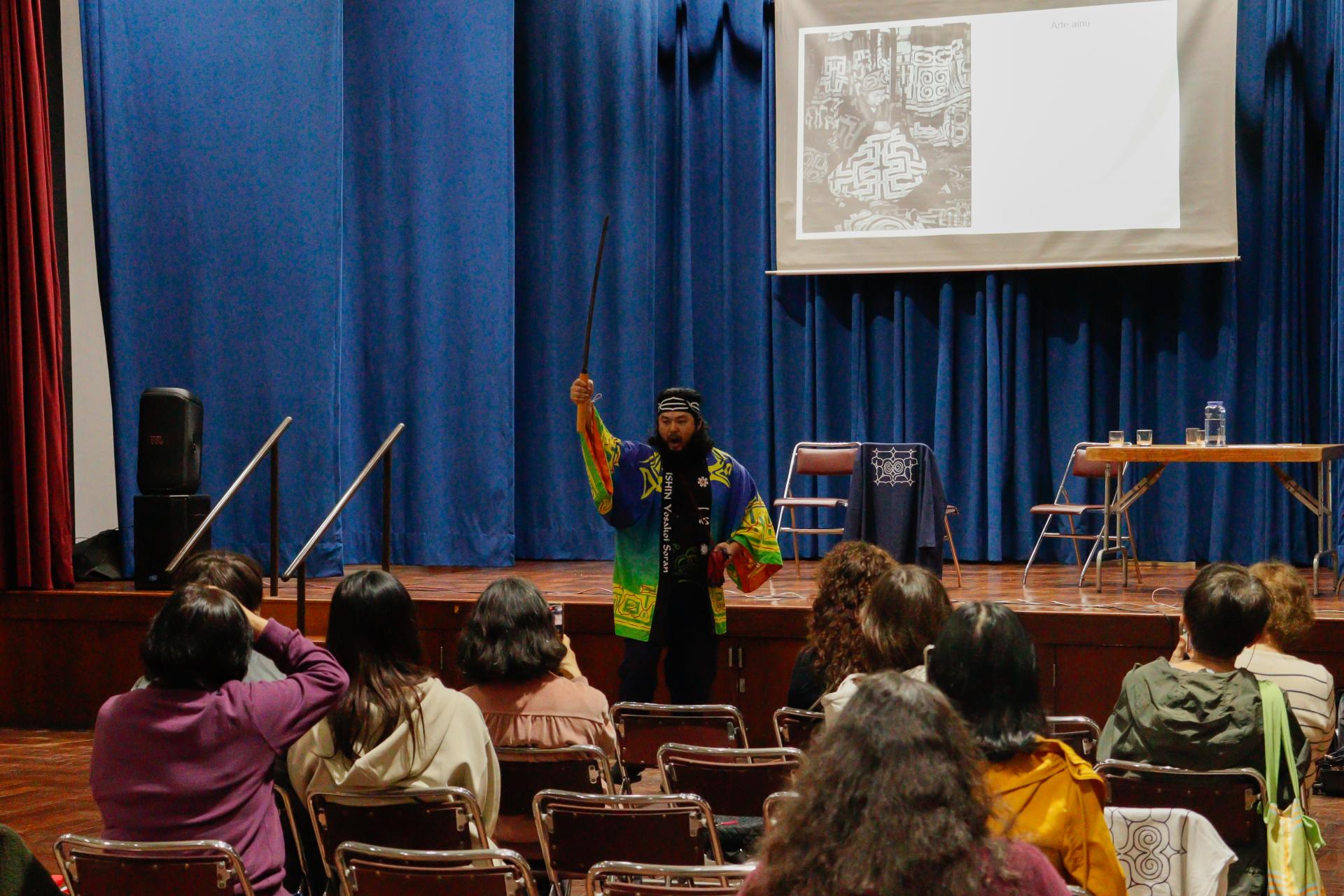
CS: How did the story of your Ainu ancestry reach you? Was it a subject that was always openly discussed at home, or was it a later process of self-discovery and re-appropriation?
UM: Through the repetition, on various occasions, of the phrase "Japan and the Japanese do not like us," I gained perhaps the most concrete realization that my family is Ainu and non-Japanese. But it also came through a lifetime of internal family gestures. My grandmother used to say that our house and yard were full of spirits called Kamuy, and that our ancestors helped us. She said we had to protect ourselves from disordered kamuy that turn malicious, and that we had to make offerings to converse with our ancestors, eat together, speak about everything happening in our lives, share our plans, and voice what afflicts us. "If you ask with a sincere heart for something you truly need, even the insects will help you," my grandmother used to say. I did not associate these things with being Ainu when I was a child. In fact, I don't think I ever associated them very directly, because whenever being Ainu was mentioned in my family, it was always with a recollection of the derogatory tone with which Nikkei people treated the matter. I remember hearing, for example, that I shouldn't say I was Ainu because "the Japanese think the northern Indians are ugly!"
I remember my grandmother saying that her pet dog was like Kumá (which was actually the dog's name), referring to bears domesticated by the Ainu people. She shared that her father was a shaman and kept a bear much like a dog. My older aunts also practiced Ainu spirituality and communicated with our ancestors. However, I didn't fully realize it was Ainu spirituality because my aunts developed their spiritual practices within Umbanda terreiros. It was only in adulthood that I understood that these and other aspects were connected to our being an Indigenous Peoples in diaspora.
In my family, I was the first (and remain the only) person to reach master's and doctoral levels of education. During my master's degree in Philosophy, which I completed in 2019, I studied discourses surrounding the "yellow race" in Brazil. Through that, I accessed official documents regarding diplomatic relations between Brazil and Japan, alongside numerous other references, to reconstruct the historical process of immigration of Peoples from East Asian islands colonized by the Japanese Empire. One day, I read an article titled "Asadoya Yutá: From Resistance to Love for the Colonizer," by an Uchinanchu anthropologist named Kemi Shimabuko. It is a very beautiful text detailing how the popular songbook of the Ryukyu archipelago's Peoples reflects the history of resistance when the Imperial Japanese Army subjugated them. In a footnote of that text, there was a reference to the Ainu people, comparing the colonization of Ryukyu with what occurred in Ainu territory. The text pointed out that the colonization Japan imposed on the Uchinanchu Peoples was also a project executed in Ainu territory against the Ainu Peoples: just as Ryukyu became Okinawa, Ainu-Moshiri became Hokkaido, two provinces annexed by the Japanese Empire through colonization. When I read that footnote, it felt as though my family's entire history had condensed into a massive historical realization that struck like a comet. I connected the secret world that had always surrounded my home life with the historical fact: we were part of a diaspora of a people that Japan did everything to exterminate, expel from their land into immigration across the Americas, and teach the diaspora to discriminate against as well. I understood, once and for all, why my family faced discrimination in the colony, why we were different from the Japanese, why my grandmother told us not to tell anyone we were "northern Indians," and why my Elders taught us to pray to insects and ancestors. I cried deeply that day. I prayed to my grandmother, now an ancestor, and asked: "help me find our people one day in Ainu-Moshiri, which Japan calls Hokkaido."
From then on, my family entered a process that continues to this day: no longer hiding that we are Ainu. But this does not come without tension. Together, we came to realize that many experiences our generation endured were continuations of Japan's violence against our people. For instance, in the 1990s and early 2000s, our family experienced the phenomenon of "Japanese-Brazilian" immigration to Japan to work temporarily in automotive factories. Three of my brothers, four cousins, and an uncle lived in Japan during those decades, working extremely hard and sending money back to the family. Japan did not (and still does not) offer full protection for the rights of immigrant workers, and the men in my family endured violence, prejudice, xenophobia, and unhealthy working conditions. It is impossible not to connect that situation to the fact that, in our grandparents' generation, our people were expelled from our ancestral land, and now, as immigrant workers, we were targets of compulsory displacement once more, facing discrimination in Japan and by Japan yet again.
Thus, we reappropriated our history by becoming Ainu, having always been who we are. We are a family from rural and suburban areas, raised far from Nikkei communities and completely divergent from the social mobility codes associated with Nikkei descendants as a "model minority." We also came to understand that what we always did in our yard, gathering around a fire to talk, eat together, and share our daily lives with the ancestors, now held a redefined meaning in our own history. Our stance shifted from "a Japan that does not like us" to "Japan owes us historical, material, and symbolic reparation, whether it likes us or not."
There is still a segment of the family that holds a position of denial. I once heard from an older cousin that we are "iPhone Indigenous" and that there was no point in searching for the history of a Peoples we no longer are. I have many conversations with my oldest female cousin about all of this, especially because she remembers our grandmother when she was younger. Through everything she shares and retells from our stories, an Ainu-Moshiri comes alive over coffee and cake at the table. We refrain from probing our Elders with questions that might cause discomfort or reopen colonial traumas. Instead, we try to exchange among brothers, sisters, and cousins what we know through the narratives of our mothers and fathers. I am very fortunate with my father, as he is a man who enjoys talking about his childhood and youth, sharing stories about my grandmother. He likes being Ainu and talks about it often, to the point of asking me what I know about certain aspects of our people so he can learn alongside me. The ways different generations handle this vary greatly, but it has definitively become a constant topic throughout my family (aunts, uncles, father, siblings, and cousins) since I began mobilizing to travel to Ainu-Moshiri through my studies.
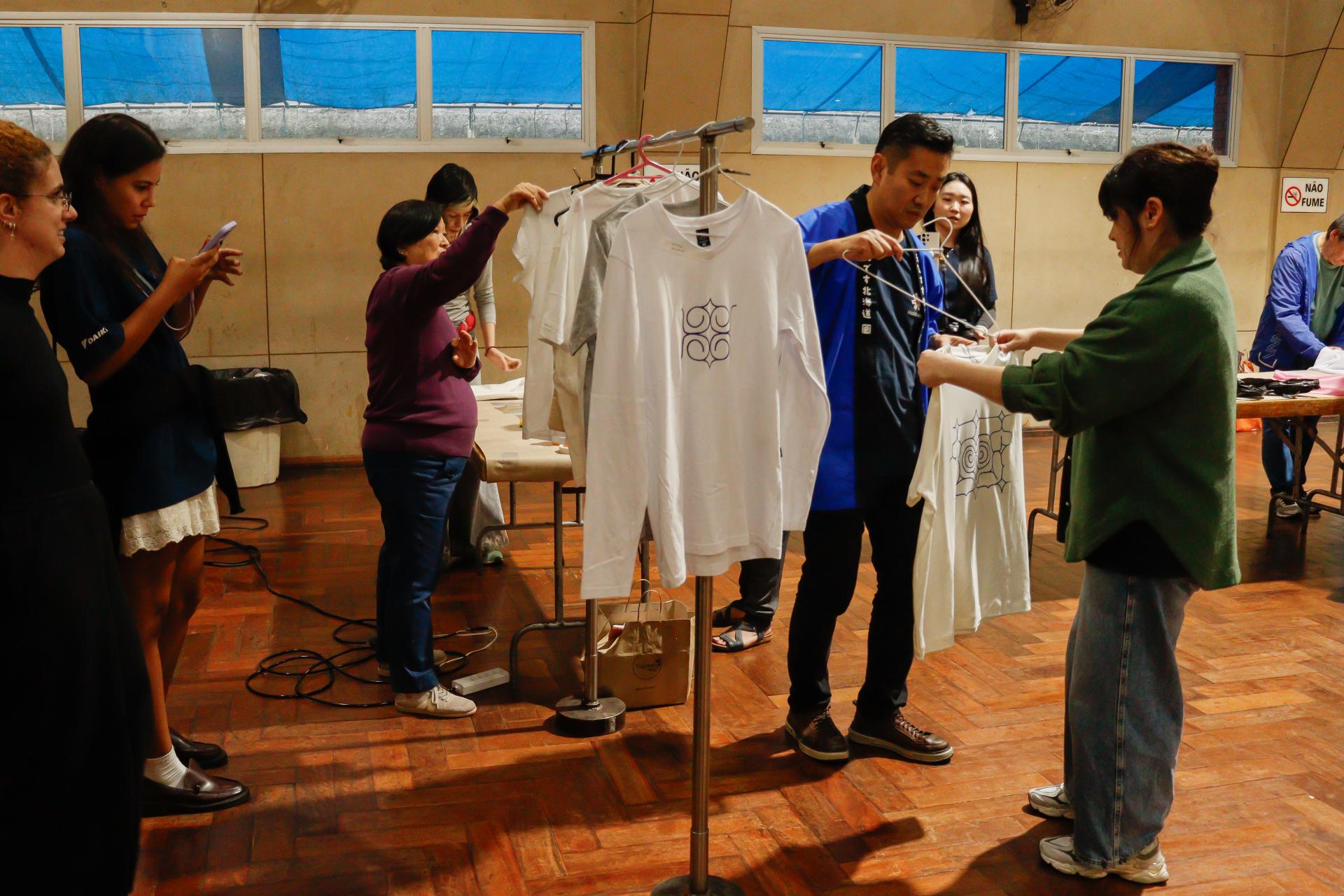
CS: Ainu culture has a profound connection to the territory of Hokkaido and the spirits of nature (Kamuy). How do you cultivate or redefine this spirituality and connection while living in Brazil?
UM: Everything is kamuy; I learned this from an early age. My family has always maintained a connection to the land, planting, and harvesting. One deeply beautiful tradition in my family is our relationship with wild flowers. We have always known the blooming seasons of different Atlantic Forest species, and it remains a habit in my family to cultivate cuttings of various species so we always have flowers and arrangements to make beautiful offerings to the ancestors.
My father owns an optical fittings workshop, offering repair services for small items, eyeglasses assembly, light welding, and watch repairs. It is a workshop of over 40 years that he built with the help of my eldest uncle and my mother. Kamuy also reside in personal objects, those that are part of our daily manual labor. I have always viewed the tools in my father's workshop and the objects he painstakingly repairs as a spiritual craft of our people. When we create things with our own hands, in our distinct way, we imbue objects and actions with spirit. Sad, malicious, envious, joyful, or welcoming spirits can all emerge. There are kamuy that serve as our protective entities—the spirits of animals, mountains, the ocean, the land itself, a tree, or a small insect.
Although I heard many stories about foxes, about their being spiritual animals that could trick us or be very kind, the same species of fox does not exist in Brazil. However, I knew the Atlantic Forest held a vast presence, and my father would take us walking through the woods down to the reservoir, where we fished and returned with tilapia and wild bananas gathered along the way. In addition to what my father cultivated in the areas surrounding our home in the woods, such as sweet potatoes, cassava, corn, and various herbs, he taught us that for everything nourishing us, we had to thank the kamuy of the earth, the plants, the animals, and our own labor. Every ray of sunlight and drop of rain that helped our potatoes grow was a spirit to be thanked for the food we ate. We kept chickens and pigs, and when slaughtering them, my father told us to express gratitude for the life they lived so that we could have meat.
I believe this relationship with life, the respect for every object supporting our livelihood through my father's workshop, our rural sustenance, and our flowers, is all prayer. I hold immense respect for the labor of my brothers who lived in Japan working in factories while I was of school age; it was largely because of them that I was able to study further than anyone else in my family. Every space I reach through my studies brings the responsibility to keep praying and expressing gratitude for all that the kamuy provide within the world I inhabit. Currently, I am mastering traditional Ainu embroidery patterns, gifting protective embroideries to our people. When I pray and embroider, I weave in rural life, the prayer of every offering, my father's work, my brothers' labor, the pigs and chickens, and our flowers blooming throughout the year. When I embroider, I create kamuy and offer a kamuy with a great soul, like the ones my people, my ancestors, and the surrounding kamuy bestowed upon me.
CS: How do you see the relationship between being an Indigenous person from Japan and living in a country like Brazil, which has its own history of Indigenous Peoples and colonization? Is there a sense of identification with the struggles of Brazilian Indigenous Peoples?
UM: The encounter between the Ainu Peoples and Indigenous Peoples in Brazil was historically mediated by white landowner classes, pointing back to a violent process of our people's continuous participation in violence against Indigenous Peoples in Brazil. Our encounter with Brazil involved a pact with white society, in the exact sense described by Cida Bento regarding the "pact of whiteness." It is a distinct type of agreement, as it is not a pact between white people, but rather an economic pact centered on class mobility and the "model minority" status, allowing us to be treated as "almost one of us" by white society. As a result, our initial encounters with racialized Black groups and Indigenous Peoples in this diaspora territory perpetuated colonial and racist violence.
Therefore, one must exercise deep responsibility when identifying as Ainu without erasing Brazil's history of colonial violence and our involvement in it as a Peoples assimilated under the Nikkei identity, acting as a model minority and an example of docility and obedience toward white landowners. All the territories where our people lived as settlers are Indigenous lands encroached upon by agribusiness plantations and large estates.
When I declare myself Ainu in a space like our provincial association (Hokkaido Kenjinkai), I view it as a form of political insistence to raise awareness among our diaspora in two ways: first, to recognize ourselves as Indigenous and perceive ourselves as a group rendered vulnerable by the Japanese state and by diplomatic relations between Brazil and Japan, which negotiated our Peoples as plantation labor; second, by "indigenizing" ourselves, to recognize the political, capitalist, and colonial structures that our assimilation served as a tool for violent practices.
I have had increasing contact and encounters with various Indigenous individuals. I had the privilege of meeting Casé Angatu (of the Tupinambá Peoples) and Angel Yraê (of the Payayá Peoples) in recent months. Through these encounters, I realized how similar our struggles and processes of self-affirmation are as political resistance against colonial structures that oppress our Peoples. We also share ways of living and relating within a community, honoring Elders, and maintaining ancestral ties. However, before identifying similar "cosmological systems" or "epistemes," we share a common struggle, a form of self-affirmation that, once initiated, leaves no room for turning back given the conditions forced upon us by historical colonization. These encounters call me to the responsibility of bringing our Ainu self-affirmation to support the struggles of Peoples and groups who, unlike us, face lethal violence from white society every day.
CS: Do you or your family maintain contact with Ainu communities in Japan or other members of the diaspora? What is that support network like?
UM: Since 2023, a significant development occurred in the lives of our family and our self-declared Ainu community in Brazil. I traveled to Hokkaido and lived there for a year as part of my doctoral studies, funded by a Brazilian government scholarship for researchers from federal universities. Conducting research in Contemporary Political Philosophy at the Federal University of São Paulo, I spent part of my doctorate in the Department of Civil Law at Hokkaido University, focusing on Restorative Justice for Indigenous Peoples. There, I established academic ties, but it was also the first time a person from the Brazilian diaspora made direct contact with Ainu groups mobilized within Hokkaido's Indigenous movement in Ainu-Moshiri, our ancestral territory.
It was leaders of our Peoples in Hokkaido (from the villages of Shiraoi, Mukawa, and Nibutani) who guided me in researching my family's village of origin. It was deeply emotional to meet and live alongside Ainu people who remained in our homeland. It felt like a reunion, the first since our people were separated during the diaspora imposed by Japan. I was the first person in my family to obtain a student visa to live in Japan. With deep respect for the journey of the men in my family who went years prior to work in factories, my residence visa in Japan represented a collective achievement.
Since returning to Brazil in June 2024, I have been working within our community so that others may have the opportunity my family had: to access the living memory of our Peoples, who now also dream of connecting with more people like me. One of the Elders who assisted me most with family searches once told me: "It is also my right to know what happened to your grandmother." He said this when I told him not to worry or go out of his way to help me. I realized then that our right to access our Peoples' memory, lands, and bonds in Hokkaido is equally matched by the right of our Peoples who remained there to know the story of the diaspora and of those who had to leave our land.
Today, there are plans to bring leaders from Hokkaido to Brazil. Our families are also mobilizing to demand that diplomatic entities between Brazil and Japan create the material conditions for diaspora Ainu individuals to access our territory, people, and memory, as I had the chance to do. We no longer have the option to act otherwise since understanding ourselves as a group rendered vulnerable by Japanese imperialism. This holds true for us and for Japan. Our people receive us with joy, and we have the right to maintain these bonds with autonomy.
CS: What does it mean for you today to affirm yourself as Ainu in Brazil? What message or legacy do you consider most important to pass on to future generations?
UM: It means confrontation. Confrontation of the narratives that colonize us to this day, of the Japanization of our Peoples, and of the pacts our people established with whiteness. I believe our self-affirmation must be joyful, yet I understand this joy does not exist without deep fractures and an awareness of intergenerational violence and trauma—both as a Peoples rendered vulnerable by the Japanese Empire and as a Peoples subjected to discrimination within the colony through lethal violence from white society.
I hope my generation opens many paths for future generations, easing the burden felt by our female Elders who felt compelled to hide their Ainu identity. More importantly, we must ground our self-affirmation in a conscious practice of solidarity with groups targeted by violence in Brazil today. To understand our place in history is to understand our historical responsibility. We hold a historical debt to the original Peoples of this land.
I believe this is the most critical realization when affirming oneself as Ainu in the diaspora today: knowing how to generate solidarity in the lands we inhabit. This involves interrupting racist statements from our Elders who still reproduce anti-Indigenous and anti-Black ideologies, while creating an environment among them that recognizes our generation's duty to confront the violence produced and reproduced by previous generations. Respecting our Elders means recognizing that they fought for us to be here; for that very reason, we cannot allow them to perpetuate harm without addressing stereotypical and prejudiced discourse. Thus, this serves as a practice and a message for all living generations of our people in the diaspora: becoming Indigenous carries responsibilities inseparable from stopping violence against groups historically marginalized by Brazil's colonial ruling class.
Photos by Guilherme Paes.