
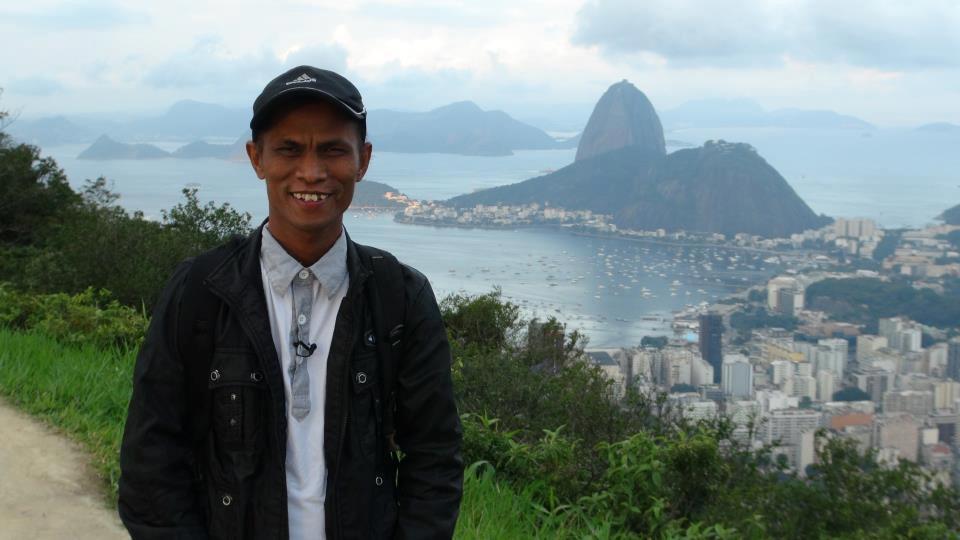
A member of the Prey Lang Network of Cambodia traveled to Rio last month to participate in the CSO Green Development Conference, running alongside the RIO+20 United Nations Conference on Sustainable Development in Brazil from June 20-22. Sok Heng made three presentations about Cambodia’s land and forest situation, the implementation of REDD+, and social movement in Cambodia.
In one presentation, he described the impact of economic development on the livelihood of the Indigenous and rural Khmer communities. In a second, he discussed the implications of economic land concessions, mining, forest crimes, and weak law enforcement on the implementation REDD+ program.
In the final presentation, he spoke of how Cambodian communities are mobilizing and forming civil society organizations and networks to challenge adverse effect of development and how they are working towards respect, promotion and protection of human rights. He described how Cambodian groups are also increasingly linking with each other and with the global community in their fight. “Prey Lang is natural property of the World and of us. It gives interests to all of us; it is, consequently, time for us to be partners in order to protect the important Prey Lang forest. We want to see Prey Lang sustainable for our generation children and the World,” explained Sok Heng in his presentation. “If Prey Lang forest is lost, we will meet difficulties and lose everything; especially traditional, customary business.”
[[{"type":"media","view_mode":"media_small","fid":"61182","attributes":{"alt":"","class":"media-image media-image-left","height":"100","style":"width: 100px; height: 100px; float: left;","width":"100"}}]]To learn more about Cultural Survival's Prey Lang campaign click here.
Source: preylang.com
