By Fabiana Gibim (Guarani-Kaiowá) and Crushing Colonialism Team
I grew up on the border between Brazil and Paraguay, shaped by the presence, resistance, and cultural memory of the Guarani-Kaiowá people. My earliest memories are stories shared by Elders, carried through songs, explaining our relationship to the land, to one another, and to the generations before us.
My grandmother was a Guarani-Kaiowá rezadeira e raizeira, a healer and shaman, and she never wrote down a single one of her prayers. To keep her practice alive, she told me that for her knowledge to keep on living, no one could kill her. When she died a few years ago, the part of me that wanted to archive everything ached, because no notebooks or photographs existed to collect. It took me my whole life to understand that her refusal to write things down was its own kind of survival, an archive carried inside a living person rather than on a shelf.
Yet, when I opened newspapers, magazines, or turned on the television, those stories were rarely there. Indigenous people appeared, of course, usually for a conflict, a tragedy, a political debate. Our stories were told by someone else, and with that, there is a specific kind of quiet that comes when you close a magazine and realize, once again, that you were never in it. On one side is relief for not being the face of a tragedy, and on the other side, there is a feeling of mourning for that being the only story told.
I grew up with that quiet, as many Indigenous people did. Colonial institutions have long controlled who gets to tell stories publicly, reducing Indigenous journalists, writers, and artists to statistics or symbols rather than letting us speak for ourselves. For those of us who are also Queer, Two-Spirit, disabled, or chronically ill, that invisibility runs even deeper. That quiet is what Crushing Colonialism was built to break.
Crushing Colonialism is an Indigenous-led nonprofit based on Piscataway Land in what is now called Washington, D.C. We work through journalism, storytelling, advocacy, and community-building to amplify Indigenous voices. Our team is primarily Indigenous women and Two-Spirit people, many Queer, disabled, or chronically ill. We are the foundation of the story we tell, not outside of it.
Over the years, I have watched Indigenous youth scroll through social media searching for some version of themselves, while emerging journalists struggle to find mentors and spaces to tell stories without first defending their identities. I have seen extraordinary storytellers leave the field for lack of resources to sustain their work. The problem is not a lack of stories. It is a lack of infrastructure for Indigenous people to tell those stories on our own terms.
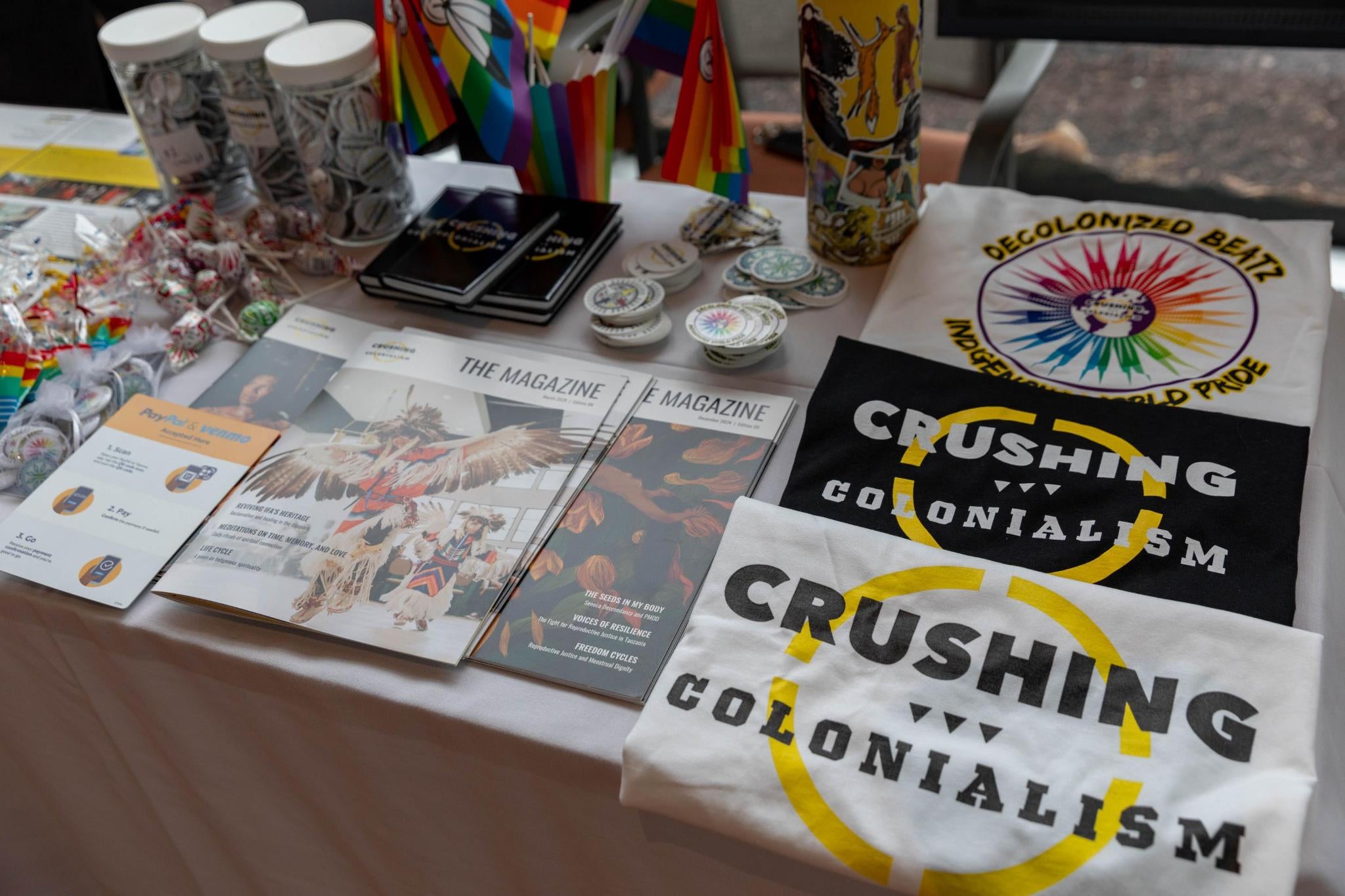
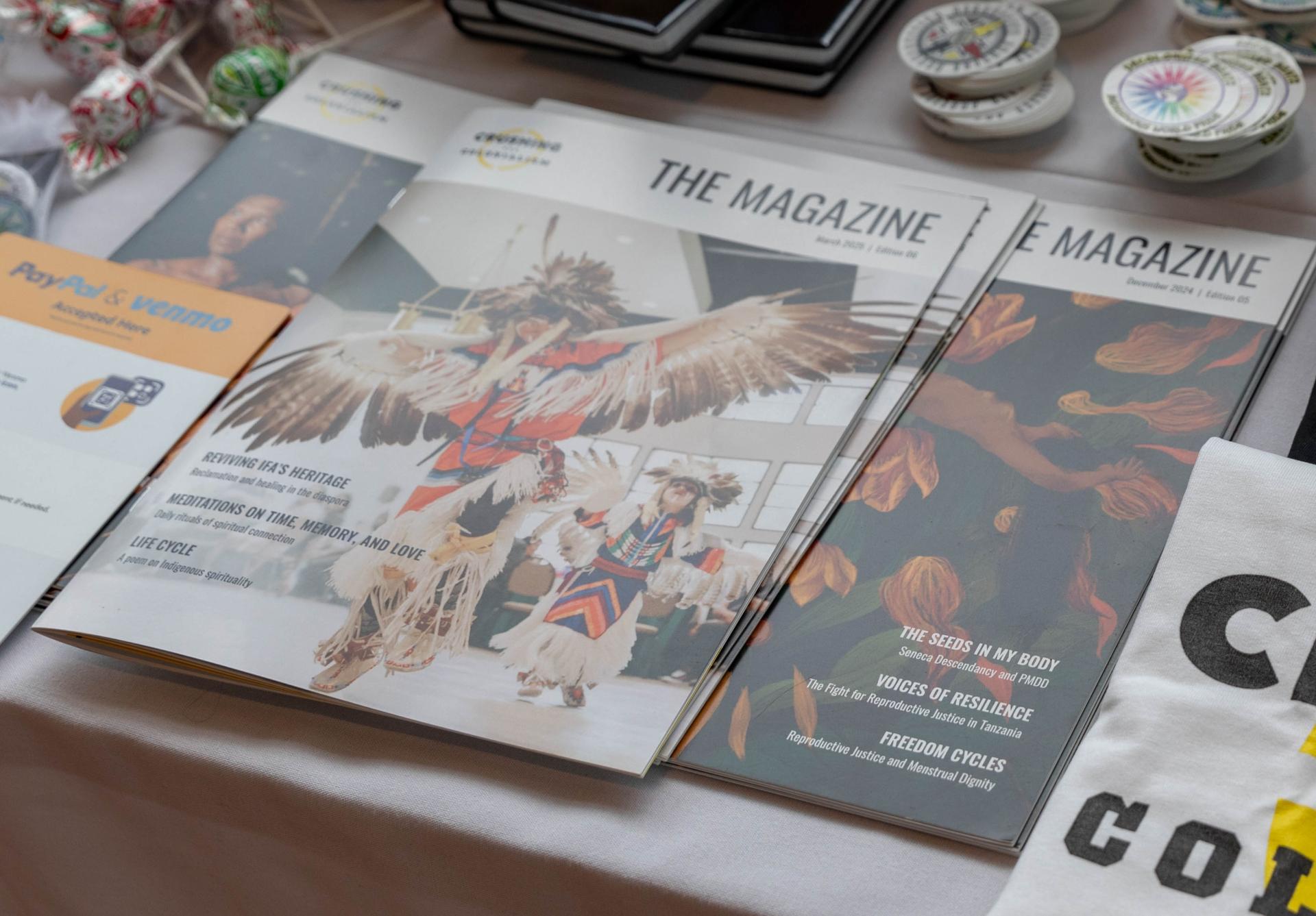
That is why we created The Magazine: a platform for Indigenous storytellers across nations, languages, and experiences, where Indigenous editors, writers, designers, and translators could shape the entire process themselves. The Magazine was born a little more than two years ago. It is free online and distributed in print to communities facing the digital divide, because a publication that only exists behind a Wi-Fi signal is a closed door, and we have had enough closed doors.
The problem we are answering is old. Colonizer media did not just ignore Indigenous people; it built stories about us that shaped laws and the imagination of people who had never met us. We became statistics, mascots, cautionary tales, everything except authors of our own lives. For those of us who are also Queer or disabled, the erasure runs even deeper. The Magazine exists because that image was never wide enough to hold us.
The erasure is also financial. Only 0.4% of philanthropic dollars in the U.S. go to Native organizations, and similarly thin slivers reach disability and 2SLGBTQIA+ organizations. We sit at that intersection, surviving without significant funding, carrying a poverty that was not an accident but a design.
What We Are Doing About It
In 2025, with the support of Cultural Survival's Indigenous Community Media Fund, we published three full issues of The Magazine. The June issue centered on Pride and the Decolonized Beatz Indigenous World Pride, a landmark gathering of IndigeQueer people from the United States, Canada, Scandinavia, and Australia, held right here on Piscataway Land during World Pride 2025. We featured 11 original interviews with people who had spent their lives invisible in two directions at once: too Queer for some Indigenous spaces, too Indigenous for some Queer ones, who showed up anyway and spoke.
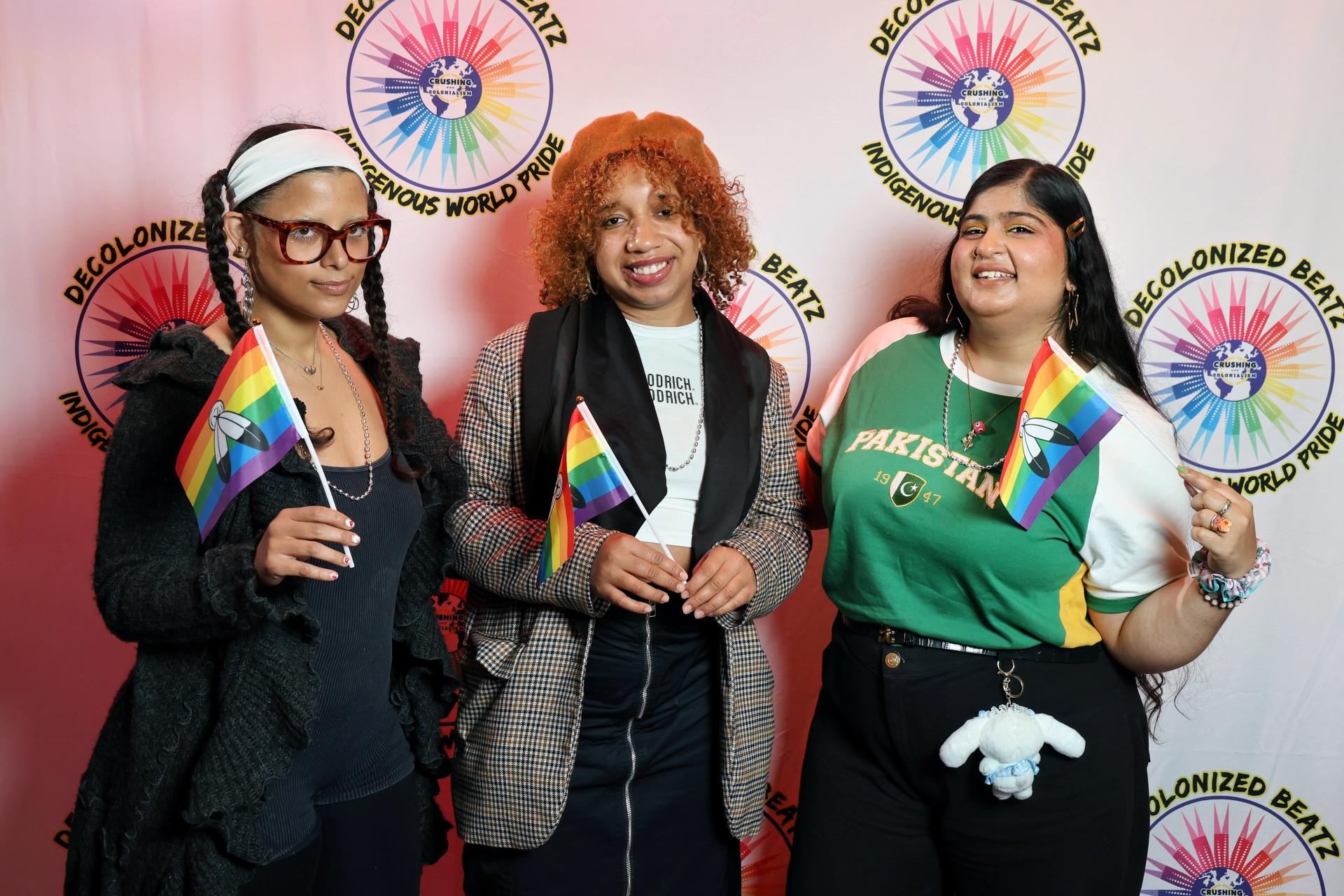
The September issue explored identity, what it means to be Indigenous today when colonial governments still decide who counts. The December issue honored changemakers, people transforming their communities through art and the stubborn act of survival. Contributors came from 11 countries, from Tlingit and Haida Nations to Guaraní territory to Sápmi to the Yoruba and Igbo worlds.
We currently print and distribute 400 copies of The Magazine, sent to Indigenous communities facing the digital divide, where reaching our online content is not realistic. We have also sent copies to incarcerated Indigenous individuals, who are part of our community even though the outside world too often forgets them—especially at facilities like Miami Correctional Facility and Red Onion State Prison, places where Indigenous people are incarcerated at disproportionate rates. We have carried copies into rooms ourselves, too, including the National Guild for Community Art Education.
We have also created a worker resource guide on calculating fair pricing, writing invoices, and navigating contracts and tax forms, things mainstream journalism schools have always taught their students but no one had made for us. So we made them for each other.
The first time I held a physical copy of The Magazine, it was heavier than I expected: not in weight, but in meaning. Every page had been written, edited, designed, and chosen by people who looked like me, loved like me, lived like me. There was no moment where I had to translate myself, no absence where my face should have been. That feeling of finally being present in your own story is what we are working to give as many people as possible.
In Guaraní, the word for language is ñe'ẽ, which is also the word for soul. To tell a story, in that understanding, is not just to describe something that already exists, but to bring a piece of the world into being. Every issue of The Magazine is not just describing Indigenous life. It is making more room for it to exist, in all its multiplicity.
It has not been simple. The hardest decision of 2025 was suspending the Spanish print edition for the last three issues because we could not fund it. The digital edition continued, but print matters, especially where internet access is unreliable or expensive. Restoring it is our top priority for 2026. There were shipping delays to incarceration facilities and production schedules stretched by translation review, the invisible logistics of building infrastructure with too few hours and resources. What surprised us on the other side was the volume of submissions for the upcoming Spirituality and Cultural Survival issue, far more than we expected. The need for this platform is growing, not shrinking.
Where We Are Going
We are aiming to hire a copyeditor, restore the Spanish print edition, and deepen partnerships in Brazil, Sápmi, and Peru. We are already in the editorial cycle for our next issue. Our #HireIndigenous campaign continues to grow, and we are applying for ABC's grant to keep crushing colonialism one issue at a time. All of this has been built with no money and no real funding. We can only imagine what proper support would let us do.
When I think about what we are building toward, I keep coming back to something simple: infrastructure. Not glamorous, but essential. It means a journalist in Guaraní territory knows how to price her labor and get paid, that a creator in Sápmi can find their story without explaining why they belong there, that the editorial process, start to finish, is in Indigenous hands.
We are not waiting for someone to hand us creativity. We have been solving problems no one else has solved, with tools no one else built, for a very long time. What we have always lacked is not talent or vision. It is the resources to keep doing what we already know how to do. That is cultural survival in action. When Indigenous storytellers can sustain themselves, when their voices are nurtured instead of extracted, something fundamental shifts. We are still in the early chapters of that shift, but the pages are filling up, issue by issue, in our own words, on our own terms.
The quiet I grew up with is not the only quiet anymore. There is another kind now: the one that comes when you hold something in your hands and know it was made for you. We made it for us. And we are not done yet.
In 2025, Crushing Colonialism, received a grant from Cultural Survival’s Indigenous Community Fund, which provides opportunities for journalism, broadcasting, audio editing, technical skills, and more for community media from Indigenous communities around the world. In 2025 CS awarded a total of $502,000 to 63 Indigenous communication projects that will benefit Indigenous Peoples in 29 countries: Argentina, Bangladesh, Bolivia, Botswana, Brazil, Chile, Ecuador, Colombia, United States of America, Philippines, Guatemala, India, Kenya, Mexico, Nepal, Peru, South Africa, Democratic Republic of Congo, Indonesia, Honduras, Mali, Nicaragua, Cambodia, Chile, Canada, Panama, Paraguay, Papua New Guinea, New Zealand, Nicaragua, and Tanzania.