By Anonymous Journalism Fellow from Indonesia
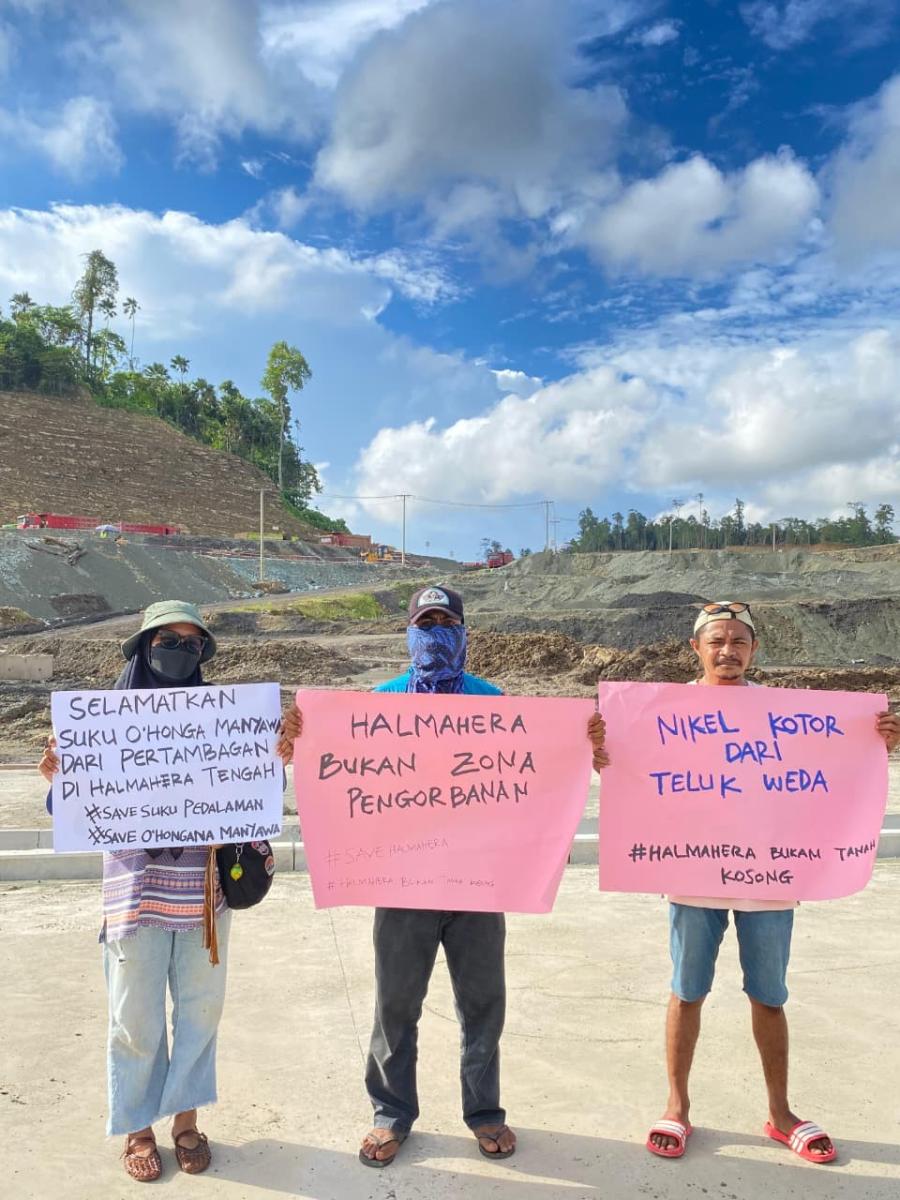
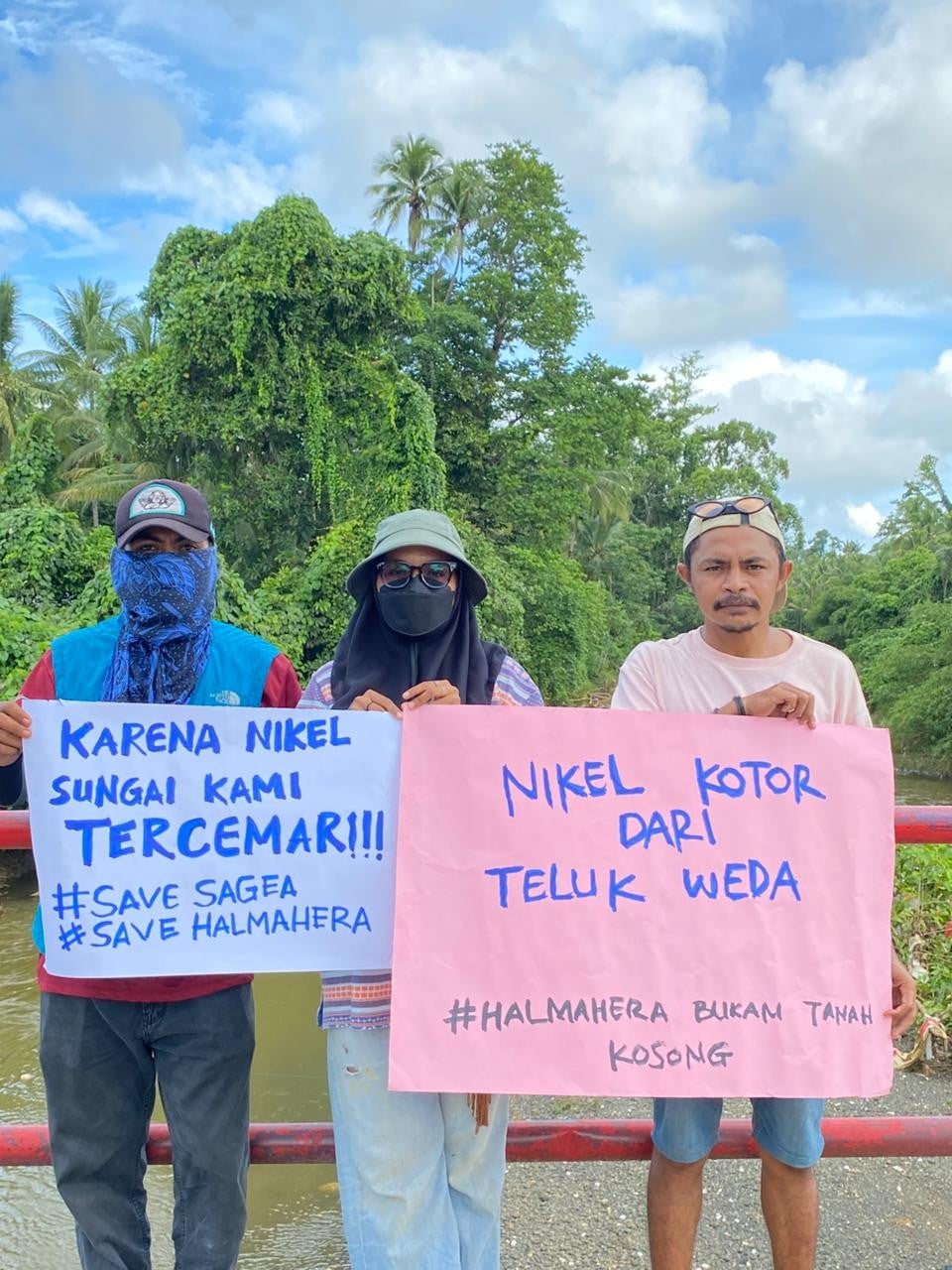
Fourteen Indigenous residents of Sagea-Kiya Village, North Weda District, Central Halmahera Regency, Indonesia, face legal action after opposing nickel mining in their ancestral customary land and territory. The residents were reported by the nickel mining company PT Zhong Hai Rare Metal Mining Indonesia, with allegations of assault and obstruction of mining operations.
The case has raised concerns among civil society groups, who view the investigation as part of a broader pattern of criminalizing communities who oppose extractive industries in North Maluku. A similar situation occurred in 2025 when 11 members of the Maba Sangaji Indigenous Community in East Halmahera Regency faced prosecution after opposing mining activities in their customary lands.
According to the Notice of Commencement of Investigation (SPDP) Number SPDP/01/1/RES.5./2026/DITRESKRIMSUS, submitted by investigators to the North Maluku High Prosecutor’s Office on February 26, 2026, authorities are investigating the Sagea-Kiya residents under Article 162 in conjunction with Article 136 paragraph (2) of Law Number 3 of 2020 concerning amendments to the Mineral and Coal Mining Law (Minerba Law). Law Number 6 of 2023 later strengthened the provision by ratifying the Job Creation Regulation into law.
The investigation relates to a protest organized by Sagea residents, together with the civil society coalition Save Sagea, at the jetty crossing of PT Zhong Hai Rare Metal Mining Indonesia on February 5, 2026.
Protest at Mining Site Leads to Legal Case
The dispute began after residents decided to set up a protest tent at the mining site as a form of boycott of PT MAI’s operations. The action followed unsuccessful attempts at dialogue between the community and the company. According to reports, demonstrators occupied the tent after it was installed. Shortly afterward, four workers from PT MAI, reportedly foreign nationals from China, approached the location and attempted to remove the structure. The removal allegedly damaged the tent, angering protesters and leading to a physical confrontation between residents and company workers.
Three days after the incident, Save Sagea activist and Sagea resident Lada Ridwan received a police summons from the Central Halmahera Police for clarification. The summons referred to several provisions of the Criminal Procedure Code, the Criminal Code (KUHP), the Indonesian National Police Law, and Police Report Number LP/B/26/II/2026/RES Halteng/SPKT dated February 5, 2026.
On February 6, 2026, investigators issued an inquiry order Number Sp.Lidik/43/II/RES.1.6/2026/Reskrim regarding an alleged assault at the Zhong Hai jetty, Sagea Village. Investigators at the Criminal Investigation Unit of the Central Halmahera Police subsequently requested that Lada Ridwan appear as a witness on February 9, 2026.
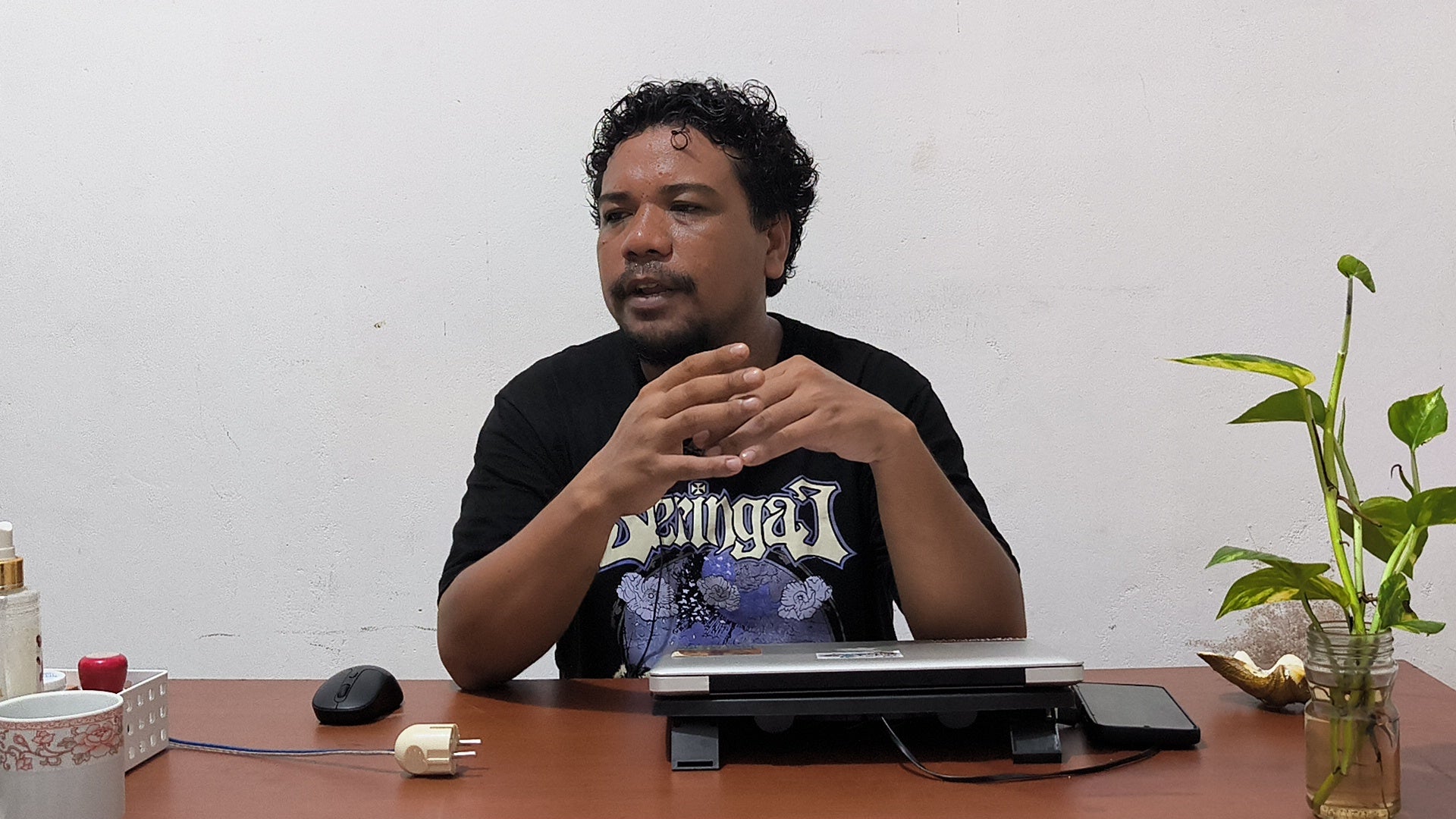
Fahrizal Dirhan.
Legal Team Warns Against Criminalizing Mining Opponents
Fahrizal Dirhan, head of the Save Sagea Advocacy Team, providing legal assistance to the 14 Sagea-Kiya residents, said the case reflects a recurring pattern in which legal instruments are used against communities defending their land and environmental rights.
According to Fahrizal, the North Maluku Regional Police’s Directorate of Special Criminal Investigation (Ditreskrimsus) questioned the residents. Three days after the questioning, two Indigenous women from Sagea-Kiya, Rifya Rusdi and Sulastri Mahmud, received a copy of a police letter sent to the North Maluku High Prosecutor’s Office, indicating that the case had moved into the investigation stage.
Fahrizal said community opposition to mining activities was a natural response because residents had not been meaningfully involved in the designation of their customary territory as a mining concession area.
“The people of Sagea-Kiya were not actively involved from the beginning when their territory was determined as a mining business location. The community views this investment and extractive development program as management of their land without their participation,” he said.
He explained that the case initially involved two separate police reports. The first targeted Sulastri and Rifya, while another report involved approximately 12 other residents. Police later combined the two cases into a single investigation involving 14 people.
“Our clients, Rifya and Sulastri, are accused of being the masterminds and mobilizers behind the demonstration. They are being linked to allegations under the Minerba Law,” Fahrizal said.
He rejected claims that certain activists were exploiting the situation without community support, saying residents opposed the mining company because of concerns over environmental damage, economic disruption, and social impacts.
“These accusations are attempts to influence public opinion and weaken the Save Sagea movement,” he said.
Save Sagea Movement Has Long Defended Community Rights
Fahrizal clarified that the Save Sagea coalition was not established solely because of the current legal case.
“The movement has existed for years. Young people in Sagea Village initially formed it to protect their environment and community. Our legal team uses the same name because it represents the local struggle,” he explained.
Regarding legal efforts, Fahrizal said the advocacy team had conducted several meetings with all 14 residents after receiving the SPDP. The team has explored various options, including third-party mediation and engagement with local authorities, to seek a fair resolution. He emphasized that mediation does not mean admitting wrongdoing or accepting the company’s accusations but rather finding a solution that protects community rights.
“All of our clients have been summoned and questioned by investigators as witnesses. We are waiting for further developments because the document only mentions ‘Lada and associates.’ It is still unclear whether their status remains as witnesses or whether they will later be named suspects,” Fahrizal said.
He criticized the use of Article 162 of the Minerba Law, arguing that the provision has frequently been applied against communities living around mining areas. According to him, the article risks being used to portray community resistance as an attempt to obstruct mining operations rather than as an exercise of citizens’ rights to express concerns over environmental and social impacts.
Community Groups Call for Government Response
Fahrizal also criticized local government authorities for what he described as a lack of meaningful intervention during the conflict between residents and the mining company. He said government institutions had not provided sufficient support or mediation for Indigenous communities affected by mining activities.
“There has been no significant intervention from the local government throughout this process. This reflects a broader situation seen in other mining areas where communities struggle to receive protection,” he said.
Fahrizal urged civil society organizations, environmental groups, and communities across North Maluku and Indonesia to continue monitoring the case and supporting the legal defense of the Sagea-Kiya residents. He said public attention is important to ensure that Indigenous communities affected by mining activities are not discouraged from defending their land, environmental rights, and livelihoods.
--The writer is a journalist covering Indigenous Peoples of the Indonesian Archipelago, specifically the Maluku Islands, and a 2026 Cultural Survival Indigenous Journalism Fellow. She is a journalist and human rights defender based in Indonesia who has pioneered some initiatives for women's empowerment and youth counseling. She has over two decades of experience in media advocacy for women, children, and Indigenous communities, documenting the violation of Indigenous Peoples' rights to land and access to customary forests by the extractive industries. In this fellowship, she will amplify the voices of Indigenous communities, primarily focusing on the environmental impacts of mining through investigative articles and visual reports on the disruption of local economies and the degradation of Indigenous land and territories caused by mining expansion.