By Rama Wijaya (Ma’la’bo’)
Before we began broadcasting about mining, we were already witnessing changes around us. The forests in our highlands were slowly being cleared. Trucks passed through village roads more frequently. Rivers that once ran clear began to turn cloudy after heavy rain. Farmers started questioning whether their soil would remain fertile. In Mamasa, environmental change is not an abstract issue. It is something we see, hear, and feel every day.
Mining activities for rare earth minerals entered our region with promises of development and economic opportunity. But alongside those promises came uncertainty. Deforestation increased the risk of landslides in our mountainous terrain. Sedimentation affected water sources. Agricultural land faced disruption. At the same time, conversations about mining created tension within communities. Some residents hoped for jobs. Others feared long term ecological damage.
One of the deepest concerns was the absence of proper consultation. There was no Free, Prior and Informed Consent process conducted with our Indigenous community when permits were issued at the provincial level. Many people felt decisions were made far from the mountains where we live. Discussions about our land were happening without our full participation.
Access to information was another major challenge. In remote areas such as Aralle, Tabulahan, and Mambi, internet connectivity is limited. Public meetings are not always accessible, and government processes often feel distant and difficult to understand. As a result, rumors spread easily, and communities struggled to access clear, balanced information. In this context, ORARI Lokal Mamasa launched Mamasa Bersuara. We believed that radio, a medium that already lives in our villages, could become a platform for dialogue, education, and accountability.
We started by inviting Indigenous Elders and respected community leaders to speak. Broadcasting in the Mamasa language was essential: it ensured that discussions about mining, environmental protection, and rights were accessible to everyone, especially Elders who are more comfortable speaking in our mother tongue. During one broadcast, an Elder from Mambi told us, “This land is not only inherited from our ancestors. It is entrusted to us for our grandchildren. If the forest is destroyed and the water disappears, what will we leave behind?” His words carried both warning and responsibility, and in that moment, the studio felt like a sacred space.
We did not limit ourselves to interviews in the studio. We traveled to areas near mining sites, places where the roads were steep and sometimes damaged. The weather in the mountains changed quickly. Landslide risks were real. Still, we went, because stories must be gathered from the ground. One resident told us, “We used to drink from this river. Now we hesitate even to wash in it.” That simple statement reflected a profound shift in daily life. Water is not only a resource. It is survival.
We also attended meetings with executive government representatives and members of the regional parliament. We asked about environmental monitoring, regulatory oversight, and community consultation. By recording and broadcasting these conversations, we created a bridge between decision makers and Indigenous communities. People who could not attend hearings could still listen and stay informed.
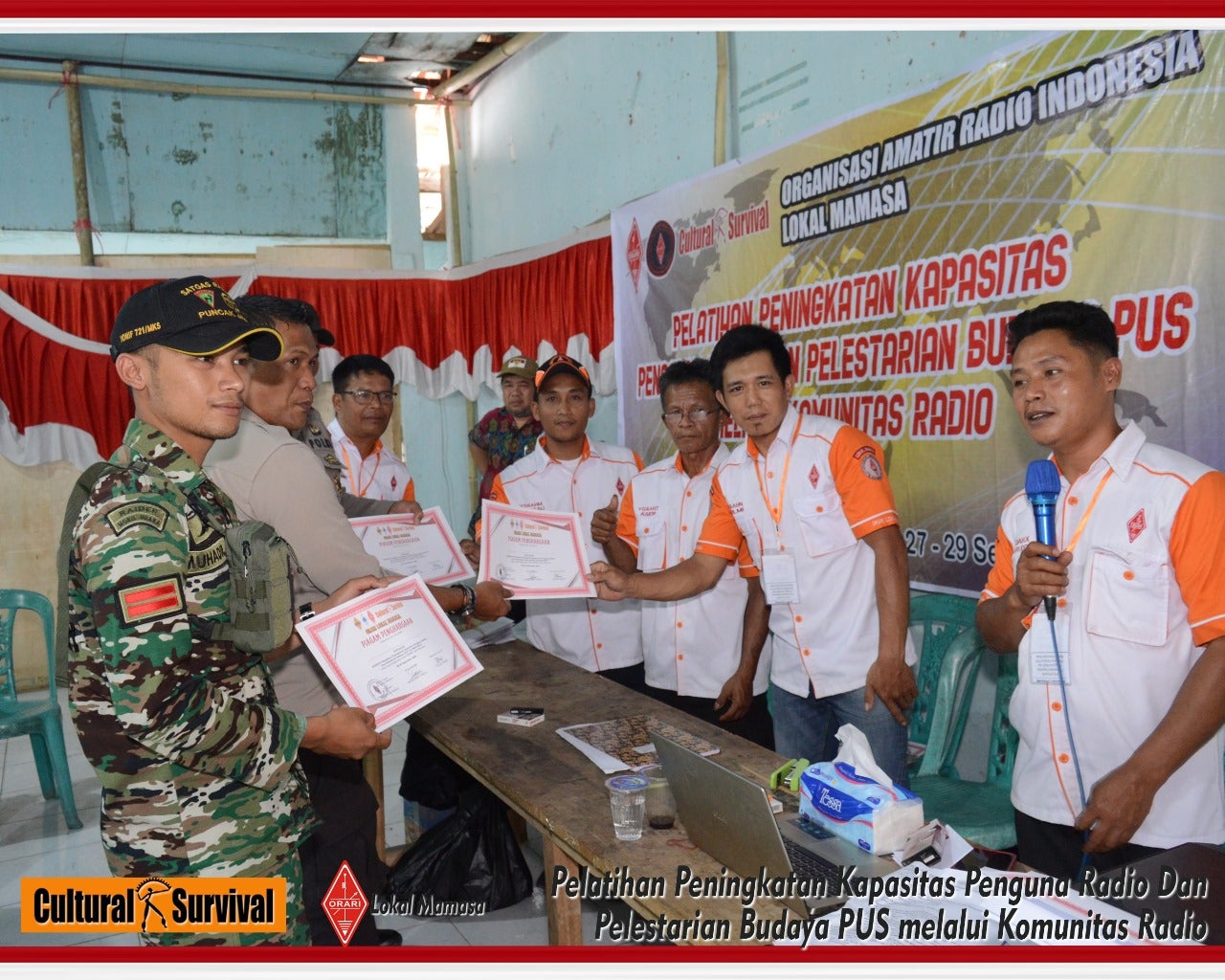
Reporting on mining is not without risk. It involves powerful actors and sensitive political dynamics. Recognizing this, we organized safety and security training for our Indigenous reporters. We learned about risk awareness, safe field practices, responsible communication, and team coordination. The training strengthened our confidence and preparedness. Aldrian, one of the broadcasters, shared, “I am very happy with this project because we received support for activities we urgently needed, especially safety and security training. It makes us more confident when reporting.”
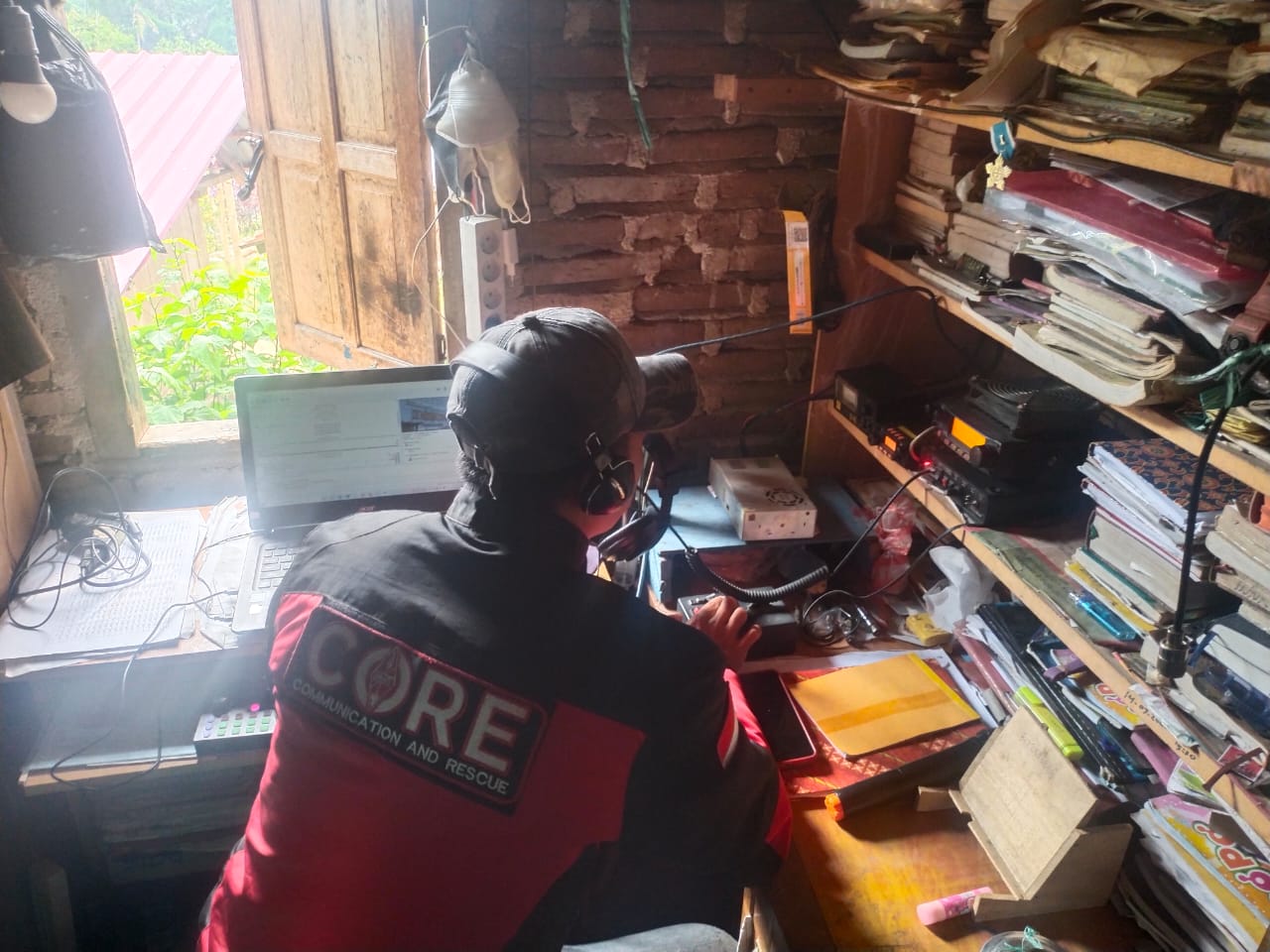
An unexpected outcome of the project was the growing interest from young people. Initially, radio listeners were mostly older adults. But after the training and regular broadcasts, youth began visiting the station. They wanted to learn how to operate equipment and host programs. The radio station gradually became more than a place for announcements. It became a space for leadership, intergenerational dialogue, and cultural pride.
Our work also extended beyond conversation. We organized tree planting activities in areas vulnerable to erosion and landslides. We planted bamboo to stabilize soil, and fruit trees such as durian and mango to support long term community benefits. Planting trees was both practical and symbolic. It represented our commitment to protect Mother Earth. During the activity, one community member said, “Talking on the radio is important. But planting together shows that we are serious about protecting our land.”
Mamasa Bersuara is not simply a media project. It is part of a broader effort to ensure that development discussions do not silence Indigenous voices. Mining negotiations are still ongoing. The future remains uncertain. But through radio, we have strengthened dialogue, built confidence, and reminded ourselves that our land has a voice. And today, Mamasa is speaking.
In 2025, ORARI Lokal Mamasa received a grant from Cultural Survival’s Indigenous Community Fund, which provides opportunities for journalism, broadcasting, audio editing, technical skills, and more for community media from Indigenous communities around the world. In 2025 CS awarded a total of $502,000 to 63 Indigenous communication projects that will benefit Indigenous Peoples in 29 countries: Argentina, Bangladesh, Bolivia, Botswana, Brazil, Chile, Ecuador, Colombia, United States of America, Philippines, Guatemala, India, Kenya, Mexico, Nepal, Peru, South Africa, Democratic Republic of Congo, Indonesia, Honduras, Mali, Nicaragua, Cambodia, Chile, Canada, Panama, Paraguay, Papua New Guinea, New Zealand, Nicaragua, and Tanzania.