Pular para o conteúdo principal

Attacks on the Saudi-owned rice plantation in southwestern Ethiopia left five people dead on April 28, 2012,  including one Pakistani worker and four Ethiopians, with at least another eight people injured.

The attack took place about three miles from the headquarters of Saudi Star, an agriculture company owned by Ethiopian-born Saudi billionaire Mohammed Al-Amoudi.

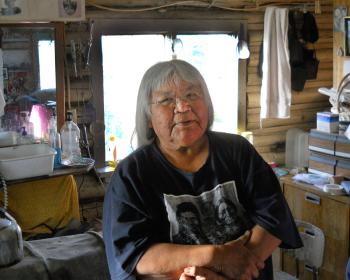
Inupiat tribal leader, Caroline Cannon, is one of this year's recipeints of the Goldman Environmental Prize for her exemplary work towards stopping oil exploration and drilling in the Alaskan Arctic.

The Goldman Environmental Prize is awarded annually since 1990 to six grassroots environmental activists, one from Africa, Asia, Europe, Islands and Island Nations, North America, and South and Central America. The prize includes a  monetary award of US$150,000 per recipient.
 

On April 3, President Martinelli signed into law a bill that reestablishes the validity of Mineral Resource Mining Code, established in 1963 but which had been abolished by the Martinelli government in 2011. The code defines who may hold and profit from mining concessions in Panama, and establishes sanctions for those who continue mining projects without authorization.

A Moscow News article describes the battle lines between environmentalists and Indigenous Peoples on one side and Russia’s Gazprom company on the other, leaving the future of the sacred Ukok Plateau uncertain. Environmentalists and Indigenous organizations are urging Gazprom to choose an alternate route that would spare the Ukok Plateau from desecration.

Building the pipeline across the Ukok would be “moral violence against people,” said Urmat Knyazev, a deputy in the Altai republic’s legislative assembly.

On March 8, 2012 in El Pangui, a small town in the southeastern Amazon region of Ecuador, a group of one thousand Indigenous people began a 400 mile journey north toward the capital of Quito. They walked in protest of mining explorations scheduled to take place on their tribal lands in the Southeastern Amazon. Meeting other Indigenous groups coming from the opposite direction, they reached their destination on March 22, demanding an explanation to the signing of mining exploration contracts signed by the government with Chinese-owned Ecuacorriente.

Inscrever-se em Lands, Resources, and Environments