By Phoebe Farris (Powhatan-Pamunkey)
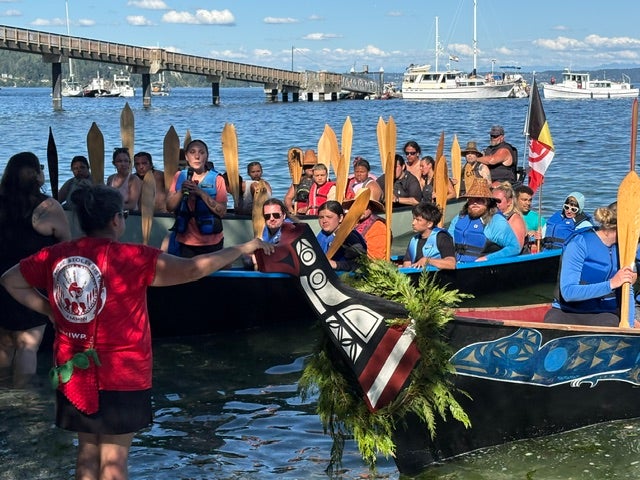
Annual inter-Tribal celebrations involving Pacific Northwest Indigenous communities were sparked by the 1989 Paddle to Seattle event, held as part of Washington State’s Centennial celebration. Since then, many canoe journeys from Canada, Alaska, and Washington State have voyaged from their traditional homelands to states in the Pacific Northwest. These canoe journeys have grown to about 100 participating canoe families from Native communities around the world, including the Māori from Aotearoa/New Zealand and other Indigenous Peoples from Japan, Mexico, South America, and Guam.
After morning arrivals at the Tribal hosts’ shorelands, families request permission to land, offering prayers and short speeches in their traditional languages. Evening activities involve more prayers, music, dancing, gifting, and honoring. These ceremonies are designated as Protocol and can be in a longhouse-type environment or in an outdoor, tent-like enclosure.
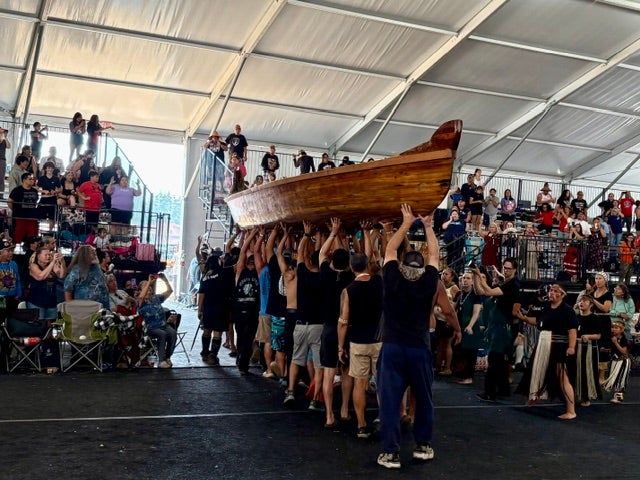
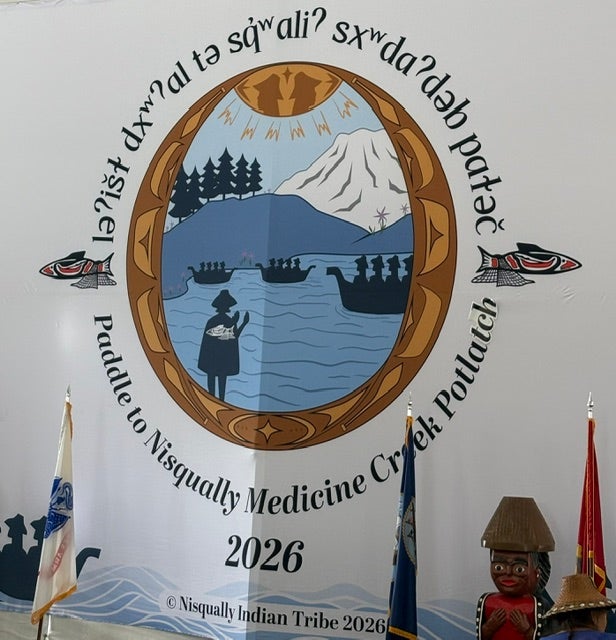
Inside Nisqually Protocol Tent.
The host Tribe receives gifts from the participating families as a token of gratitude, and traditional foods are served during breakfast, lunch, and dinner. Participating Tribes share and explain their cultural practices and request that non-Native guests honor these practices by standing when asked during certain prayers and by refraining from photographing some dance performances, specifically those featuring dancers wearing large, wooden face masks.
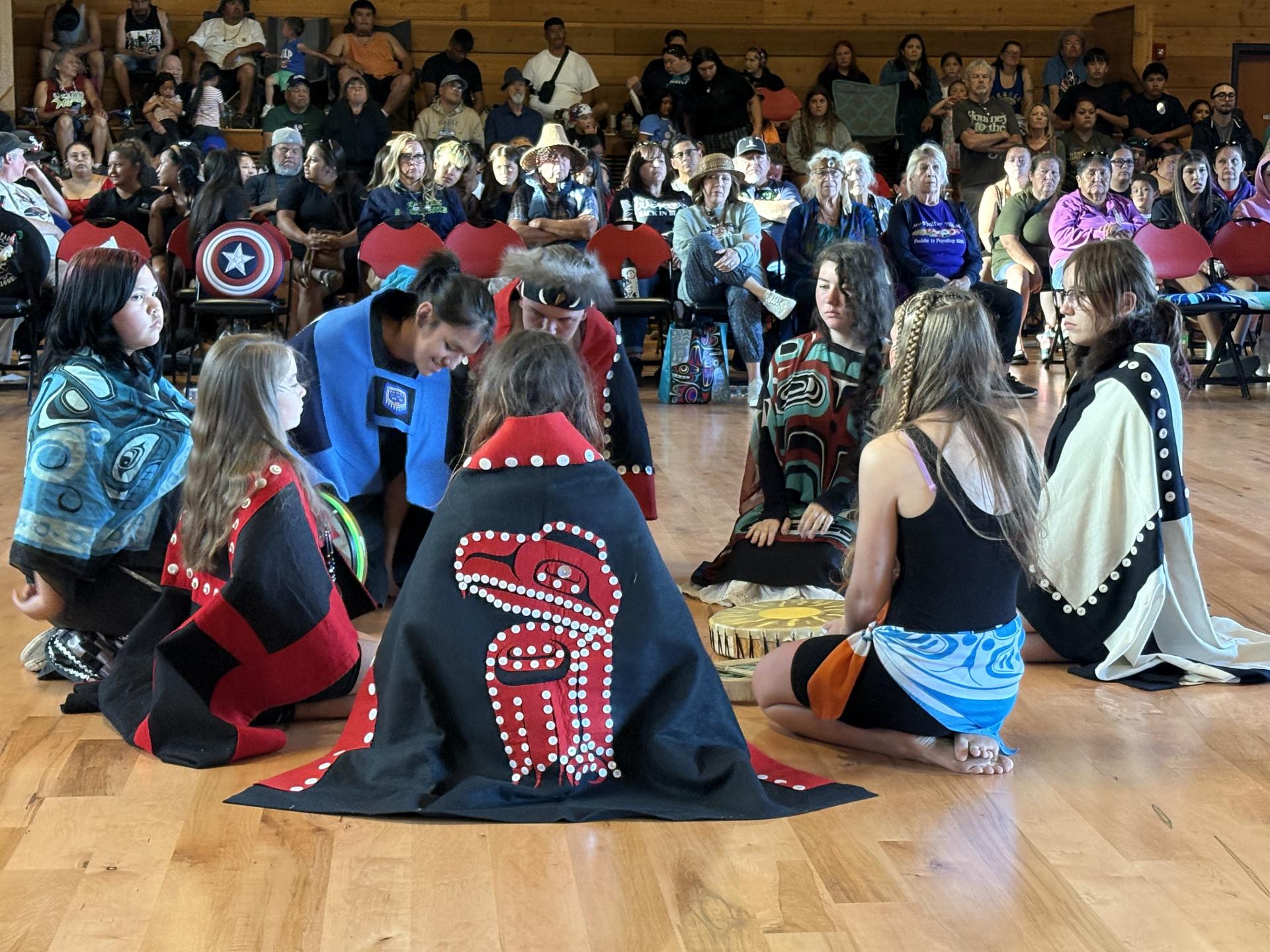
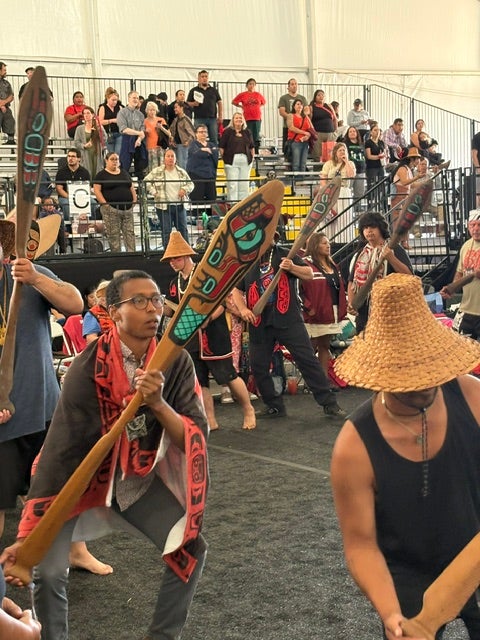
The first canoe journey I observed was hosted by the Suquamish Tribe from July 27-29. Indoor activities took place at the House of Awakened Culture in Suquamish, Washington. At this particular landing, the ocean was right below the Protocol building.
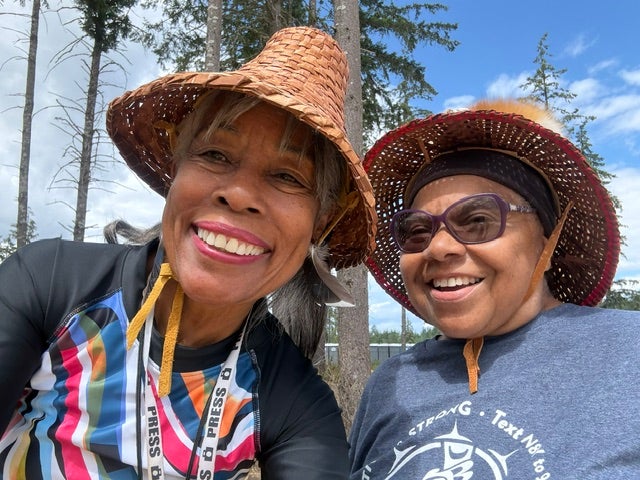
Phoebe Farris with Cynthia Lozier.
On my first day at Suquamish, I met Chaplain Cynthia Lozier (Muckleshoot and Puyallup), a retired Army veteran whose role as Chaplain is to comfort grieving Indigenous families during funerals, at hospitals, and in home or hospice settings. Her husband, Franklin Ross (Puyallup and Muckleshoot), is also a veteran. Lozier sang songs in her traditional language, and her husband drummed during Protocol.
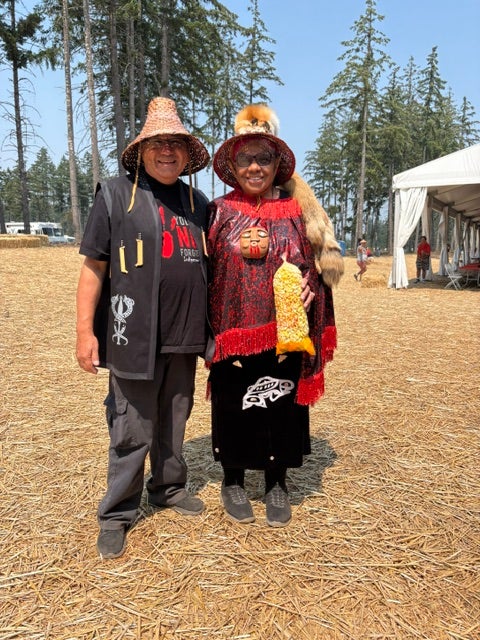
Chaplain Cynthia Lozier (Muckleshoot and Puyallup) and husband Franklin Ross (Puyallup and Muckleshoot).
That same day, I met an Elder named Leona Canuta (Pacheedaht First Nations), who asked me to take photos of her family’s canoe, “People of the Sea Foam”—also the name of their family drum group—and her daughter, Emily Harmony (Pacheedaht), her nephew, Mike Smith, and her grandchildren. She said that Professor Sarah Wright-Cardinal at Northwest University helped secure grants for carving canoes from Macawmah Land. I ran into her the next week at Nisqually and watched her dance with other women at Protocol, in their red-and-white regalia.
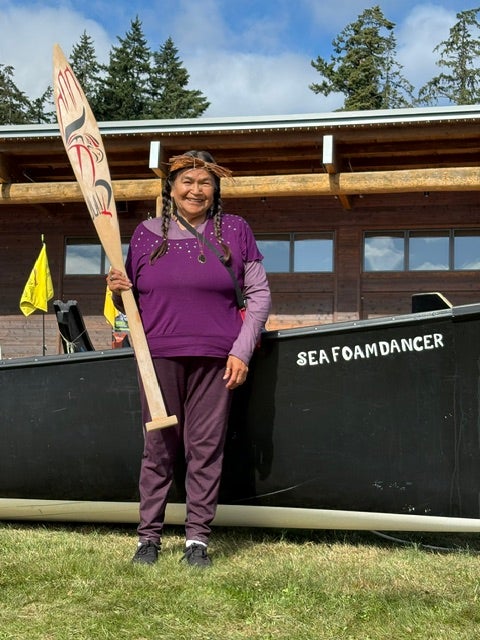
Leona Canuta (Pachedahtt) standing next to her family’s canoe.
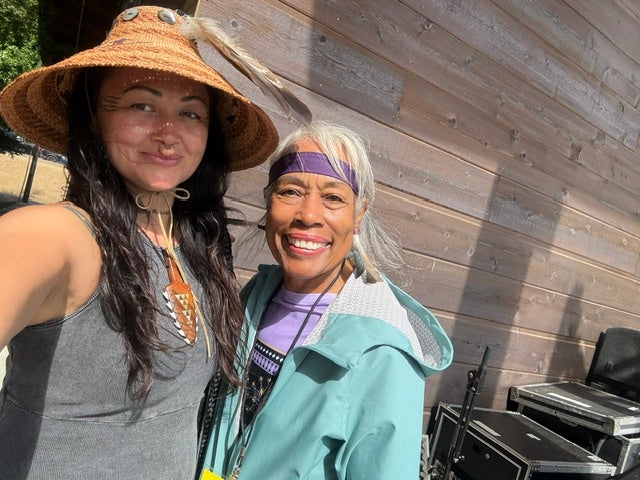
Phoebe Farris with Aimee Phair.
While wandering around Suquamish, I met Aimee Phair (Lummi Nation), who has tattoos on her face, neck, arms, and hands. She briefed me on the differences between tattoo shops that use electronic tools and artificial dyes and those that use nature-based dyes and no electrical machinery. She explained that the colors are sometimes less bright and don’t last as long as commercial tattoos, but the pain is minimal, similar to the very mild sensation of an acupuncture needle.
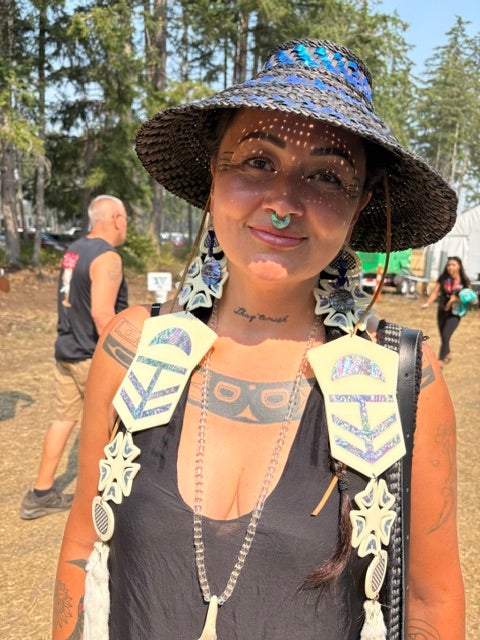
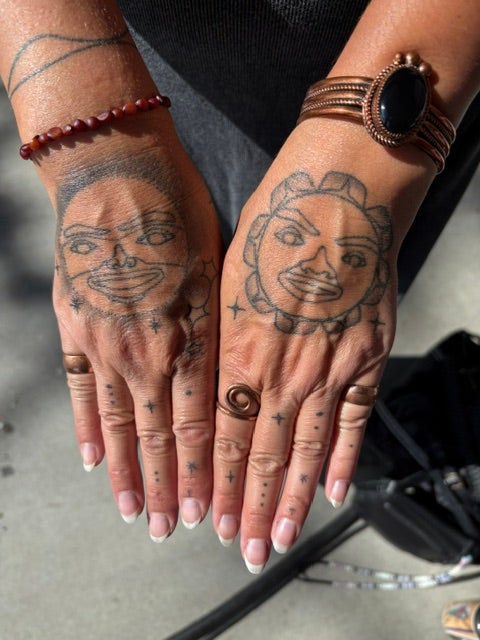
Aimee Phair showing her hand tattoos.
Later in the evening, Phair danced in Protocol and said she was heading to participate as a puller for the Muckleshoot canoe landing in Muckleshoot territory. I would see her again at Nisqually, where she discussed the Lummi nonprofit film “Children of the Setting Sun” and encouraged me to visit the nearby nature reserve dedicated to the late Billy Frank Jr. (Nisqually), a social-justice fishing-rights advocate.
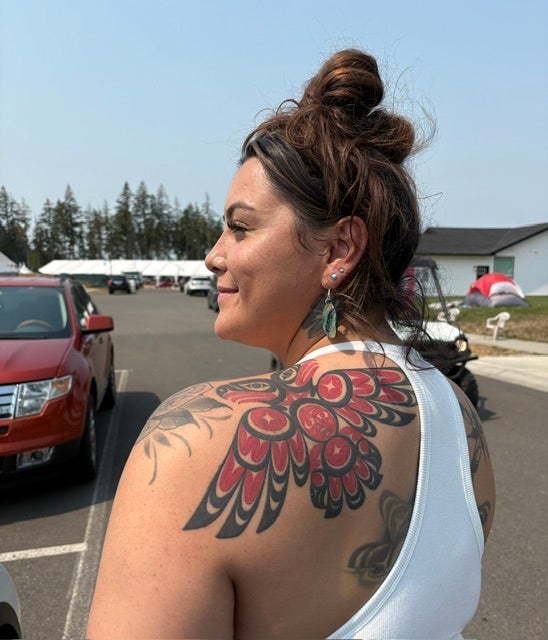
Calina Lawrence (Suquamish) with “Looking Eagle” tattoo.
I also ran into an old friend, Calina Lawrence (Suquamish), whom I had not seen in years. She has a shoulder tattoo titled “Looking Eagle,” created by tattoo artist Kyle Twiddy (Skokomish). It is called Looking Eagle because by moving his head fast, he can see in all directions and understand all perspectives.
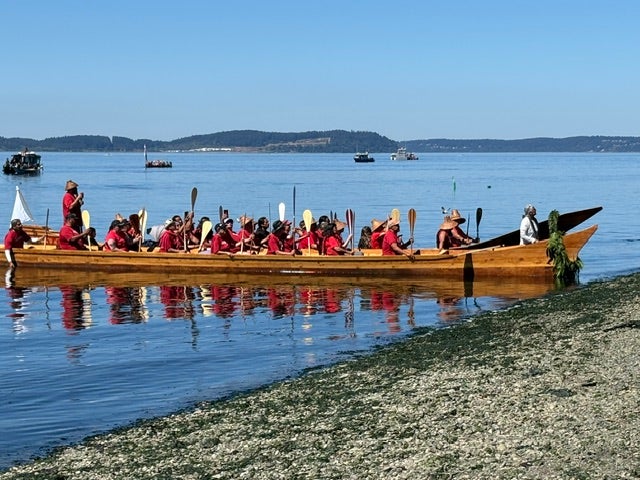
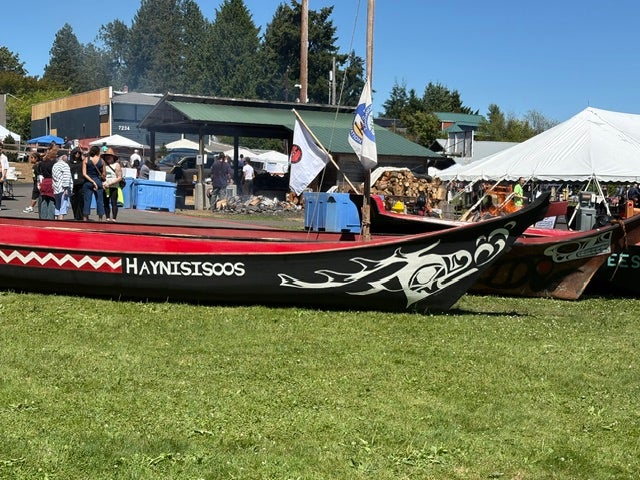
Canoe landing at Sequalitchew Creek.
A few days later, I witnessed the canoe landing “Medicine Creek Potlatch: Healing Through Our Waters,” hosted by the Nisqually Tribe from July 31 to August 5. The landings took place on Sequalitchew Creek and involved a one-and-a-half-mile walk down a trail from the local park to the water landing. The Protocol ceremonies took place inside a large tent on the Nisqually reservation, several miles from the creek. Per custom, the host Tribe was honored and gifted by the various canoe families. Guests observed traditional dancing and were offered meals.
In addition to the beautiful surroundings and the excitement of watching colorfully decorated canoes landing, the experience was marked by the warmth of the people involved—the pullers (rowers), the performers, the volunteers, the Tribal staff, and the visitors and guests from all over Turtle Island and beyond.
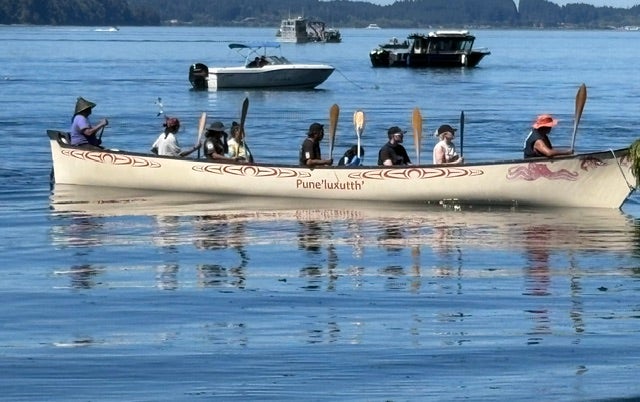
Canoe landing at Sequalitchew Creek.
I met John Halliday (enrolled Muckleshoot, Duwamish, Yakama, and Warm Springs descent), a visually impaired artist and retired BIA administrator. Halliday’s artist name is Coyote. He was introduced to me by his caretaker, Lucas Patricio, also an artist, whose Tribal heritage is southwest Pueblo. They explained some of the techniques involved in making the traditional vest Halliday was wearing.
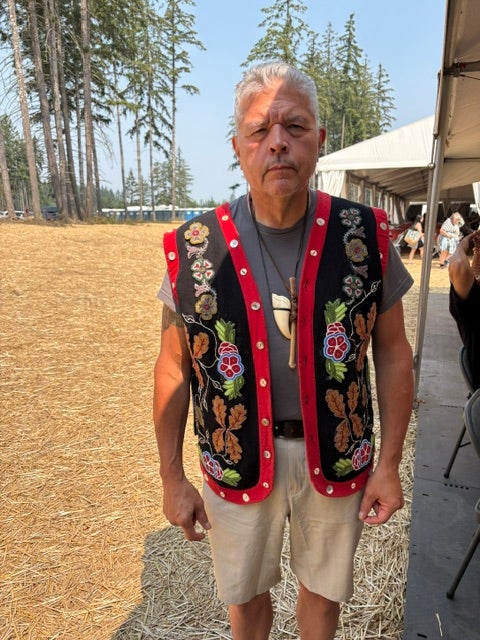
John Halliday (Muckleshoot).
At both landing sites, the host Tribes provided campsites with outdoor showers and toilets. For the first time in my life, I engaged in activities I will probably never repeat: helping set up a tent, crawling on my knees in the dirt, digging holes, pulling out squiggly earthworms, and nailing down posts—all while destroying my newly manicured nails. It was sort of fun, but I am an urban Indian and stayed at the Suquamish Tribal Casino Hotel and two other local hotels.
I would like to express special gratitude to Kelvin Penn, a musician whose day job is managing sound equipment and other technical responsibilities at events like the Nisqually Protocol. Penn respectfully stood up for the Blessing the Floor prayers and all other significant prayers, making sure that the entire film crew turned off their cameras when requested. Protocol events were livestreamed and shown in the Elders’ tent, but certain activities were not allowed to be filmed, and Penn was on the case.
I would also like to thank Cheebo Frazier (Nisqually), Tribal Council Vicechairwoman; Kyles Gemmell (Suquamish), Cultural Activities Coordinator; and Hazle Pacquette (Suquamish), Activities and Events Planner, for graciously responding to all of my emails, text messages, and phone calls regarding press passes, transportation, and housing. And all the volunteer cooks for the free salmon, crabs, elk stew, bison burgers, fresh fruit and vegetables, strong coffee, homemade pastries, and bottles of water available day and night that kept us nourished.
--Phoebe Farris (Powhatan-Pamunkey descent) is Contributing Arts Editor for the Cultural Survival Quarterly magazine. An art critic, curator, author, and photographer, she has written extensively on Indigenous visual, literary, and performing arts for over two decades. Farris is also a Professor Emerita of Art and Design at Purdue University and has curated and contributed to exhibitions highlighting Native and global Indigenous artists. Her work bridges scholarship, creative practice, and advocacy, amplifying Indigenous voices in contemporary art and media.
Top photo: Suquamish canoe landing site.
All photos by Phoebe Farris.