By Dev Kumar Sunuwar (Koĩts-Sunuwar, CS Staff)
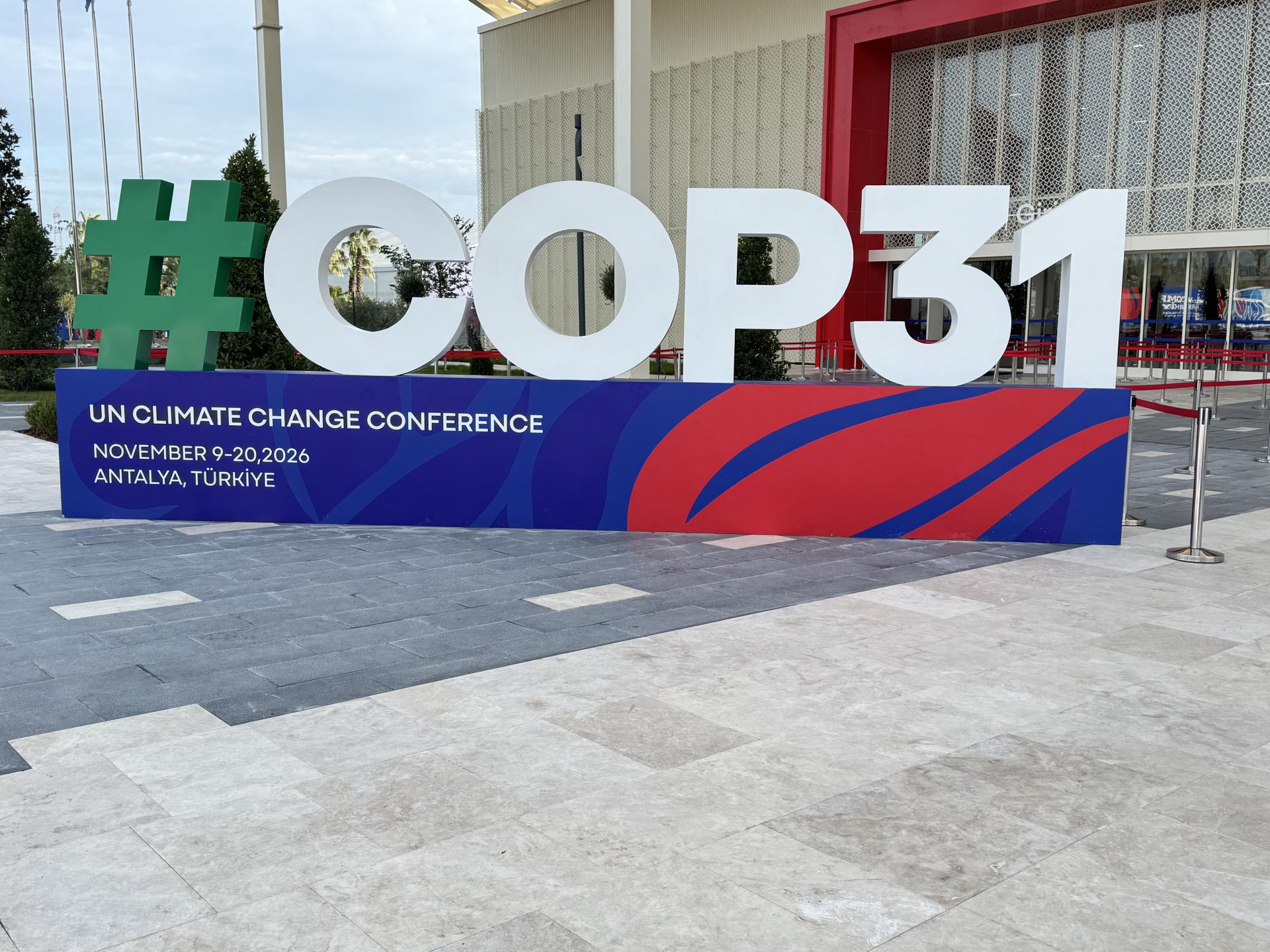
The 31st Conference of the Parties of the United Nations Framework Convention on Climate Change (UNFCCC COP31), also called the “Implementation COP,” took place in Antalya, Türkiye, from November 9-20, 2026. While delegates and heads of state in plenaries and meeting rooms were busy discussing transitions to clean energy sources and turning their promises to address the climate crisis into action, there was, as usual, a sharp divide between their words and the reality on the ground.
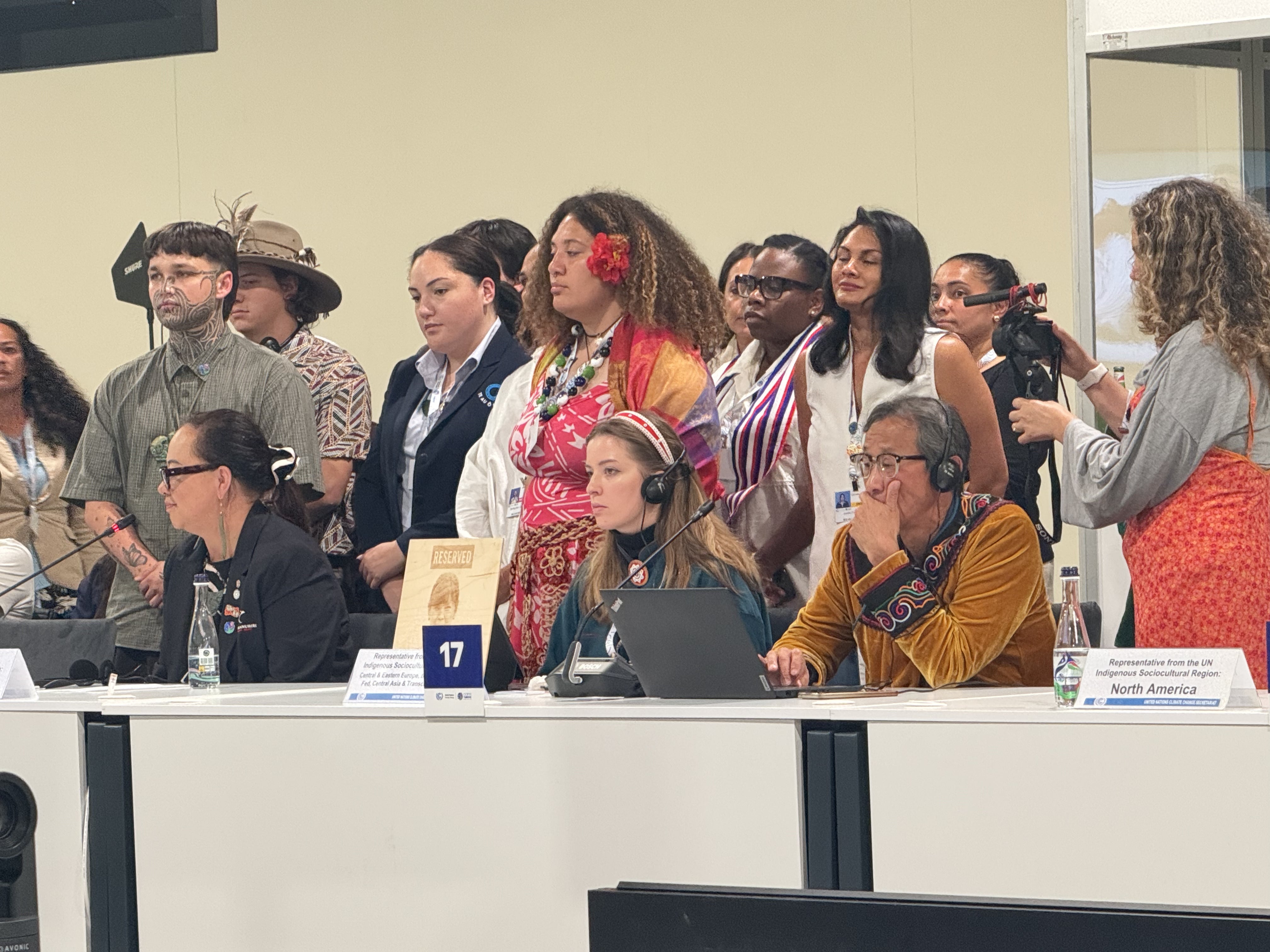
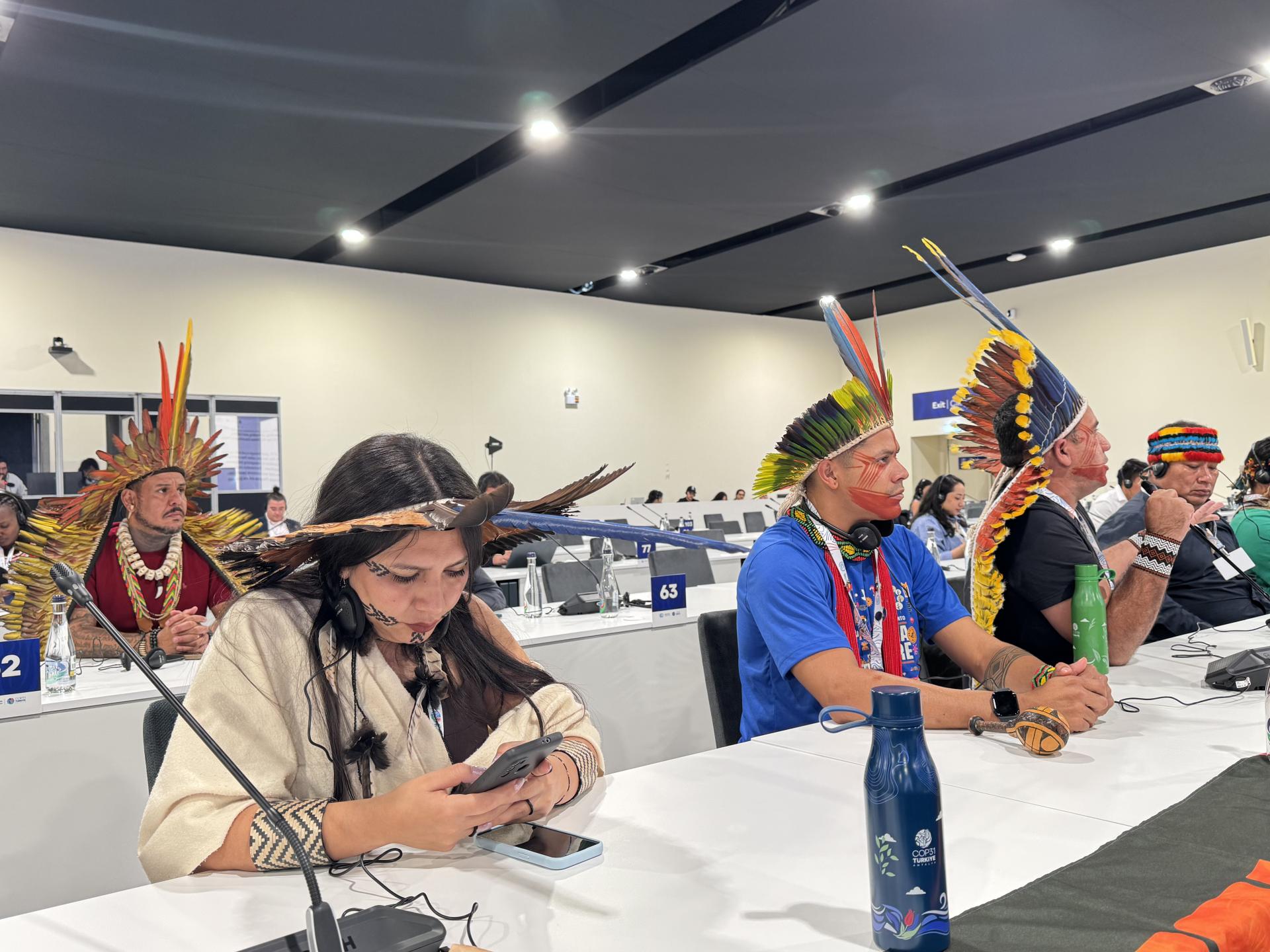
The collective message of the Indigenous Peoples from around the world gathered in Antalya is that the global climate crisis cannot be addressed by decisions made without us. We are the people at the table whose ancestral lands, territories, forests, and oceans are at stake.
In a high-level dialogue between the COP31 Presidency and Indigenous Peoples, representatives emphasized their central role in climate negotiations. Eloy Terena (Terena), Brazil’s Minister of Indigenous Peoples, said that current climate pledges cover barely 10% of what is needed to limit global warming to 1.5 degrees Celsius. He also stressed that real progress is impossible without meaningful representation of Indigenous Peoples at the table.
Representatives of Indigenous Peoples from the seven socioeconomic regions of the world brought similar crises unfolding on their lands and territories. They shared how their communities are bearing the brunt of climate change, being displaced from their land and territories without Free, Prior and Informed Consent (FPIC), and suffering the impacts of rising seas, disappearing resources, devastating forest fires, and mining and hydropower projects.
Indigenous Peoples around the world are the primary custodians of vital ecosystems, and yet they continue to face shrinking traditional food sources and a lack of direct climate funding, loss and damage to their habitat and livelihoods, and increasing threats and criminalization against those defending their lands, environment, and rights.
They challenged the main theme of this year’s climate conference, Implementation. While governments repeatedly promise to turn climate commitments into action, representatives raised questions: whose priorities would guide this action? Who will control the resources? And who will pay the price when climate policies are imposed without their consent and representation?
“The so-called clean energy transition is taking away our lands, just like fossil fuels did, [though] faster and labeled as ‘green,’” said Pratima Gurung (Gurung), a delegate with disabilities from Nepal, speaking on behalf of Asia Indigenous Peoples Caucus.
Indigenous communities worldwide share similar concerns. Shifting to renewable energy to fight the climate crisis is important, but the rush to rare earth mineral mining and building “green” projects on the lands and territories of Indigenous Peoples without their FPIC are threatening their lives and livelihoods. Simply trading fossil fuel extraction for a new wave of land grabbing is not a fair solution.
Gurung also noted that the green transition is already harming communities on the ground. In Indonesia and the Philippines, nickel mining for electric car batteries is damaging local areas. In Sarawak and Nepal, hydropower and geothermal projects have flooded ancestral lands. In Nepal, she said, the consultation process is often treated as just checking a box.
For Indigenous Peoples, it is not enough to simply be asked for permission. They need real power to decide on any matter that happens to their lands, territories, resources, and livelihoods that they depend on.
Gurung called for strict, binding human rights and environmental accountability across mineral supply chains, fair benefit-sharing, and independent monitoring by Indigenous Peoples for carbon markets projects. She also urged governments to grant Indigenous Peoples’ organizations direct access to the fund to respond to loss and damage. “Putting plans into action is a must for us, and that means getting our real consent, not just dropping off projects,” she said.
Gurung’s message resonates across Asia where mining and energy projects are booming, often in the name of green climate action or national development, especially on Indigenous Peoples' lands and territories. However, Indigenous Peoples are shut out of the rooms where these projects are planned, funded, and approved.
Climate Finance
One of Indigenous Peoples’ biggest demands during these talks is direct access to climate finance.
Faith Nataya (Maasai), a youth leader from Kenya, speaking for the African Caucus, said that even though Indigenous Peoples protected and managed their lands for generations, they are the ones hit hardest by drought, floods, desertification, eviction, and conflict. Because of this, she said, “climate finance must be direct, predictable, flexible, and accessible to Indigenous communities and their organizations, without unnecessary intermediaries.”
She also stated that less than 2% of dedicated Indigenous climate finance and less than 1% of global climate finance only reaches Indigenous Peoples directly. The issue is not merely the amount of money available; it is who controls it and whether communities can decide how to use it.
Herb Nakimayak (Inuk), Vice President of the Inuit Circumpolar Council of Canada and a representative from the Arctic, shared a similar story. “The Arctic is warming fast, putting our local food supplies, health, culture, livelihoods, and well being at serious risk. Indigenous Peoples in the Arctic have done almost nothing to cause global emissions, but they are facing some of the worst impacts of climate change,” he said.
Nakimayak urged funding that respects Indigenous Peoples’ rights and governance systems and supports Indigenous-led adaptation, mitigation, resilience, nature and environment protection, and responses to loss and damage.
Delegates from Latin America and the Caribbean echoed similar concerns, linking climate finance directly to the security of Indigenous Peoples’ land and territories. They pointed out that Indigenous Peoples occupy approximately 404 million hectares in the region, where around 35% of forests are located. Yet of those territories, only about 269 million hectares are legally recognized, leaving more than 130 million hectares unprotected.
Calling for direct funding, especially for Indigenous women and youth, and full and meaningful participation in Just Transition mechanisms, the delegates said, “You cannot protect forests without protecting the people who cared for them. Indigenous governance, land and territorial rights, and Indigenous knowledge should be recognized as essential elements of climate policy, not treated as supplementary concerns.”
Island Survival
Delegates from the Pacific brought the urgent realities of island communities into the negotiating rooms.
Nicola MacDonald (Ngāti Manuhiri) from Aotearoa/New Zealand, representing the Pacific Caucus, reminded everyone that the ocean connects communities, carries their histories and shapes who they are. “For us, the ocean is not what separates our islands; it is what connects us,” she said.
MacDonald also made it clear that keeping global warming below 1.5 degrees Celsius is not just a political talking point for Pacific islanders: it is a matter of survival. Crossing that line could mean coral reefs dying off for good, drinking water turning salty, and ancestral territories sinking beneath rising seas.
Similar urgency was raised in a separate meeting between Indigenous leaders and Astrid Puentes Riaño, UN Special Rapporteur on the human right to a clean, healthy and sustainable environment. Taurere Marguerite Ariihau Hauata (Mā'ohi) from Tahiti described how rising sea levels, eroding coastlines, and stronger storms are affecting communities across the region.
“Many of the low-lying coral islands in my homeland sit less than three meters above the oceans. As storms batter the shore, saltwater is seeping into underground freshwater supplies that our communities rely on. This has put clean water for future generations at risk,” she warned.
Other parts of the Pacific region are facing the opposite extreme. In the Marquesas Islands, long droughts and wildfires have left communities struggling to find even basic drinking water. For these communities, the crisis is not just about extreme weather patterns. It is about being included in the decisions that shape their lands and futures.
“Our people have cared for the environment for generations without needing climate policies to show them how [through] traditional practices like rāhui, which temporarily pauses the use of resources so nature can recover, and tapu, which sets aside areas for long-term protection,” Hauata said, adding, “Coral reefs are not just underwater ecosystems. They are our living parts of the home which provide us food, cultural identity, and connect generations.”
Rights Under Threat
Indigenous delegates also spoke about the serious risks faced by Indigenous Peoples who speak out against projects affecting their land and territories.
Rodion Sulyanziga (Udege), representing the Russian Indigenous Peoples’ Caucus, brought up the arrest of Selkup leader Daria Egereva, who has been detained since December 17, 2025, following COP30 in Belém, Brazil. He argued that Indigenous leaders cannot meaningfully take part in global climate talks if their personal safety is at risk. He also said the right to FPIC should not depend on whether they agree with powerful economic or political interests.
During the high-level dialogue, Mariia Michurova (Saami), a representative from the Russian Arctic, read a letter from Egereva that put it plainly: “Speaking out is not a crime.” Michurova called for Egereva’s immediate release and highlighted the growing risks facing Indigenous land defenders near mining sites in the region.
In a separate meeting with Elisa Morgera, Special Rapporteur on Climate Change, Michurova reported that companies are mining lithium near Lovozero, an area important to Saami reindeer herding, without the community's consent. She also pointed out how mining and smelting have already damaged land in the Kola Peninsula.
Climate change is disrupting Saami food systems, too. Cloudberries, reindeer, and fish are central to Saami life, but shifting seasons are throwing off generations of Indigenous Traditional Knowledge about when and where to gather food.
Michurova’s own family story is particularly striking: her mother was sent to a boarding school at the age of three, where she lost her language and cultural traditions. Today, Michurova is reclaiming that heritage by learning her language and recording Elders’ knowledge about medicinal plants.
Morgera said that she is preparing a report on environmental human rights defenders and that Egereva's case was already included in her work. She also stressed the importance of protecting Indigenous Peoples who participate in UN climate processes from reprisals.
Political Promises
Representatives of the COP31 Presidency acknowledged several concerns raised during the dialogue. Australia's Minister for Climate Change and Energy, Chris Bowen, who is serving as president of negotiations, recognized the value and importance of Indigenous Traditional Knowledge and stewardship. He pointed to the traditional practice of savanna burning in Australia as an example of how Indigenous practices reduce the risk of wildfires while supporting Indigenous livelihoods.
Terena called for continued Indigenous leadership in the climate process. Reflecting on COP30 in Belém, he said Indigenous Peoples’ participation had reached an unprecedented level, but warned that they still face barriers to direct access to climate finance and meaningful participation in international decision-making. He proposed developing an Indigenous Roadmap to bring together Indigenous Peoples’ experiences and priorities and strengthen their voice in future climate summits.
While these commitments are welcome, it remains to be seen whether those promises will turn into actual decisions and funding mechanisms that give communities genuine authority.
In their opening statement on November 9, Indigenous Peoples’ representatives laid out clear demands, including rights-based adaptation and direct climate finance, meaningful participation in the design and monitoring of national climate plans, and an Indigenous-led pathway within the Loss and Damage Fund. They also demanded the protection of Indigenous women, youth, persons with disabilities, and Peoples living in voluntary isolation.
Listening to these interventions in Antalya brought everything back to one basic question: what does climate implementation mean for the people whose lands and territories are being used to achieve climate ambitions?
For generations, Indigenous Peoples have protected forests, rivers, mountains, grasslands and oceans. They have developed systems for managing resources, growing food, and governing land that offer practical solutions to today's climate crisis. Even so, their land rights remain insecure, their organizations struggle to access funding, and their leaders are too often invited to speak only after the major decisions have already been shaped.
Indigenous delegates at COP31 drove home a truth that often gets lost in climate talks: the climate crisis is about more than carbon and temperatures. It is about land, culture, identity, human rights, and the rights of Indigenous Peoples to shape their own future.
At COP31, governments have an opportunity to move beyond recognition and turn their promises into action. That means securing Indigenous Peoples’ land rights, respecting FPIC, ensuring direct access to climate finance, protecting environmental defenders, and giving Indigenous Peoples a meaningful role in the institutions that shape climate policy.
The shift to a low-carbon world cannot happen at the expense of the people who have protected nature for generations. Indigenous Peoples do not want governments to speak on their behalf or simply nod along to their concerns. They are demanding to sit at the table as rights-holders, decision-makers, and equal partners. The message from Indigenous leaders in Antalya is simple: a Just Transition cannot be called “just” if it comes at the expense of Indigenous Peoples.