Seventeenth meeting of the Conference of the Parties to the Convention on Biological Diversity 19–30 October 2026, Yerevan, Armenia
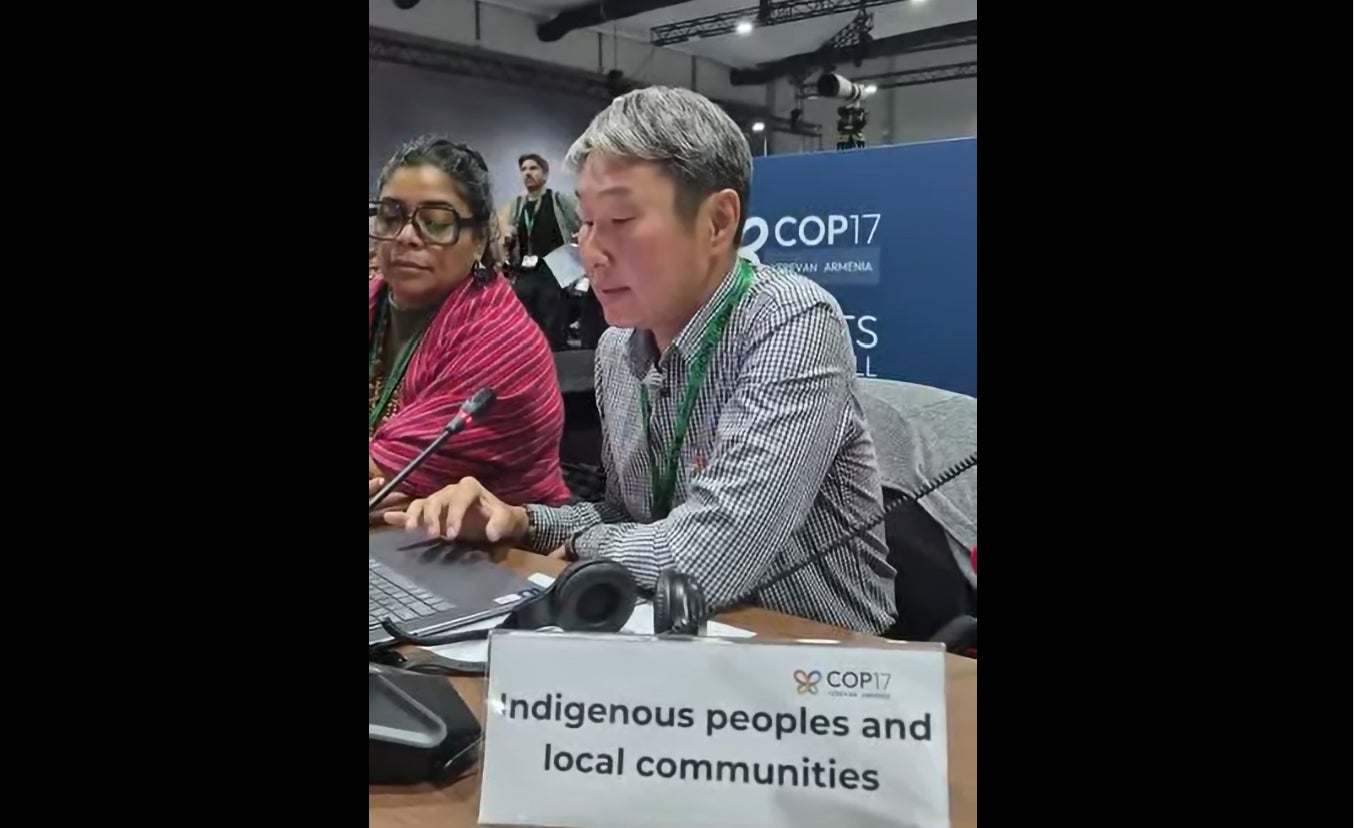
COP17 AGENDA ITEM: Opening Statement on behalf of the International Indigenous Forum on Biodiversity (IIFB) delivered by Andrei Isakov
Thank you, Chair.
I speak on behalf of the International Indigenous Forum on Biodiversity (IIFB). We thank you for the opportunity to address this plenary.
Our lands, waters, territories, cultures, and collective and customary governance structures are living systems that sustain and protect biodiversity every day. As we approach COP17, we reaffirm our commitment to contribute to achieving the Kunming–Montreal Global Biodiversity Framework.
At this halfway point in the Framework’s implementation, the Global Review must provide a clear, evidence‑based assessment of progress, identify gaps, and set out a concrete, actionable pathway to 2030. This requires accurately reflecting the distinct roles, rights and contributions of Indigenous Peoples and local communities, women, youth and other relevant groups. We stress the importance of explicitly naming Indigenous Peoples and local communities throughout the draft decision. Our contributions cannot be captured under the generic term “actors other than national Governments.” As the Convention itself recognizes—including in Article 8(j)—Indigenous Peoples and local communities are rights‑holders respectively, not stakeholders. Our knowledge systems, governance structures, stewardship of biodiversity, and priorities are diverse and cannot be obscured behind a blanket category. With respect to the monitoring framework, we welcome the establishment of an Ad Hoc Technical Expert Group on the Further Operationalization of the Monitoring Framework, and we look forward to engagement in it and in other processes related to the monitoring framework. We would like to highlight the need for the further operationalization of the traditional knowledge indicators and to strengthen community- based monitoring and information systems and to improve accessibility of the Online Reporting Tool.
We call for COP 17 to be elevated as a historic moment for Indigenous Peoples and local communities through the adoption of a Modus Operandi of the Subsidiary Body on Article 8(J) that ensures continuity, coherence, clarity and meaningful participation that does not go below the participation standards of the WG8J. However, the modus operandi should not undermine these standards. It is imperative that nominations of Co-chairs from Indigenous Peoples and local communities and Friends of the Bureau from seven socio-cultural regions be carried out through our own governance structures, respecting our self‑determination and established regional processes. These practices are proven and effective, based more than two decades on the Working Group on Article 8(j).
Adoption of the voluntary guidelines developed under tasks 1.1 and 1.2 of the Programme of Work on Article 8(J) is a key priority for the IIFB. We urge Parties to maintain the integrity of the text already agreed at SB8J-1. These guidelines must be implemented in a manner consistent with human rights, customary governance and tenure systems. We believe that the guiding principles provide crucial guidance for implementation, particularly on respect for spiritual and cultural relationships, customary governance, diverse value systems, gender equity, and intergenerational equity.
We emphasise that Indigenous and traditional territories (ITTs) should, in relevant contexts, be considered a distinct system that contributes to the conservation and sustainable use of biodiversity complementary to and different from protected areas and OECMs. This recognition is essential. Our territories must not be forced into protected area categories or OECMs.
We emphasize that direct access to finance for Indigenous Peoples and local communities is already recognised in COP decisions. The most efficient and effective way to support the stewards of nature is through direct access to support their priorities, through their own mechanisms and organizations. Any attempt to introduce requirements such as letters of support would create barriers and contradict the principles of accessibility, equity and effectiveness. Resource mobilization must strengthen—not weaken—the ability of Indigenous Peoples and local communities to implement the KMGBF in line with its Target 19(f).
The Cali Fund must deliver real, timely, and direct funding to communities, upholding the COP16 commitment that at least 50% of all DSI‑related funding flows to Indigenous Peoples and local communities, while ensuring direct access without intermediaries or burdensome requirements. We urge Parties to advance an allocation methodology that recognises Indigenous Peoples and local communities as rights holders, not beneficiaries. The Fund must ensure that companies and Parties contribute fairly to a mechanism that supports stewardship, equity, and actions of Indigenous Peoples, women and youth, and local communities on the ground.
Thank you.