By Anonymous Journalism Fellow from Indonesia
Rifya Rusdi, one of the women reported in a criminalization case while protesting to defend the existence of Indigenous communities in Sagea and Kiya Villages, North Weda District, in Indonesia, confirmed that she, along with Sulastri Mahmud and Ua Lada Ridwan, has been singled out as the masterminds behind the protests rejecting nickel mining in Central Halmahera Regency.
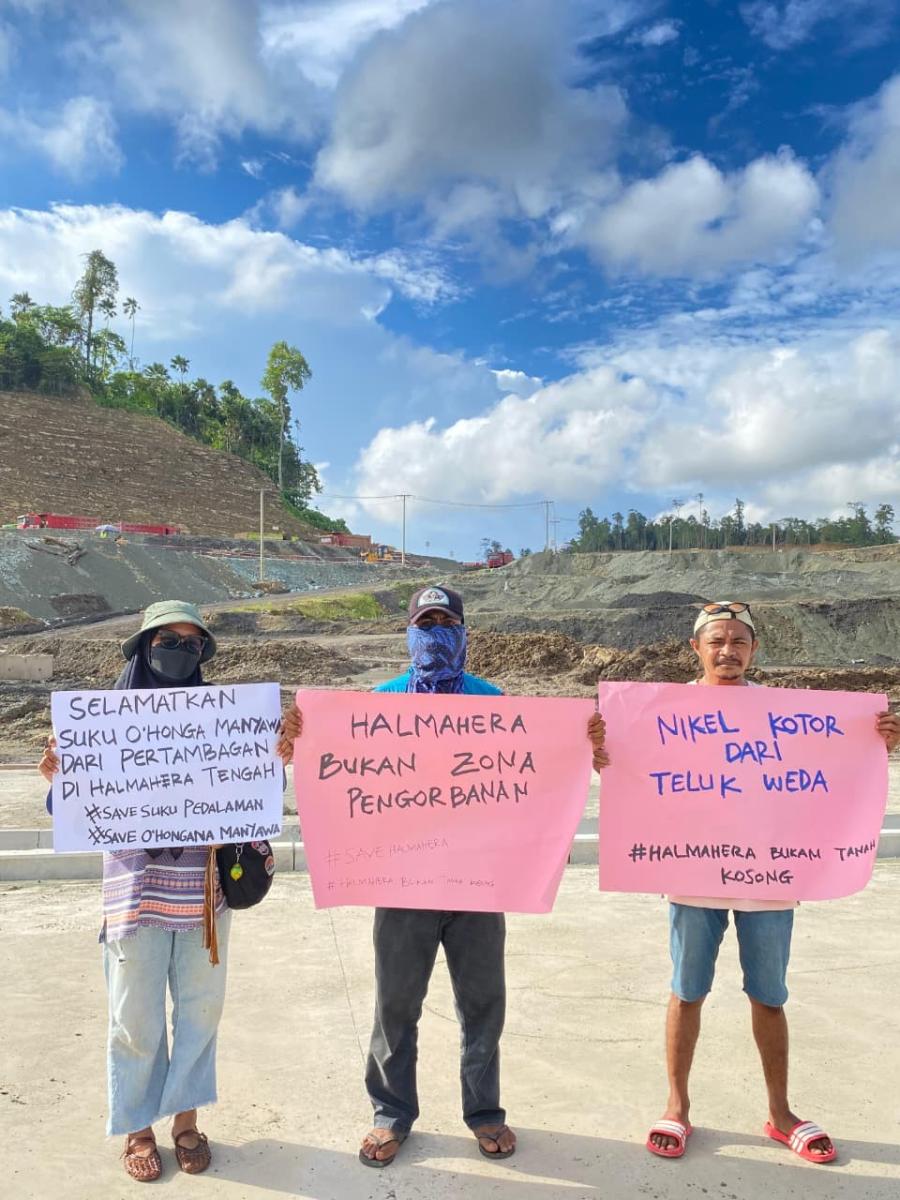
Initially, according to Rusdi, only she and Mahmud were accused of masterminding the demonstrations. In reality, all Indigenous community members had gathered to demand that the government revoke the permits of the nickel mining company currently operating in Sagea and Kiya.
"It is true—Sulastri, Ua Lada, and I have been summoned again. Our names are listed in the carbon copy of the Notice of Commencement of Investigation (SPDP). This investigative process attempts to criminalize residents who oppose mining activities in this region. This legal process clearly shows bias toward corporate interests, criminalizing citizens who defend their homeland and living space. This sets a terrible precedent for enforcing democracy and protecting the environment and nature in this country. Because of this, I have been threatened multiple times," Rusdi said.
She also stated that, so far, numerous threatening narratives have deliberately targeted her as a woman, all designed to weaken their struggle. According to her, the community's protests began because the company's planned nickel mining activities pose a severe threat to local water sources and vital ecosystems.
"The tailings waste facility is located extremely close to Lake Yonelo, posing a contamination risk to our water source as well as our fishing grounds during rough wind seasons at sea," Rusdi explained.
Lake Yonelo serves as a primary water source for the surrounding village communities’ daily needs. The area also serves an ecological function as a habitat for various fish species that support local livelihoods.
Saving Halmahera’s Last Stronghold
Rusdi also pointed out that the mining concession lies adjacent to Bokimoruru Cave, which feeds the Sagea River. The river is a primary water source for villages across the North Weda region.
"We are saving the last stronghold of Halmahera. If the mine continues to operate, the water source will die, and the fate of the surrounding village communities will be sealed," she said.
In addition, the Sagea Karst region has been designated as a nature conservation priority zone across several government planning documents, including Presidential Regulation No. 12 of 2025 concerning the National Medium-Term Development Plan (RPJMN) 2025–2029, Central Halmahera Regional Spatial Plan (RTRW) Bylaw No. 3 of 2024, and Central Halmahera Regent Regulation No. 35 of 2023 regarding the Central Halmahera Geopark.
According to Rusdi, residents have staged multiple protests to reject PT MAI's operations because the company has repeatedly and formally been asked to show the permits it claims to hold, yet none have ever been produced. "This remains a major question mark for us in the Save Sagea Coalition. The Sagea community also questions why there was never any public socialization. We were shocked when PT MAI suddenly began operations in October 2025. There should have been consultations first. We were completely caught off guard by the company's sudden presence."
She also described the village government's stance as neutral and unaligned. "The village government favors neither the company nor the residents. If a company program requests government assistance to approach residents for dialogue, the government comes to us. Likewise, if the community has grievances, the government relays them to the company," Rusdi said. However, she noted that all parties—the company, the community, and the local government—had once met to discuss how PT MAI's mining operations had suddenly entered the area.
"Just yesterday, local mothers (mama-mama) held a protest regarding an agreement established between PT Yonghai and the community. The agreement concerned community development, stipulating that for every departing barge [transporting materials], the company must pay Rp 350,000 per household. But since they began operating in October 2025, approximately 60 barges have left, and the company has paid nothing; the community has received nothing.
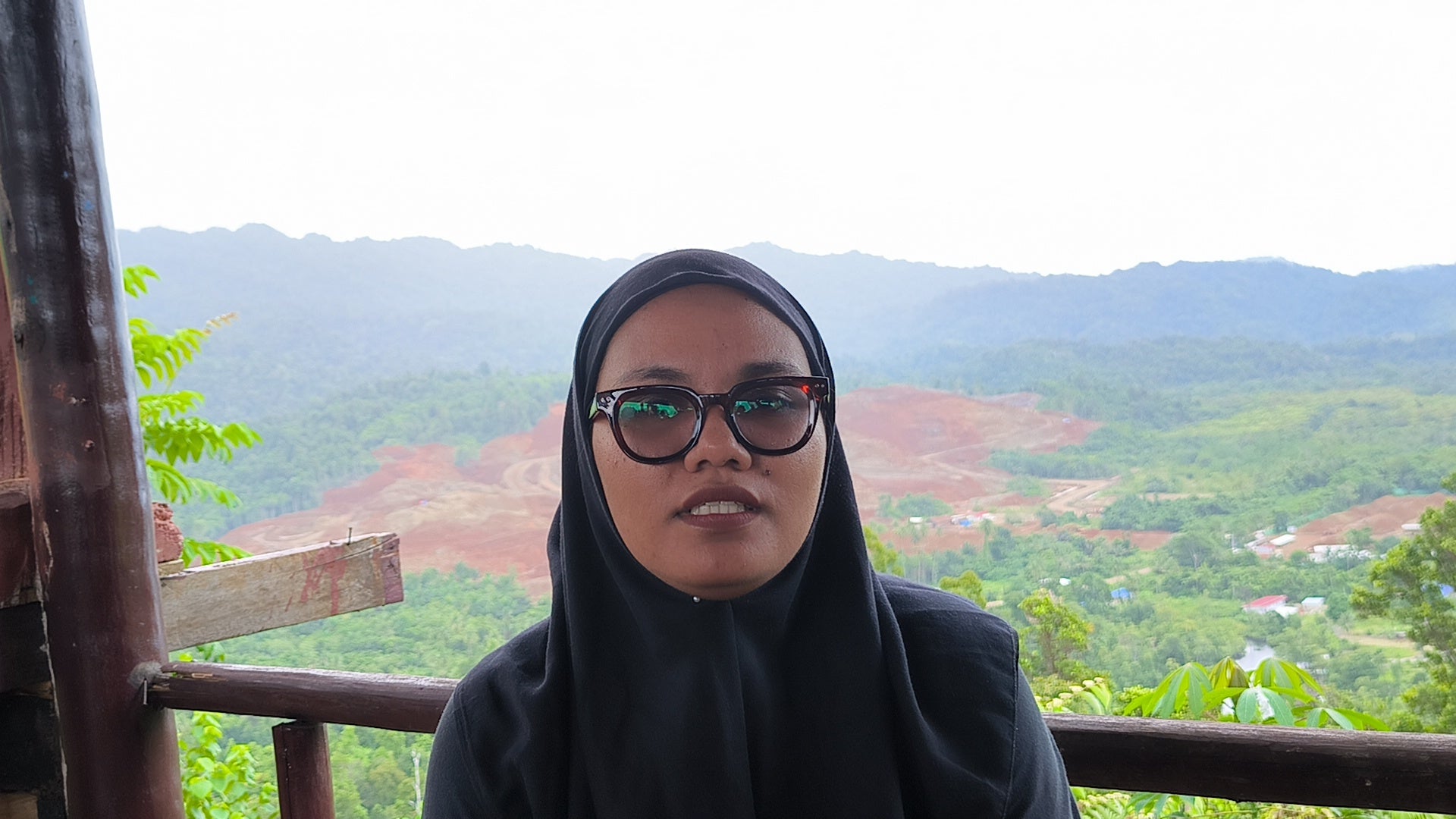
We at Save Sagea firmly stand by our principles as youth and community members, rejecting mining companies' entry onto our land. Alongside the demands of the mothers, we inserted a demand that PT MAI must pack up and leave. They must pay us first because they took our land, yet to date, they remain indifferent. You can see behind me—it clearly shows how the company suddenly seized land and bulldozed trees," Rusdi said indignantly.
She then recounted the protests they held over five days in February 2026, in multiple waves. "On February 10, around 10:00 PM WIT, we were served letters from the North Maluku Regional Police. There were 14 of us in total: 6 women and 8 young men. Among the women were 4 mothers and 2 young women, Sulastri and me."
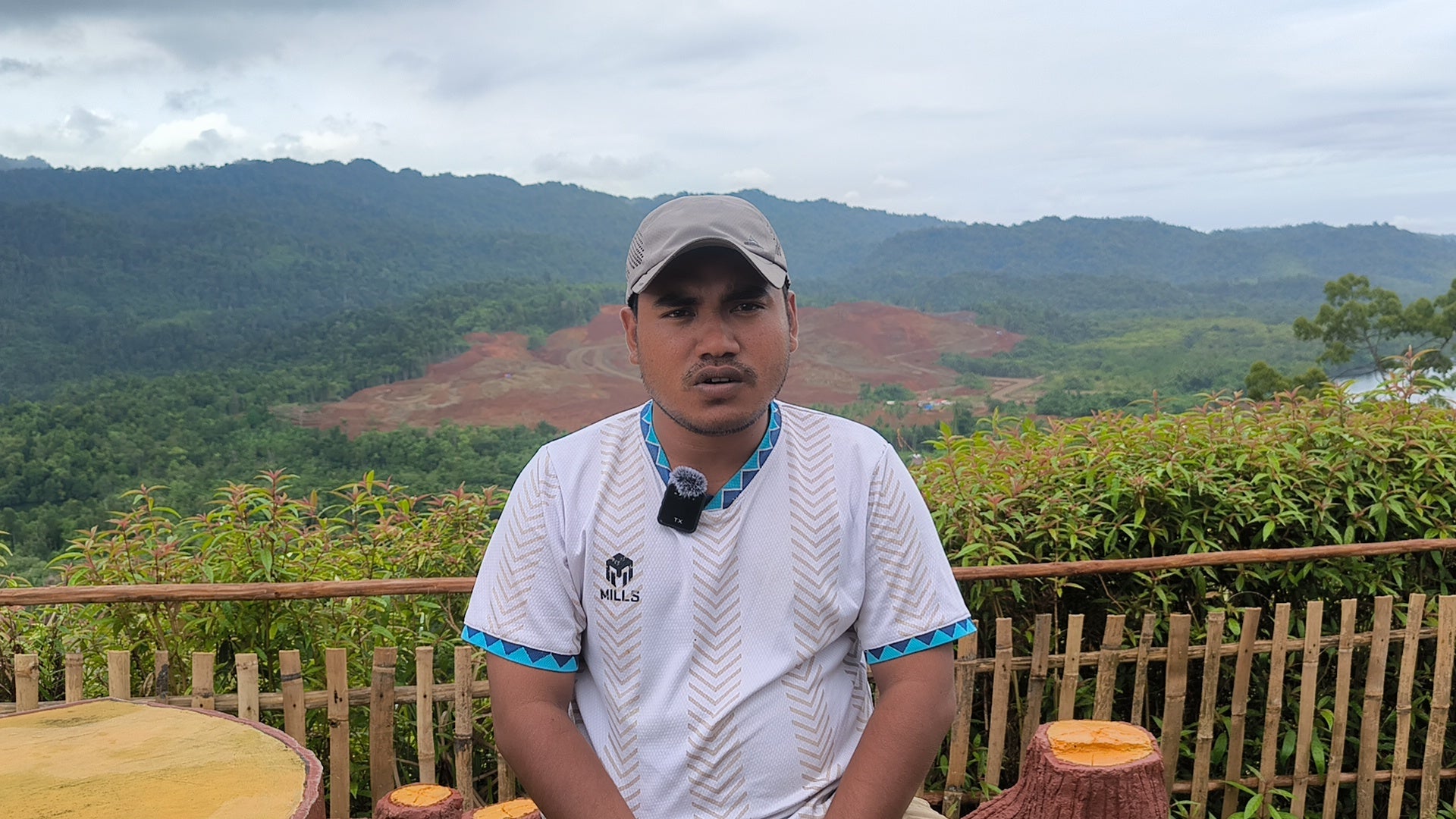
Among those 14 individuals, Rusdi continued, she, Mahmud, Lada, and Rizal received summonses and complied by appearing at the police station as witnesses. However, it remains unclear whether the case will proceed further.
"The greatest likelihood is that if this case moves forward, the four of us will be named suspects. Currently, we are accompanied by around 14 legal advocates from North Maluku, along with a broad coalition of national and local NGO allies supporting us. That is our source of strength. The community stands with us; we are not alone. We have legal counsel and allies standing in solidarity with us, 14 residents," she said.
Facing Threats, Victim Reports to the National Commission on Violence Against Women
Rusdi said she visited the National Commission on Violence Against Women (Komnas Perempuan) after an Indigenous journalism event in Jakarta. At Komnas Perempuan, she recounted the entire chronology of the protests. "I also reported the intimidation directed at me. I felt terrorized after the protests, which made me feel unsafe. Hearing my account, Komnas Perempuan immediately followed up. It is currently in the verification stage to proceed to formal advocacy and support."
She admitted that the threats have taken a severe psychological toll. Ever since receiving the police summons, she has lived in fear that her family might become targets: "If it is just me, that is fine, but spare my family. Especially since we are not fighting a small company. Every move we make must now be cautious."
"My mental state was most severely impacted when the SPDP was issued. It kept me awake for days; I could only fall asleep around 10:00 AM or 11:00 AM. It was incredibly distressing because it was my first time dealing with the law—my first time receiving an SPDP. On top of that, I received non-stop spam phone calls from unknown numbers, ringing continuously from 11:00 AM to 11:00 PM until I was exhausted. I was eventually forced to block incoming calls from unknown numbers."
Rusdi hopes mining companies will cease operations on Sagea land, noting that the area is home not only to people but also to rich biodiversity and livelihoods sustained by Sagea's ecosystem.
"I hope the international community can hear us and support our struggle in Indonesia, especially in the eastern regions. Today, this burden is felt not only by the Sagea community but also by communities across Papua, Obi, and throughout Indonesia facing the direct impacts of National Strategic Projects (PSN). I hope international allies can listen and campaign together on these issues occurring in Indonesia."
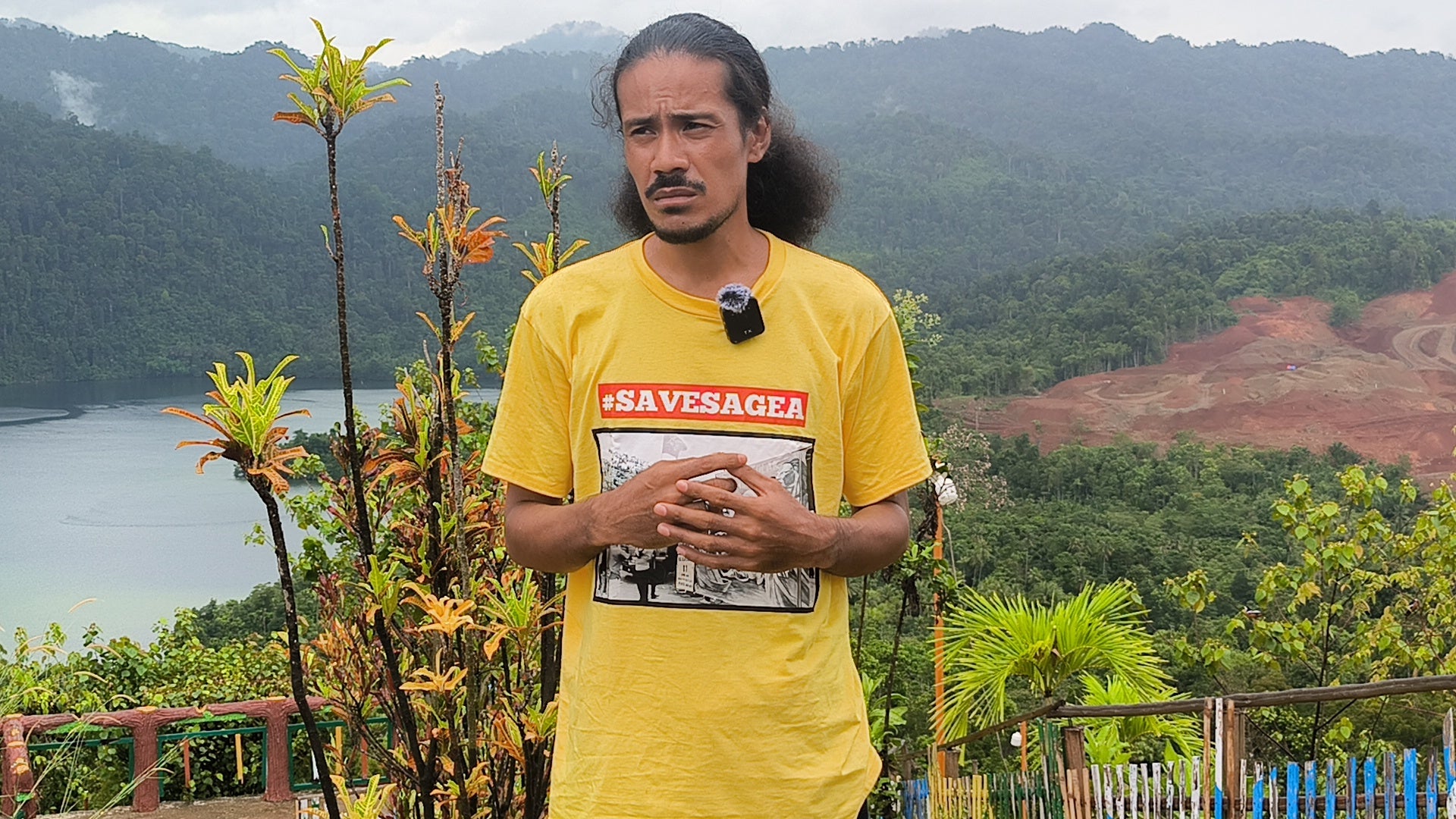
Lada Ridwan.
Depletion of the Community's Reserve Food Sources
Meanwhile, another resident, Lada Ridwan, a youth from Sagea Kiya Village active in defending Sagea's environment, explained that the conflict with PT MAI arose because the company began clearing land near Legai Lol Lake in Bobana Jailolo. Legai Lol Lake serves as a critical food reserve, where villagers rely on fishing and foraging during rough southern wind seasons.
"Now, due to land clearing by the company, our ability to source food from the lake is increasingly disrupted. Our greatest fear is that expanding land clearing will cause mine sedimentation to enter our lake. Exactly three months ago, Sagea Kiya youth staged a protest. During that action, PT MAI Songhai subjected us to criminalization, attempting to report and arrest us under Article 162 for allegedly obstructing mining activities," he said.
According to Ridwan, residents protested because they do not want Sagea Village and its surroundings to suffer the same fate as Lelief Village, where the company initially operated.
Community members, Ridwan stated, do not want Sagea's lakes, the Batu Lobang Cave, and the river system to become contaminated.
"We are accused of obstructing mining activities. Yet, beforehand, both the police and the mining company knew full well what PT MAI Songhai was doing: clearing land right next to our lake. That is what locals fear—that runoff sediment will pollute Legai Lol Lake, wiping out the milkfish population and destroying the community's catch," Ridwan noted.
He emphasized that residents view their actions as righteous efforts to protect the environment and defend their customary ancestral rights.
"We do not want our children and grandchildren—or even ourselves—to lose the chance to enjoy intact nature just because mines moved in and erased everything: our lakes, our rivers, our Batu Lobang cave, and the traditional areas we have always visited," he lamented.
Ridwan also said that before the protests, residents tried to communicate with the local government, including the Regent, but received no response. He suggested that local officials likely viewed the matter as unimportant, which explains the lack of response.
"For that reason, we hope this situation reaches international visibility, garnering global attention to help save our environment and customary lands," Ridwan stated.
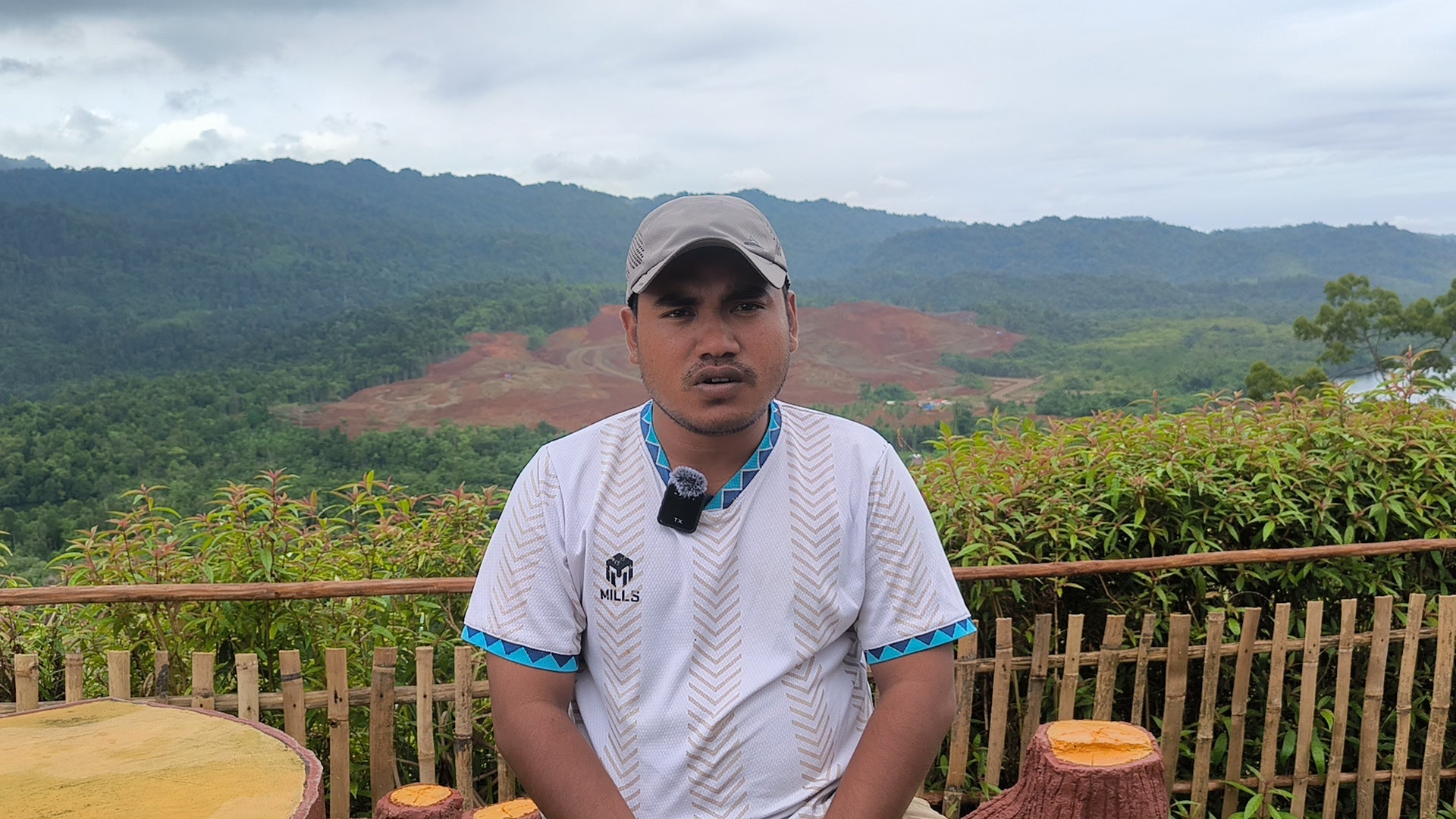
Odi Saputra.
Sulastri Mahmud Left Traumatized
Sulastri Mahmud's husband, Odi Saputra—a youth from Kahino who joined the Save Sagea Collective—is also among the 14 criminalized residents. He explained that locals protested against PT MAI because they witnessed the company destroying Sagea Kiya's living spaces.
"We staged protests because we saw the company destroying the environment here, including Lake Legai Lol and Bokimaruru. Because of this, we were summoned by the police and accused of obstructing corporate operations in Sagea... To this day, we are still undergoing police questioning. Four residents, including my wife, Sulastri, have had their cases escalated to the SPDP stage. My wife has been left traumatized and reluctant to meet people, let alone speak publicly about this issue. When this criminalization occurred, we were in the middle of preparing for our wedding. It has severely disrupted our family's psychological well being; none of us has found peace of mind since," Saputra added.
Despite facing criminal charges, Saputra affirmed his firm commitment, alongside his fellow activists in Save Sagea, to stand firm against the company's presence in Sagea Kiya. He hopes for widespread solidarity from environmental organizations and advocates, both nationally and globally, to end the criminalization of citizens defending their ecosystems and customary rights.
"We hope the police summons issued to the 14 residents will be resolved justly," he concluded.
--The writer is a journalist covering Indigenous Peoples of the Indonesian Archipelago, specifically the Maluku Islands, and a 2026 Cultural Survival Indigenous Journalism Fellow. She is a journalist and human rights defender based in Indonesia who has pioneered some initiatives for women's empowerment and youth counseling. She has over two decades of experience in media advocacy for women, children, and Indigenous communities, documenting the violation of Indigenous Peoples' rights to land and access to customary forests by the extractive industries. In this fellowship, she will amplify the voices of Indigenous communities, primarily focusing on the environmental impacts of mining through investigative articles and visual reports on the disruption of local economies and the degradation of Indigenous land and territories caused by mining expansion.