
Many believe the Klamath River is free, but it’s not—not yet. Four of the six dams on the Klamath River were removed in 2023-2024, prompting major media outlets, prominent environmental organizations, and even other Indigenous people to proclaim that the river is free.
The fight is not over—we still need to remove the Keno and Link Dams and heal our watershed. The misinformation about our sacred ambo (water in Klamath/Modoc) has made many Klamath Tribal members feel like we are experiencing termination all over again. The Termination Era was a period where the U.S. government targeted Tribal Nations whose land they wanted to steal, like
the Klamath Tribes, with lands rich in natural resources. They “terminated” our status as a federally recognized sovereign Indigenous Nation in 1954.
Our home was once a massive watershed filled with lakes, rivers, wetlands, and marshes, historically known as ancient Lake Modoc. A biodiverse ecosystem, once the third-largest salmon run on the Pacific coast. The Klamath River starts in our homelands and ends in the Pacific Ocean, in Yurok territory. The Klamath watershed historically connected many Tribal Nations: the Klamath, Modoc, Pit River, Karuk, Hupa, Yurok, and other Tribes.
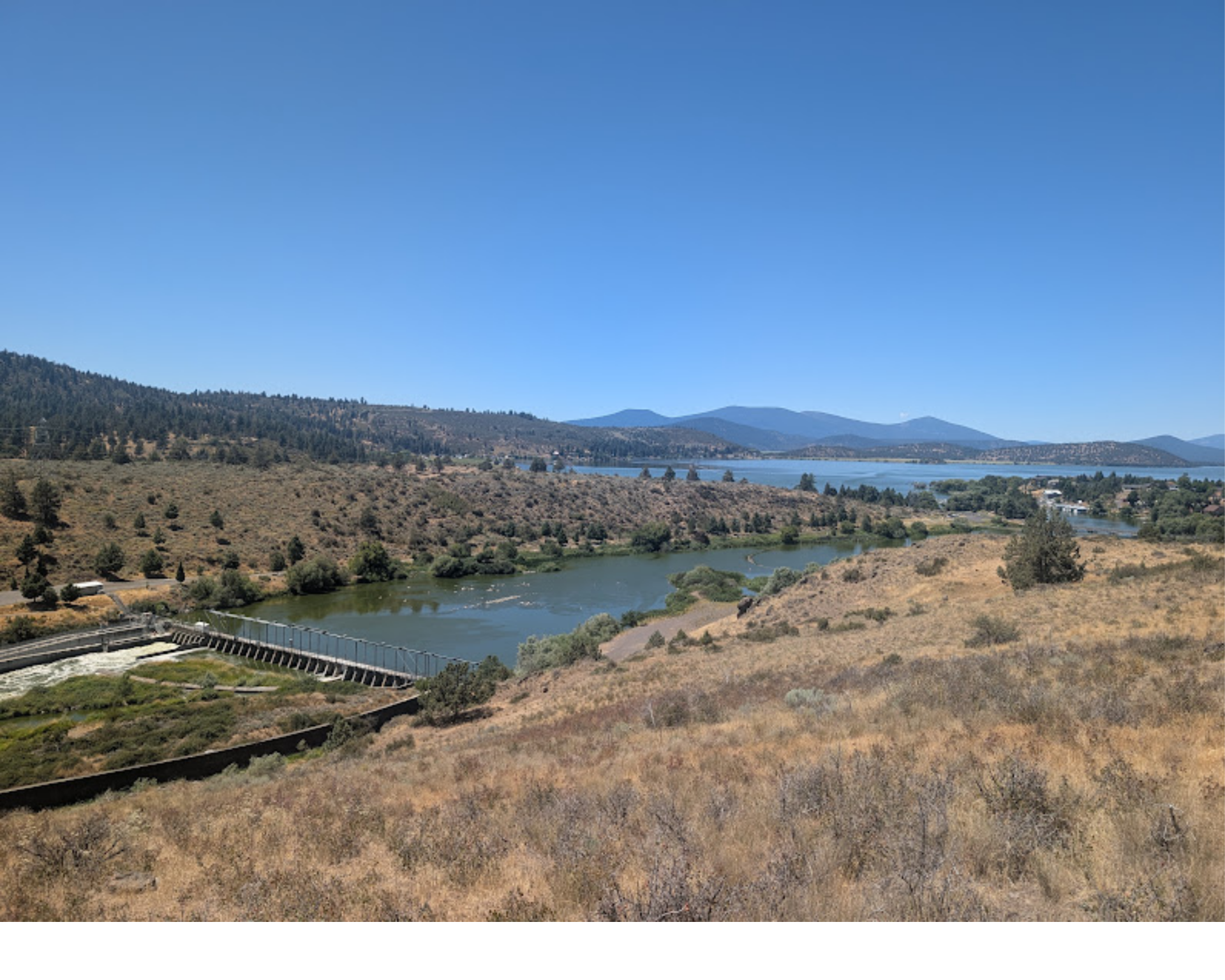
Photo taken July 2026. The start of the Klamath River flows out of the Upper Klamath Lake. The Link Dam is shown below, and in the photo, the remains of two natural reefs that were nearly destroyed during its construction. The rocky area before the dam and the green area near the dam.
The Klamath Tribes are three Tribes—Klamath, Modoc, and Yahooskin Paiute—all forced onto a single reservation. We are the maqlaq and neme, located at the heart and lung of the Klamath watershed. We ceded over 22 million acres of land to the U.S. government via the Treaty of 1864 in exchange for a 2-million-acre reservation and reserved treaty rights to hunt, fish, gather, and trap, including water rights. We are the only Tribal Nation along the Klamath River with a ratified treaty, and hold the most senior water rights.
We did what we could to survive colonization and sold timber to support our people. Our sales made us one of the wealthiest Tribes in the U.S., which gave us the financial ability to advocate. We stewarded our land with fire until the government outlawed its use in 1911. We were an impediment to the government, which wanted to log our forests, steal water for irrigation to farm cattle, mass produce non-native agriculture, construct railroad lines, and create hydroelectric energy with dams. Sadly, all was accomplished throughout the 1860s,1870s, and continues.
In 1905, the Klamath Project was authorized under the 1902 Reclamation Act, allowing irrigation development for 200,000 acres in the Klamath Basin. Construction of the first of six dams began in 1909, marking the beginning of our severance from our c’iyaals (salmon). The government wanted full control over our home, so they broke our treaty. In 1954, the U.S. ceased to recognize us as a sovereign Indigenous Nation. Our delegates traveled to the termination hearings in Washington, D.C., to tell Congress we would never give up our rights, but it did not matter. We were terminated, and so were our c’iyaals— a near genocide of our culture.
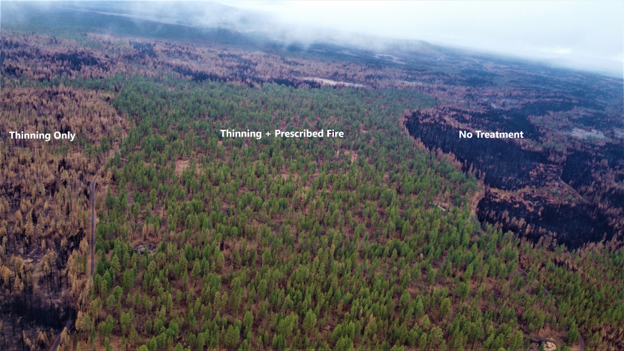
Aerial drone image post 2021 Bootleg Fire. The areas not burned were stewarded with fire by the Klamath Tribes.
After termination, we could no longer hunt, fish, gather, or steward our lands until we successfully advocated to restore our treaty rights in 1974, which helped lead to recognition as a sovereign Nation again in 1986. Our recognition was restored, but with no land. We are salmon Peoples who have been without our c’iyaals for over 100 years; the only Tribe along the Klamath River that was, and remains blocked from our salmon relatives.
Colonization and termination had catastrophic impacts on the Klamath River. We are the namesake, being located at the headwaters. What happens in our headwaters impacts all downstream. Today, toxic water continues to flow from our headwaters. Our sacred watershed is sick, crying for help, and our aquatic relatives are on the brink of extinction. When we hear others say the Klamath River is free, it feels like colonial erasure, the termination of our Peoples and animal relatives all over again.
We are still healing from termination. The government was almost successful in their genocide, but, like our c’iyaals, we are finding our way back home. After the removal of four dams, c’iyaals were spotted in our upper watershed in October 2025. We do not know how they made it over the remaining two dams, as the fish ladders are not designed for salmon. Miraculously, our c’iyaals are coming home, but return to deadly, toxic waters.
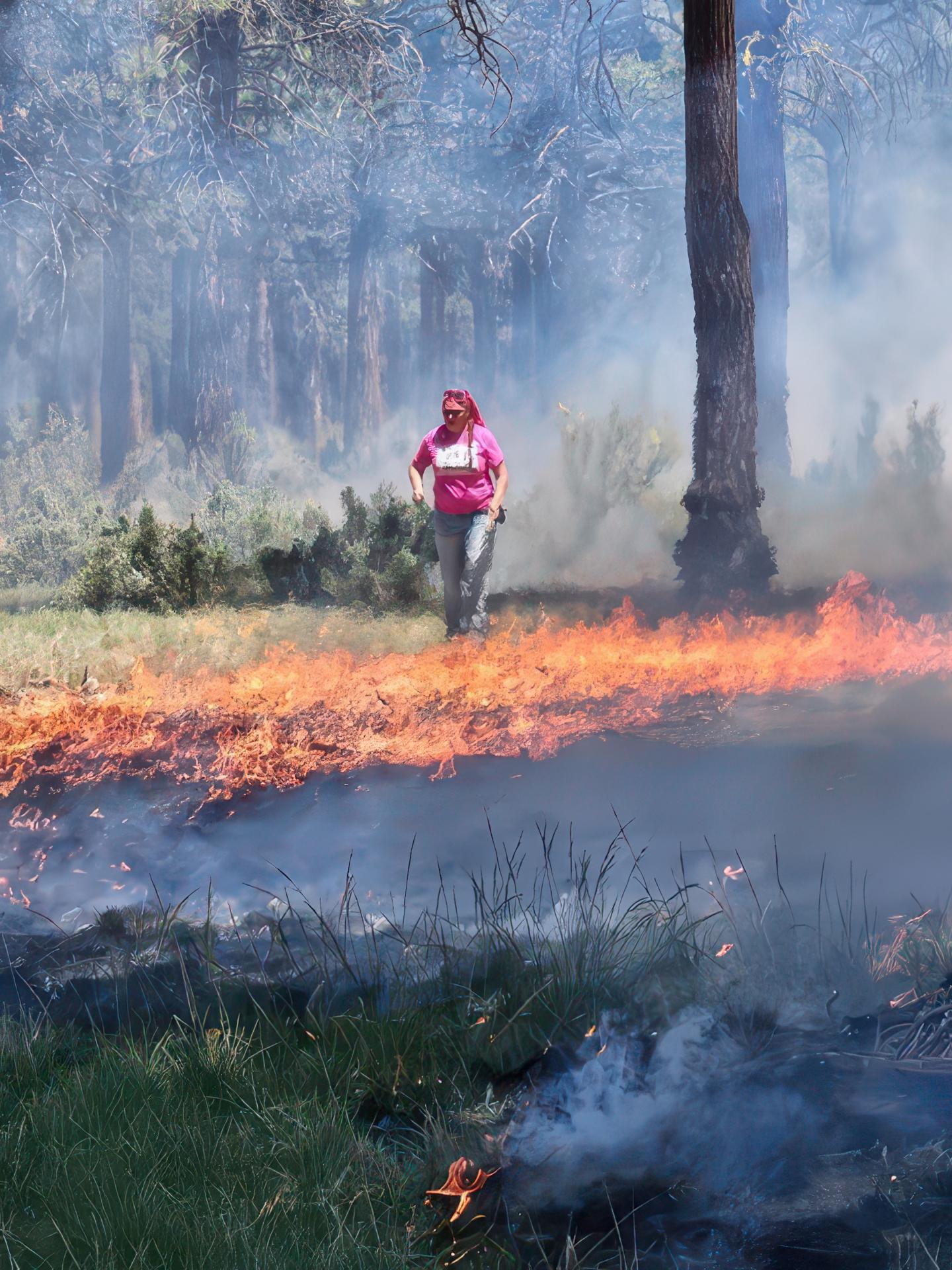
Lighting a prescribed fire in a culture and fire workshop.
Using Fire to Restore Our Sacred Watershed
Indigenous Peoples’ use of loloqs (fire) has shaped landscapes and cleaned water for thousands of years. Our homeland is a volcanic plateau, a fire-dependent ecosystem that provides pristine water to the Klamath watershed and is interconnected throughout the upper and lower basins. Fire acts as a natural selection process, creating resilience and resistance to future disturbance by favoring fire-dependent and adapted species, while reducing accumulated fuels, disease, and invasive species. It renews soils, stimulates the growth of culturally important plants, enhances wildlife habitat, reduces hazardous fuels, and increases an ecosystem’s resistance to severe wildfire, pests, and climate stress.
Fire is the solution to fighting mega fires, but also the medicine to heal our watershed and people. Without intentional burns on our landscape, we get massive wildfires. In 2021, Oregon’s Bootleg Fire obliterated over 400,000 acres. It ravaged through the canopy and when it reached the areas treated by the Klamath Tribes, it dropped to the understory and walked across the forest floor. Drone footage captured the effectiveness of our stewarding. We co-steward with the U.S. Forest Service since 1999, but have limited capacity to fully steward all of our homelands. The portions we managed were the proof needed to change the national perspective on fire in the U.S. What happened in our homeland during the Bootleg was what we have known about fire since time immemorial.
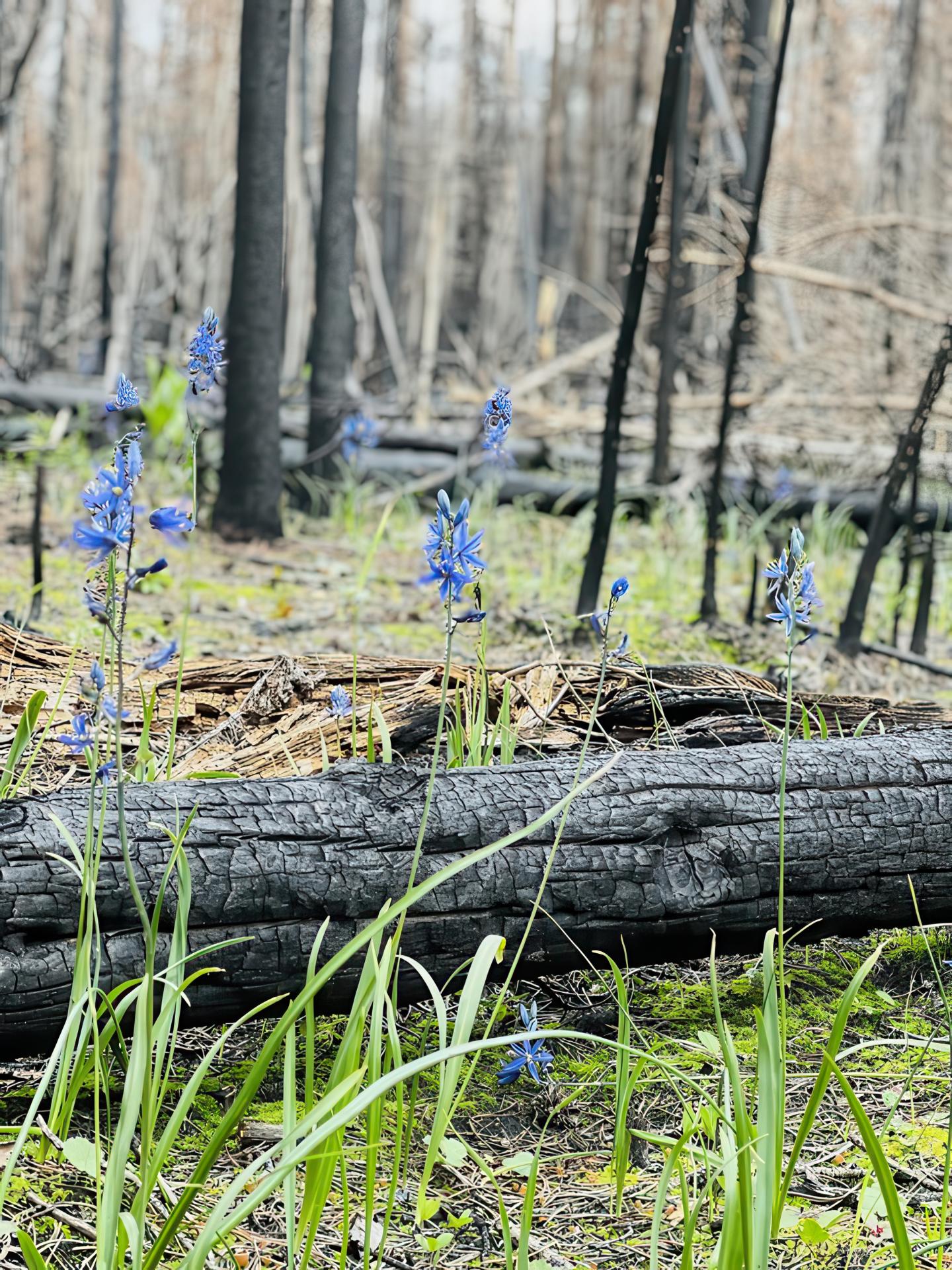
Post Bootleg Fire meadow portion of the burn, 2021.
Our lands would burn on average, every 10-13 years, anywhere from 300,000–500,000 acres at a time; smaller fires would burn more frequently. Our ancestors spread fire for many reasons; managing the watershed was one of them. Over the past decade, fire suppression has created a fuel load of dense, down woody fuels and layers of duff. To relieve an overloaded fire suppressed forest from mega fires, cattle are being introduced to steward the land and reduce fuels, replacing Indigenous Traditional Ecological Knowledge in the system and destroying the once-pristine waterways.
Fire is essential for our culture, spiritual practice, land, water, and has been the primary tool for thousands of years. The government severed our ability to steward the land with fire and created pollution with cattle, pesticides, plastics, and dams, sickening our homelands. The majority of our watershed is toxic. Upper Klamath Lake is choking with algae blooms. Because the connection between Lower Klamath Lake and the Lost River has been fragmented, dammed, and poisoned, our sacred fish are unable to reproduce or reach their original spawning grounds. Traditionally, we would cremate our loved ones and place them back into the water, something we can no longer do with the fracturing of our watershed.
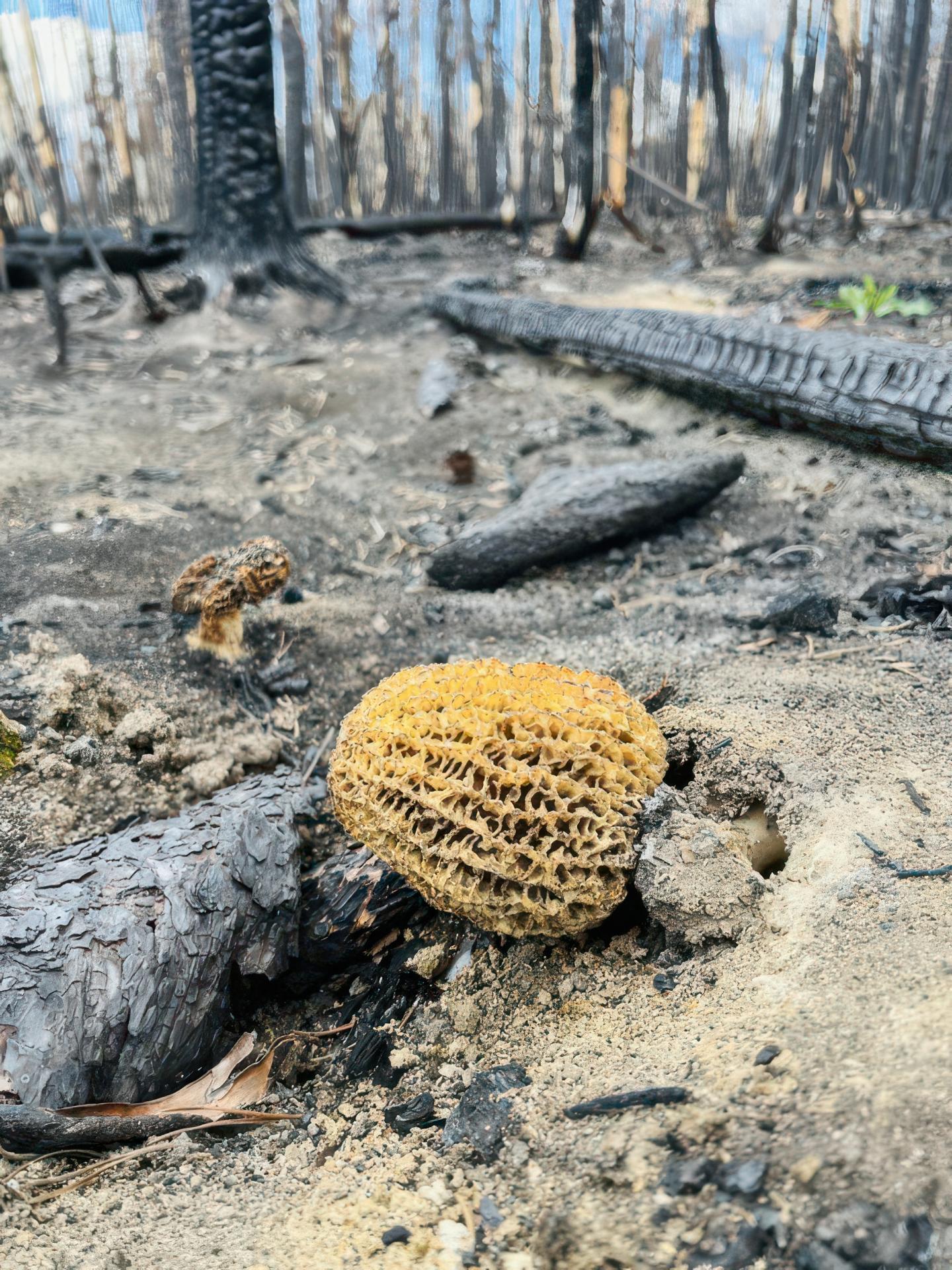
Post Bootleg thicket burn 2021, photo taken Spring 2022.
Our creation story is tied to our sacred c’waam (lost river sucker) and koptu (short-nose sucker), who are found nowhere else in the world except in our ambo. We are spiritually tied to these fish, and if they suffer, we do. In our stories, animals came first, and then later our Peoples. The most powerful bird that worked alongside Creator is Ka-ak (Old Raven), the supreme ally to Creator, who watches over the people and has oracular powers.
Ka-ak is guiding us back to our old ways. As our Elders have told us, we must build it as it was before. This is why, as Co-executive Directors of tonip ka-ak (5 Raven) Alliance, we are working together to advocate for the change needed to heal our lands. We have the solutions to healing the Klamath watershed; remove the dams and use fire to heal our watershed and Peoples.
Juliette A. Jackson and Anna Merritt are enrolled members of the Klamath Tribes and Co-directors and Co-founders of tonip ka-ak (5 Raven) Alliance, a Native women-led nonprofit in Chiloquin, Oregon, whose core mission is to “heal the land, heal the people.”
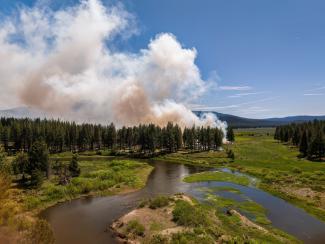
Top photo: Culture and fire workshop on the Sprague River, Oregon.
All photos courtesy of Tonip Ka-ak (5 Raven) Alliance.