By Mara Moldavan (CS Intern)
For centuries, the Crimean Tatars have lived on the Black Sea peninsula of Crimea, where their language, traditions, and history are closely tied to the land.
But since Russia’s annexation of Crimea in 2014, many Crimean Tatars have been forced into exile or now live under occupation. Their situation raises a question that Europe still struggles to answer: what does it mean for an Indigenous People to defend identity, continuity, and political belonging when access to their homeland is disrupted by occupation and war?
“Our homeland is Crimea—and no one else's,” says Liudmyla Korotkykh (Crimean Tatar), a lawyer and manager at the Crimean Tatar Resource Center, an organization that documents human rights violations in Crimea. Speaking from Kyiv, where she has lived since leaving Crimea in 2015, Korotkykh describes a Peoples whose identity is inseparable from the land itself.
Who are the Crimean Tatars?
The Crimean Tatars are recognized in Ukraine as one of the Indigenous Peoples of Crimea, alongside the Karaims and the Krymchaks. Outside of Eastern Europe, many people are unfamiliar with the idea that Indigenous Peoples live within Europe at all. Korotkykh believes this misunderstanding stems partly from the way Indigenous identity is often depicted.
“People often think Indigenous Peoples are those who were colonized,” she explains. “And historically, Europeans were the colonizers. Because of this, many people don’t imagine Indigenous Peoples existing in Europe.”
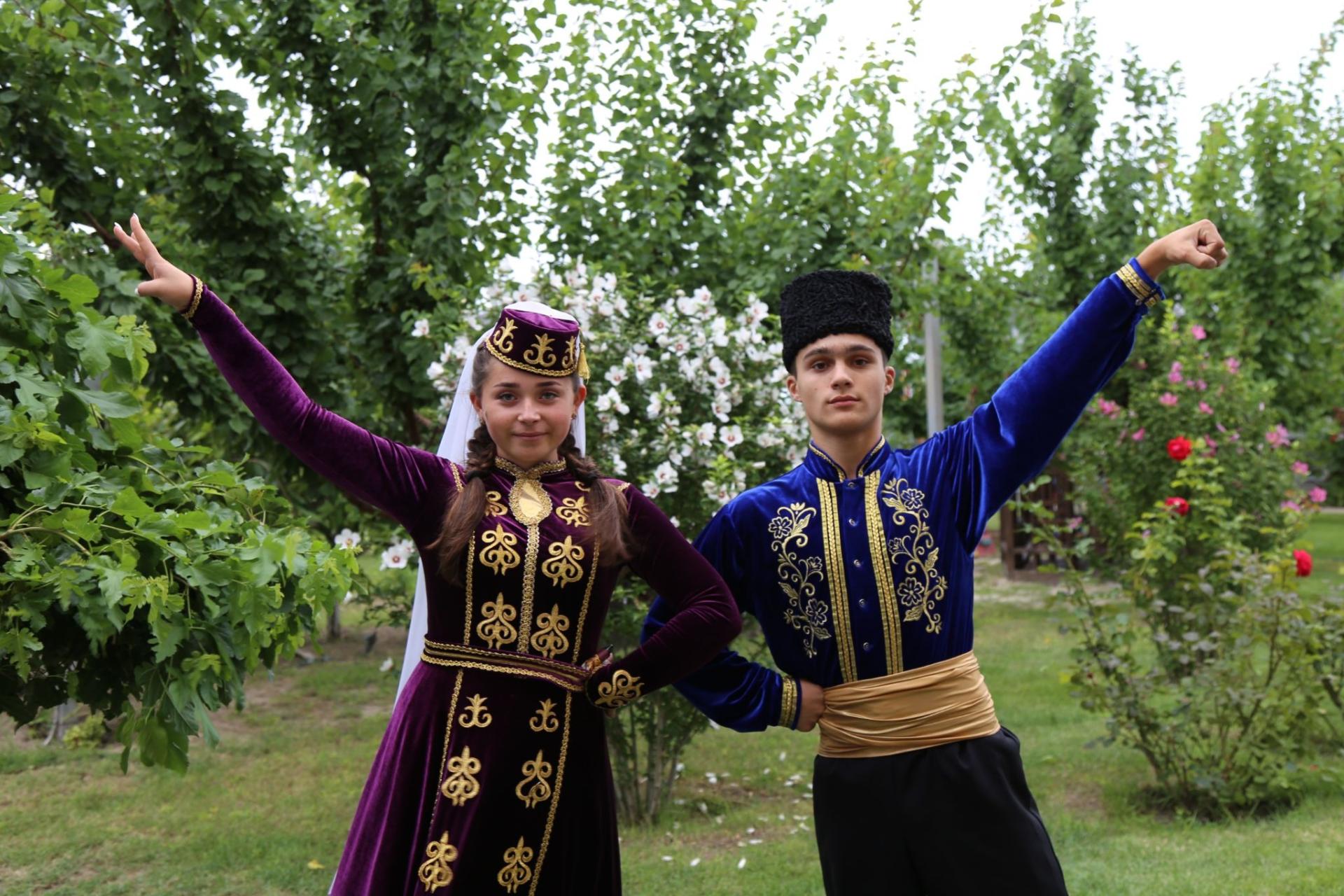
Tatar Youth. Photo by Crimean Tatar Resource Center.
A Relationship Rooted in Land
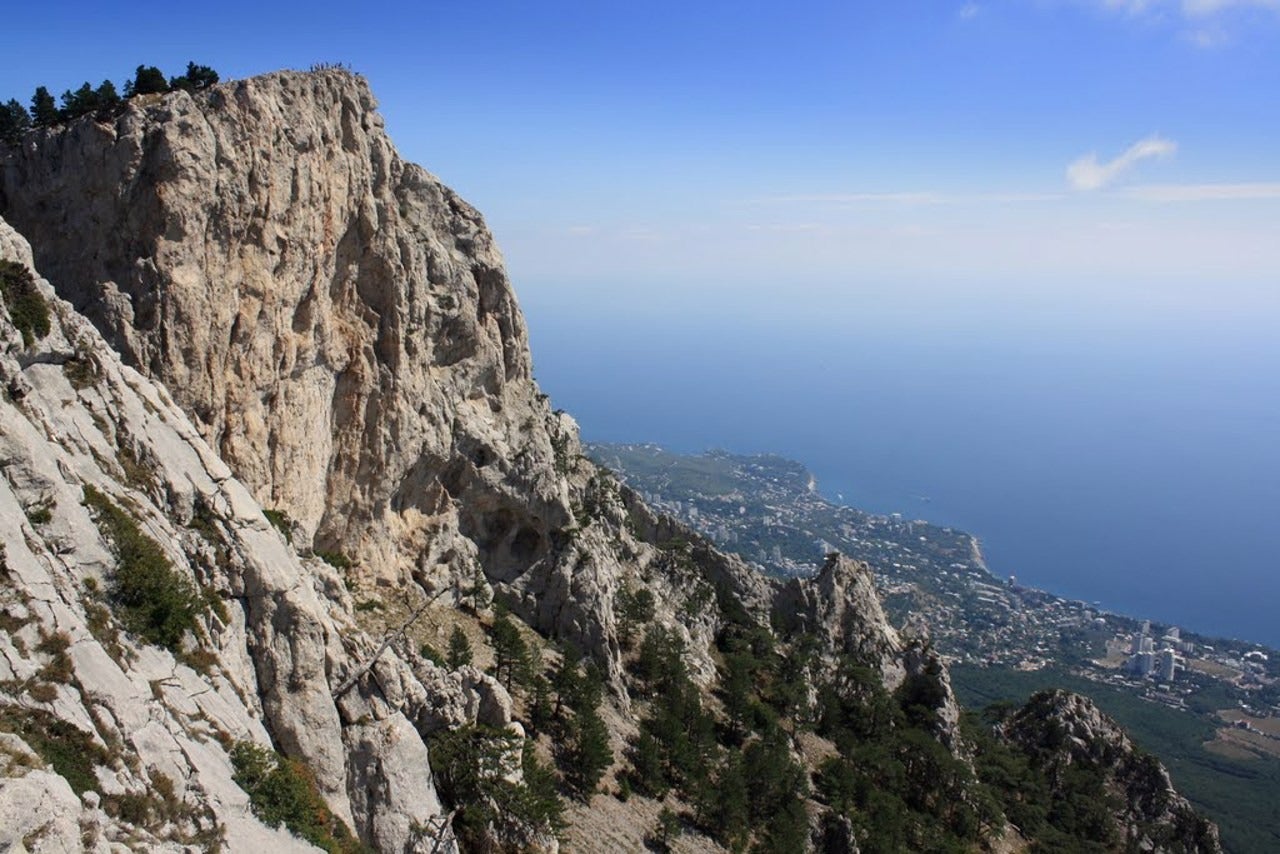
Crimea is located on the northern coast of the Black Sea and consists of mountains and prairie lands. Over generations, communities developed ways of living with these environments. “It’s more than territory,” Korotkykh says. “It’s a special way of life.”
One example lies in the mountains, where traditional orchards known as chayır rely on natural water flows shaped by the terrain. These mountain gardens allow communities to grow fruit and crops in places where irrigation would otherwise be difficult. According to Korotkykh, the unique conditions of these landscapes produce fruit that is known for its distinct flavor.
Even among those who grew up far from Crimea, that connection remains. Korotkykh’s mother was born in Uzbekistan after the deportation. “We grew up hearing stories about Crimea,” she says. “People would say that the fruit there tastes better, that even the sun shines more brightly.”
Displacement and Survival
In 1944, Joseph Stalin, then leading the Soviet Union, ordered the mass deportation of Crimean Tatars to Central Asia, accusing the entire population of collaborating with Nazi Germany. Families were forced onto trains and deported thousands of kilometers away; many did not survive.
For decades afterward, Crimean Tatars weren’t allowed to return. Their culture was suppressed, yet families continued to maintain traditions and language in private, passing them from one generation to the next.
Over time, small acts of cultural preservation became forms of resistance. Weddings, for example, took on a significance beyond celebration. In Crimean Tatar communities, large gatherings allowed people to share music, language, and news while raising funds to support cultural activities and the growing movement.
During the late Soviet era, Crimean Tatars began returning to their homeland after generations of exile. Many found their homes gone and land ownership uncertain, but through persistence and collective effort, they slowly rebuilt community life. By the early 21st century, Crimean Tatar culture was beginning to reemerge across the peninsula.
A Homeland Under Occupation
That recovery was interrupted in 2014, when Russia annexed Crimea.
In February 2014, thousands gathered outside the Crimean parliament building in Simferopol to support Ukraine’s territorial integrity and protest Russia’s actions. “Crimean Tatars were in the center of opposition to the occupation,” Korotkykh says.
In the years that followed, many Crimean Tatar activists and journalists faced arrests and criminal charges widely criticized by human rights organizations. “Russia uses these accusations to create the image that Crimean Tatars are extremists,” Korotkykh says. “But in many cases, people are targeted simply for their activism or for their beliefs.”
Despite pressures, Crimean Tatars continue to safeguard their identity. As Korotkykh explains, language remains a powerful marker of belonging: “When you hear Crimean Tatar language or see traditional clothing, you understand you are among your people.”
For younger generations, cultural expression has become a form of resistance. “In conditions where political activity is dangerous, culture becomes a way to show who you are. Young people are increasingly interested in traditions because they want to keep that identity alive,” Korotkykh says.
What Is at Stake
The broader war between Russia and Ukraine has added new pressures to Crimean Tatar communities. After Russia launched its full-scale invasion of Ukraine in 2022, reports of arrests and political prosecutions in Crimea intensified.
The stakes, Korotkykh argues, extend beyond one community. Crimea’s location on the Black Sea makes it strategically important for the region, and it has become a central element of the conflict between Russia and Ukraine. For Korotkykh, the international response to Crimea since 2014 shows just how easily the concerns of Indigenous Peoples can be overlooked in geopolitical debates.
“When the occupation began, many people said a full-scale war in Europe was impossible,” she recalls. “But we warned that Russia would not stop in Crimea.”
Eight years later, those warnings proved prescient. Only a few hundred thousand Crimean Tatars now live worldwide. Korotkykh worries that continued displacement could slowly fade the identity of Crimean Tatars.
“If the world closes its eyes to Crimea,” she says, “our People could disappear.”
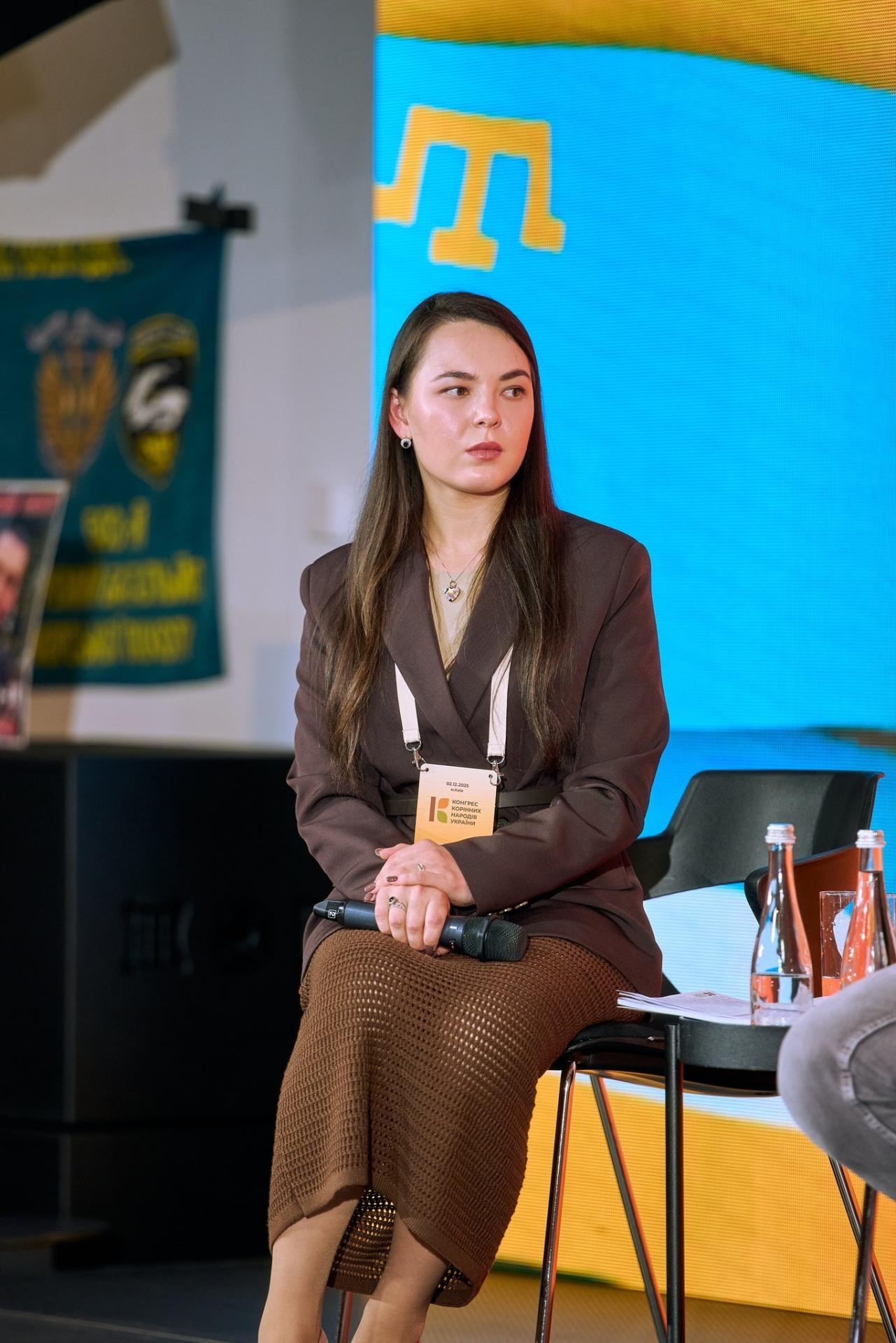 Liudmyla Korotkykh
A Future Tied to Home
Today, Korotkykh documents human rights violations in Crimea while also advocating internationally for the rights of Crimean Tatars and the other Indigenous Peoples of Crimea. Her work extends to engagement with United Nations mechanisms and international forums, where she brings attention to the situation on the peninsula. Like many Crimean Tatars living outside Crimea, she still has family there.
“I’m Crimean Tatar. I’m from Crimea,” she says. “And of course, I want to go home.”
Despite the ongoing war and uncertainty about the future of Crimea, Korotkykh remains hopeful that the rights of Indigenous Peoples will play a greater role in shaping Ukraine’s future. In 2021, Ukraine adopted a law recognizing Indigenous Peoples, including the Crimean Tatars, Karaims, and Krymchaks, marking an important step toward acknowledging Indigenous identity within Europe. “Each person can make the world more just,” she says.
For the Crimean Tatars, the memory of Crimea continues to shape daily life—whether on the peninsula itself or across the diaspora. Even after decades of deportation, exile, and conflict, that connection endures. Crimea remains not only the land remembered, but the homeland many still hope to return to.