By Hendro Karundeng
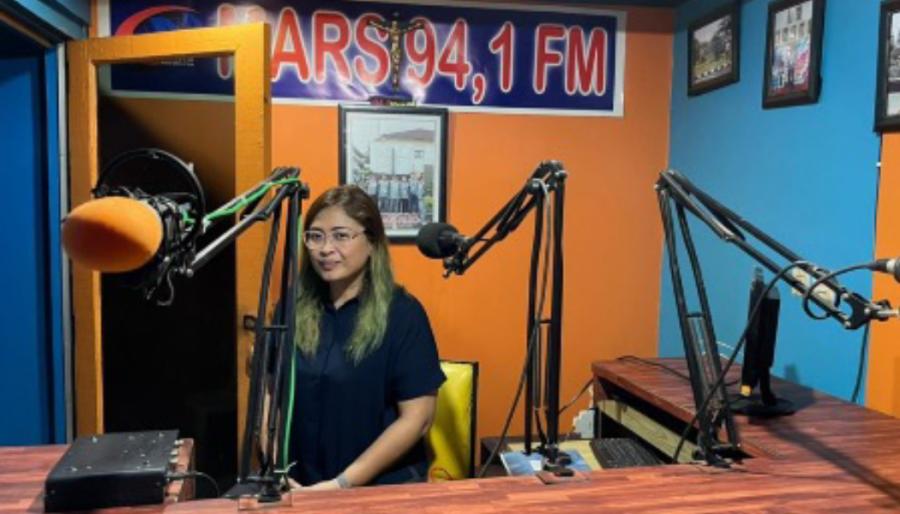
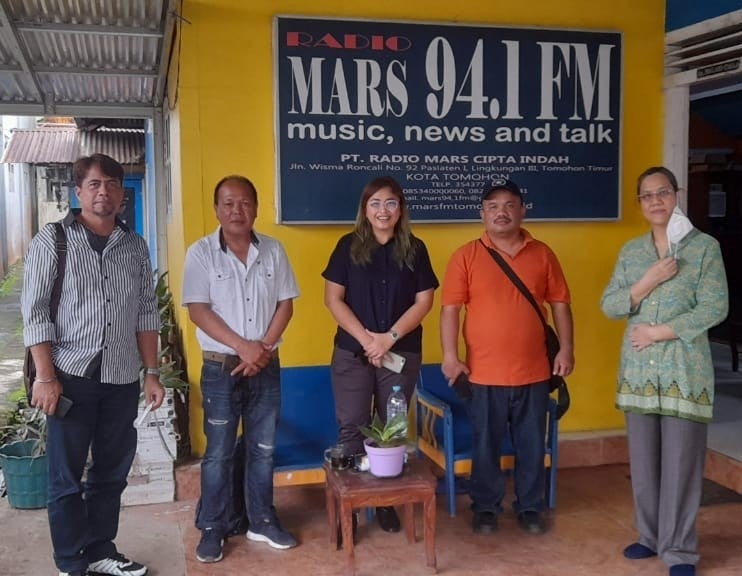
When we began the Sumirita In Tana Minaesa Tarekan 2025 project under the Indigenous Community Media Fund, we were responding to something urgent and deeply personal. As a community radio station based in Minahasa (94.1 FM Mars FM/PT Radio Mars Cipta Indah), we could no longer ignore the accelerating environmental destruction caused by mining activities in our ancestral territories. We witnessed rivers growing increasingly murky, forests thinning, springs shrinking, and social tensions rising within the community. This was not merely an environmental issue; it was about dignity, identity, and survival.
Mining in the territories of the Minahasa People has left visible scars on the land. In the Tontemboan and Tonsawang areas, gold mining, both legal and illegal, has transformed landscapes that were once green and fertile into fragmented terrain. Indigenous youth described hills having been cut open and how the air feels heavier with dust. Water sources that once sustained village life are now under threat.
In Pasan Ponosakan, decades of mining activity have dried up a natural body of water, as seen in satellite imagery. The impact of mercury contamination in the rivers continues to haunt families who depend on those waters for their daily needs. A young participant from Tontemboan told us during an interview, “We used to drink directly from the spring. Now our parents forbid us. The water looks different, and we are afraid.” These testimonies reminded us that environmental degradation is not abstract; it is intimate and becomes a legacy passed down through generations.
Beyond ecological damage, social impacts have also intensified. In Tonsawang, the influx of outside workers into illegal mining sites has disrupted community harmony. Young people spoke about rising conflict and violence. “Before the mining boom, we all knew each other,” a young woman said. “Now there are fights, weapons, and tension. It feels like this village is no longer ours.”
This sense of alienation is not only physical, but emotional. Government officials we interviewed often emphasized that mining companies hold Environmental Impact Assessment permits. However, on the ground, there is a widening gap between official narratives and residents’ lived realities, and communities question whether those regulations are truly enforced. Scholars who joined our programs highlighted the need for stricter oversight and a more holistic approach to environmental justice, one that places Indigenous rights at the center, not merely as an accessory to development.
Faced with these layered challenges, we chose to act through what we know best: radio. Through the Sumirita and Pahkua Nera series, we built structured dialogues that brought together Indigenous youth, Elders and traditional leaders, government representatives, and academics. Each episode focused on a specific territory, allowing local issues to be explored in greater depth, and we grouped speakers by Tribe to preserve context and ensure that every story was told with nuance and respect.
One of the most powerful moments of this project was the involvement of Elders and traditional leaders. A Minahasa Elder said during a live broadcast, “The land is not inherited from our ancestors; it is borrowed from our grandchildren. If we remain silent, we betray both.” His words echoed in the hearts of listeners and reminded us why this platform matters so deeply.
Women’s participation was equally significant. Many Indigenous women courageously shared how environmental changes have increased their burdens, forcing them to walk farther to obtain clean water, adjusting farming patterns, and protecting their children from polluted areas. Their inclusion was intentional: we believe that gender equality is inseparable from environmental advocacy, that the two are deeply interconnected.
In addition to studio interviews, we developed community-based reporting. Residents near mining areas recorded their testimonies using simple equipment and sent them to us. These raw recordings carried the sound of rivers, the noise of mining machinery, and even tense conversations in the distance. All of this brought authenticity to our broadcasts and empowered villagers as storytellers. Some participants even expressed interest in becoming regular broadcasters. This enthusiasm showed us that media can become a tool of collective ownership.
Unexpectedly, our radio broadcasts reached communities north of Mount Klabat, further than we had anticipated. Listeners sent messages of gratitude for being able to hear discussions about environmental conservation and Indigenous rights. Government officials also tuned in and began connecting us with credible sources. This expanded reach strengthened our sense of responsibility.
We also faced various challenges. Some residents were hesitant to speak out due to fear of possible pressure from parties connected to mining interests. To protect them, we ensured anonymity when necessary. At times, misinformation circulated suggesting that our project might threaten people’s livelihoods. We responded by organizing community dialogues to clarify that our mission is advocacy grounded in respect, not confrontation.
Throughout this journey, trust became our most valuable asset. We learned that meaningful communication always begins with listening. Flexibility in scheduling, cultural sensitivity, and transparency about our goals were key. We also recognized the transformative power of yout engagement. When young people speak about their land, they speak with both urgency and vision.
Looking ahead, our work is far from finished. Continued engagement with Indigenous communities remains essential as the impacts of mining evolve. Advocacy for stronger enforcement of regulations must continue. Further research is needed to monitor long term environmental and health impacts. Most importantly, we aim to expand training for Indigenous youth in journalism and media literacy so that this storytelling movement continues beyond the project period.
Reflecting on this experience, it is clear that this project was not merely about broadcasting. It was about reclaiming narrative space, ensuring that the voices of the Minahasa People are not reduced to footnotes in development debates. Through radio waves, we carried stories of grief, resilience, and hope across mountains and valleys. As one traditional chief said in our final broadcast, “If we speak together, our voices are stronger than the sound of machines.” That belief continues to guide our steps.
In 2025, Radio Mars received a grant from Cultural Survival’s Indigenous Community Fund, which provides opportunities for journalism, broadcasting, audio editing, technical skills, and more for community media from Indigenous communities around the world. In 2025 CS awarded a total of $502,000 to 63 Indigenous communication projects that will benefit Indigenous Peoples in 29 countries: Argentina, Bangladesh, Bolivia, Botswana, Brazil, Chile, Ecuador, Colombia, United States of America, Philippines, Guatemala, India, Kenya, Mexico, Nepal, Peru, South Africa, Democratic Republic of Congo, Indonesia, Honduras, Mali, Nicaragua, Cambodia, Chile, Canada, Panama, Paraguay, Papua New Guinea, New Zealand, Nicaragua, and Tanzania.