Stand with the A’uwẽ-Xavante Peoples! Sign the petition and help defend Ró, their right to self-determination, and their right to keep dreaming.
By Djalma Ramalho (Aranã Caboclo, CS Staff)
In front of one of the world’s foremost symbols of international diplomacy, an Indigenous campaign denounces the impacts of the Center-West Integration Railway (FICO) and demands respect for territory, self-determination, and the right to keep living and dreaming.
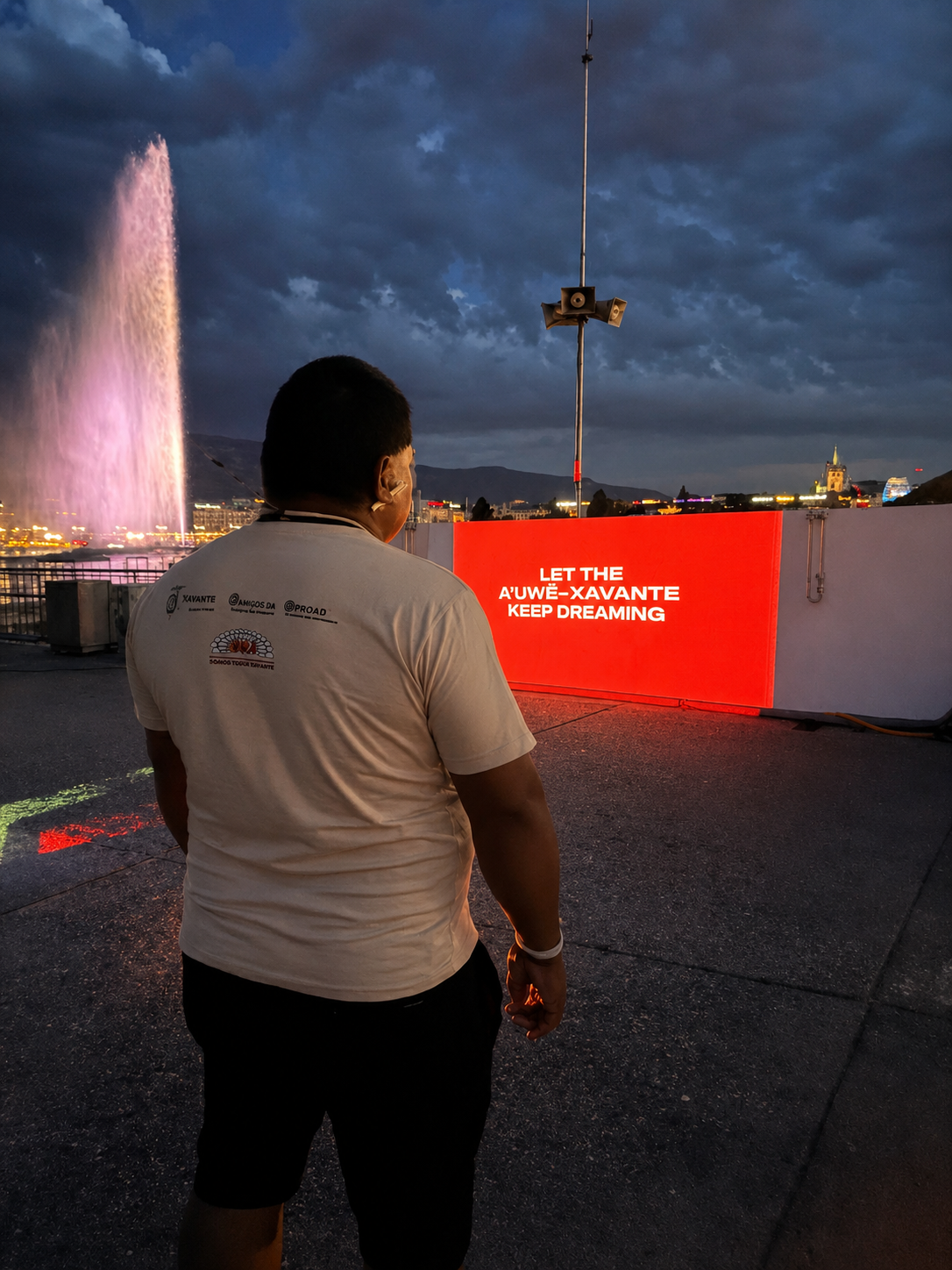
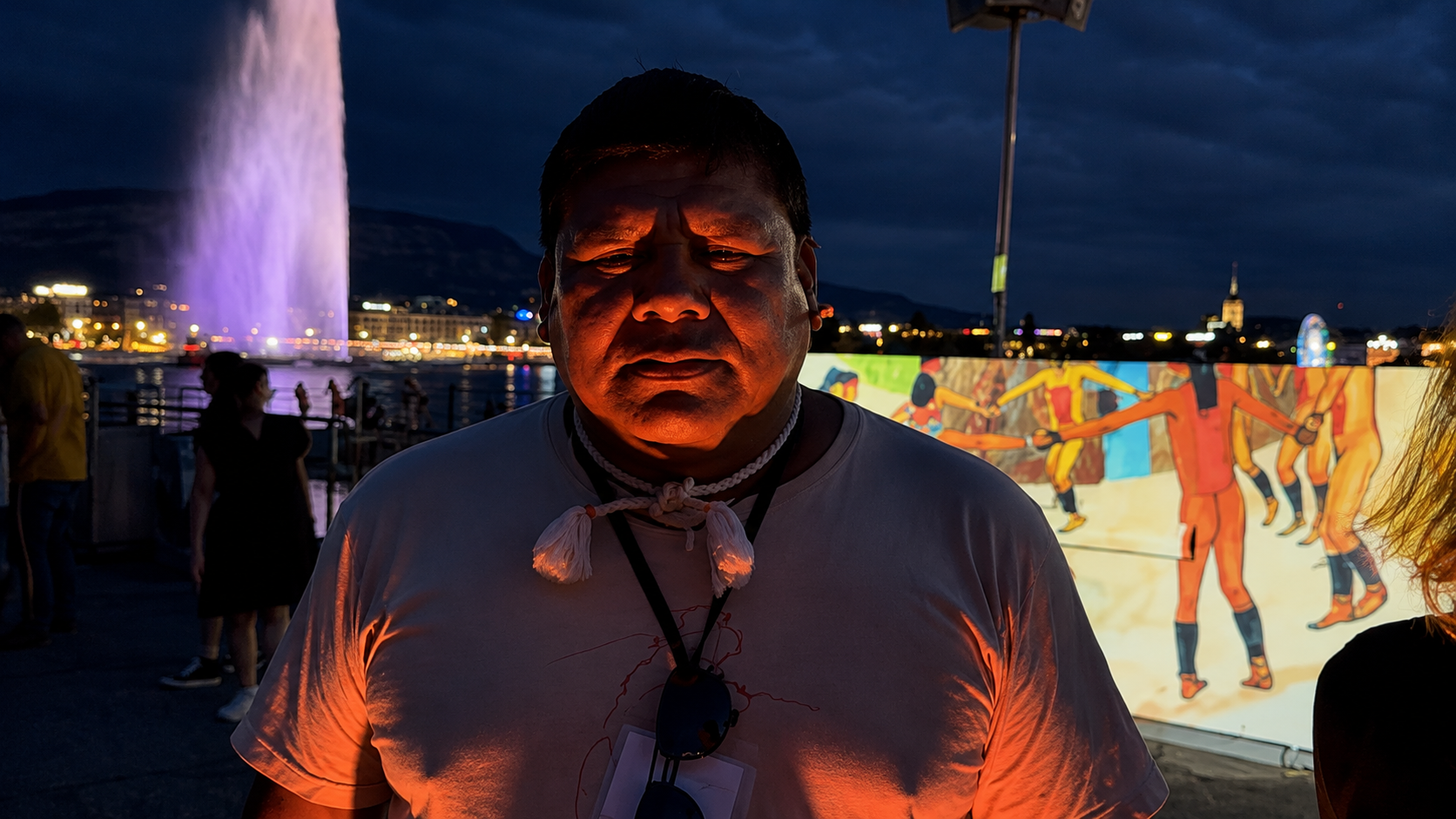
Under a heavy sky, on the shores of Lake Léman in Geneva, Switzerland, red words cut across the landscape of one of Switzerland’s most iconic spaces, which symbolizes social inclusivity, democracy, and public space rights. In front of the Jet d’Eau of Bain de Pâquis, Geneva’s emblematic fountain and a symbol of the city’s international stature, two messages appeared: “Let the A’uwẽ-Xavante Keep Dreaming” / “Deixem o povo A’uwẽ-Xavante continuar sonhando” and “Stop the megaprojects fragmenting Ró, the A’uwẽ-Xavante territory” / “Parem os megaprojetos que fragmentam Ró, o território A’uwẽ-Xavante.”
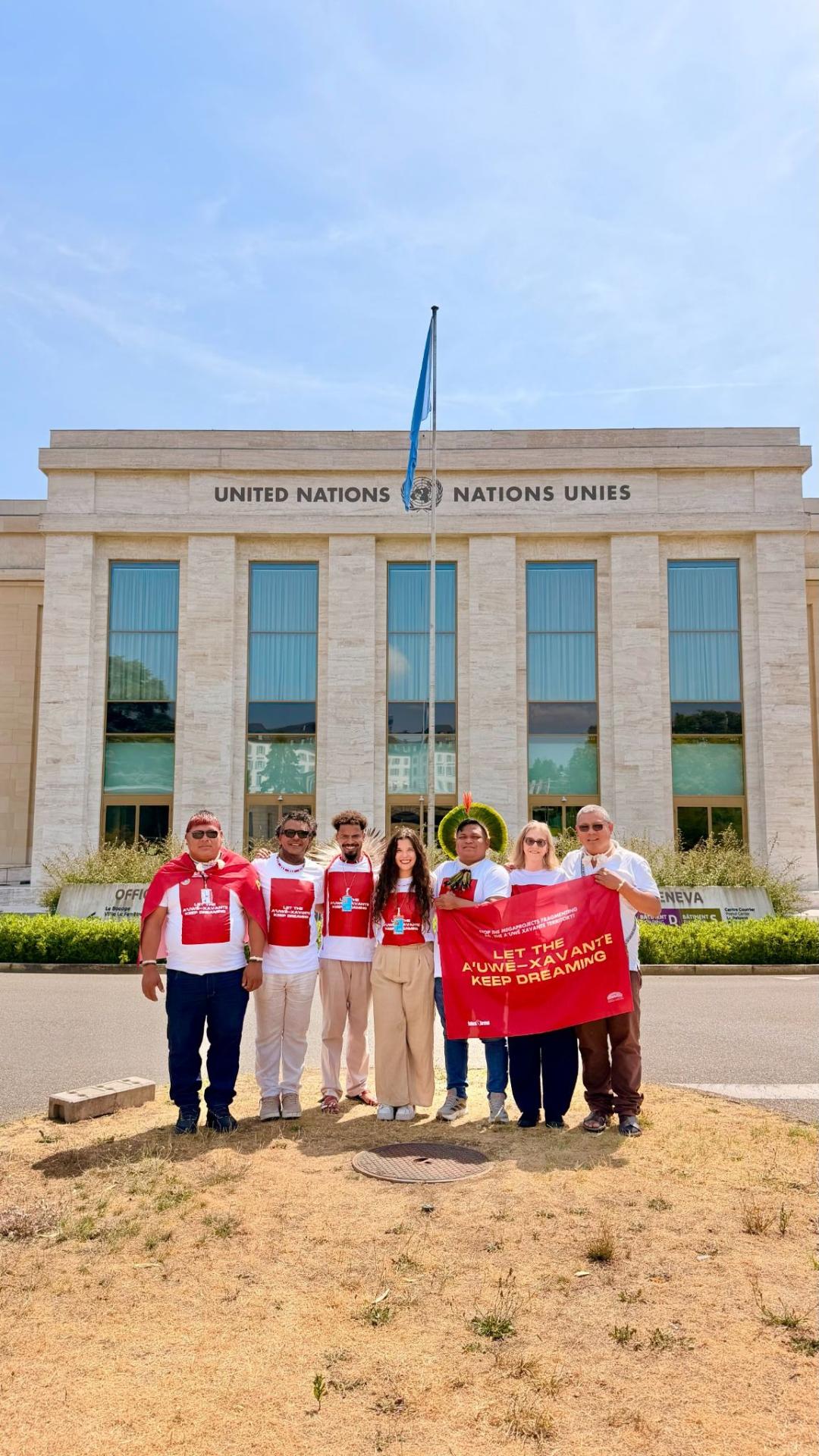
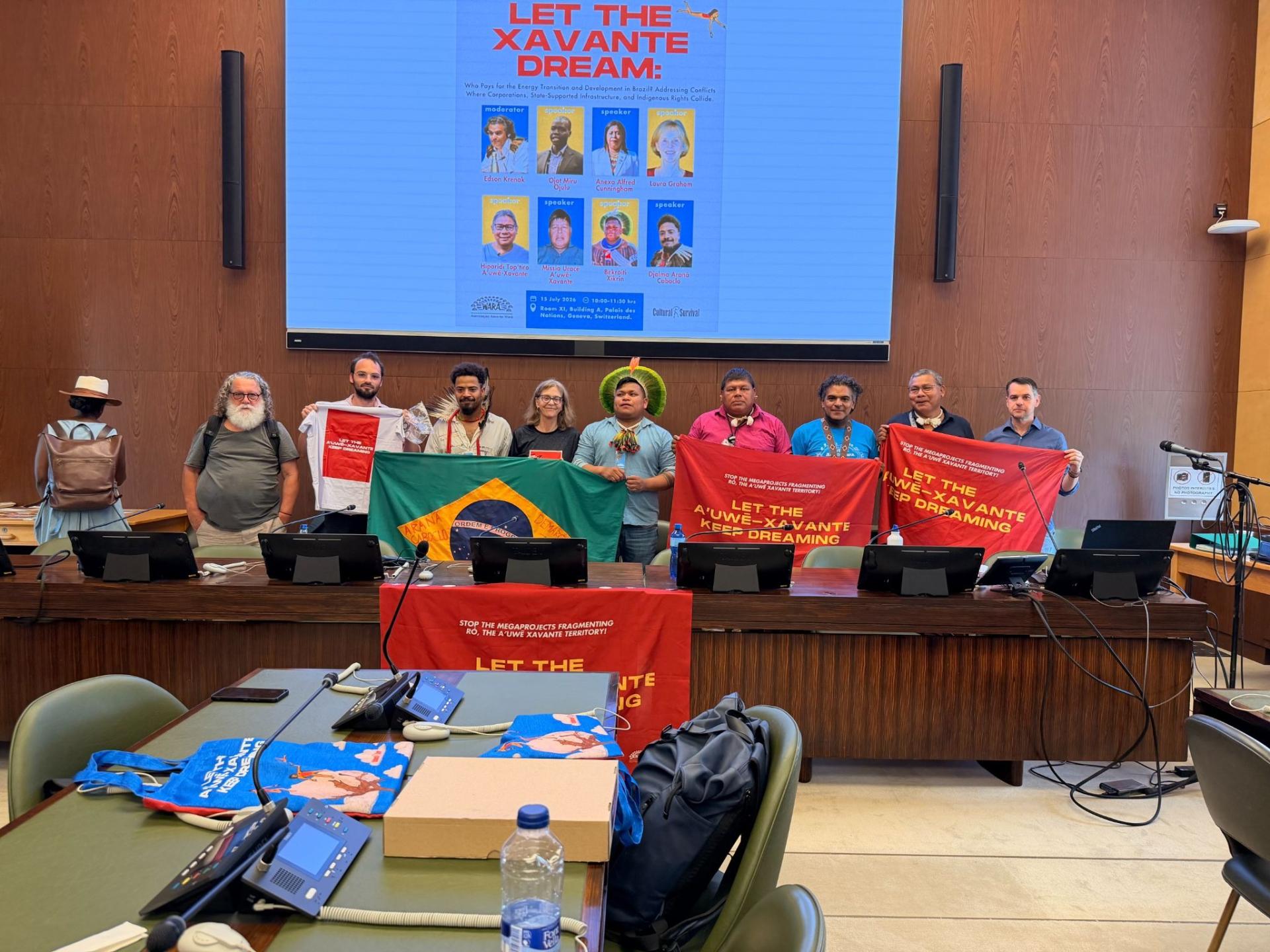
The intervention marked the international launch of a campaign led by A’uwẽ-Xavante leaders, communities, and organizations, in coordination with the Xavante Warã Association, the Mobilization of Indigenous Peoples of the Cerrado, Rede Cerrado, and Cultural Survival. The action took place during the 19th session of the United Nations Expert Mechanism on the Rights of Indigenous Peoples (EMRIP), held from July 13 to 17, 2026, at the Palais des Nations in Geneva.
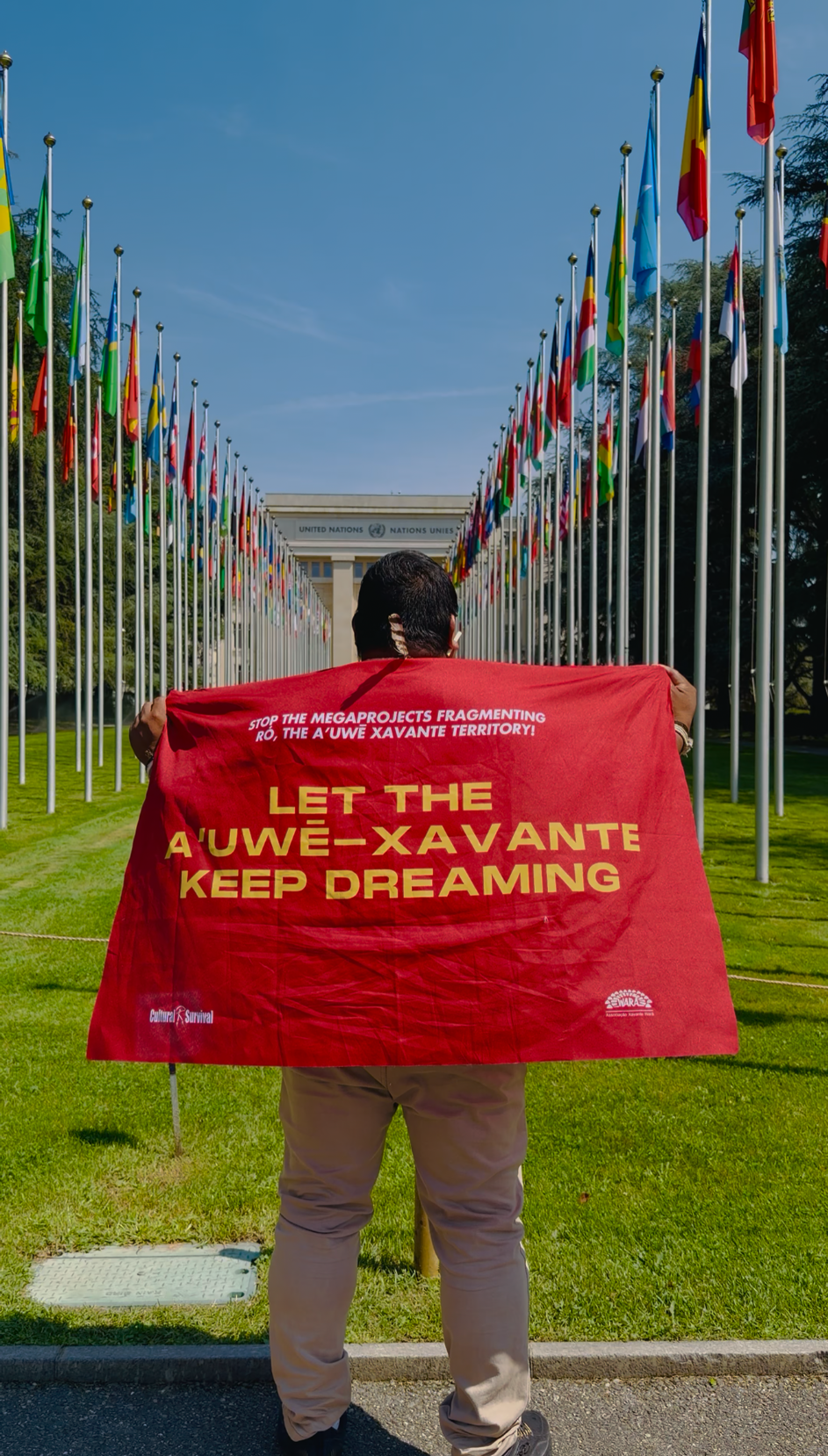
While government representatives debated international policies and standards inside the United Nations, the Indigenous delegation occupied public space to assert an unmistakable message:
There can be no legitimate development when its realization depends on the destruction of the material, spiritual, and political conditions that sustain a people’s existence.
Held before a landmark that Switzerland’s own official representation describes as a symbol of Geneva’s ambition and international reputation, the projection carried the denunciation beyond the conference rooms. In doing so, it transformed a monument of global governance into an A’uwẽ-Xavante platform of testimony and resistance.

Dreaming Is Not a Metaphor; It Is a Foundation of A’uwẽ-Xavante Life
For those encountering the campaign from the outside, the phrase “Let the A’uwẽ-Xavante Keep Dreaming” may sound like a metaphor for hope, freedom, or the future. For the A’uwẽ-Xavante People, however, dreaming is a concrete dimension of social, spiritual, and political life.
In her research on dream performance among the A’uwẽ-Xavante, anthropologist Laura Graham demonstrates that dreams establish relationships among the living, ancestors, and immortal beings. Songs received during sleep are shared with the community and may become collective performances that bring together narrative, music, dance, memory, and cultural continuity. In one episode documented by Graham, an Elder recounts receiving songs from ancestral creators intended for the living, so that by singing them collectively, the A’uwẽ could continue to exist as A’uwẽ-Xavante. The dreamer, therefore, does not appear as the individual owner of a creation, but rather as a mediator of knowledge that belongs to and circulates among the Peoples as a whole.
This understanding is also identified in the dissertation of Indigenous researcher Laerte Rupré Tsimbarana’Õ. By describing the A’uwẽ-Xavante Uptabi as the “People of Dreams,” he explains that dreams make it possible to perceive future events, receive guidance, and learn the names destined for children and grandchildren. Dreaming is therefore part of A’uwẽ-Xavante ways of producing knowledge and educating new generations.
Songs, names, movements, and teachings can emerge from these encounters. Once such knowledge is shared, it no longer belongs only to the person who dreamed it; it becomes part of the community’s living heritage. In recent years, according to the leaders who developed the campaign, dreams have also begun to convey warnings related to growing pressures on their territories. The expansion of railways, highways, hydroelectric projects, monocultures, and other large-scale developments is therefore understood not merely as a physical transformation of the landscape, but as a threat to the relationships that make it possible to receive, transmit, and enact this knowledge.
To defend the right to dream, then, is to defend the territorial conditions that make dreaming possible.
Ró: Cerrado, World, Territory, and Life
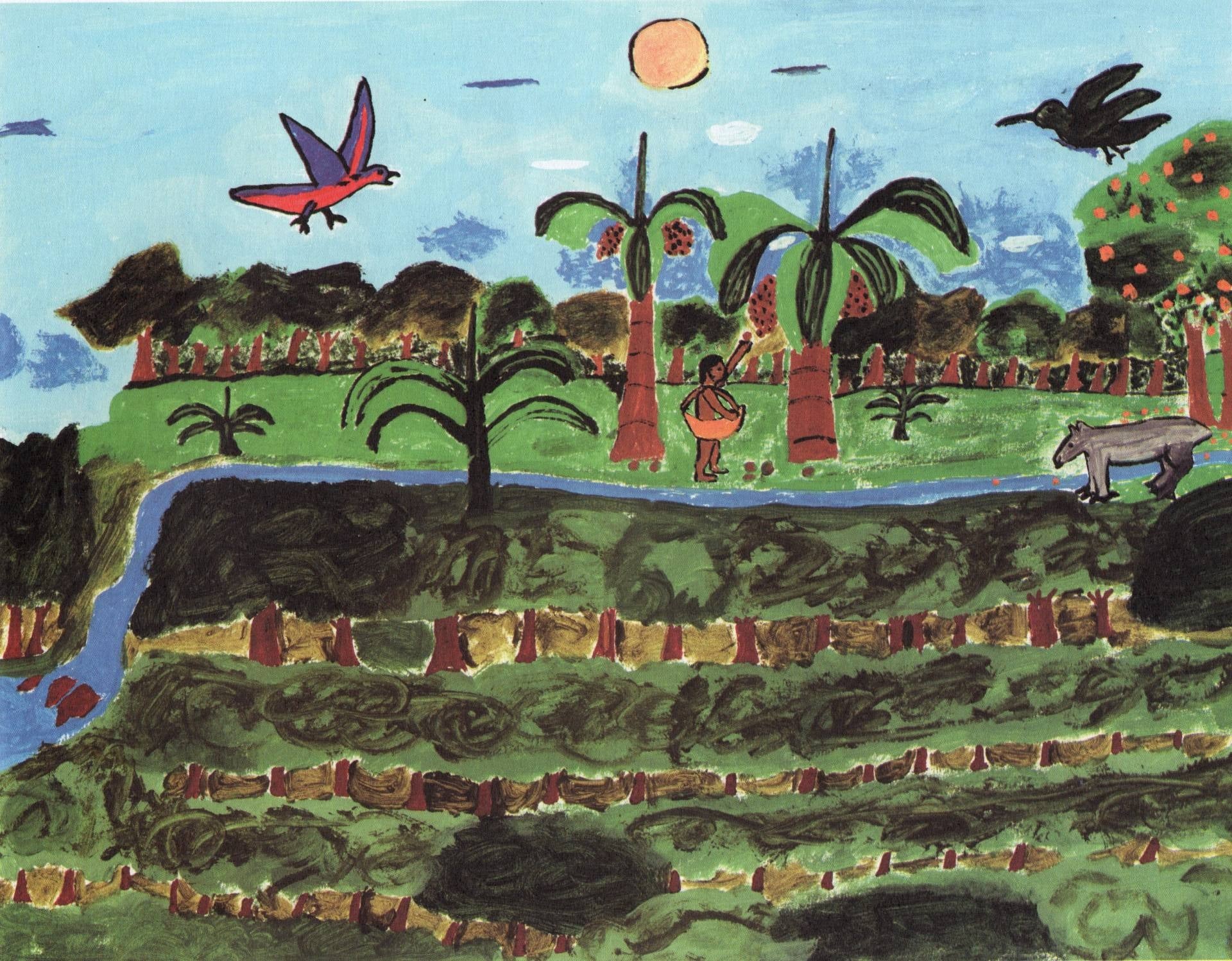
The word Ró also has no full equivalent in the conventional translation of “territory.” Geographer Maria Lucia Cereda Gomide explains that Ró can simultaneously mean “Cerrado, world, our land, everything.” It refers to a territorial and cosmological complex extending from the village space to the Cerrado, its waters, animals, plants, and the spirits that inhabit this world.
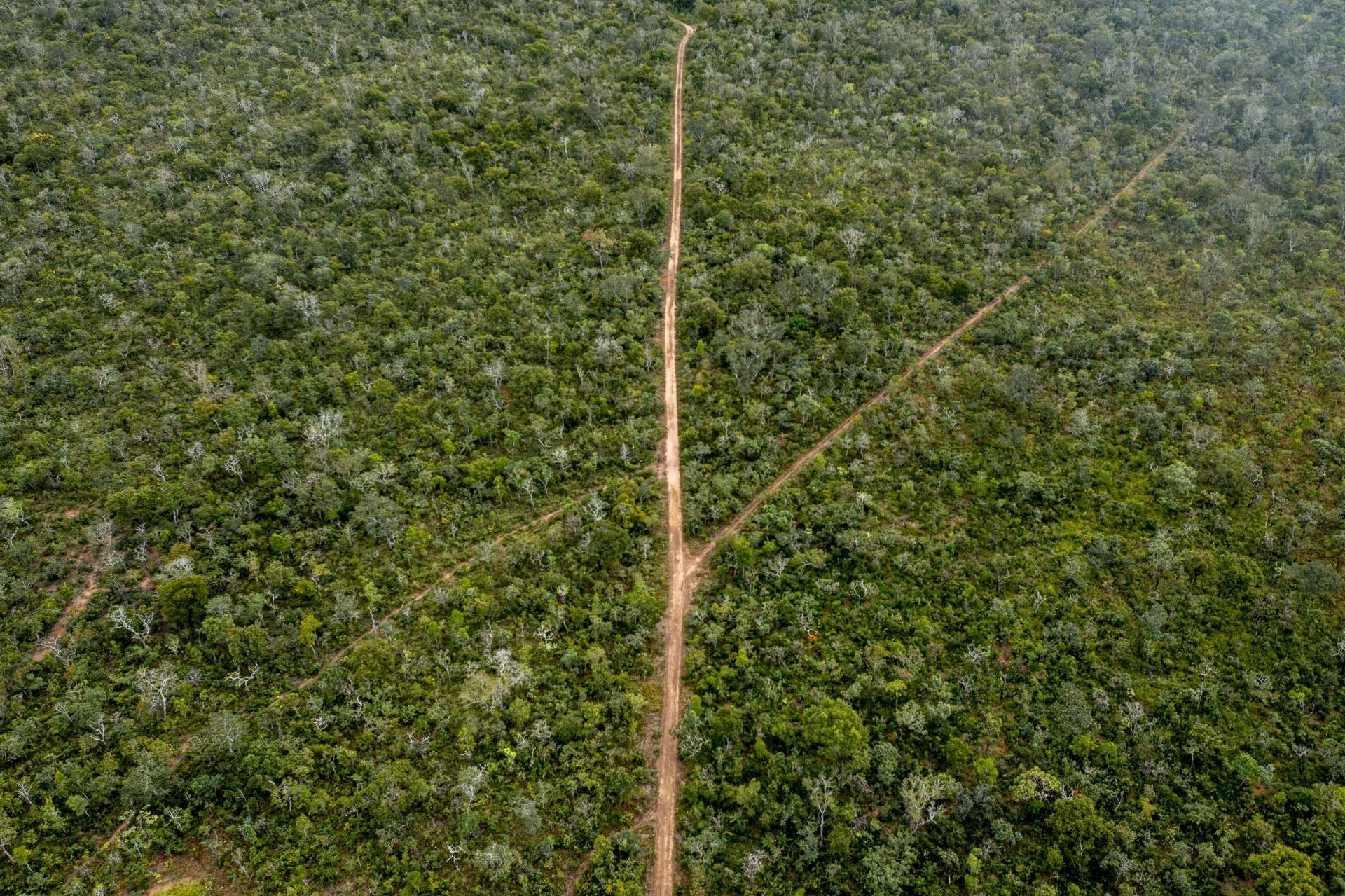
Ró is not an inert backdrop against which A’uwẽ-Xavante society carries out its activities. It is a living network of relationships. It encompasses hunting, gathering, and fishing grounds; ancient villages; burial grounds; rivers and pathways; medicinal plants; ceremonial sites; and ancestral presences that sustain collective life.
A technical note by the Brazilian Anthropological Association emphasizes that A’uwẽ-Xavante-- territoriality depends on practices such as journeys through the Cerrado, the gathering of roots, fruits, and fibers, fishing, hunting, and circuits of reciprocity that connect families, clans, age groups, and different Indigenous Lands. Territorial fragmentation, therefore, compromises not only access to natural resources but also the ability to perform ceremonies, transmit knowledge, and maintain the social and cosmological relationships through which the A’uwẽ constitute themselves as a Peoples.
It is in this sense that the message projected in Geneva goes far beyond the promotional function of a campaign slogan. “Let the A’uwẽ-Xavante Keep Dreaming” is a demand for the protection of the integrity of Ró and for the continuity of A’uwẽ-Xavante existence itself. As A’uwẽ-Xavante leader Hiparidi Top’tiro states in the campaign’s international advocacy document: “Any project that affects one of our territories is a problem for the entire A’uwẽ-Xavante Peoples.”
A Railway for Commodities: Territories, Lives, and Dreams Cut by Tracks
The campaign’s central demand is the protection of the rights of the A’uwẽ-Xavante Peoples in the face of the construction of the Center-West Integration Railway (FICO), also known as EF-354. Presented by the Brazilian government as a strategic project to reduce logistics costs and expand freight rail transport, the railway is part of a broader corridor designed primarily to move soybeans, corn, and other commodities produced in Brazil’s Center-West region. By advancing the project without ensuring adequate Free, Prior and Informed Consultation, the Brazilian State fails in its obligation to protect the rights of Indigenous Peoples.
For the federal government and the agencies responsible for the project, the railway represents a more efficient alternative to road transportation and an opportunity for regional development. Indigenous organizations, researchers, and A’uwẽ-Xavante leaders, however, challenge both the impacts of the proposed route and the manner in which consultation processes have been conducted.
The Center-West Integration Railway (FICO) is a federal railway project of approximately 1,641 kilometers, planned to connect Mara Rosa, Goiás, to Vilhena, Rondônia, under the responsibility of Infra S.A. Its first section, between Mara Rosa (GO) and Água Boa (MT), is currently being built by Vale as compensation for the early renewal of the Vitória-Minas Railway concession, under the supervision of Infra S.A., with completion scheduled for April 2028.
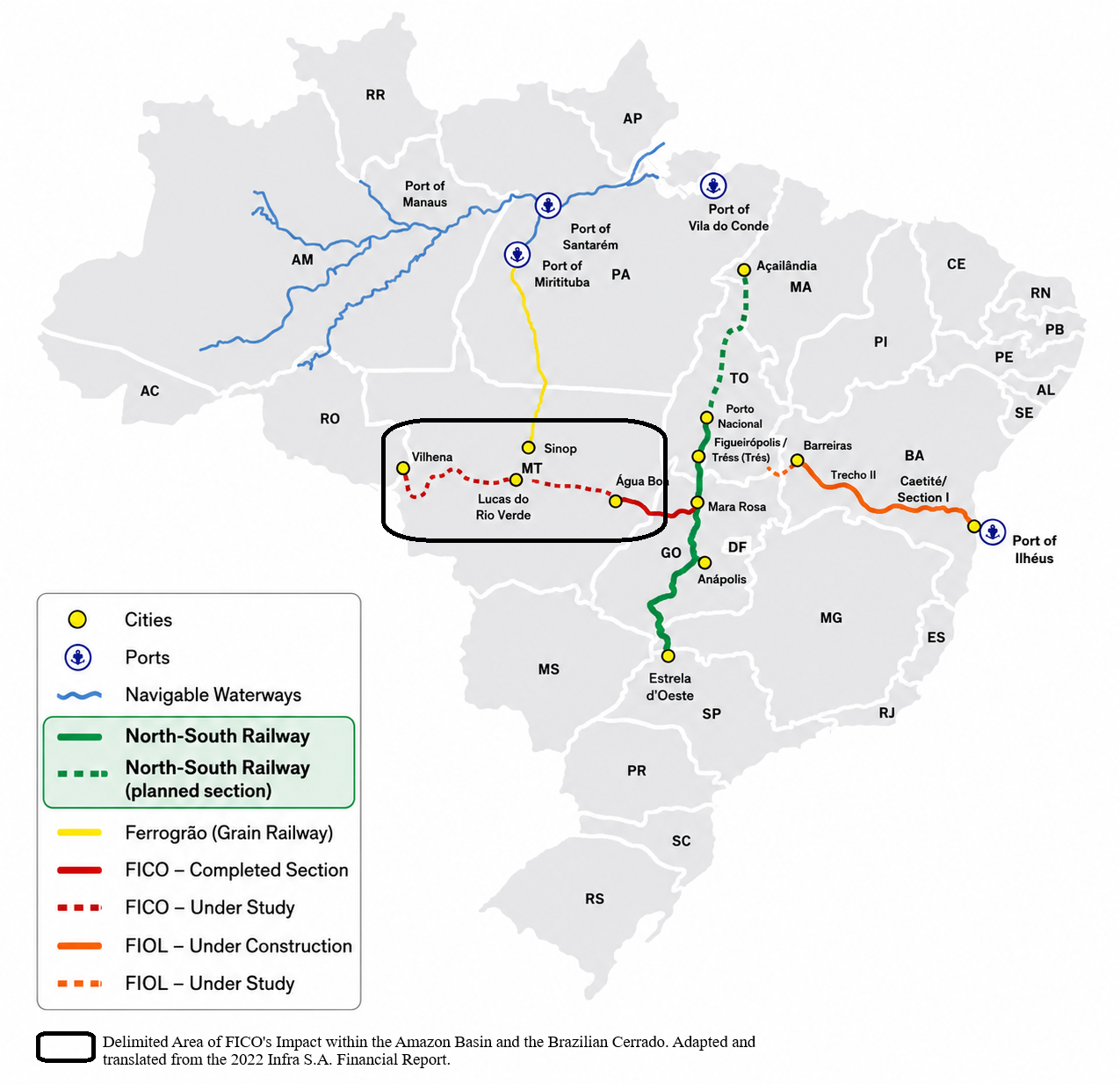
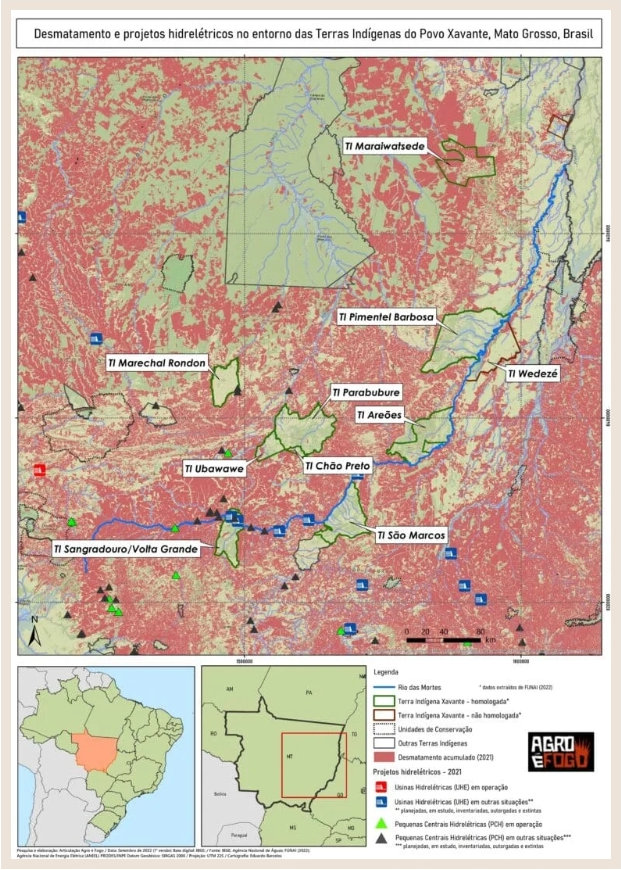
The railway corridor and its associated logistics infrastructure advance through a region marked by the presence of several A’uwẽ-Xavante Indigenous Territories. Studies and administrative processes related to the route have identified Xavante territories within its area of influence, raising serious concerns about territorial, environmental, social, and cultural impacts, as well as about guarantees of the right to Free, Prior and Informed Consultation and Consent (FPIC).
In May 2026, Infra S.A. itself reported that approximately 80 kilometers of the final portion of the section currently under construction depended on the completion of the Basic Environmental Plan – Indigenous Component (PBA-CI) and on negotiations with Xavante communities. This makes clear that the relationship between the railway and Indigenous territories is not merely indirect, but a central issue affecting the project’s implementation.
A technical note issued by the Brazilian Anthropological Association states that the railway affects areas of traditional occupation, claimed lands that remain undemarcated, gathering areas, former villages, burial grounds, waterways, and sacred sites. The document recommends suspending construction and the installation license until adequate consultation has taken place, and altering the route so that the railway does not cross A’uwẽ-Xavante territoriality (ABA, 2025).
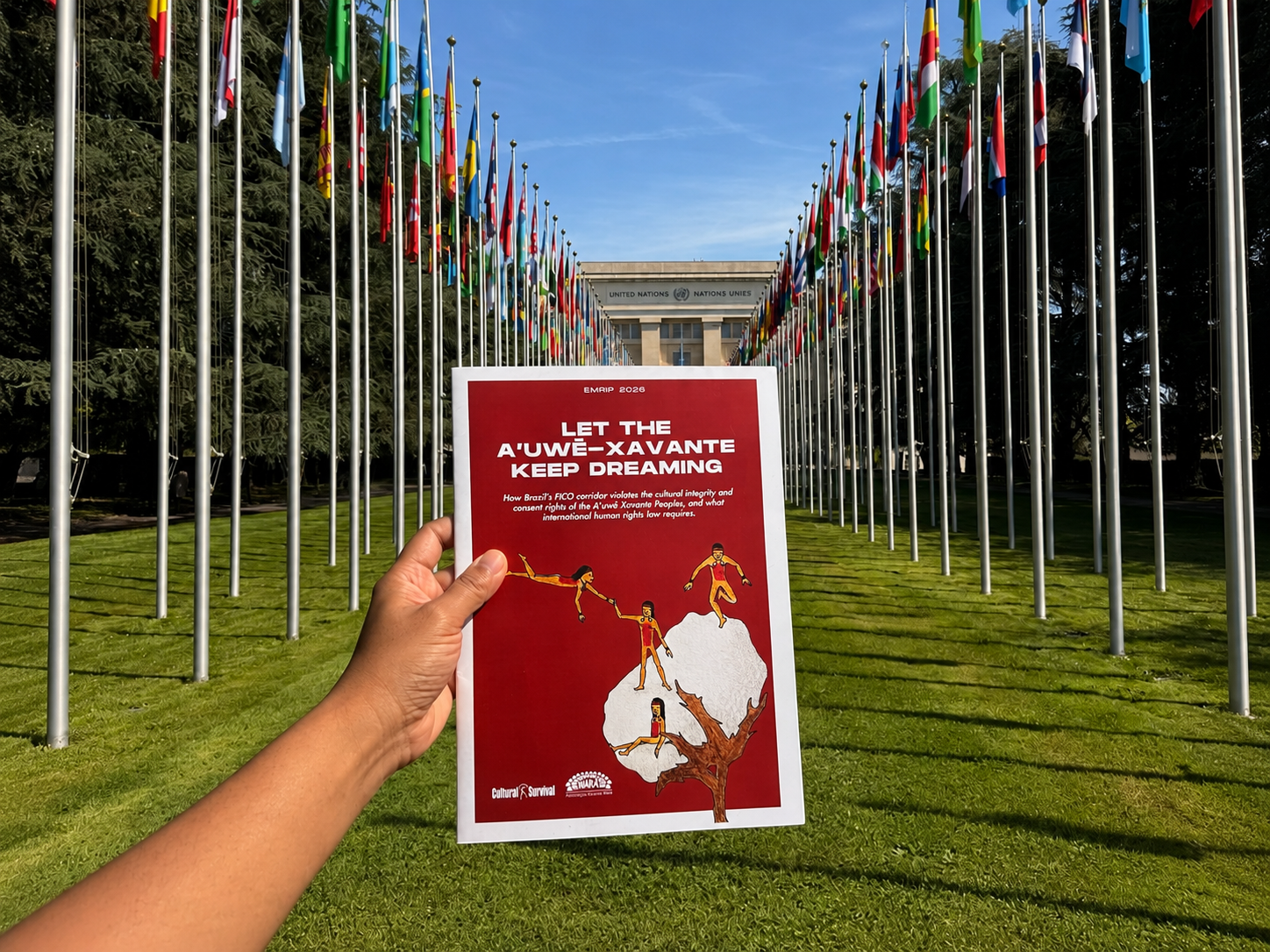
The advocacy brief Let the A’uwẽ-Xavante Keep Dreaming: How Brazil’s FICO Corridor Violates the Cultural Integrity and Consent Rights of the A’uwẽ-Xavante Peoples, and What International Human Rights Law Requires, available here, was launched in Geneva and argues that FICO cannot be assessed merely as an isolated railway line. It is part of a broader architecture of highways, railways, waterways, and export corridors that is likely to intensify commodity flows, non-Indigenous occupation, and economic pressure on already fragmented territories.
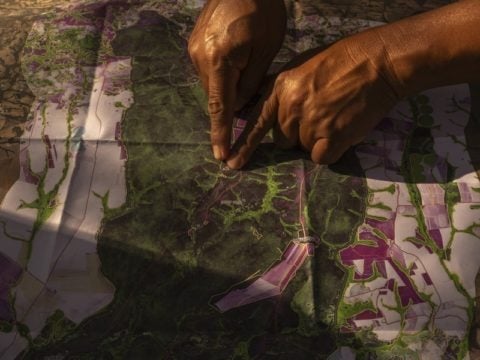
From an A’uwẽ-Xavante perspective, therefore, the railway does not simply connect municipalities, production zones, and ports. It can separate villages, interrupt traditional routes, place hunting and gathering areas under pressure, and cut across relationships that cannot be contained within the administrative boundaries drawn by the State.
The tracks may be mapped as a line across official territory. For the A’uwẽ-Xavante, however, what they risk cutting through is Ró: territory, world, life, and the conditions that make dreaming possible.
Consultation Under Dispute
In February 2026, the Coordination of Indigenous Organizations of the Brazilian Amazon (COIAB) denounced irregularities in the consultation process related to FICO. According to the organization, meetings scheduled for the Parabubure, Marechal Rondon, Areões, and Pimentel Barbosa Indigenous Lands were held at very short intervals, leaving communities insufficient time to conduct internal discussions in accordance with their own decision-making processes.
COIAB also documented reports of pressure on Indigenous leaders, the absence of independent technical assistance, and communication difficulties among communities distributed across territories that have historically been fragmented. The Federal Public Prosecutor’s Office (MPF) opened an administrative proceeding to monitor the Free, Prior and Informed Consultation process in the context of the project.
The right to consultation is not an administrative concession. International Labour Organization Convention No. 169 requires governments to consult the Peoples concerned, through their representative institutions, whenever legislative or administrative measures may directly affect them. Such consultations must be carried out in good faith, in a form appropriate to the circumstances, and with the objective of achieving agreement or consent. In Brazil, the Convention was originally promulgated through Decree No. 5,051 of April 19, 2004, and its provisions were subsequently consolidated under Decree No. 10,088 of November 5, 2019.
The United Nations Declaration on the Rights of Indigenous Peoples likewise establishes that States must consult and cooperate in good faith with the Indigenous Peoples concerned, through their own representative institutions, before approving projects affecting their lands, territories, or resources, in order to obtain their Free, Prior and Informed Consent (FPIC).
Consultation does not simply mean informing Indigenous Peoples that a project will proceed. It requires prior access to information, respect for community decision-making timelines, freedom from coercion, participation by the Peoples’ legitimate institutions, and a genuine possibility to influence decisions, including the ability to withhold consent from measures that could compromise their future.
Different Territories, One Shared Struggle
The A’uwẽ-Xavante presence at EMRIP did not stand alone. During the 19th session of the United Nations Expert Mechanism on the Rights of Indigenous Peoples in Geneva, representatives of different Indigenous Peoples from Brazil brought forward denunciations that, although rooted in distinct territories, revealed the same underlying structure: large-scale development projects continue to advance over Indigenous territories, while the environmental, social, and cultural costs of so-called development remain concentrated on the communities that have historically protected these regions.
While A’uwẽ-Xavante delegations denounced the impacts of the Center-West Integration Railway (FICO) and demanded respect for Free, Prior and Informed Consultation and Consent, representatives of the Aranã Caboclo and Xikrin Peoples were also present, bringing to Geneva conflicts linked to the expansion of mining in their territories.
In the A’uwẽ-Xavante case, the campaign’s own documentation demonstrates that the railway is part of an infrastructure system designed to transport commodities and that it crosses a region marked by several Indigenous territories, affecting traditional routes, waters, gathering areas, ancient villages, burial grounds, and sacred sites. The railway, therefore, cannot be understood merely as a line connecting points on a map: it interferes with a much broader territoriality, constituted through relationships among communities, the Cerrado, waters, animals, plants, ancestors, and places fundamental to the continuity of Ró.
In the Jequitinhonha Valley, in Minas Gerais, the Aranã Caboclo Peoples face another expression of this same model: the rapid expansion of lithium mining. Approximately 85 percent of Brazil’s lithium reserves are concentrated in the Jequitinhonha Valley, a region of traditional Aranã Caboclo occupation. The territory claimed by the Peoples has remained in the demarcation process since 2005, while new mining projects and infrastructure associated with the extraction of this so-called “energy transition mineral” continue to advance across the region.
The contradiction is particularly striking because lithium is internationally promoted as a strategic raw material for batteries, electric vehicles, energy storage systems, and the decarbonization of the economy. For the Peoples living in the territories from which these minerals are extracted, however, there can be no just energy transition when reducing emissions elsewhere in the world depends on transforming Indigenous and traditional territories into new sacrifice zones.
The same contradiction ran through the A’uwẽ-Xavante campaign in Geneva. Technologies, railways, mines, and supply chains considered strategic to a low-carbon economy can continue to reproduce colonial relations when they are implemented without the effective participation of affected peoples, territorial protection, and respect for Free, Prior and Informed Consent. Changing the energy source or the mineral considered strategic does not, in itself, alter the power relations that structure its extraction.
In response to the advance of mining in the Jequitinhonha Valley, the Aranã Caboclo have also helped build responses that extend beyond the defense of a single territory. Together with other Indigenous Peoples, Quilombola communities, social movements, and organizations across the region, they participated in the mobilization that contributed to the drafting of a bill to recognize the Jequitinhonha River as a subject of rights.
Bill No. 5,609/2026, introduced by State Representatives Beatriz Cerqueira and Leninha, recognizes the Jequitinhonha River, throughout its entire course, as a subject possessing intrinsic rights and provides for the establishment of a Council of Guardians, with the participation of Indigenous Peoples, Quilombola communities, traditional Peoples and communities, civil society, and public authorities. As of August 2026, the proposal was before the Constitution and Justice Committee of the Legislative Assembly of Minas Gerais, awaiting the appointment of a rapporteur.
If approved by the Legislative Assembly and subsequently enacted into law, the proposal could establish an important precedent for the recognition of the Rights of Nature at the state level, strengthening the legal protection of the river while recognizing that its existence cannot be separated from the Peoples and communities who have historically lived along, cared for, and built cultural, territorial, and spiritual relationships with its watershed.
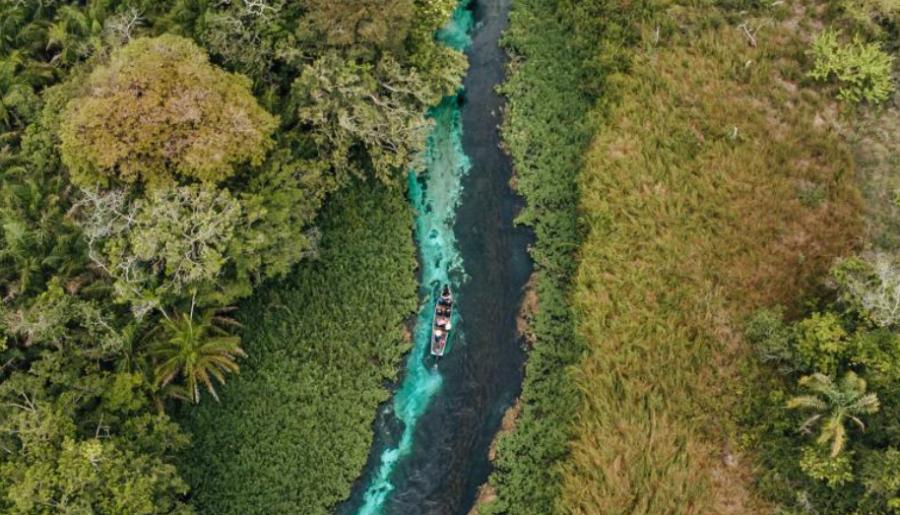
In southeastern Pará, the Xikrin do Cateté People face an even more acute manifestation of mining's impacts. The Xikrin do Cateté Indigenous Territory, home to approximately 1,700 Indigenous people, is crossed by the Cateté and Itacaiúnas Rivers and is surrounded by Vale mining operations. These include Onça Puma, a nickel mining operation, as well as other major mining projects installed throughout the Carajás region.
The impacts denounced by the Xikrin directly affect what sustains life in the territory: the water and their own bodies. A 2024 study involving 720 Xikrin do Cateté individuals found that 99.7 percent of those analyzed had at least one chemical element above reference levels, while 98.5 percent had excessive concentrations of at least one toxic or potentially toxic element. The elements detected included manganese, nickel, iron, and cobalt, as well as highly toxic substances such as lead, mercury, barium, and arsenic. Of the 121 children analyzed, all showed exposure to multiple chemical elements. The results were subsequently published in a scientific study in 2026.
The severity of the case led Brazil’s Federal Public Prosecutor’s Office (MPF) to file a lawsuit in 2025 against Vale, the federal government, and the State of Pará. According to the MPF, technical studies indicate the presence and dissemination of heavy metals in the Cateté and Itacaiúnas Rivers and the exposure of the Xikrin population, with impacts on health, fishing, water consumption, and other practices essential to community life. In February 2026, the agency also requested that a federal court freeze R$60 million in Vale assets to finance independent technical studies and environmental restoration measures for the Cateté River.
Vale disputes the causal link between the Onça Puma operation and contamination of the Cateté River. The company states that reports produced by court-appointed experts concluded that the operation was not the source of the contamination, and also points to other possible pollution sources and the natural occurrence of metals in the region’s geology. The controversy remains at the center of ongoing legal proceedings and disputes over the independent production of knowledge about the impacts of mining.
For the Xikrin, however, the issue cannot be reduced to the physical boundaries of a mine or to the isolated identification of a single source of contamination. When water can no longer be safely used for drinking, fishing, bathing, and feeding the community, the impact cuts simultaneously across territory, health, food, culture, and the very possibility of collective continuity.
Although soy, lithium, nickel, iron, and other minerals belong to different economic chains, the conflicts presented in Geneva converge around a fundamental issue: Indigenous territories continue to be surrounded or crossed by mines, railways, highways, transmission lines, and logistics corridors designed primarily to extract and transport resources toward national and international markets.
From the A’uwẽ-Xavante Cerrado to the Jequitinhonha Valley and the Xikrin Amazon, the commodities, projects, and corporations may change. So too does the immediate form of violence: in one territory, a railway fragments pathways and relationships; in another, mining advances across an Indigenous region whose territorial claims remain unresolved; in another, metals and potentially toxic elements are found in rivers and in people’s bodies.
The underlying structure of the conflict, however, remains remarkably similar: territories that sustain life are converted into spaces of extraction, transit, and export.
In the face of this reality, the Brazilian State has failed to adequately and preventively guarantee the rights of Indigenous Peoples affected by large-scale development projects. Protecting these rights cannot begin only after a river has been contaminated, a mine opened, or railway tracks laid. It requires Indigenous Peoples to participate from the outset in decisions that can profoundly transform their territories and ways of life.
For this reason, the voices gathered at EMRIP pointed toward a demand that extends beyond any individual conflict. The question is not merely where a railway should pass, how a mine should operate, or what forms of compensation should be offered after the impacts have already occurred. It is about recognizing that Indigenous Peoples have the right to participate in decisions concerning projects that transform their territories, to establish their own development priorities, and to determine the futures they wish to build.
Different territories, then, but one shared struggle: to ensure that no railway, mine, or project advanced in the name of development, decarbonization, or the energy transition is placed above Indigenous Peoples’ rights to territory, self-determination, consent, and the continuity of life.
When the City Becomes an Extension of Indigenous Territory
Carrying out the intervention in Geneva carried a particular symbolic weight.
The city is home to the United Nations Office at Geneva and to numerous institutions connected to the international human rights system. Inside the Palais des Nations, Indigenous representatives are often given only a few minutes to present territorial conflicts shaped by decades of violations. Outside its walls, the projection broke through that limitation: the urban landscape itself became an extension of the assembly.
By visually occupying the cityscape, the A’uwẽ-Xavante temporarily reversed the usual direction of the gaze. Indigenous Peoples were no longer the ones being observed, studied, or translated by European institutions. Instead, Europe itself was being addressed by a message coming from the Cerrado.
The intervention was also a reminder that Indigenous rights cannot remain confined to international declarations. They must have concrete consequences for environmental licensing processes, the banks that finance infrastructure projects, corporate supply chains, export contracts, and the decisions of the countries that consume the commodities transported through these corridors.
A Message to Europe: Coloniality Also Travels by Rail and Electric Car
The campaign also challenges the contradictions of the so-called green transition.
Railways, logistics corridors, mining operations, and large-scale infrastructure projects are frequently presented as necessary instruments for building a low-carbon economy. Yet when they advance without the effective participation of affected Peoples, they can reproduce long-standing colonial mechanisms: territorial appropriation, the concentration of economic benefits, and the transfer of environmental and social costs onto Indigenous Peoples and traditional communities.
The International Labour Organization itself has warned that infrastructure, transportation, climate mitigation, and renewable energy projects can cause harm when Indigenous Peoples are excluded from decision-making processes. According to the ILO, a just transition requires recognition of their rights, institutions, knowledge systems, and priorities.
The United Nations has likewise warned that the expansion of supply chains associated with the energy transition is taking place, to a significant extent, within or near Indigenous territories. Without territorial protection, meaningful participation, and consent, replacing fossil-fuel technologies may leave the political logic of extractivism fundamentally unchanged.
The projection in front of the Jet d’Eau confronted precisely this paradox. Europe, historically implicated in the colonization of Indigenous territories, remains connected to these regions through networks of finance, consumption, mining, agribusiness, and export infrastructure. Changing the energy source without transforming these relationships is not enough. A transition that continues to treat Indigenous territories as sacrifice zones may be technologically new, but it remains politically colonial.
No Future Can Be Built Against the Right to Exist
For a few minutes, the distance between the Cerrado of Mato Grosso and one of the world’s principal centers of diplomacy seemed to disappear. The words projected across Geneva illuminated a struggle that extends far beyond a single railway. What is at stake is who has the power to define development, whose lives are considered expendable, and which forms of knowledge are allowed to shape the future.
For the A’uwẽ-Xavante, a fragmented territory does not simply mean a reduction in physical space. It means the interruption of pathways, songs, ceremonies, memories, and ancestral relationships. It means diminishing the conditions through which knowledge can be received and transmitted to future generations. The message carried to Europe is direct: a Peoples can continue dreaming only when they have a territory in which to live, walk, sing, teach, and encounter their ancestors.
No megaproject can claim to represent the future if its existence depends on destroying the dreams of those who have always cared for the land.
Stand with the A’uwẽ-Xavante Peoples! Sign the petition and help defend Ró, their right to self-determination, and their right to keep dreaming.