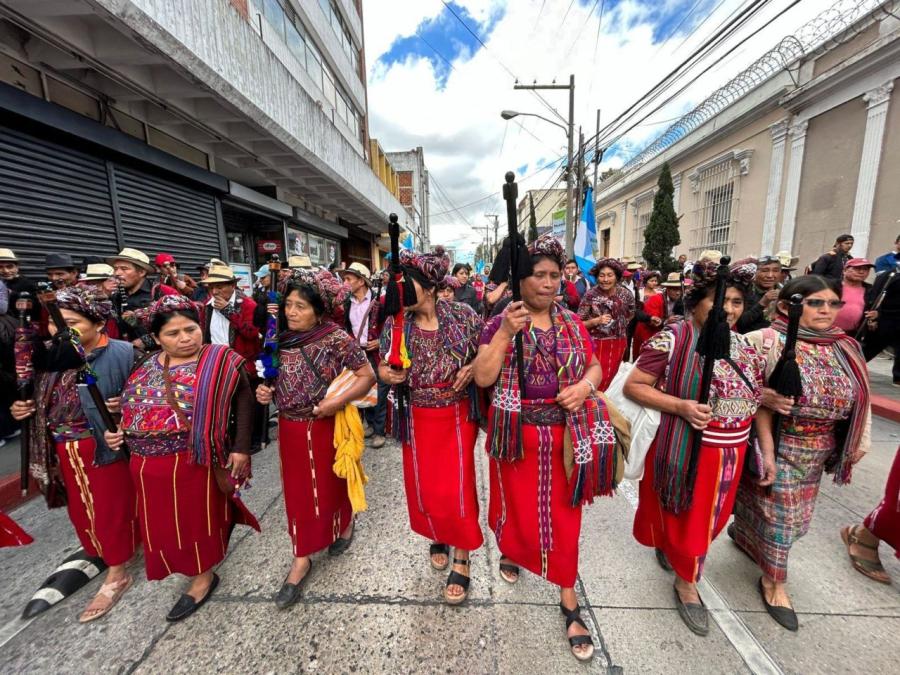
On July 7–8, 2012, members of 15 community radio stations partnering with Cultural Survival’s radio network across Guatemala gathered for a workshop in the Mujb’ab’l Yol training center in San Mateo, Quetzaltenango. The workshop focused on the difficult topic of historical memory of Guatemala’s 36-year armed conflict, which claimed the lives of 200,000 mostly Indigenous people. With the goal of using self-expression as a tool to alleviate trauma, participants wrote and
recorded poems about the armed conflict in Spanish and their native Mayan languages. Leading the workshop was Alberto “Tino” Recinos (Mam), Cultural Survival’s citizen participation coordinator, who ran the guerilla radio station Voz Popular during the armed conflict. Recinos founded a community radio station after the signing of the Peace Accords in 1996.
Below, read one of the poems written by ex-combatant Rigoberta Gonzalez Sul, and member of the radio station Radio Ixchel. Written in Spanish, the poem is a call to women to be strong in the face of the traumas they experienced in the war.
Romper el Silencio
By Rigoberta González Sul
36 años inolvidables y dolorosas,
sembró lágrimas y tristezas.
Indujo a la mujer en el silencio y traumas.
Impidiendo el desarrollo integral de la mujer
en su identidad y valores.
Mujer, basta. Ya
ya no más lágrimas.
Ya no más violación a nuestros derechos humanos
Rompamos el silencio, alcemos nuestras voces libremente.
Breaking the Silence
By Rigoberta González Sul
36 unforgettable and painful years,
planted tears and sadness.
It led the women into silence and trauma,
Preventing the integral development of women
in their identity and values
Women, Stop.
No more tears,
No more violations of our human rights.
Let’s break the silence, let us raise our voices freely.