By Suresh Sayanju, Station Manager, Radio Janasanchar 107.9 FM, Nepal
For generations, the Newar Peoples of the Kathmandu Valley have lived closely with nature. But today, beneath the capital city’s growing concrete landscape, a quiet crisis is unfolding. Rapid urbanization, rising temperatures, and unpredictable weather are doing more than harming the environment: they are erasing the centuries-old culture and way of life of the valley’s original inhabitants.
Historically, Newar civilization relied on an advanced water system made up of hiti (stone spouts), pukhu (ponds), and inar (wells). These were not just water sources; they were also sacred cultural and religious spaces. Today, many of these systems have disappeared, crowded out by buildings and dried up by changing rainfall. Because the Newar community lives in the capital city, its struggles are often overlooked. Most climate change support in Nepal goes to rural areas, leaving urban Indigenous communities with little or no help.
A resident and Newar Peoples rights activists warns that changing weather patterns are striking at the heart of Newar identity and pushing families away from their ancestral practices. “Climate change has had a major impact on the cultural lifestyle of the Newar community,” said Renu Twayanabasu, a local resident of Bhaktapur. “The original civilizations and rituals developed over generations are disappearing. The main reason for this is the shift in human lifestyle brought about by climate change.”
For farming families, climate change is also a direct threat to food security and income. Unpredictable, heavy rainfall during the planting and harvest seasons has damaged crops and changed how families eat. Aditya Duwal, a member of a traditional Newar farming family, explained how these changes have affected daily meals and traditions: “I am the child of a farming family, but nowadays my family doesn’t work in the fields much. Because of this, our home serves market-bought food rather than our own products. We have developed a habit of eating Mo:Mo (dumplings) and chowmein instead of rotis and maize-soybeans…making me feel that the original identity of the Newar community is starting to fade,” Duwal said.
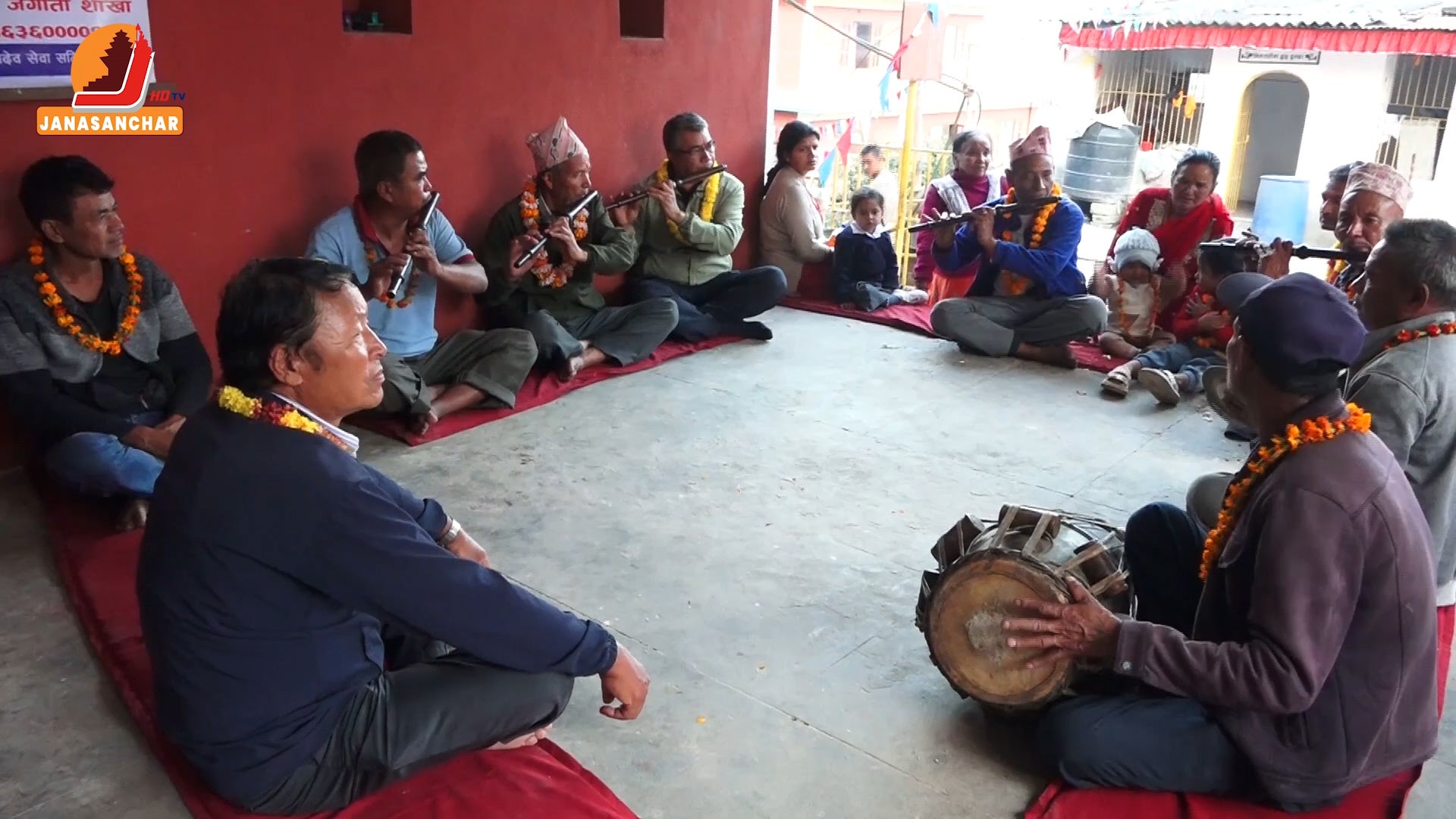
Pooja Sakhakarmi also expressed deep concern. “The impacts of climate change have increased due to human activities, causing traditional culture and civilization to disappear,” Sakhakarmi said. The effects of climate change are especially visible during major Indigenous festivals. Rituals like Sakimana Punhi, a full moon festival celebrated in late autumn to mark the end of the harvest, depend on regular farming cycles. When bad weather damages crops, it also threatens the Indigenous traditions tied to them. Newar community members say the global forces causing these problems feel far removed from the damage they face at home. “The Newar community is an Indigenous nationality rich in art, cuisine, and culture,” said Meena Sayanju.
“However, climate change has altered the cultural lifestyle that has existed since ancient times. It is said that pollution from factories in large countries and the increasing use of chemicals and development trends are equally affecting the civilization of the Newar Indigenous community.”
With little visible government action, Newar communities say they must step in to protect their traditions. Rather than treating climate change only as a scientific issue, they are calling for local dialogue and practical solutions. “Issues that should be addressed by the government are being raised from the community level,” said Kumar Maharjan of Bhaktapur. “This is a topic that must be brought up within every community. Nepal is on the front lines among countries affected by climate change.”
Maniram Shrestha said a clean environment directly benefits human health and saves families money. “If there is public awareness, the environment will naturally become clean and improved,” Shrestha said. “When the environment is healthy, people will be healthy, hospital visits will decrease, and expenses will be reduced.”
As warning signs for the valley’s ancient traditions grow, the urgency to protect what remains is rising. Activists and residents are calling for future climate policies to include urban Indigenous communities so they are not left out of survival plans. “Global climate change activities are showing warning signs for our centuries-old cultural lifestyles and traditions,” said Rijan Maharjan. “We must preserve our cultural and traditional originality at any cost.”
In 2025, Radio Janasanchar received a grant from Cultural Survival’s Indigenous Community Fund, which provides opportunities for journalism, broadcasting, audio editing, technical skills, and more for community media from Indigenous communities around the world. In 2025 CS awarded a total of $502,000 to 63 Indigenous communication projects that will benefit Indigenous Peoples in 29 countries: Argentina, Bangladesh, Bolivia, Botswana, Brazil, Chile, Ecuador, Colombia, United States of America, Philippines, Guatemala, India, Kenya, Mexico, Nepal, Peru, South Africa, Democratic Republic of Congo, Indonesia, Honduras, Mali, Nicaragua, Cambodia, Chile, Canada, Panama, Paraguay, Papua New Guinea, New Zealand, Nicaragua, and Tanzania.