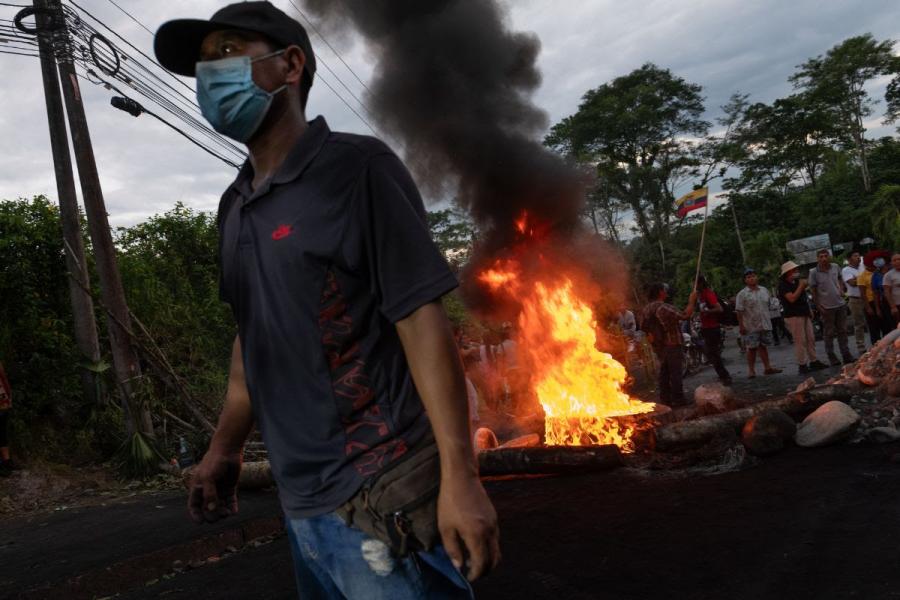
In late January 1995, the Shuar and Aguaruna Indians along the border between Ecuador and Peru were forcibly relocated into refugees camps while Peruvian and Ecuadorian soldiers battled each other in hilly forests between the Cordillera del Condor and the Cenepa River. In 1942 international arbitrators ended a border war between Ecuador and Peru by awarding Peru nearly all of Ecuador's Amazon region (including the deep-water port of Iquitos), and except for a short series of skirmishes a decade ago, each anniversary generally produces only a series of speeches and rock-throwing at the Peruvian and US Embassies. This year's fighting, however, has displaced several thousand Indians and destroyed their subsistence gardens along the rainforest border.
On February 6th Reuters News Agency cited a British Broadcasting Corporation report from the press office of Ecuador's Presidential Palace. The Ecuadorians accused the Peruvian military of "using local Indians as mine sweepers and shields, forcing them to walk in front of [Peruvian] troops to detonate mines and to protect them from incoming [Ecuadorian] fire." Indicating that such acts would be gross violations of non-combatants' human rights, Cultural Survival submitted formal requests for clarification to the Peruvian and Ecuadorian foreign ministries. As of March 6th, no response had been received. Meanwhile, despite a cease-fire agreement, reports of sporadic fighting and bombings continue.
Article copyright Cultural Survival, Inc.