
United Nations Permanent Forum on Indigenous Issues
23rd Session
New York, April 15-26, 2024
Theme 5(g): Thematic dialogues, including on the financing of Indigenous Peoples’ work and participation in the context of, inter alia, development, climate, environment and biodiversity
Presented by Jurandir Seridiwê Xavante, representing the Xavante Associations Warã, Eténhiritipa, Pimentel Barbosa, Ö'a'a, Mobilization of Indigenous Peoples of the Cerrado (MOPIC) and Cultural Survival
February 21 is International Mother Language Day. It was first proclaimed in 1952 as "Language Movement Day" by Dhaka University students in Bangladesh (formerly East Pakistan) who protested the suppression of their Bengali language. Police and military forces opened fire, killing many young people in attendance.
By Edson Krenak (Krenak, CS Staff)
Content Note: The following includes disturbing information on violence against Indigenous Peoples
Content Note: The following includes disturbing information on violence against Indigenous Peoples.
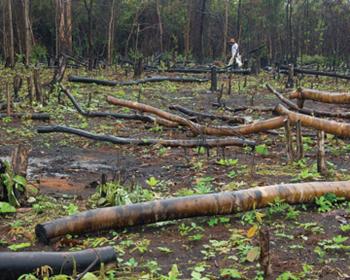
In November 2023, the University of California Network for Human Rights and Digital Fact-finding of the University of California, in partnership with Cultural Survival, published a Story Map on Indigenous land defenders who have been killed in Brazil.
To the Esteemed Members of the Comissão do Conselho Nacional de Educação Escolar Indígena (CNEEI) and other MEC Commissions,
We express our support for the full participation of Universidade Pluriétnica Indígena Aldeia Maracanã and its scholars in the deliberations and discussions with the MEC Commission concerning the establishment of an Indigenous university in Brazil.
By Edson Krenak (Krenak, CS Staff)
Por Cliver Ccahuanihancco Arque (Quechua) e Carlos Madrigal and Carlos Madrigal (Mazahua/Jñatjo)
A diversidade de expressões identitárias tem sido um tema recorrente nos últimos anos. Conceitos e percepções foram estabelecidos sob os recorrentes efeitos da globalização no contexto urbano; no entanto, estes nem sempre respondem, traduzem ou incluem toda a diversidade que existe no mundo.
The diversity of expressions and manifestations of identity has been a recurring theme over time. Concepts and perceptions have varied in different contexts from urbanization to globalization. However, these do not always respond to or include all the diversity that exists in the world.
Para os povos indígenas, o gênero sempre foi transcendal e diverso, interligado às nossas terras, línguas, culturas, espiritualidades e visões de mundo. A separação foi produto do processo de colonização e dos atos de genocídio que deram origem a uma regulamentação da sexualidade para eliminar a diversidade de gênero nas comunidades indígenas.
The extractivist growth model for transition minerals has emerged in Latin America in recent years, fueled by a sharp spike in demand for batteries and other technologies for the transition to the so-called “green economy” by industrialized countries and rising superpowers alike.
Washington Kiriri (Kiriri) is an Anthropology student at the Federal University of Southern Bahia in Brazil. He aspires to end the objectification of Indigenous people as anthropological case studies and to create new opportunities for Indigenous people to tell their stories. He is also part of the United Movement of Peoples and Organizations of Bahia, which seeks to guarantee Indigenous territorial rights, women's rights, 2SLGBTQ+ rights, and climate justice. Kiriri offers a reflection on his experience as a bisexual person in Brazil.

Land Acknowledgement
We acknowledge that we are headquartered on Massachusett land, in Cambridge, MA, and we thank the past, current, and future Indigenous stewards of this territory.